COSMOS 564 (06675)

COSPAR: 1973-037A | Alt Name: Kosmos-564

Image
COSMOS 564 Satellite Image
Additional Sources
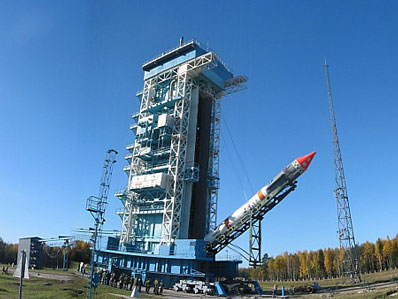
Launch Details

Launch Date

June 8, 1973

Launch Site

PLMSC

Launch Pad

LC132/1

Launch Vehicle

Kosmos 11K65M

Orbital Elements

NORAD ID

06675

International Designator

1973-037A

Epoch

Mon, 20 Jul 2026 18:16:42 GMT

Apogee

Calculating...

Perigee

Calculating...

Inclination

74.02°

Right Ascension

311.98°

Eccentricity

Calculating...

Argument of Perigee

139.31°

Period

114.59 min

Mean Motion

12.57 rev/day

Latitude

Calculating...

Longitude

Calculating...

Altitude

Calculating...

Velocity

Calculating...

Polar Plot
3D Visualization
Basic Satellite Info

Name

COSMOS 564

Alternative Name

Kosmos-564

Type

Payload

Status

Unknown

Owner

GUKOSR

Country

USSR

Constellation

N/A

Related Satellites

Major Events

N/A

Latest TLEs
1 06675U 73037A   26201.76160410 -.00000009  00000+0  43184-4 0  9993
2 06675  74.0213 311.9812 0054690 139.3127 334.4093 12.56610928436490

Source: Celestrak

Summary

Apologies, there is no summary for this satellite yet. I am working to generate these for every object in the catalog, but it is going to take time.

Physical Characteristics

Length

0.8

Diameter

0.8

Span

0.8

Dry Mass

60

Launch Mass

60

Shape

Poly

Radar Cross Section

0.67

Visual Magnitude

Unknown

Color

Unknown

Material Composition

Unknown

Technical Details

Payload

Strela-1M Blok 06 No. 1

Purpose

Military Communication

Mission

Military Communication

Manufacturer

OKB10

Life Expectancy

6 months

Bus

Strela-1 11F625

Configuration

Unknown

Motor

Unknown

Equipment

Unknown

Power System

Solar cells, batteries

ADCS

Unknown

Transmitter Frequency

Unknown

Map
This tool will help you track the satellite's position and predict its upcoming passes over your location. Simply input the coordinates or click the geolocation button to get started.
Next Pass
Azimuth Elevation Time (Local)
Start Azimuth
Max Elevation
Stop Azimuth
Time Until
Pass Duration

Satellite Articles

View All Posts »

Learn more about satellites and other related topics.

X Report 27 Nov 2025

X Report 27 Nov 2025

SpaceX's plans for the Transporter-15 mission are temporarily delayed as the Falcon 9 launch was scrubbed. The next launch attempt is now targeted for Friday, Nov. 28, with hopes of delivering 140 payloads into sun-synchronous orbit.

Space Brief 4 Feb 2025

Space Brief 4 Feb 2025

Today's brief covers the expansion of the U.S. missile defense shield, a new contract for Viasat from the U.S. Space Force, and the Missile Defense Agency's call for innovative Iron Dome concepts.

Top 10 Features You Didn't Know About Starlink

Top 10 Features You Didn't Know About Starlink

Discover the hidden gems and lesser-known aspects of SpaceX's revolutionary Starlink satellite internet service, from Easter eggs to advanced technical features.

Space Force Awards $1.8B Andromeda Program to 14 Firms | KeepTrack Space Brief

Space Force Awards $1.8B Andromeda Program to 14 Firms | KeepTrack Space Brief

Space Force selects 14 companies for $1.8 billion Andromeda program to replace GSSAP geosynchronous surveillance satellites with commercial alternatives through 2036.

SpaceX Hits 600 Rocket Landings, Wins $175M Mars Deal | KeepTrack X Report

SpaceX Hits 600 Rocket Landings, Wins $175M Mars Deal | KeepTrack X Report

SpaceX's 600th Falcon 9 booster landing coincides with a $175M NASA Mars contract win and the final GPS III satellite launch this week.

Space Force Eyes Space Tugs, On-Orbit Refueling by 2030 | KeepTrack Space Brief

Space Force Eyes Space Tugs, On-Orbit Refueling by 2030 | KeepTrack Space Brief

Space Force commits to operational space tugs and on-orbit refueling by 2030. New capabilities will complicate conjunction analysis for GEO and MEO satellite tracking.

Space Brief 23 Jun 2025

Space Brief 23 Jun 2025

Significant advancements and launches in space: NASA's hypersonic sensor breakthrough, ChinaSat-9C's launch, and SpaceX's resilient Falcon 9 operations.

Low Earth Orbit (LEO)

Low Earth Orbit (LEO)

The bustling downtown of space: where most satellites operate, communication networks bloom, and the challenges of atmospheric drag and radiation shape our approach to space operations