COSMOS 374 DEB (05138)

COSPAR: 1970-089AY | Alt Name: deb Kosmos-374 [*]
DECAYED

Image
COSMOS 374 DEB Satellite Image
Additional Sources
Launch Details

Launch Date

October 23, 1970

Launch Pad

LC90/20

Launch Vehicle

Tsiklon-2

Orbital Elements

NORAD ID

05138

International Designator

1970-089AY

Decay Date

3/24/1972

Explore in the Catalog
Basic Satellite Info

Name

COSMOS 374 DEB

Alternative Name

deb Kosmos-374 [*]

Type

Debris

Status

Space Junk

Owner

PKO

Country

USSR

Constellation

N/A

Related Satellites

Major Events

N/A

Summary
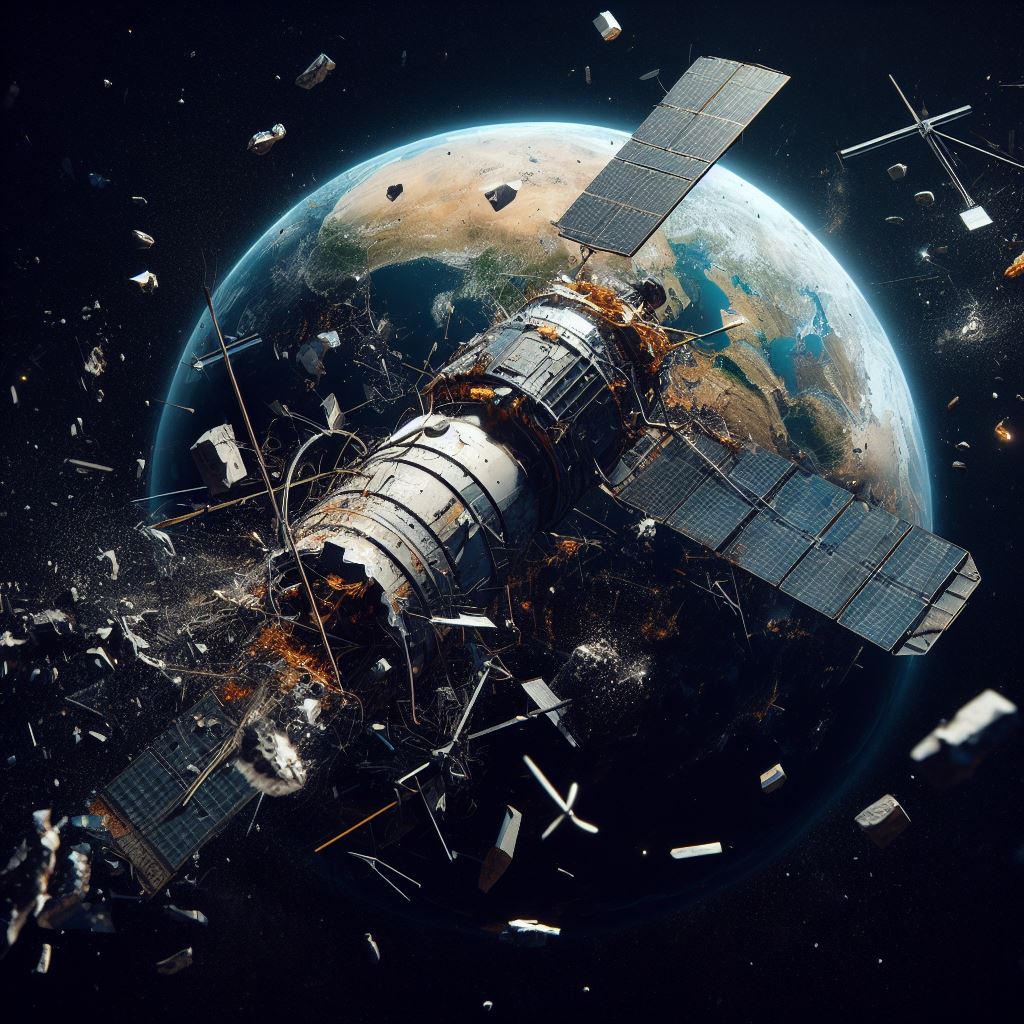
Space debris, also known as space junk, encompasses all non-functional objects orbiting Earth such as defunct satellites, spent rocket stages, and fragments from collisions or disintegrations. Over time, this debris can accumulate and create an increasingly hazardous environment in orbit. Even tiny fragments, traveling at extremely high velocities, can inflict significant damage on operational satellites and spacecraft. If left unmanaged, the density of debris raises the risk of catastrophic collisions and further fragmentation, compounding the problem and threatening the safety and sustainability of space activities.
Physical Characteristics

Length

0

Diameter

0

Span

0

Dry Mass

0

Launch Mass

0

Shape

N/A

Radar Cross Section

Unknown

Visual Magnitude

Unknown

Color

Unknown

Material Composition

Unknown

Technical Details

Payload

Unknown

Purpose

Unknown

Mission

Unknown

Manufacturer

Unknown

Life Expectancy

Unknown

Bus

Unknown

Configuration

Unknown

Motor

Unknown

Equipment

Unknown

Power System

Unknown

ADCS

Unknown

Transmitter Frequency

Unknown

Satellite Articles

View All Posts »

Learn more about satellites and other related topics.

Second Starlink Satellite Generates Debris; Falcon 9 Booster Flies 34th Mission | KeepTrack Space Brief

Second Starlink Satellite Generates Debris; Falcon 9 Booster Flies 34th Mission | KeepTrack Space Brief

Second Starlink satellite malfunctioned on orbit and generated debris within three months of prior event. Falcon 9 booster completed record 34th mission from Cape Canaveral.

SpaceX Opens 2026 With 29 Starlink Satellites, X Report 5 Jan 2026

SpaceX Opens 2026 With 29 Starlink Satellites, X Report 5 Jan 2026

SpaceX Starlink updates for 2026 open with Starlink 6-88: 29 satellites from Cape Canaveral on Jan 4, after a record 165-launch 2025.

X Report 25 Mar 2025

X Report 25 Mar 2025

SpaceX achieves new milestones with back-to-back launches for the NRO while preparing for groundbreaking crewed polar mission FRAM2.

Space Brief 25 Oct 2025

Space Brief 25 Oct 2025

Today's brief covers significant growth forecasts for global defense satellite communications, the integration of hypersonic missiles, cyber authority expansion in the Army, and more pivotal military developments.

Starship V3 Static Fire Sets Up Flight 12, X Report 16 Apr 2026

Starship V3 Static Fire Sets Up Flight 12, X Report 16 Apr 2026

Starship V3 completes its first full-duration static fire in April 2026, with Flight 12 targeting May. Dual Falcon 9s push Starlink to 10,242 working.

Falcon Heavy Returns | A Six-Ton Bet on Geostationary Broadband

Falcon Heavy Returns | A Six-Ton Bet on Geostationary Broadband

Falcon Heavy flew for the first time in eighteen months on April 29, 2026, expending its center core to push Viasat's final ViaSat-3 satellite toward geostationary orbit. The mission is a flagship rocket doing what only it can still do, for an operator betting six tons of high-throughput hardware on a market Starlink is rapidly redefining.

SpaceX Launches 21 SDA Missile-Tracking Satellites | KeepTrack Week in Review

SpaceX Launches 21 SDA Missile-Tracking Satellites | KeepTrack Week in Review

This week: SpaceX launched 21 SDA missile-tracking satellites, Soyuz MS-29 carried a new crew to the ISS, and Europe's space spending rose 12%.

The Rise of Super Heavy-Lift Rockets

The Rise of Super Heavy-Lift Rockets

Super heavy-lift rockets are the most powerful launch vehicles ever built. They can send humans and cargo to the Moon, Mars, and beyond. But what are they, and why are they so important?