· x report · 3 min read
Musk Addresses Orbital Data Center Crowding Fears | KeepTrack X Report
Elon Musk pushed back on orbital crowding concerns as SpaceX eyes data centers in space, with 10,584 Starlink satellites currently operational.
Latest Developments
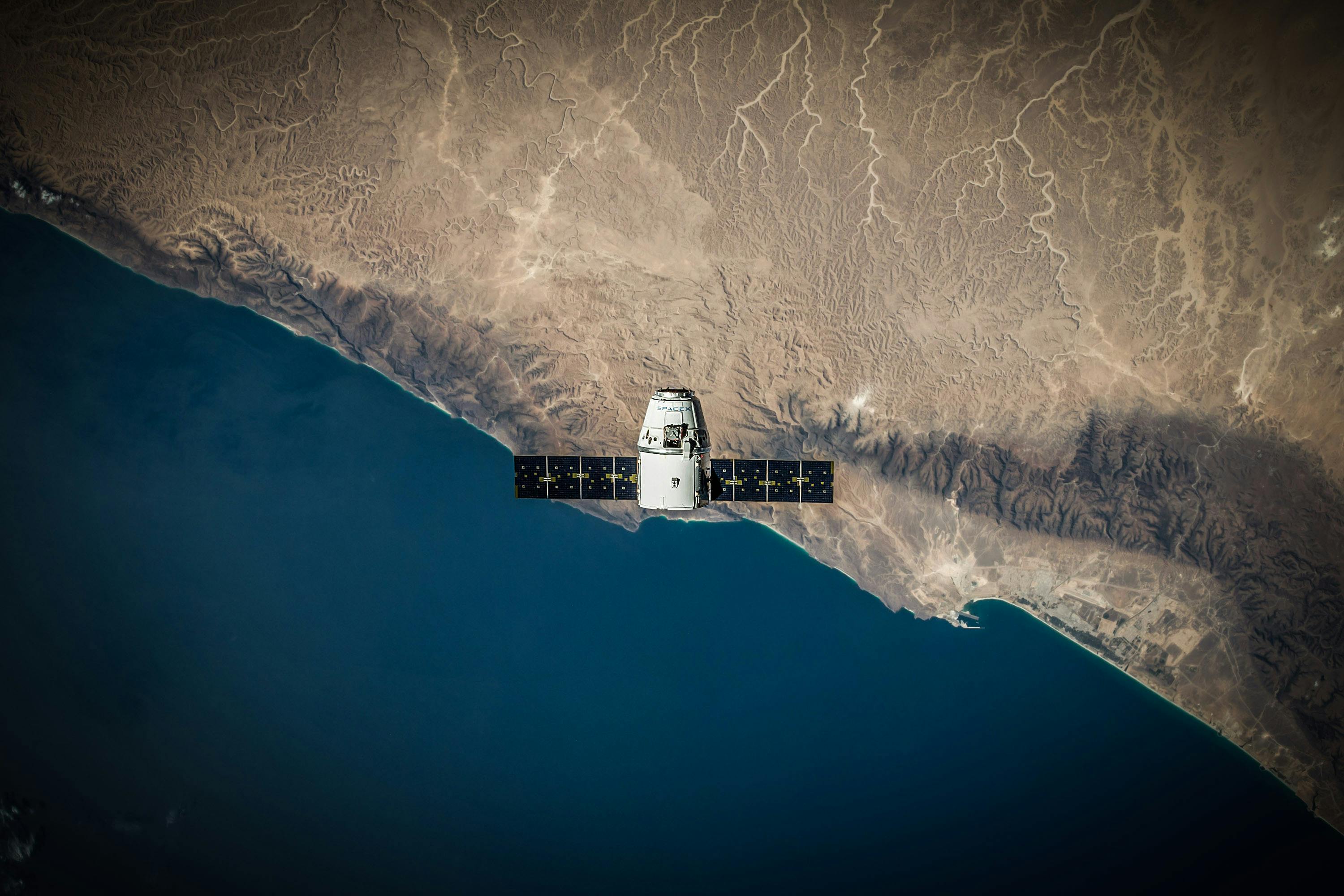
SpaceX CEO Elon Musk moved this week to address growing concerns about orbital congestion, specifically pushing back on fears that launching data centers into space could further crowd low Earth orbit. With 12,241 Starlink satellites launched to date, 10,600 currently in orbit, and 10,584 actively working, the scale of SpaceX’s constellation ambitions makes the orbital data center question more than hypothetical. Musk argued that space-based infrastructure offers a compelling alternative to land-hungry terrestrial data centers, framing the orbital environment as a resource to be responsibly developed rather than avoided. The remarks signal that SpaceX’s long-term vision extends well beyond broadband connectivity into large-scale orbital computing infrastructure.
Space Safety
The current Starlink conjunction threat picture shows moderate activity with two elevated-risk events expected in early-to-mid June 2026, both involving intra-constellation encounters. STARLINK-30526 presents the highest collision probability at 30.26% when approaching STARLINK-35247 on Jun 10, followed by STARLINK-1133 at 10.47% risk relative to STARLINK-34975 on Jun 7. Beyond these two MODERATE-risk events, eight additional LOW-risk conjunctions are tracked through mid-June. Concurrently, five Starlink satellites are predicted to reenter Earth’s atmosphere between Jun 12-14, 2026, with reentry windows ranging from 540 to 1,140 minutes.
| Risk | Starlink Sat | Other Object | Status | Min Range (km) | Rel Speed (km/s) | Max Prob | Time of Closest Approach |
|---|---|---|---|---|---|---|---|
| MODERATE | STARLINK-30526 | STARLINK-35247 | Operational | 0.029 | 1.352 | 30.26% | Jun 10, 18:10 UTC |
| MODERATE | STARLINK-1133 | STARLINK-34975 | Operational | 0.054 | 9.686 | 10.47% | Jun 7, 16:23 UTC |
| LOW | STARLINK-30585 | FALCONSAT-6 | Operational | 0.034 | 7.762 | 8.64% | Jun 13, 01:24 UTC |
| LOW | STARLINK-3060 | COSMOS 2221 | Unknown | 0.027 | 14.628 | 7.52% | Jun 9, 06:53 UTC |
| LOW | STARLINK-6263 | FLOCK 4G-7 | Operational | 0.029 | 14.277 | 7.43% | Jun 11, 23:42 UTC |
| LOW | STARLINK-30385 | ELECTRON KICK STAGE R/B | Non-operational | 0.031 | 13.435 | 7.40% | Jun 11, 04:00 UTC |
| LOW | STARLINK-36171 | COSMOS 1275 DEB | Non-operational | 0.036 | 11.423 | 6.59% | Jun 11, 08:28 UTC |
| LOW | STARLINK-36648 | QMR-KWT-2 (RS95S) | Operational | 0.037 | 12.875 | 5.54% | Jun 8, 05:44 UTC |
| LOW | STARLINK-1262 | STARLINK-35484 | Operational | 0.085 | 0.077 | 5.51% | Jun 9, 13:02 UTC |
| LOW | STARLINK-35892 | YAOGAN-35 01A | Operational | 0.049 | 3.857 | 4.92% | Jun 9, 13:34 UTC |
| Satellite | NORAD ID | Predicted Decay | Window (min) | Inclination | Lat | Lon |
|---|---|---|---|---|---|---|
| STARLINK-2065 | 47672 | Jun 12, 13:44 UTC | 540 | 53.1° | 2.8° | 146.7° |
| STARLINK-3004 | 48880 | Jun 13, 04:52 UTC | 1,140 | 97.7° | -82.2° | 67.0° |
| STARLINK-1795 | 46696 | Jun 13, 20:24 UTC | 840 | 53.0° | 47.8° | 333.1° |
| STARLINK-3729 | 52135 | Jun 13, 21:43 UTC | 1,020 | 53.2° | 45.7° | 234.1° |
| STARLINK-2114 | 47393 | Jun 14, 18:26 UTC | 1,140 | 53.0° | -42.7° | 352.8° |
Detailed Coverage
Musk Pushes Back on Orbital Crowding Fears as SpaceX Eyes Space-Based Data Centers
Elon Musk directly addressed public and industry concerns this week regarding the feasibility and safety of placing data centers in orbit, an idea SpaceX has been quietly advancing as demand for computing infrastructure accelerates globally. Critics have pointed to the already densely populated low Earth orbit environment — where Starlink alone accounts for a significant share of all active satellites — as a reason to pump the brakes on any further large-scale deployments beyond broadband constellations.
Musk countered that orbital space, properly managed, represents a practical solution to the terrestrial land and energy constraints that are increasingly bottlenecking data center expansion on Earth. With KeepTrack data showing 10,584 Starlink satellites actively working across the constellation, SpaceX has demonstrated an ability to operate thousands of coordinated spacecraft simultaneously — a foundational capability that would be essential for any future orbital computing network. The remarks are likely to intensify regulatory and astronomical community scrutiny of SpaceX’s longer-term infrastructure ambitions.
Read the full story: Teslarati
Constellation Status
No changes have occurred in the Starlink constellation since the last check. The constellation maintains a total of 12,241 launched satellites, with 10,600 currently in orbit, 10,584 of which are fully operational, while 1,641 have decayed from their orbits.
- Total Launched: 12241
- Total On Orbit: 10600
- Total Working: 10584
Track Starlink satellites in real-time: Track Starlink
B1049