Latest Developments
NASA’s Office of Inspector General has raised significant concerns about gaps in the agency’s risk management approach for the Starship Human Landing System, warning that crew survival analyses remain incomplete and that Starship development delays could ripple directly into the Artemis lunar timeline. The findings arrive at a pivotal moment for SpaceX, which simultaneously faces intensifying scrutiny over its crewed lunar lander certification posture while continuing to lead the global launch market at a relentless pace. On the commercial side, Falcon 9 is set to anchor yet another busy week with multiple missions among eight worldwide launches scheduled. Against this operational backdrop, Starlink’s constellation — now standing at 11,488 satellites launched, 9,949 in orbit, and 9,938 operational — is reshaping the broader satellite connectivity market so fundamentally that industry analysts say bandwidth itself is no longer the primary competitive differentiator.
Space Safety
The current Starlink conjunction threat environment shows moderate activity with two MODERATE risk events identified among 20 total tracked conjunctions. The highest-risk event involves STARLINK-32678 with a close approach to the non-operational KSLV-II R/B on Mar 13, 2026, presenting a maximum collision probability of 18.33% at a minimum range of just 19 meters. Meanwhile, reentry predictions indicate five Starlink satellites are expected to decay between Mar 13-15, 2026, with the largest uncertainty windows extending to 48 hours, underscoring the continued operational churn within the constellation.
| Risk | Starlink Sat | Other Object | Status | Min Range (km) | Rel Speed (km/s) | Max Prob | Time of Closest Approach |
|---|---|---|---|---|---|---|---|
| MODERATE | STARLINK-32678 | KSLV-II R/B | Non-operational | 0.019 | 12.833 | 18.33% | Mar 13, 15:18 UTC |
| LOW | STARLINK-4349 | STARLINK-36920 | Operational | 0.073 | 10.546 | 5.92% | Mar 11, 21:14 UTC |
| LOW | STARLINK-32866 | AIST-2 (RS43) | Non-operational | 0.046 | 9.764 | 4.70% | Mar 11, 18:23 UTC |
| LOW | STARLINK-4364 | CZ-4B DEB | Non-operational | 0.051 | 8.823 | 3.98% | Mar 15, 11:06 UTC |
| LOW | STARLINK-4467 | ICEYE-X33 | Operational | 0.037 | 14.838 | 3.77% | Mar 12, 02:53 UTC |
| Satellite | NORAD ID | Predicted Decay | Window (min) | Inclination | Lat | Lon |
|---|---|---|---|---|---|---|
| STARLINK-1112 | 44925 | Mar 13, 05:24 UTC | 1320 | 53° | 13.4° | 341.3° |
| STARLINK-1738 | 46336 | Mar 13, 16:25 UTC | 1440 | 53° | 11.1° | 211° |
| STARLINK-30995 | 58474 | Mar 14, 04:04 UTC | 2880 | 43° | -11.9° | 152.6° |
| STARLINK-3050 | 49180 | Mar 15, 10:58 UTC | 2880 | 70° | -11° | 94.1° |
| STARLINK-36858 | 68021 | Mar 15, 11:37 UTC | 2880 | 97.3° | -80.6° | 87° |
Detailed Coverage
NASA Inspector General Warns of Crew Survival Gaps in Starship Lander Risk Management
NASA’s Office of Inspector General released a pointed assessment of the agency’s handling of lunar lander risk, finding that despite ongoing mitigation efforts, critical gaps remain in NASA’s testing posture and crew survival analyses for the SpaceX Starship HLS. Of particular concern is the question of what protocols and survival pathways exist following a catastrophic but non-fatal event during a crewed lunar landing attempt — a scenario the OIG says has not been sufficiently analyzed. The report stops short of halting the program but calls on NASA leadership to close these analytical gaps before crewed missions proceed.
The findings place additional pressure on an already scrutinized program that has faced repeated schedule adjustments. Blue Origin’s Blue Moon lander, also under NASA contract, received similar scrutiny in the report, suggesting systemic risk management challenges extend beyond SpaceX alone. For Starship’s path to crewed lunar operations, the OIG assessment represents one of the most substantive institutional challenges to date.
Read the full story: Spaceflight Now
Starship Development Delays Threaten Artemis Schedule, NASA Watchdog Confirms
Compounding the risk management concerns, a separate NASA watchdog report has directly linked Starship’s ongoing development delays to potential slippage in the broader Artemis program timeline. Several technical milestones — spanning propellant transfer, heat shield performance, and full-stack reusability demonstrations — must still be achieved before Starship can realistically serve as a crewed lunar lander. The report underscores that each delay in Starship’s maturation compresses the margin available to NASA for crewed lunar surface missions already running behind their originally targeted windows.
The dual watchdog assessments arriving in the same news cycle signal growing institutional impatience with uncertainty in the HLS program. SpaceX has not publicly revised its Starship HLS schedule in response, but the reports are likely to intensify Congressional and agency-level discussions about contingency planning for Artemis crewed lunar landings.
Read the full story: Teslarati
Falcon 9 Set to Lead 8-Launch Global Week, Cementing Cadence Dominance
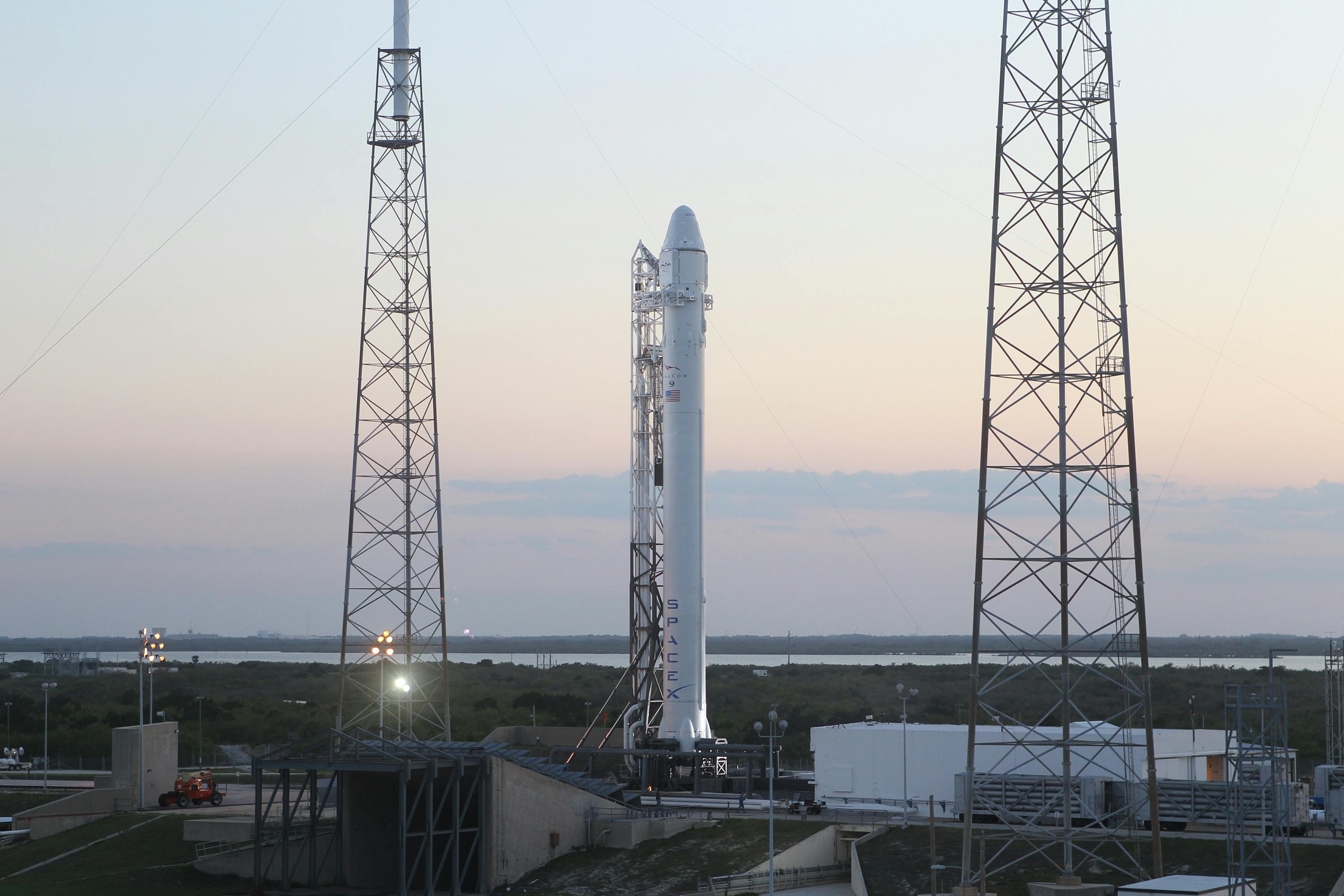
Falcon 9 will once again dominate the world’s launch schedule this week, anchoring what NASASpaceFlight describes as a busy eight-launch global manifest. The vehicle’s ability to support multiple mission types — from Starlink replenishment runs to commercial and government payloads — within a single weekly window continues to demonstrate an operational tempo unmatched by any other launch system currently flying. Each Starlink-dedicated flight adds to a constellation already numbering 9,949 satellites in orbit, sustaining the network density that underpins Starlink’s growing service quality.
The week’s launch activity also reflects the broader cadence SpaceX has established across its Florida and California launch sites, where rapid turnaround between missions has become routine rather than exceptional. Tracking the specific mission manifests as they confirm will be essential for understanding which orbital shells receive reinforcement and whether any dedicated rideshare or government missions break the cadence.
Read the full story: NASASpaceFlight
Starlink Drives Satellite Industry Into a “Post-Capacity Era,” Novaspace Finds
A landmark industry analysis from Novaspace — the eighth edition of its Capacity Pricing Trends report — concludes that the satellite connectivity market has fundamentally shifted. Bandwidth is no longer the primary basis of competitive differentiation among satellite operators; instead, the market has entered what Novaspace terms a “Post-Capacity Era,” driven in large part by Starlink’s vertical integration across manufacturing, launch, and ground systems. With 9,938 working satellites generating unprecedented throughput, Starlink has effectively commoditized raw capacity and moved the competitive battleground toward latency, reliability, and service ecosystem.
The implications for legacy geostationary operators and emerging LEO constellations are significant. Operators that cannot compete on the integrated cost and performance model Starlink has established are being forced to differentiate through niche applications, regional presence, or government contract positioning. The Novaspace report represents the clearest market-level acknowledgment yet that Starlink’s scale has permanently restructured satellite connectivity economics.
Read the full story: SpaceNews
Constellation Status
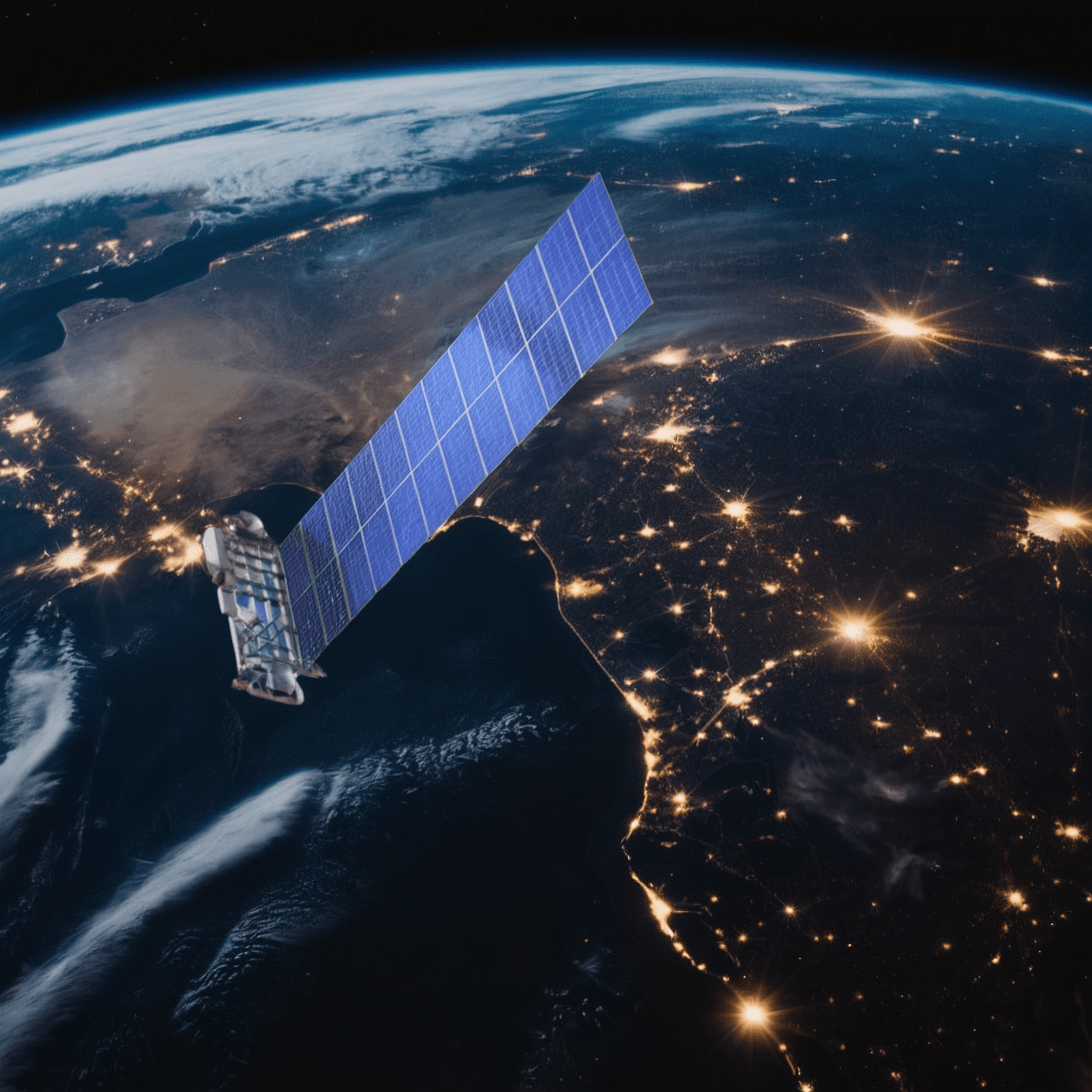
There have been no changes to the Starlink constellation since the last check. The constellation currently consists of 11,488 total satellites launched, with 9,949 remaining in orbit, of which 9,938 are operational and 1,539 have decayed.
- Total Launched: 11488
- Total On Orbit: 9949
- Total Working: 9938
Track Starlink satellites in real-time: Track Starlink