In the early hours of February 9, 1990, NASA’s Galileo spacecraft swooped within 16,000 kilometers of Venus’ cloud tops, executing a precisely choreographed celestial maneuver that would help reshape our approach to solar system exploration. The Venus flyby, part of an innovative “VEEGA” (Venus-Earth-Earth Gravity Assist) trajectory, demonstrated how spacecraft could use planets’ gravity as a cosmic slingshot, enabling missions that would otherwise be impossible with existing rocket technology.
A Mission Born of Necessity
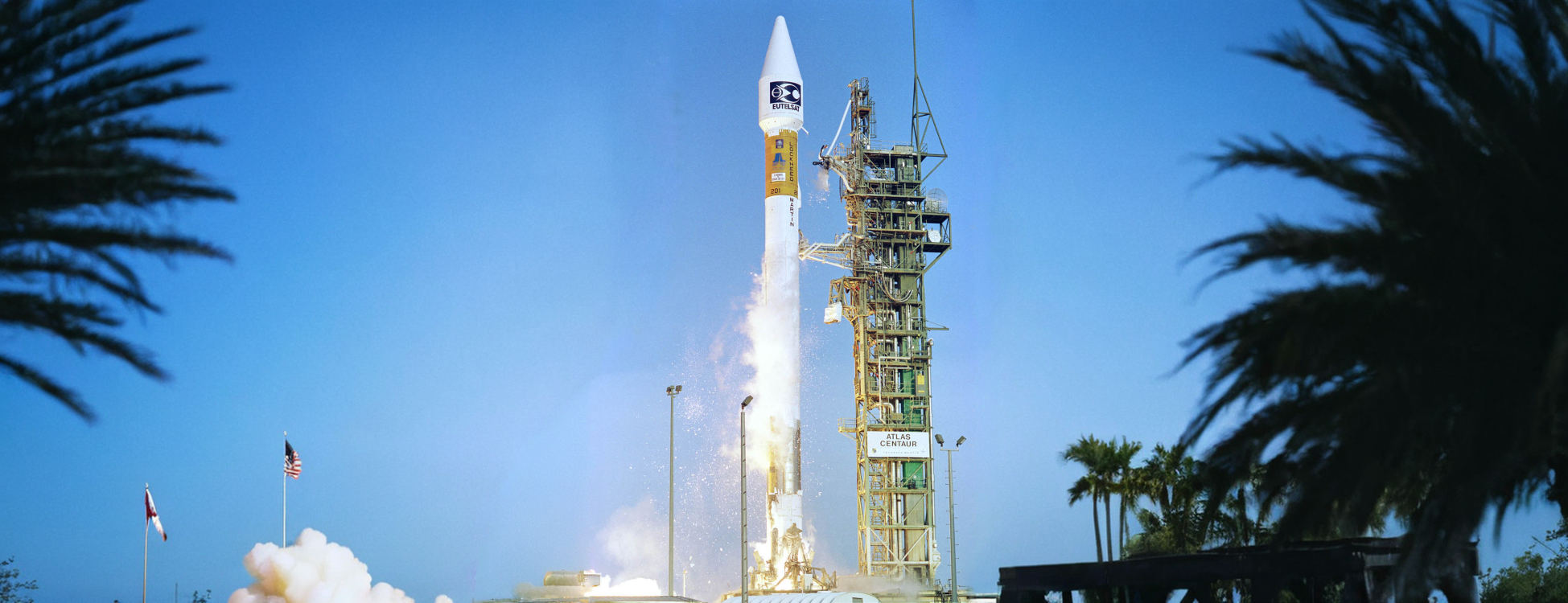
The path to Venus wasn’t part of Galileo’s original flight plan. The spacecraft, designed to study Jupiter and its moons, was forced to take this roundabout route after its planned Centaur upper stage was deemed too risky to carry in the Space Shuttle’s cargo bay following the Challenger disaster. Engineers devised an elaborate alternative that would use the gravity of Venus and Earth to give Galileo the energy it needed to reach Jupiter.
Breaking New Ground
The Venus encounter demonstrated the sophistication of NASA’s navigation capabilities. Flight controllers had to guide the three-ton spacecraft to precisely the right position relative to Venus, using the planet’s gravitational field to alter Galileo’s velocity and trajectory. The maneuver’s success proved that complex gravity-assist trajectories could be executed with remarkable precision.
Science on the Side
While the primary purpose of the flyby was navigational, Galileo’s science team seized the opportunity to study Earth’s sister planet. The spacecraft’s instruments captured unprecedented infrared and ultraviolet images of Venus’s cloud structure and gathered new data about the planet’s upper atmosphere. These bonus observations added valuable data to our understanding of Venus while testing instruments that would later be used at Jupiter.
Engineering Innovation
The Venus flyby showcased the ingenuity of NASA’s mission designers. The VEEGA trajectory, while complex, actually saved fuel and enabled Galileo to carry more scientific instruments than would have been possible with a direct route to Jupiter. This approach became a model for future missions, demonstrating how limited launch capability could be overcome through creative orbital mechanics.
Legacy and Impact
Galileo’s Venus flyby pioneered techniques that would become standard in planetary exploration. Modern missions routinely use gravity assists to reach their destinations, from Cassini’s journey to Saturn to New Horizons’ flight to Pluto. The success of the VEEGA trajectory proved that seemingly indirect routes could actually be the most efficient way to explore the solar system.
Looking Forward
As space agencies plan increasingly ambitious missions to the outer solar system, the lessons learned from Galileo’s Venus flyby continue to influence trajectory design. Future missions to the ice giants Uranus and Neptune will likely use similar gravity-assist techniques, building on the foundation laid by Galileo’s groundbreaking journey. The spacecraft’s close encounter with Venus 35 years ago showed that in space exploration, sometimes the longest way around proves to be the shortest way there.