Latest Developments
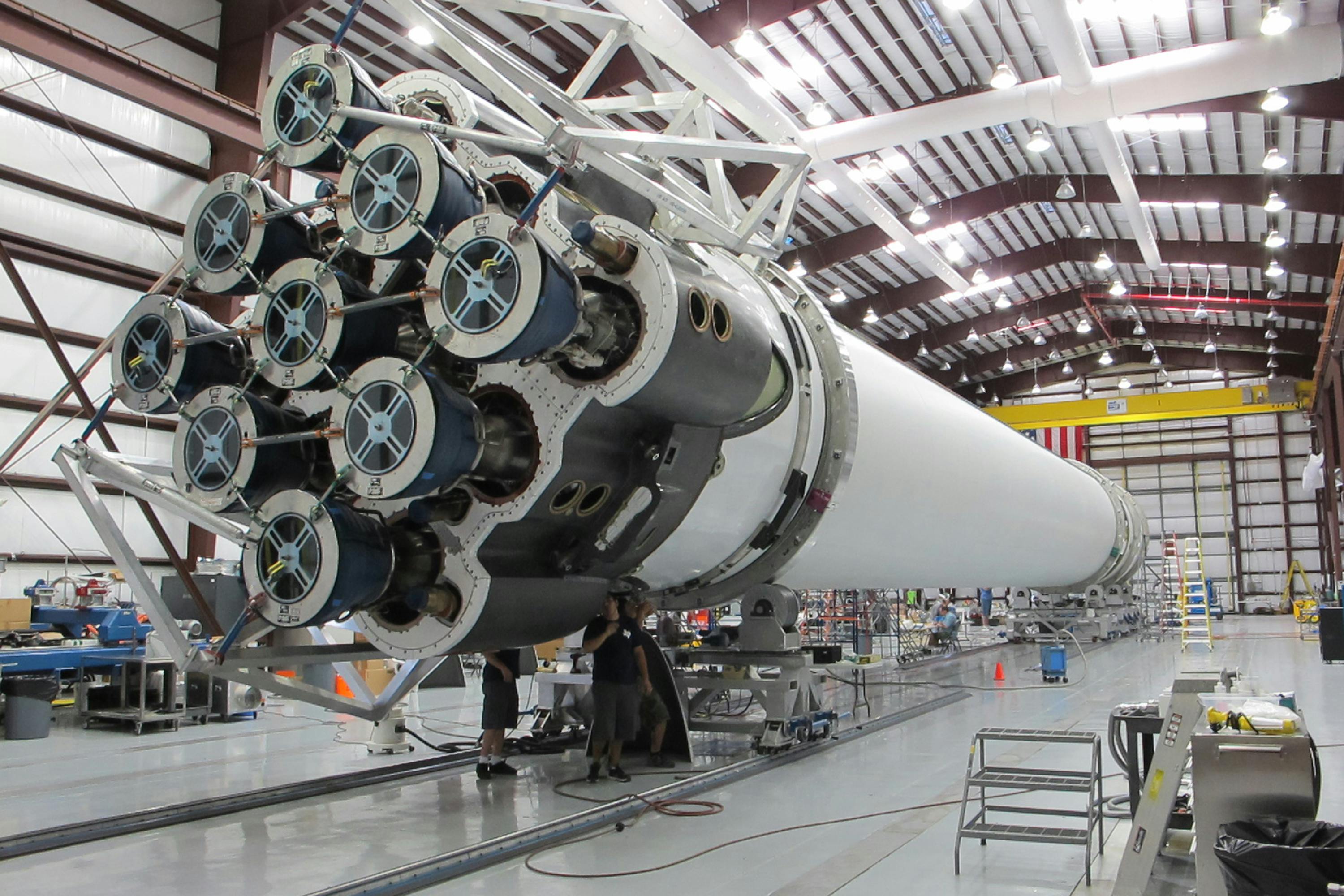
SpaceX booster B1067 shattered its own reusability record Thursday, completing a 36th flight to deliver the Starlink 10-42 batch from Cape Canaveral — adding to a constellation that now stands at 12,472 launched, 10,777 in orbit, and 10,761 operational. The milestone landing caps a week in which SpaceX also made a sweeping regulatory move, filing with the FCC to operate a next-generation megaconstellation of 100,000 Starlink satellites, each weighing roughly 4,400 pounds. Looking further ahead, NASA has selected Falcon Heavy to loft the Roman Space Telescope this August, while Starship continues to attract commercial lunar customers including Japanese firm ispace. Together, these developments underscore a week defined by reusability records, audacious expansion filings, and a deepening manifest across SpaceX’s full vehicle family.
Space Safety
The Starlink conjunction and reentry environment presents a mixed threat picture in early July 2026, with one HIGH risk event commanding immediate attention. STARLINK-4621 faces a critical conjunction with the defunct SL-18 R/B on Jul 9, 23:44 UTC with zero separation margin (0.011 km minimum range) and unity collision probability—a scenario requiring urgent conjunction assessment and potential avoidance maneuver consideration. Beyond this acute threat, six MODERATE risk events involve operational and partially-operational Starlink assets on close approach trajectories, while five Starlink satellites are predicted to reenter Earth’s atmosphere between Jul 10-13, 2026, with decay windows ranging from 8 to 17 hours.
| Risk | Starlink Sat | Other Object | Status | Min Range (km) | Rel Speed (km/s) | Max Prob | Time of Closest Approach |
|---|---|---|---|---|---|---|---|
| HIGH | STARLINK-4621 | SL-18 R/B | Non-operational | 0.011 | 14.173 | 1.0000 | Jul 9, 23:44 UTC |
| MODERATE | STARLINK-30464 | STARLINK-36196 | Operational | 0.048 | 10.027 | 0.1285 | Jul 4, 22:40 UTC |
| MODERATE | STARLINK-5106 | STARLINK-32760 | Operational | 0.049 | 10.192 | 0.1211 | Jul 11, 06:11 UTC |
| MODERATE | STARLINK-5400 | STARLINK-5781 | Partially Operational | 0.053 | 6.407 | 0.1203 | Jul 7, 15:32 UTC |
| LOW | STARLINK-36967 | LEMUR-2-AFFIE-WAUWIE | Operational | 0.038 | 7.332 | 0.0733 | Jul 8, 04:03 UTC |
| Satellite | NORAD ID | Predicted Decay | Window (min) | Inclination | Lat | Lon |
|---|---|---|---|---|---|---|
| STARLINK-1707 | 46359 | Jul 10, 20:33 UTC | 540 | 53.0° | -49° | 79° |
| STARLINK-4798 | 53858 | Jul 11, 13:50 UTC | 480 | 53.2° | 9.8° | 80.1° |
| STARLINK-5032 | 53895 | Jul 11, 15:59 UTC | 720 | 53.2° | -22.1° | 257° |
| STARLINK-5000 | 53935 | Jul 11, 19:22 UTC | 780 | 53.2° | -53.2° | 91.7° |
| STARLINK-1545 | 46156 | Jul 13, 10:01 UTC | 1020 | 53.0° | 22.7° | 69.1° |
Detailed Coverage
Booster B1067 Lands Record-Breaking 36th Flight on Starlink 10-42 Mission
SpaceX’s workhorse booster B1067 launched for an unprecedented 36th time Thursday, lifting off from Cape Canaveral Space Force Station’s Launch Complex 40 at 5:25 a.m. EDT carrying the Starlink 10-42 payload. The flight eclipses the previous single-booster record and demonstrates how aggressively SpaceX is cycling its fleet to sustain Starlink’s rapid deployment cadence.
The successful landing extends B1067’s status as the most-flown orbital rocket booster in history. For constellation watchers, each incremental Starlink batch nudges the operational count — currently 10,761 working satellites — closer to the density thresholds that unlock global low-latency coverage in contested coverage zones.
Read the full story: Spaceflight Now
SpaceX Files to Operate 100,000-Satellite Next-Gen Starlink Megaconstellation
In a move that would dwarf every existing or planned satellite network, SpaceX has formally applied for regulatory approval to operate 100,000 next-generation Starlink satellites in Earth orbit. Each spacecraft in the proposed fleet would weigh approximately 4,400 pounds — roughly three times the mass of current V2 Mini hardware — signaling a dramatic leap in per-satellite capability.
If approved, the filing would represent one of the most consequential spectrum and orbital-slot actions ever submitted to the FCC. The sheer mass budget involved suggests SpaceX is planning to exploit Starship’s full payload capacity to make per-kilogram launch costs economical enough to justify the build-out. Orbital congestion analysts will be watching closely as the application works its way through the regulatory process.
Read the full story: Space.com
NASA Selects Falcon Heavy to Launch Roman Space Telescope This August
NASA has contracted SpaceX’s Falcon Heavy to carry the Nancy Grace Roman Space Telescope to orbit, with launch targeted for August. Roman is designed to survey wide swaths of the infrared sky, hunting for exoplanet populations and probing dark energy — science objectives that have earned it comparisons to a “hundred Hubbles” in survey power.
The selection of Falcon Heavy reflects both the telescope’s mass requirements and SpaceX’s increasingly dominant position in NASA’s launch portfolio. A successful deployment would mark one of the most scientifically significant Falcon Heavy payloads to date and set the stage for years of observational campaigns that could reshape our understanding of planetary formation across the galaxy.
Read the full story: Teslarati
ispace Books 500 kg of Starship Cargo Space for Lunar Delivery Mission
Japanese lunar exploration company ispace has contracted approximately 1,100 pounds (500 kg) of cargo capacity aboard a future SpaceX Starship lunar lander mission, substantially expanding its payload ambitions beyond what its own RESILIENCE landers can accommodate. The deal positions ispace to deliver larger, more complex payloads to the Moon’s surface for commercial and governmental customers who require mass margins no current small lander can provide.
The agreement is a telling signal of how Starship’s enormous payload envelope is reshaping the commercial lunar economy. Rather than competing with Starship, smaller lunar logistics players are increasingly integrating it into their service stack, effectively using the vehicle as a heavy-lift backbone while retaining their own surface operations expertise.
Read the full story: SpaceNews
Starship-Dependent Constellations Face IPO-Era Volatility Familiar to SpaceX Veterans
A new analysis from SpaceNews examines how the early turbulence surrounding SpaceX’s IPO is sending ripples through the growing cohort of satellite operators whose constellation architectures depend on Starship achieving commercial launch cadence. The piece draws a pointed parallel: just as SpaceX itself endured existential financial uncertainty during early Falcon 9 development, the companies now betting on Starship’s per-launch economics face a similarly uncertain timeline.
For Starlink competitors and niche constellation operators alike, the stakes are high — Starship’s reusable economics are the foundational assumption baked into their business models. Any sustained delay in reaching reliable operational tempo could force painful redesigns or relaunch procurements on legacy vehicles at far higher cost, squeezing margins before revenue even begins to flow.
Read the full story: SpaceNews
Record 36th Booster Flight Confirmed Across Multiple Tracking Sources
Independent confirmation from Space.com corroborates the B1067 record, noting liftoff occurred precisely at 5:25 a.m. ET on July 9, with both the ascent and booster recovery proceeding nominally. The cross-source verification is particularly relevant for reusability benchmarking, as multiple tracking communities have been monitoring B1067’s flight log since its debut in 2021.
From a fleet-health perspective, achieving 36 flights on a single first stage — while maintaining a near-flawless Starlink deployment record — strengthens the business case for SpaceX’s block-buy launch contracts and sets an informal performance target that rivals developing reusable boosters will need to eventually address.
Read the full story: Space.com
Constellation Status
There have been no changes to the Starlink constellation since the last check. As of July 9, 2026, SpaceX maintains a total of 12,472 launched satellites, with 10,777 currently in orbit, 10,761 operational, and 1,695 that have decayed.
- Total Launched: 12472
- Total On Orbit: 10777
- Total Working: 10761
Track Starlink satellites in real-time: Track Starlink