· space brief · 8 min read
Space Force Completes First Tactical Orbital Intercept | KeepTrack Space Brief
U.S. Space Force executes first tactical orbital intercept under Victus Haze mission using commercial spacecraft. Rendezvous and proximity operations now operationally demonstrated.

Top Stories
Space Force Completes First Tactical Orbital Intercept with Victus Haze
The U.S. Space Force has executed its first tactical intercept of an orbital target under the Victus Haze mission, using one private spacecraft to close on another in orbit. This is the first time USSF has demonstrated this capability operationally with commercial assets.
Victus Haze is part of Space Force’s broader push to develop tactically responsive space operations. Rendezvous and proximity operations (RPO) of this kind are directly trackable through KeepTrack’s satellite tracking tools — if you know the NORAD IDs of the vehicles involved, you can monitor their orbital geometry in real time. For background on RPO concepts, see the KeepTrack glossary.
Read the full story: Space.com
Pegasus XL Launches Swift Reboost Mission — Possibly Its Last Flight
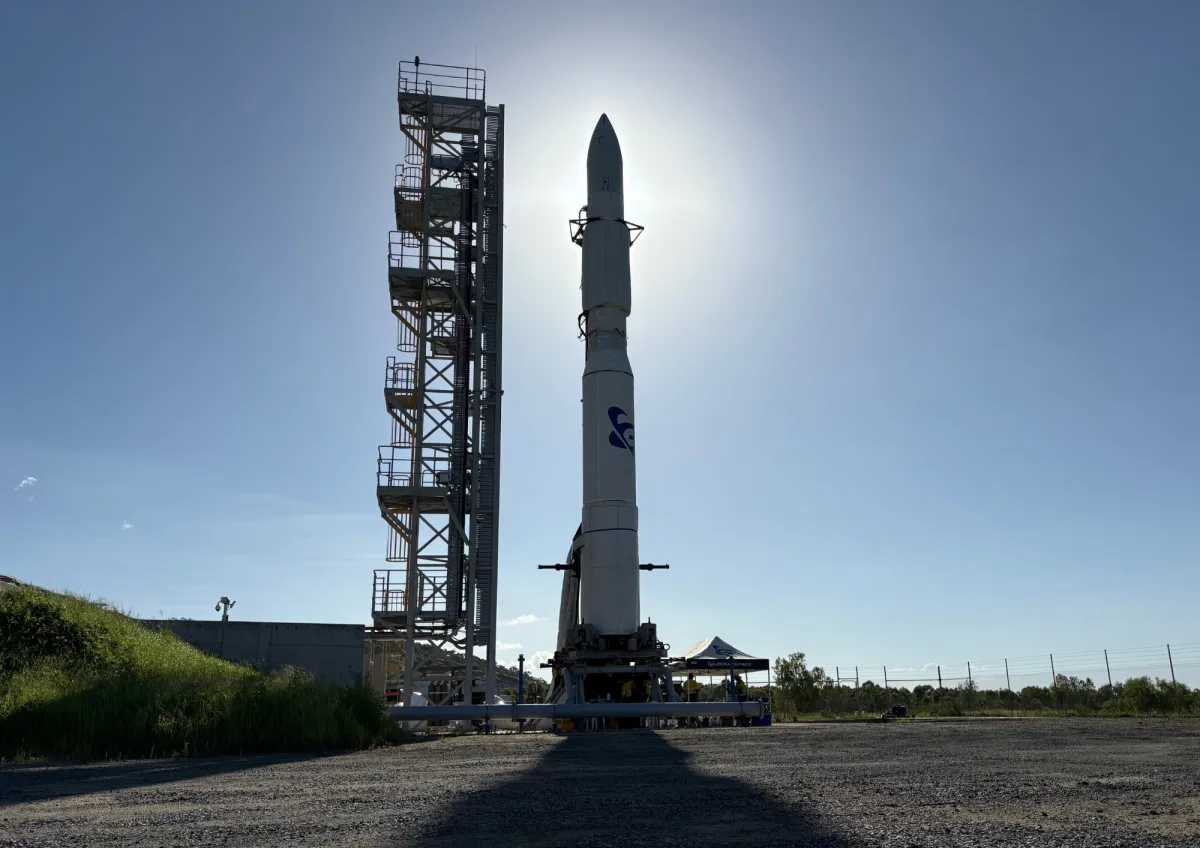
An Orbital Sciences Pegasus XL rocket launched a dedicated reboost mission for NASA’s Swift gamma-ray burst observatory. The flight may be the final one for the air-launched Pegasus XL, which has been operating since 1990.
Swift has been in orbit since 2004. Without a reboost, atmospheric drag at its altitude would eventually cause uncontrolled reentry. With the reboost complete, the observatory gets additional operational life. You can track Swift (NORAD 28485) to monitor its updated orbital parameters.
Read the full story: SpaceNews
Starship Targets 2026 Launch from Cape Canaveral
SpaceX is pushing to fly Starship from Launch Complex 39A at Kennedy Space Center before the end of 2026. Ground support equipment and infrastructure work are advancing with contractors on site.
A Florida launch site adds a second Starship pad to the picture, separate from the Starbase facility in South Texas. The orbital path from KSC will differ from Starbase trajectories, opening different inclinations for future Starship missions.
Read the full story: NASASpaceFlight.com
China’s Hongqing Technology Raises $191 Million for Satellite Manufacturing
Hongqing Technology, the satellite manufacturing arm of Chinese launch company Landspace, closed a $191 million funding round. It’s one of the largest single raises recorded for a Chinese commercial satellite manufacturer.
Hongqing’s backing from Landspace — the company behind the Zhuque-2 methane rocket — positions it to supply hardware for emerging Chinese commercial constellations. Increased Chinese commercial satellite production means more objects to track; KeepTrack users can filter by country of origin to monitor the growing Chinese commercial catalog.
Read the full story: SpaceNews
Falcon 9 Orbits 24 Starlink Satellites from Vandenberg
A SpaceX Falcon 9 launched 24 Starlink satellites from Vandenberg Space Force Base on July 1, 2026. The booster was B1100, recovered on droneship Of Course I Still Love You.
This was mission Starlink 17-46. The new satellites will join the existing Starlink shell in a sun-synchronous or mid-inclination orbit out of Vandenberg. Track the Starlink constellation in KeepTrack to see the updated deployment pattern as the new vehicles raise to operational altitude.
Read the full story: Space.com
Satellite of the Day
ONEWEB-0497
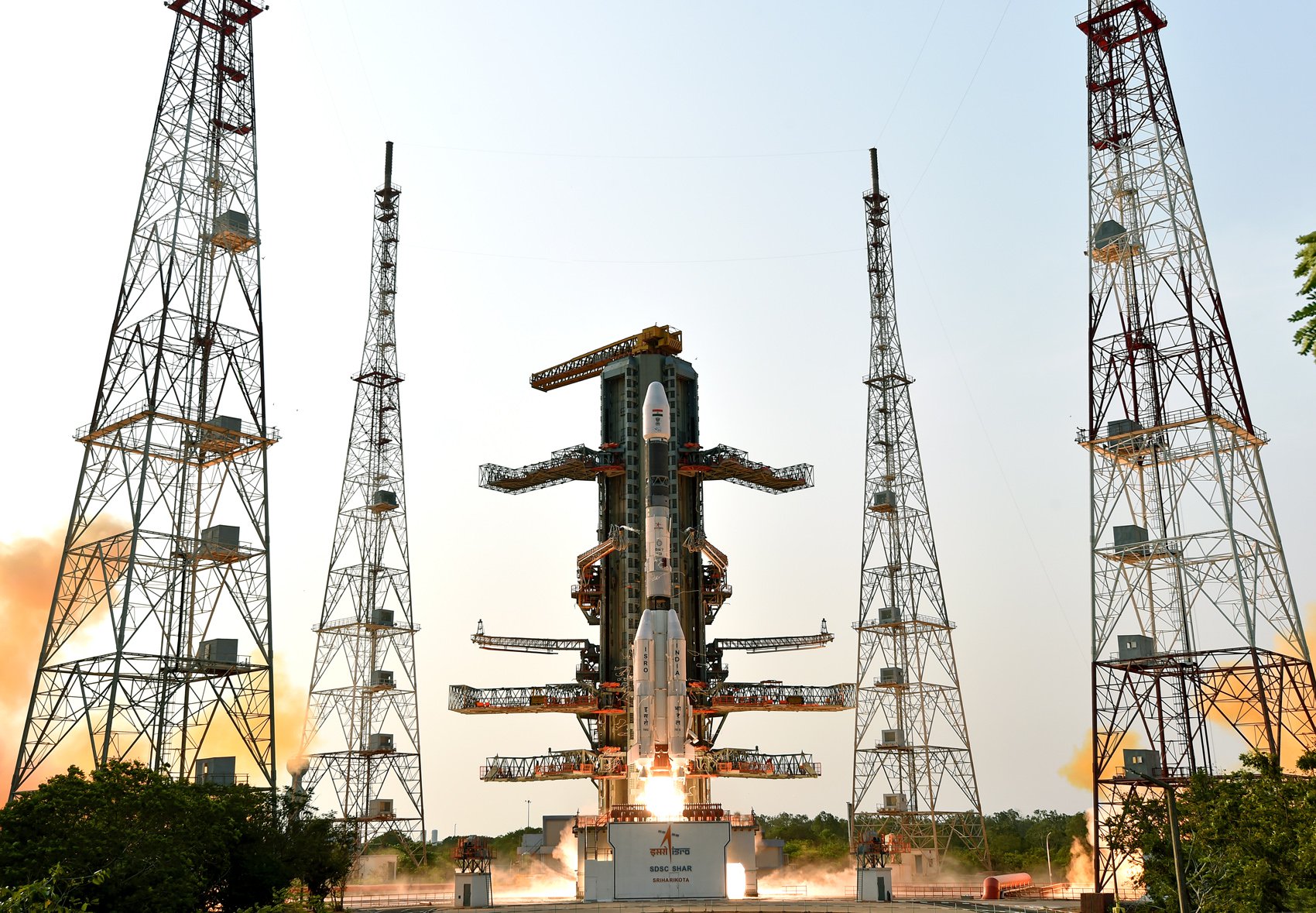
ONEWEB-0497 is part of OneWeb’s ambitious global broadband constellation, designed to deliver high-speed internet connectivity to underserved regions around the world. Launched on October 22, 2022, aboard an LVM3 rocket from Satish Dhawan Space Centre in India, this Ku-Band communication satellite represents one of many identical units being deployed to create seamless polar and near-polar coverage. With its seven-year design life and Hall effect thrusters for orbital maneuvering, ONEWEB-0497 is built to maintain its position and support the constellation’s growing network capacity.
OneWeb’s constellation strategy differs from competitors by prioritizing polar coverage—notice the exceptionally high 87.9° inclination, which allows the constellation to serve arctic and near-polar regions that traditional geostationary satellites cannot reach effectively. At just 148 kilograms at launch, these compact satellites pack impressive capability into a lightweight package, making them cost-effective to deploy in the large numbers needed for global coverage. The OneWeb program has weathered significant challenges, including bankruptcy during the COVID-19 pandemic, but has since resumed operations under new ownership and continues its mission to bridge the global digital divide.
| Detail | Value |
|---|---|
| NORAD ID | 54116 |
| Operator | OneWeb (UK) |
| Launch Date | October 22, 2022 |
| Orbit | Low Earth Orbit, 87.919° inclination |
| Purpose | Communication (Ku-Band broadband) |
| Status | Active |
Track this satellite in real-time: Track ONEWEB-0497
Upcoming Space Launches
July 4
- China Aerospace Science and Technology Corporation Long March 6A:
- Unknown Payload from Taiyuan Satellite Launch Center, Launch Complex 9A, People’s Republic of China (09:21 UTC) Details are not yet available for this mission. The Long March 6A is a further development of the Long March 6, featuring two YF-100 engines on the first stage augmented by four solid rocket boosters — making it China’s first rocket with solid rocket boosters. Launch Preview
July 5
-
SpaceX Falcon 9 Block 5:
- Starlink Group 10-50 from Cape Canaveral Space Force Station, Space Launch Complex 40, FL, USA (10:36 UTC) A Falcon 9 will launch 29 Starlink V2 Mini Optimized satellites to low Earth orbit. Booster B1090, flying for the 13th time, will land on drone ship A Shortfall of Gravitas in the Atlantic Ocean. Watch Live Launch Preview
-
China Aerospace Science and Technology Corporation Long March 8A:
- SpaceSail Polar Group TBD from Wenchang Space Launch Site, Commercial LC-1, People’s Republic of China (13:32 UTC) A communications mission to polar orbit aboard the Long March 8A, an enhanced variant of the Long March 8 capable of delivering up to 7 tonnes to a 700 km sun-synchronous orbit. The rocket features a larger 3.35-metre liquid hydrogen/liquid oxygen second stage powered by two upgraded YF-75H engines, and can carry a 5.2-metre diameter payload fairing. Launch mass is approximately 371 tonnes. Launch Preview
July 7
- SpaceX Falcon 9 Block 5:
- Transporter 17 (Dedicated SSO Rideshare) from Vandenberg Space Force Base, Space Launch Complex 4E, CA, USA (07:10 UTC) A Falcon 9 will carry 81 payloads on a dedicated rideshare mission to sun-synchronous orbit. Booster B1097, flying for its 11th time, will land on drone ship Of Course I Still Love You in the Pacific Ocean. Watch Live
July 9
- SpaceX Falcon 9 Block 5:
- Starlink Group 10-42 from Cape Canaveral Space Force Station, Space Launch Complex 40, FL, USA (09:05 UTC) A Falcon 9 will launch 29 Starlink V2 Mini Optimized satellites to low Earth orbit. Booster B1090 will land on drone ship A Shortfall of Gravitas in the Atlantic Ocean. Watch Live
July 10
- China Aerospace Science and Technology Corporation Long March 10B:
- Demo Flight from Wenchang Space Launch Site, Commercial LC-2, People’s Republic of China (05:12 UTC) The demonstration flight of the Long March 10B, a reusable launch vehicle derived from the Long March 10A’s first stage core. The vehicle is powered by seven YF-100 series kerosene/liquid oxygen staged-combustion engines on the first stage and a single YF-219 methane/liquid oxygen engine on the second stage. The first stage is designed to be recovered downrange via a barge-mounted arrestor net system. The Long March 10B has a reported low Earth orbit capacity of 16,000 kg.
July 11
- SpaceX Falcon 9 Block 5:
- Starlink Group 17-48 from Vandenberg Space Force Base, Space Launch Complex 4E, CA, USA (02:00 UTC) A Falcon 9 will launch 29 Starlink V2 Mini Optimized satellites to low Earth orbit. Booster B1090 will land on drone ship A Shortfall of Gravitas. Watch Live
July 12
-
Orienspace Technology Gravity-1:
- Unknown Payload from Haiyang Oriental Spaceport, Haiyang offshore launch location (02:00 UTC) Details for this payload are not yet available. Gravity-1 is a four-stage all-solid launch vehicle developed by Chinese private company OrienSpace, capable of delivering up to 6,500 kg to low Earth orbit. It made its maiden flight in January 2024 and launches from an offshore platform. Launch Preview
-
Skyroot Aerospace Vikram-I:
- Demo Flight from Satish Dhawan Space Centre, First Launch Pad, India (05:00 UTC) The inaugural flight of Skyroot Aerospace’s Vikram-I orbital launch vehicle, carrying several cubesats with identities yet to be confirmed. Vikram-I is a four-stage rocket with three solid-fuel stages and a hypergolic upper stage, capable of delivering up to 350 kg to low Earth orbit. It is developed by Indian private space company Skyroot Aerospace.
July 13–14
- SpaceX Falcon 9 Block 5:
- Starlink Group 15-14 from Vandenberg Space Force Base, Space Launch Complex 4E, CA, USA (22:38 UTC) A Falcon 9 will launch 29 Starlink V2 Mini Optimized satellites to low Earth orbit. Booster B1090 will land on drone ship A Shortfall of Gravitas. Watch Live
July 14
- Russian Federal Space Agency (ROSCOSMOS) Soyuz 2.1a:
- Soyuz MS-29 from Baikonur Cosmodrome, Site 31/6, Republic of Kazakhstan (14:47 UTC) Soyuz MS-29 will carry a crew of three to the International Space Station, including Roscosmos cosmonauts Pyotr Dubrov and Anna Kikina and NASA astronaut Anil Menon. The Soyuz 2.1a features a fully digital flight control system and is the current standard vehicle for crewed Soyuz and Progress missions to the station. This mission is part of the International Space Station programme.
Schedule Changes
- Long March 8A | SpaceSail Polar Group TBD: Status upgraded from To Be Determined to Go for Launch.
- Long March 10B | Demo Flight: Status upgraded from To Be Confirmed to Go for Launch.
- Gravity-1 | Unknown Payload: Status updated from To Be Determined to To Be Confirmed.
- Vikram-I | Demo Flight: Newly added to the manifest, currently To Be Confirmed for July 12, 2026.
Note: Launch dates and times are subject to change due to technical or weather considerations.

Maurice Stellarski