· space brief · 4 min read
Space Brief 26 Oct 2025
Today's brief covers a new Space Force contract for advanced tracking systems, innovative debris removal strategies, pivotal new satellite launches, and significant updates in air quality tracking from orbit.

📰Top Stories
US Space Force Boosts Tracking with Vantor Partnership
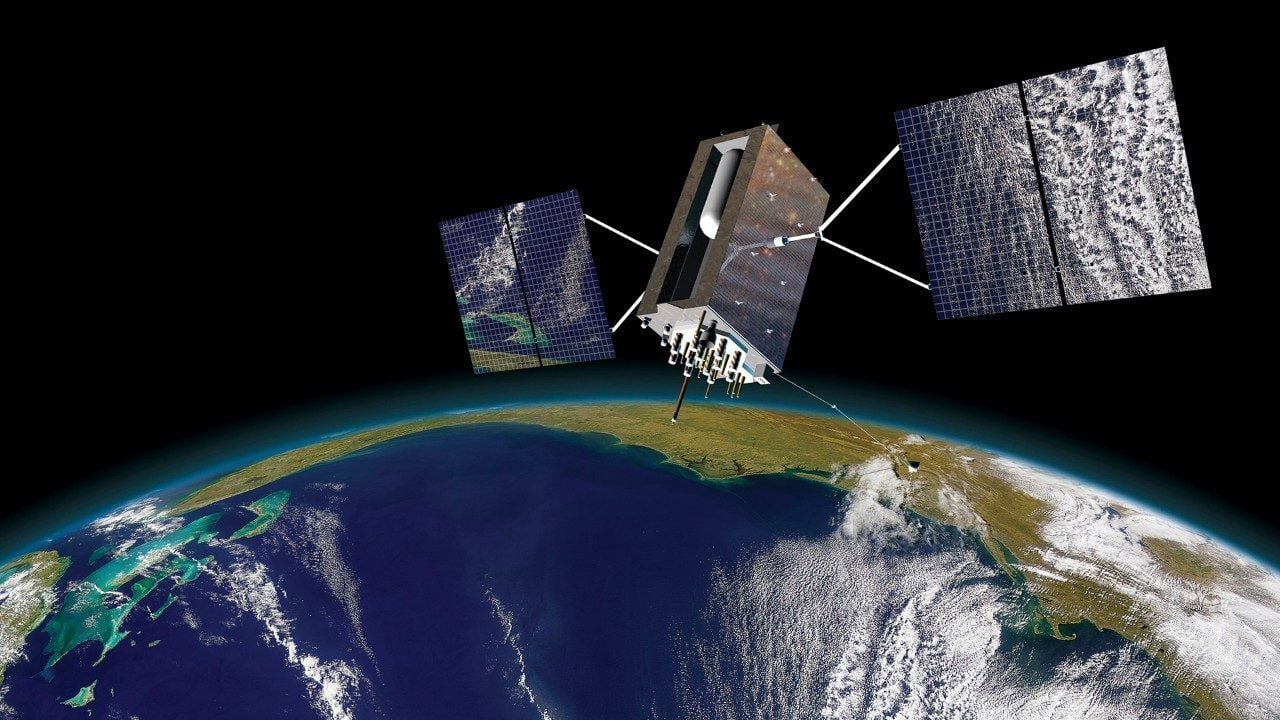
Vantor has secured a contract with the US Space Force to enhance tracking and analysis of space objects of interest using advanced non-Earth imaging technology. This initiative will provide crucial updates on object positions, trajectories, and orbit changes that may threaten US assets in space, addressing current gaps in the ground sensor network.
Read the full story: SpaceDaily
Could Ion Beams Tackle Space Debris?
A promising concept in space debris management could involve using ion beams to nudge hazardous debris out of popular orbits. The ALBATOR project explores this innovative solution to the increasing space debris problem, potentially unlocking safer orbital zones for current and future missions.
Read the full story: Space.com
SpaceX’s Record-Breaking Year with Starlink Launches
SpaceX launched another batch of Starlink satellites, marking the company’s 135th launch of 2025—a new record. The mission adds to its growing constellation, emphasizing SpaceX’s intensive launch cadence and the scale of its satellite network expansion plans.
Read the full story: Space.com
H3 Rocket Delivers New Generation Cargo to ISS
Japan has successfully launched the H3 rocket carrying its first HTV-X cargo spacecraft to the International Space Station. This spacecraft is designed for missions extending beyond low Earth orbit, signifying a strategic advancement in reach and capability for international space operations.
Read the full story: SpaceNews
Sentinel-4’s Breakthrough in Air Quality Monitoring
Europe’s Sentinel-4 mission has released its first high-resolution air pollution maps, available hourly. These observations form part of EUMETSAT’s Meteosat Third Generation satellite, representing a significant leap forward in real-time environmental monitoring and data availability across Europe.
Read the full story: SpaceDaily
Upcoming Starlink Launch from Cape Canaveral
SpaceX is set for another significant launch with 28 Starlink satellites aboard a Falcon 9 rocket from Cape Canaveral. This launch will further bolster the Starlink fleet, supporting global internet connectivity efforts and solidifying SpaceX’s presence as a leader in satellite launches.
Read the full story: Spaceflight Now
🛰️Satellite Spotlight
- Satellite Name: ONEWEB-0277
- NORAD ID: 48995
- Launch Date: July 1, 2021
- Mission: ONEWEB-0277 is part of the OneWeb constellation focused on providing global broadband internet coverage through a network of low Earth orbit satellites.
- Orbit: LEO (Low Earth Orbit)
- Operator: OneWeb
- Fun Fact: This satellite is designed to operate for over 7 years, showcasing the longevity and reliability of the OneWeb satellite platform.
Track this satellite in real-time on our web app: Track ONEWEB-0277
🌌Space Weather
Next 24 Hours
-
Radio Blackouts Probability
- Minor: 10
- Major: 1
- Risk: None
-
Solar Radiation
- Probability: 1
- Risk: None
-
Geomagnetic Storming
- Scale: 0
- Impact: none
- Activity: Low
-
Impact Summary
- Next 24 hours: No risk of radio blackouts.
- No risk of solar radiation storms.
- Geomagnetic outlook: G1 (Minor) conditions likely on 28 Oct, with a chance for G2 (Moderate) due to the anticipated influence from a positive polarity coronal hole.
- Slight chance for isolated R1-R2 (Minor-Moderate) radio blackouts continues over 26-28 Oct.
Long Term Forecast
- Forecast of Solar and Geomagnetic Activity: 20 October - 15 November 2025
- Moderate solar activity expected on 31 Oct - 15 Nov due to the return of Region 4246.
- Low levels are expected from 20 Oct - 30 Oct, and 14-15 Nov.
- No proton events anticipated at geosynchronous orbit.
- Greater than 2 MeV electron flux at geosynchronous orbit expected to reach high levels on 21-25 Oct and 29 Oct - 15 Nov due to recurrent CH HSS influences.
- Geomagnetic field activity expected to reach G1-G2 (Minor-Moderate) storm levels on 28-30 Oct and 08-09, 15 Nov due to recurrent CH HSS influences.
- Isolated active periods expected on 20, 31 Oct, and 07 Nov also due to recurrent CH HSS activity.
- Quiet to unsettled levels expected on the remaining days of the outlook period.
🚀 Upcoming Space Launches
October 26
- SpaceX Falcon 9:
- Starlink Group 10-21 from Cape Canaveral Space Force Station (14:05 UTC) A batch of 28 satellites for the Starlink mega-constellation, part of SpaceX’s space-based internet communication system.
October 27
- SpaceX Falcon 9:
- Starlink Group 11-21 from Vandenberg Space Force Base (21:12 UTC) A batch of 28 satellites for the Starlink mega-constellation, part of SpaceX’s space-based internet communication system.
October 28
-
Innospace HANBIT-Nano:
- Spaceward from Alcântara Space Center, Brazil (00:00 UTC) Maiden orbital launch attempt for Innospace’s HANBIT-Nano with satellites from the Brazilian space agency, Universidade Federal do Maranhão, and Grahaa Space.
-
SpaceX Falcon 9:
- Starlink Group 10-37 from Cape Canaveral Space Force Station (13:14 UTC) A batch of 29 satellites for the Starlink mega-constellation, part of SpaceX’s space-based internet communication system.
October 30
- SpaceX Falcon 9:
- Starlink Group 11-23 from Vandenberg Space Force Base (20:06 UTC) A batch of 28 satellites for the Starlink mega-constellation, part of SpaceX’s space-based internet communication system.
October 31
- China Aerospace Science and Technology Corporation Long March 2F/G:
- Shenzhou 21 from Jiuquan Satellite Launch Center (15:34 UTC) Tenth crewed flight to the Chinese space station.
November 2
- SpaceX Falcon 9:
- Bandwagon 4 (Dedicated Mid-Inclination Rideshare) from Cape Canaveral Space Force Station (05:00 UTC) Dedicated rideshare flight with microsatellites and nanosatellites for commercial and government customers.
Note: Launch dates and times are subject to change due to technical or weather considerations.

Maurice Stellarski