KUIPER-00534 (69606)

COSPAR: 2026-140Q | Alt Name: N/A

Image
KUIPER-00534 Satellite Image
Additional Sources
Launch Details

Launch Date

June 17, 2026

Launch Site

FRGUI

Launch Pad

ELA4

Launch Vehicle

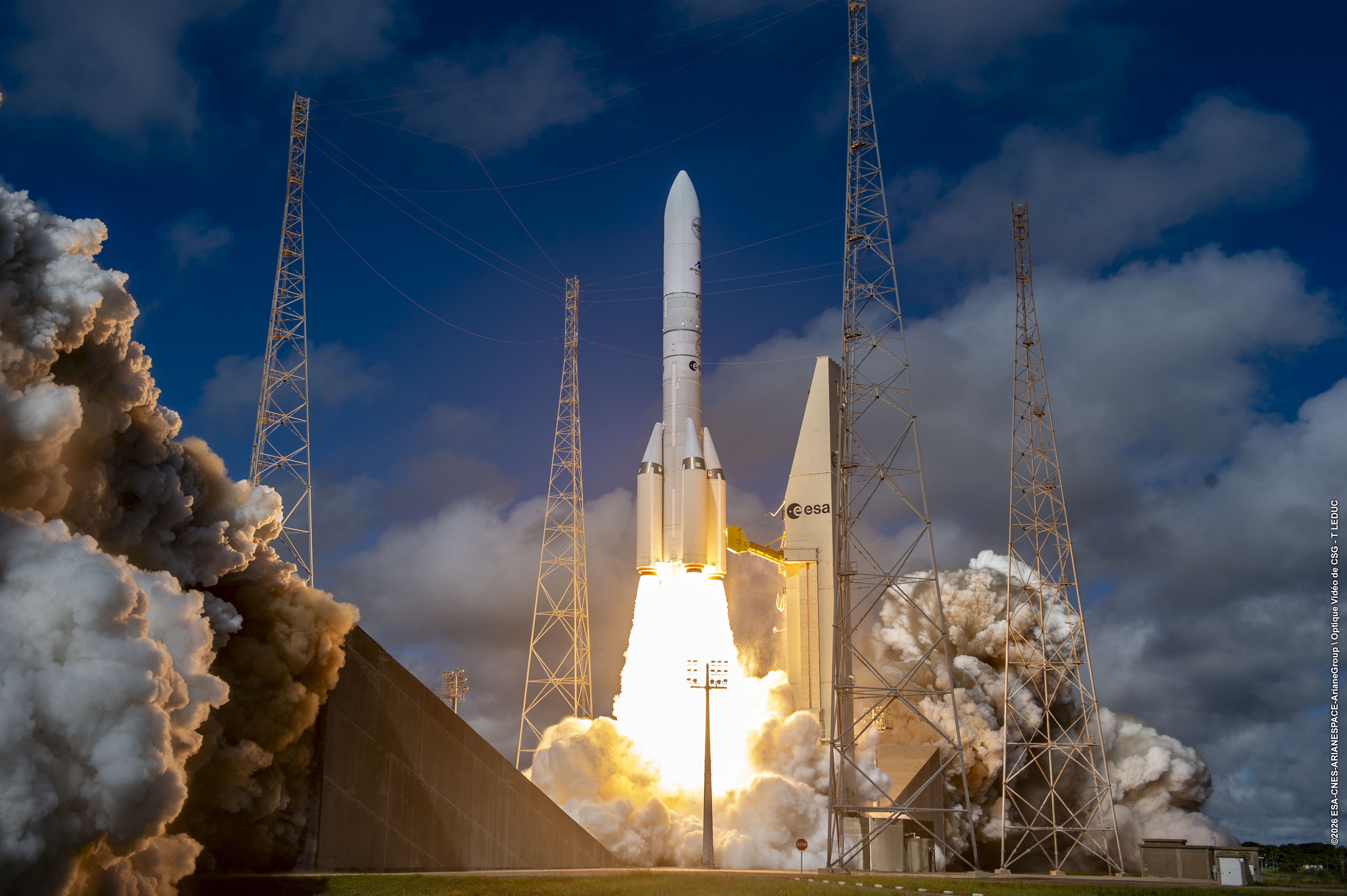
Ariane 64

Orbital Elements

NORAD ID

69606

International Designator

2026-140Q

Epoch

Sun, 19 Jul 2026 12:40:27 GMT

Apogee

Calculating...

Perigee

Calculating...

Inclination

51.88°

Right Ascension

242.00°

Eccentricity

Calculating...

Argument of Perigee

285.27°

Period

93.58 min

Mean Motion

15.39 rev/day

Latitude

Calculating...

Longitude

Calculating...

Altitude

Calculating...

Velocity

Calculating...

Polar Plot
3D Visualization
Basic Satellite Info

Name

KUIPER-00534

Alternative Name

N/A

Type

Payload

Status

Unknown

Owner

KUIP

Country

United States

Constellation

N/A

Related Satellites

Major Events

N/A

Latest TLEs
1 69606U 26140Q   26200.52809859  .00015376  00000+0  40297-3 0  9992
2 69606  51.8798 241.9972 0013609 285.2739  74.6743 15.38790512  6217

Source: Celestrak

Summary

Apologies, there is no summary for this satellite yet. I am working to generate these for every object in the catalog, but it is going to take time.

Physical Characteristics

Length

1.8

Diameter

0.7

Span

5.0

Dry Mass

490

Launch Mass

490

Shape

Box + 2 pan

Radar Cross Section

Unknown

Visual Magnitude

Unknown

Color

Unknown

Material Composition

Unknown

Technical Details

Payload

Kuiper LE03-15

Purpose

Unknown

Mission

Unknown

Manufacturer

KUIP

Life Expectancy

Unknown

Bus

Kuiper

Configuration

Unknown

Motor

Unknown

Equipment

Unknown

Power System

Unknown

ADCS

Unknown

Transmitter Frequency

Unknown

Map
This tool will help you track the satellite's position and predict its upcoming passes over your location. Simply input the coordinates or click the geolocation button to get started.
Next Pass
Azimuth Elevation Time (Local)
Start Azimuth
Max Elevation
Stop Azimuth
Time Until
Pass Duration

Satellite Articles

View All Posts »

Learn more about satellites and other related topics.

Pentagon Cancels OPIR Polar After Northrop Sensor Delivery | KeepTrack Space Brief

Pentagon Cancels OPIR Polar After Northrop Sensor Delivery | KeepTrack Space Brief

Pentagon cancels Next-Generation OPIR Polar program after Northrop Grumman delivered sensor payload. LEO and MEO alternatives deemed sufficient for missile-warning coverage.
Space Brief 2 Jun 2025

Space Brief 2 Jun 2025

Today's edition covers SpaceX's Starlink launch delay, a breakthrough in ceramic manufacturing for space, and Momentus's orbital tech demo, among other headlines.

X Report 23 Nov 2024

X Report 23 Nov 2024

SpaceX advances with Starship tests as Starlink continues global expansion. Key infrastructure updates from Cape Canaveral involve multiple industry players.

Space Brief 8 Jan 2025

Space Brief 8 Jan 2025

Today's highlights include China's launch of Shijian-25 for on-orbit refueling tests, Pentagon's investment in defense technologies, and key military upgrades.

Space Brief 18 Aug 2025

Space Brief 18 Aug 2025

Today's Space Brief covers significant satellite launches by SpaceX, an automated collision avoidance system development, Rocket Lab's strategic acquisition, and the rise of corporate-named satellites in orbit.

The Day Humanity Got Its First Close-up of the Future Apollo Landing Site

The Day Humanity Got Its First Close-up of the Future Apollo Landing Site

Sixty years ago, a pioneering spacecraft called Ranger 8 captured thousands of detailed photographs of the lunar surface before intentionally crashing into the Moon, helping pave the way for humanity's first steps on another world

SpaceX IPO Day 1: Falcon 9 Flies, Musk Eyes $1T | KeepTrack X Report

SpaceX IPO Day 1: Falcon 9 Flies, Musk Eyes $1T | KeepTrack X Report

SpaceX surged 19% on Nasdaq debut as Falcon 9 B1093 deployed 24 Starlink satellites — the 1,500th launched in 2026 — while Dragon CRS-34 heads home.

The Telescope That Needed Glasses

The Telescope That Needed Glasses

On April 25, 1990, the Space Shuttle Discovery's robotic arm lifted a 11,110-kilogram barrel of mirrors and instruments out of the payload bay and released it into orbit. Six weeks later, the first images came back badly out of focus. The Hubble Space Telescope had been ground to the wrong prescription, and America had just spent $2.5 billion on what the press was calling a 'technoturkey.'