Latest Developments
SpaceX marked a historic double milestone on June 15, 2026, executing its first Falcon 9 launch as a publicly traded company just hours after its Nasdaq debut, with booster B1093 lifting off from Vandenberg Space Force Base at 8:34 a.m. PDT and deploying 24 Starlink V2 Mini satellites — including the 1,500th Starlink launched so far this year. The stock surged 19% on its first trading day as CEO Elon Musk projected the company could reach $1 trillion in annual revenue by 2030, a figure that sent institutional investors scrambling. Renowned fund manager Ron Baron followed the IPO with a $1 billion purchase of SPCX shares, bringing Baron Capital’s total SpaceX holdings to an eye-watering $25 billion. Meanwhile, with the constellation now standing at 12,318 satellites launched and 10,655 actively working on orbit, SpaceX’s Dragon CRS-34 cargo capsule is set to depart the International Space Station on June 16, closing out another busy operational week.
Space Safety
The current Starlink conjunction threat picture shows two MODERATE risk events within the June 7-10 window, with STARLINK-30526 presenting the highest collision probability at 0.3026 against STARLINK-35247 on Jun 10, followed by STARLINK-1133 and STARLINK-34975 at 0.1047 on Jun 7. The remaining eight conjunctions are classified as LOW risk with probabilities below 0.09. Concurrently, four Starlink satellites are predicted to reenter within a 48-hour window (Jun 15-17, 2026), with STARLINK-1815 exhibiting the largest decay window at 480 minutes, indicating higher uncertainty in the reentry prediction.
| Risk | Starlink Sat | Other Object | Status | Min Range (km) | Rel Speed (km/s) | Max Prob | Time of Closest Approach |
|---|---|---|---|---|---|---|---|
| MODERATE | STARLINK-30526 | STARLINK-35247 | Operational | 0.029 | 1.352 | 0.3026 | Jun 10, 18:10 UTC |
| MODERATE | STARLINK-1133 | STARLINK-34975 | Operational | 0.054 | 9.686 | 0.1047 | Jun 7, 16:23 UTC |
| LOW | STARLINK-30585 | FALCONSAT-6 | Operational | 0.034 | 7.762 | 0.0864 | Jun 13, 01:24 UTC |
| LOW | STARLINK-3060 | COSMOS 2221 | Unknown | 0.027 | 14.628 | 0.0752 | Jun 9, 06:53 UTC |
| LOW | STARLINK-6263 | FLOCK 4G-7 | Operational | 0.029 | 14.277 | 0.0743 | Jun 11, 23:42 UTC |
| LOW | STARLINK-30385 | ELECTRON KICK STAGE R/B | Non-operational | 0.031 | 13.435 | 0.0740 | Jun 11, 04:00 UTC |
| LOW | STARLINK-36171 | COSMOS 1275 DEB | Non-operational | 0.036 | 11.423 | 0.0659 | Jun 11, 08:28 UTC |
| LOW | STARLINK-36648 | QMR-KWT-2 (RS95S) | Operational | 0.037 | 12.875 | 0.0554 | Jun 8, 05:44 UTC |
| LOW | STARLINK-1262 | STARLINK-35484 | Operational | 0.085 | 0.077 | 0.0551 | Jun 9, 13:02 UTC |
| LOW | STARLINK-35892 | YAOGAN-35 01A | Operational | 0.049 | 3.857 | 0.0492 | Jun 9, 13:34 UTC |
| Satellite | NORAD ID | Predicted Decay | Window (min) | Inclination | Lat | Lon |
|---|---|---|---|---|---|---|
| STARLINK-1736 | 46585 | Jun 15, 21:31 UTC | 1 | 53.0° | -48.9° | 54.7° |
| STARLINK-5017 | 53915 | Jun 15, 21:37 UTC | 60 | 53.2° | -6.6° | 154.4° |
| STARLINK-1654 | 46326 | Jun 16, 01:45 UTC | 1 | 53.0° | 7.1° | 272.1° |
| STARLINK-1815 | 46713 | Jun 17, 18:21 UTC | 480 | 53.0° | -9.4° | 228.9° |
Detailed Coverage
SpaceX’s First Launch as a Public Company: Starlink 17-54 Lifts Off from Vandenberg
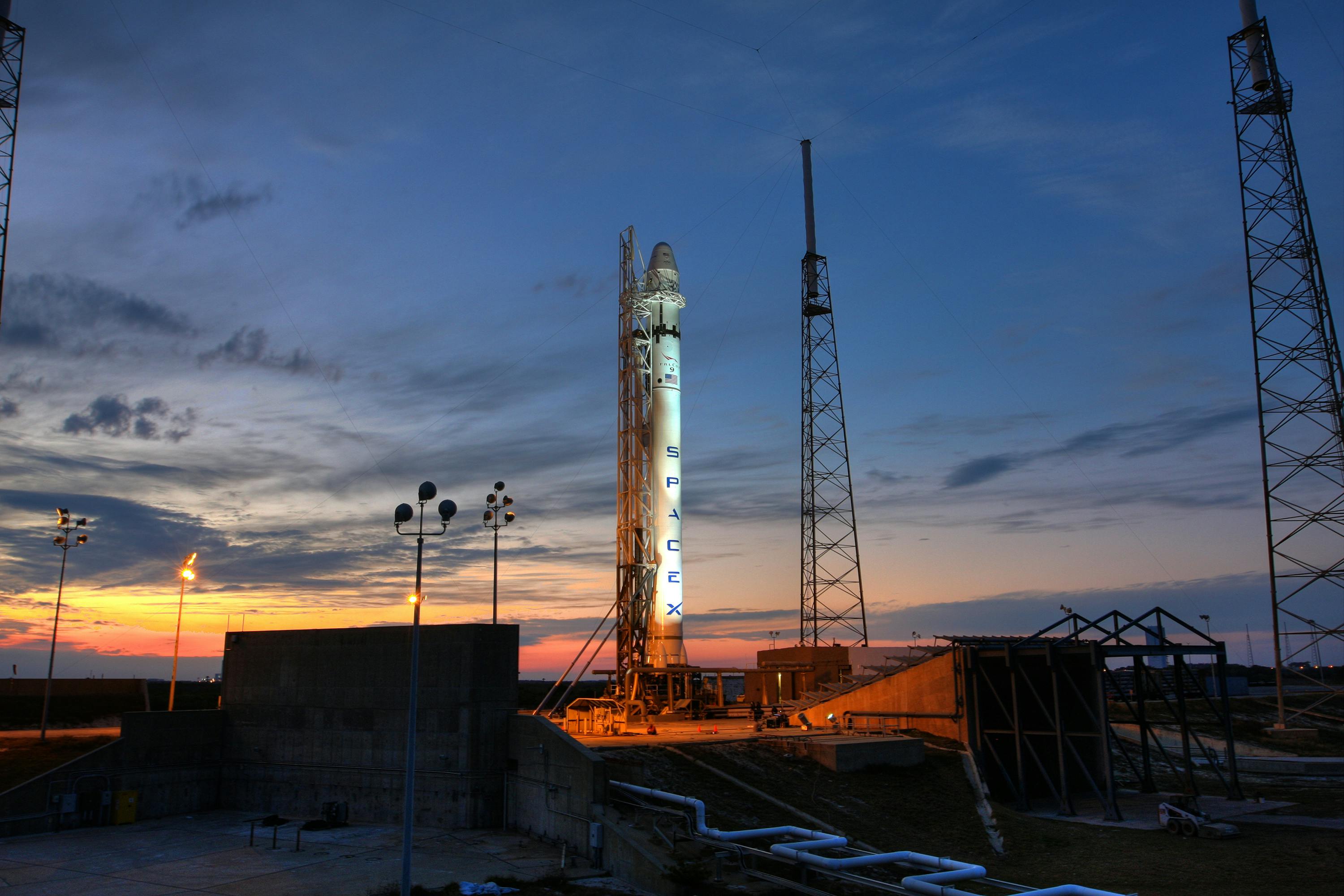
In what may be the most symbolically loaded Falcon 9 flight in the rocket’s history, SpaceX executed the Starlink 17-54 mission from Space Launch Complex 4E at Vandenberg Space Force Base at 8:34 a.m. PDT on June 15, 2026 — the same morning the company’s shares began trading on the Nasdaq under the ticker SPCX. Booster B1093, flying its 14th mission, delivered 24 Starlink V2 Mini satellites to low Earth orbit before returning to the drone ship for a successful recovery.
The mission carried added numerical significance: these 24 satellites included the 1,500th Starlink launched in 2026 alone, underscoring the relentless cadence SpaceX has maintained even amid the monumental corporate transition of going public. For satellite trackers, the fresh batch will join a working constellation of 10,655 operational birds — a number that continues to climb week over week.
Read the full story: Spaceflight Now
IPO Surge: SpaceX Stock Soars 19% on Nasdaq Debut as Musk Targets $1 Trillion Revenue
SpaceX’s first day on the Nasdaq was nothing short of spectacular, with shares of SPCX climbing 19% in opening trading and setting the tone for what Elon Musk described as the company’s next phase of growth. Musk used the occasion to publicly attach a staggering revenue target to Starlink and the broader SpaceX enterprise: $1 trillion annually by 2030, a number that would place SpaceX among the most valuable companies in human history.
The projection is grounded, at least in part, in Starlink’s rapidly expanding subscriber base and the company’s near-monopoly on commercial orbital launch services. Whether or not the $1 trillion figure materializes, the IPO itself marks a profound shift — SpaceX is now accountable to public markets in ways it never was as a private entity, adding a new layer of scrutiny to every launch, every anomaly, and every regulatory filing.
Read the full story: Teslarati
Ron Baron Doubles Down: $1 Billion SPCX Buy Pushes Holdings to $25 Billion
Legendary growth investor Ron Baron, founder and CEO of Baron Capital, wasted no time after SpaceX’s record-breaking IPO before making his confidence financially explicit. Baron announced a fresh $1 billion purchase of SPCX shares in the immediate wake of the public listing, lifting Baron Capital’s cumulative SpaceX investment to $25 billion — a position that stands as one of the largest single-investor bets on any aerospace company in history.
Baron has been a long-term Musk bull, holding substantial positions in Tesla as well, but the scale of this SpaceX commitment signals that institutional money views Starlink’s internet revenue and the company’s Starship ambitions as transformative rather than speculative. For the broader space industry, the IPO and the institutional appetite it has attracted may unlock a new wave of capital flows into commercial space ventures.
Read the full story: Teslarati
New Era, Same Rocket: What SpaceX Going Public Means for Launch Operations
The symbolic weight of Starlink 17-54 being SpaceX’s first launch as a public company has not been lost on industry observers, but the operational reality is equally striking — the company barely paused. Within hours of its Nasdaq debut, a flight-proven booster was standing on a California launch pad and proceeding through a routine countdown, a demonstration of how deeply industrialized SpaceX’s launch infrastructure has become.
That normalization of high-cadence spaceflight is itself one of the strongest arguments for the company’s valuation. With 12,318 Starlink satellites launched to date and more than 10,600 actively working in orbit, the constellation is approaching a scale where it can offer meaningful global broadband redundancy — the foundation on which Musk’s trillion-dollar revenue projection ultimately rests.
Read the full story: Teslarati
Dragon CRS-34 Departs ISS: Cargo Capsule Heads Home on June 16
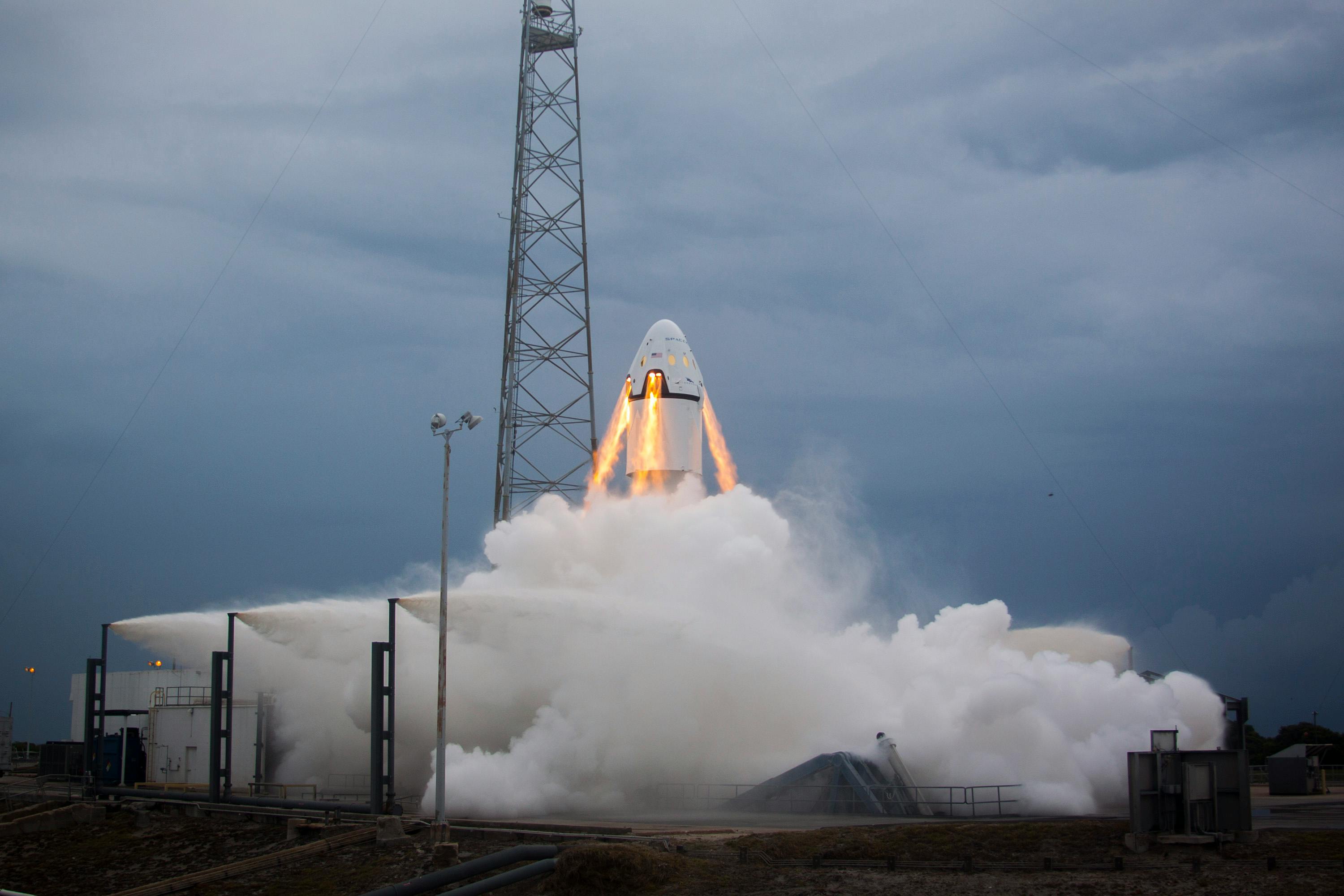
Closing out a week packed with corporate firsts, SpaceX’s Dragon cargo spacecraft is scheduled to undock from the International Space Station and begin its return to Earth on June 16, 2026. The CRS-34 mission will wrap up its ISS stay by splashing down off the coast of Florida, returning scientific experiments, hardware, and crew provisions to ground teams.
Dragon’s return cadence has become as routine as Falcon 9 launches themselves, but each splashdown represents a critical logistics lifeline for ISS operations. Satellite trackers can follow the capsule’s deorbit burn and reentry arc in real time, with the spacecraft’s radar cross-section making it a trackable object through much of its descent profile before atmospheric heating disrupts the return.
Read the full story: Space.com
By the Numbers: Starlink 17-54 Mission Profile and Booster History
For those tracking the technical details of the June 15 launch, the Starlink 17-54 mission offers a clean case study in SpaceX’s reusability economics. Booster B1093 completed its 14th flight, a figure that continues to push the demonstrated operational ceiling for Falcon 9 first stages. The 24 V2 Mini satellites deployed represent the current standard manifest for Vandenberg-based Starlink missions targeting mid-inclination orbital shells.
From a tracking perspective, the newly deployed batch will spend several days maneuvering from their insertion orbit to their operational altitude, a period during which ground observers can spot them in their characteristic “train” formation before they disperse into the broader constellation. With over 10,655 satellites already working on orbit, identifying new arrivals requires precise ephemeris data — exactly the use case KeepTrack was built for.
Read the full story: Space.com
Constellation Status
The Starlink constellation remains unchanged since the last check, maintaining 12,318 total satellites launched with 10,671 currently in orbit. Of these in-orbit satellites, 10,655 are operational while 1,647 have decayed from the constellation.
- Total Launched: 12318
- Total On Orbit: 10671
- Total Working: 10655
Track Starlink satellites in real-time: Track Starlink