OBJECT D (67749)

COSPAR: 2026-027D | Alt Name: N/A

Image
OBJECT D Satellite Image
Additional Sources
Launch Details

Launch Date

February 12, 2026

Launch Site

SCSLA

Launch Pad

Unknown

Launch Vehicle

Unknown

Orbital Elements

NORAD ID

67749

International Designator

2026-027D

Epoch

Sun, 19 Jul 2026 14:44:48 GMT

Apogee

Calculating...

Perigee

Calculating...

Inclination

97.51°

Right Ascension

328.75°

Eccentricity

Calculating...

Argument of Perigee

110.71°

Period

94.72 min

Mean Motion

15.20 rev/day

Latitude

Calculating...

Longitude

Calculating...

Altitude

Calculating...

Velocity

Calculating...

Polar Plot
3D Visualization
Explore in the Catalog
Basic Satellite Info

Name

OBJECT D

Alternative Name

N/A

Type

Unknown

Status

Operational

Owner

Unknown

Country

China

Constellation

N/A

Related Satellites

Major Events

N/A

Latest TLEs
1 67749U 26027D   26200.61444698  .00003879  00000+0  18149-3 0  9994
2 67749  97.5098 328.7469 0011401 110.7124 249.5334 15.20300507 23845

Source: Celestrak

Summary

Apologies, there is no summary for this satellite yet. I am working to generate these for every object in the catalog, but it is going to take time.

Physical Characteristics

Length

N/A

Diameter

N/A

Span

N/A

Dry Mass

N/A

Launch Mass

N/A

Shape

N/A

Radar Cross Section

Unknown

Visual Magnitude

Unknown

Color

Unknown

Material Composition

Unknown

Technical Details

Payload

Unknown

Purpose

Unknown

Mission

Unknown

Manufacturer

Unknown

Life Expectancy

Unknown

Bus

Unknown

Configuration

Unknown

Motor

Unknown

Equipment

Unknown

Power System

Unknown

ADCS

Unknown

Transmitter Frequency

Unknown

Map
This tool will help you track the satellite's position and predict its upcoming passes over your location. Simply input the coordinates or click the geolocation button to get started.
Next Pass
Azimuth Elevation Time (Local)
Start Azimuth
Max Elevation
Stop Azimuth
Time Until
Pass Duration

Satellite Articles

View All Posts »

Learn more about satellites and other related topics.

NASA Cancels Draper Lunar Lander; Skyroot Reaches Orbit, Space Brief 19 Jul 2026

NASA Cancels Draper Lunar Lander; Skyroot Reaches Orbit, Space Brief 19 Jul 2026

NASA terminated Draper's commercial lunar lander after development delays. Meanwhile, Skyroot Aerospace's Vikram-1 became India's first commercial rocket to reach orbit on July 18.

X Report 3 Oct 2025

X Report 3 Oct 2025

SpaceX continues to expand its reach with the successful launch of more Starlink satellites while exploring innovative military applications for satellite communications.

The Day Humanity Gained New Eyes on the Sun

The Day Humanity Gained New Eyes on the Sun

Fifteen years ago, NASA launched its most advanced solar observatory, revolutionizing our understanding of our star and transforming space weather prediction

SpaceX Logs Record 165 Launches in 2025, X Report 1 Jan 2026

SpaceX Logs Record 165 Launches in 2025, X Report 1 Jan 2026

SpaceX number of launches in 2025: a record 165 orbital flights. Starlink added 4.6M customers across 35 new markets; new Vandenberg pad offered.

SpaceX's Military Pivot Takes Center Stage, X Report 19 Jul 2026

SpaceX's Military Pivot Takes Center Stage, X Report 19 Jul 2026

This Week In Space Episode 219 examines SpaceX's expanding military ties as Starlink's constellation tops 12,552 satellites launched.

Space Brief 21 Nov 2024

Space Brief 21 Nov 2024

Today's brief covers influential space events including Space Force's interest in Starship, U.S. military constellation advancements, and technological developments in counter-drone capabilities.

Japan's H3 Returns to Flight With 6 Satellites | KeepTrack Space Brief

Japan's H3 Returns to Flight With 6 Satellites | KeepTrack Space Brief

Japan's H3 rocket successfully launched June 11, deploying 6 smallsats to orbit after December failure. First return-to-flight for JAXA's flagship heavy-lift vehicle.

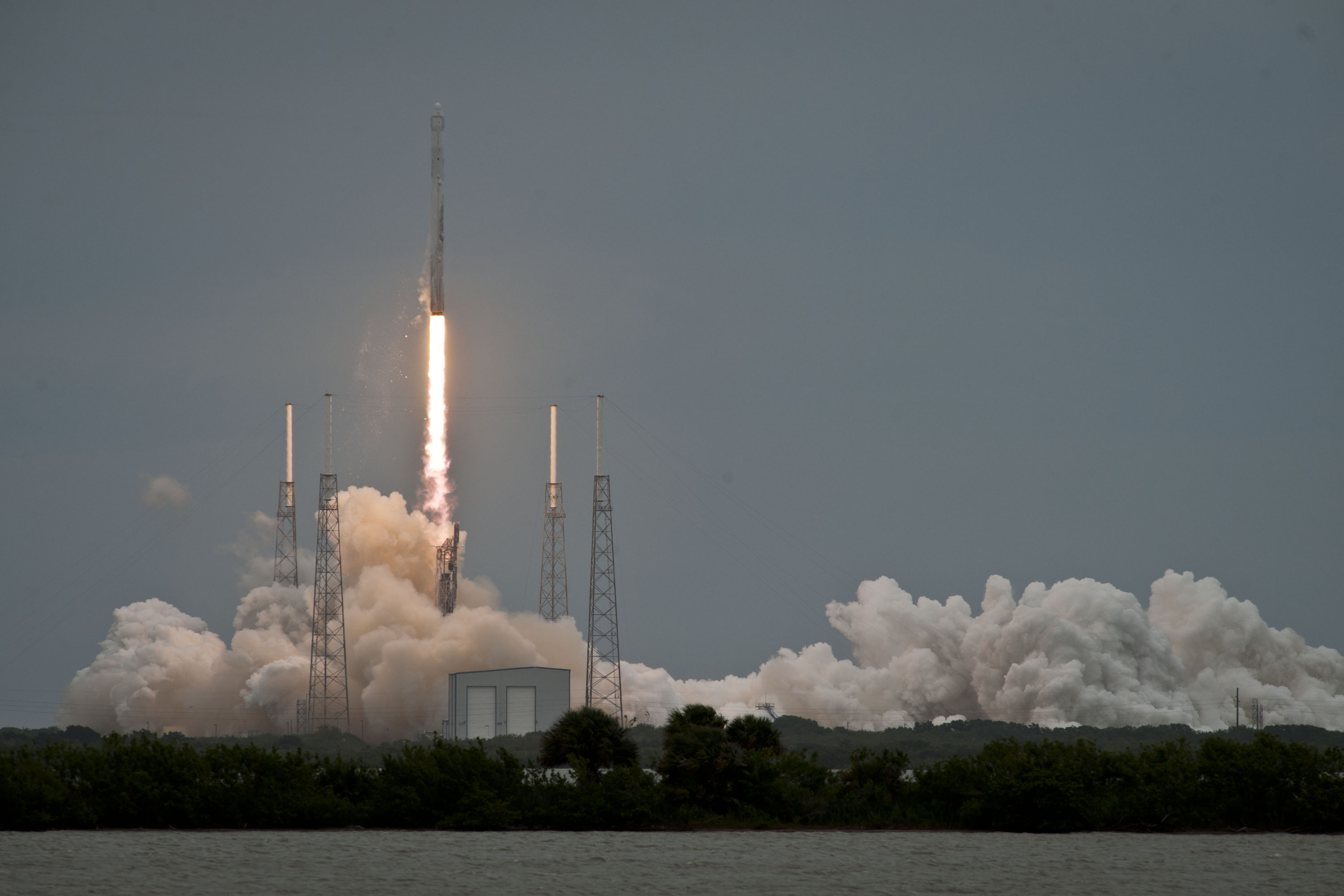
The Rocket That Refused to Sink

The Rocket That Refused to Sink

On April 18, 2014, a Falcon 9 first stage did something no orbital rocket had ever done before. It fired its engines on the way down, steered itself through the atmosphere using grid fins that did not yet exist, and touched the Atlantic Ocean softly enough to survive the impact. Nobody recovered it. The data was the whole point.