Latest Developments
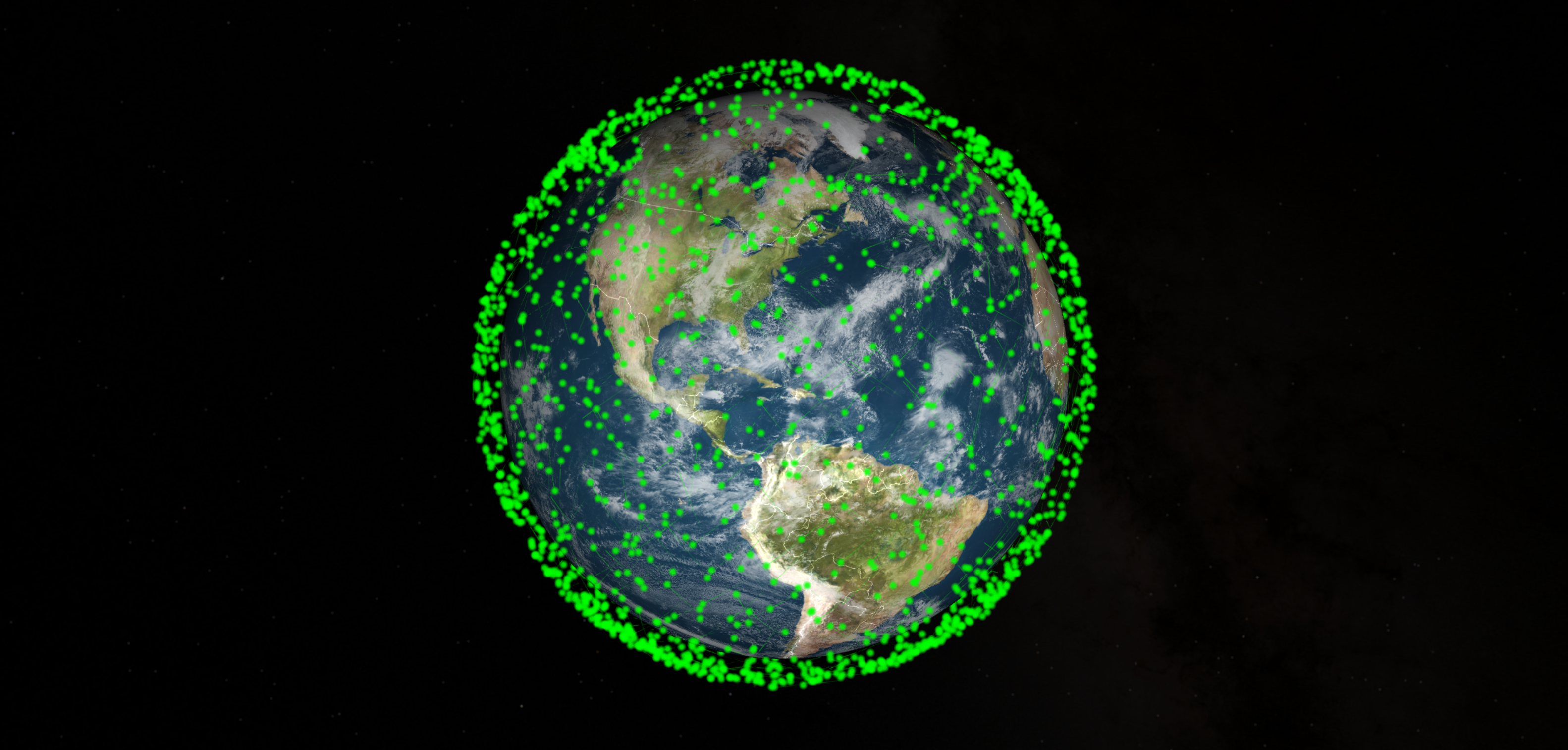
This week’s headlines center on SpaceX’s deepening involvement in national security space, as discussed on the latest episode of This Week In Space. Hosts Rod Pyle and Tariq Malik dig into how the company’s Starshield division and broader defense relationships are reshaping the conversation around commercial space power. This comes as Starlink’s footprint continues to grow, with 12,552 satellites launched to date, 10,844 currently in orbit, and 10,828 actively functioning - a scale that increasingly blurs the line between commercial megaconstellation and strategic infrastructure. Analysts and trackers alike are watching closely as military applications become a larger part of SpaceX’s public narrative.
Space Safety
The Starlink conjunction environment presents a critical risk scenario dominated by a HIGH severity event involving STARLINK-4621 and the defunct SL-18 R/B rocket body, with a time of closest approach on Jul 9, 2026 at 23:44 UTC and a minimum range of just 0.011 km - essentially a collision-level proximity. Beyond this acute threat, six MODERATE risk conjunctions are distributed across July 4-11, 2026, involving both operational and partially operational Starlink satellites, while current reentry predictions indicate nine Starlink objects decaying between July 18-22, 2026, with the most imminent decay occurring on Jul 18, 2026 at 21:32 UTC for STARLINK-1817. The presence of multiple high-confidence predictions and moderate-risk intra-constellation encounters underscores the need for continued tracking and potential maneuver planning.
| Risk | Starlink Sat | Other Object | Status | Min Range (km) | Rel Speed (km/s) | Max Prob | Time of Closest Approach |
|---|---|---|---|---|---|---|---|
| HIGH | STARLINK-4621 | SL-18 R/B | Non-operational | 0.011 | 14.173 | 1.0 | Jul 9, 23:44 UTC |
| MODERATE | STARLINK-30464 | STARLINK-36196 | Operational | 0.048 | 10.027 | 0.1285 | Jul 4, 22:40 UTC |
| MODERATE | STARLINK-5106 | STARLINK-32760 | Operational | 0.049 | 10.192 | 0.1211 | Jul 11, 06:11 UTC |
| MODERATE | STARLINK-5400 | STARLINK-5781 | Partially Operational | 0.053 | 6.407 | 0.1203 | Jul 7, 15:32 UTC |
| LOW | STARLINK-36967 | LEMUR-2-AFFIE-WAUWIE | Operational | 0.038 | 7.332 | 0.0733 | Jul 8, 04:03 UTC |
| Satellite | NORAD ID | Predicted Decay | Window (min) | Inclination | Lat | Lon |
|---|---|---|---|---|---|---|
| STARLINK-1817 | 46715 | Jul 18, 21:32 UTC | 60 | 53.0° | 51.7° | 91.9° |
| STARLINK-1788 | 46689 | Jul 19, 04:48 UTC | 60 | 53.0° | -25.4° | 248.9° |
| STARLINK-2032 | 47649 | Jul 19, 14:22 UTC | 240 | 53.0° | 20.4° | 80.8° |
| STARLINK-3573 | 51794 | Jul 19, 15:23 UTC | 180 | 53.2° | 29.9° | 298.0° |
| STARLINK-1759 | 46340 | Jul 20, 01:48 UTC | 540 | 53.0° | 45.4° | 112.3° |
| STARLINK-1679 | 46557 | Jul 21, 01:51 UTC | 840 | 53.0° | 37.5° | 356.2° |
| STARLINK-2128 | 47404 | Jul 21, 11:18 UTC | 900 | 53.0° | -22.9° | 298.6° |
| STARLINK-2113 | 47392 | Jul 21, 23:20 UTC | 1080 | 53.0° | 40.5° | 177.1° |
| STARLINK-1622 | 46128 | Jul 22, 04:53 UTC | 1140 | 53.0° | -26.9° | 232.4° |
Detailed Coverage
SpaceX’s Growing Defense Footprint Draws Scrutiny
On Episode 219 of This Week In Space, veteran space journalists Rod Pyle and Tariq Malik unpack the accelerating convergence of SpaceX’s commercial and military ambitions, framing the discussion around what they call the company “going to war.” The episode surveys recent developments tying Starlink and Starshield capabilities to Pentagon priorities, reflecting a broader industry trend where proliferated low-Earth-orbit constellations are being reimagined as resilient military communications and sensing networks.
The hosts note that this shift carries implications well beyond SpaceX’s bottom line, touching on how satellite operators, regulators, and rival nations are recalibrating their own strategies in response. With thousands of Starlink satellites already on orbit, the conversation underscores how quickly a commercial broadband constellation has become a dual-use asset central to national security planning.
Read the full story: Space.com
Tracking Implications of a Dual-Use Constellation
As Starlink’s operational fleet approaches 10,828 working satellites, the podcast’s framing raises fresh questions for the satellite-tracking community about transparency and orbital behavior. A constellation originally marketed for consumer broadband now carries strategic weight, meaning maneuvering patterns, coverage prioritization, and payload upgrades may increasingly reflect defense-driven requirements rather than purely commercial ones.
This dynamic makes independent tracking and public catalog data more important than ever, as observers work to distinguish routine constellation management from activity tied to Starshield or other military-linked missions. The episode serves as a reminder that the story of Starlink is no longer just about global internet access - it’s about the geopolitics of orbit itself.
Read the full story: Space.com
Constellation Status
The Starlink constellation remains unchanged since the last check, maintaining a total of 12,552 launched satellites with 10,844 currently in orbit. Of the satellites in orbit, 10,828 are actively working, while 1,708 have decayed from their operational orbits.
- Total Launched: 12552
- Total On Orbit: 10844
- Total Working: 10828
Track Starlink satellites in real-time: Track Starlink
Wondering about the totals? See how many Starlink satellites are in orbit, updated daily.