AETHER-5 (67376)

COSPAR: 2026-004P | Alt Name: N/A

Image
AETHER-5 Satellite Image
Additional Sources
Launch Details

Launch Date

January 11, 2026

Launch Site

AFWTR

Launch Pad

SLC4E

Launch Vehicle

Falcon 9

Orbital Elements

NORAD ID

67376

International Designator

2026-004P

Epoch

Sun, 19 Jul 2026 11:05:28 GMT

Apogee

Calculating...

Perigee

Calculating...

Inclination

97.81°

Right Ascension

198.42°

Eccentricity

Calculating...

Argument of Perigee

49.38°

Period

96.88 min

Mean Motion

14.86 rev/day

Latitude

Calculating...

Longitude

Calculating...

Altitude

Calculating...

Velocity

Calculating...

Polar Plot
3D Visualization
Basic Satellite Info

Name

AETHER-5

Alternative Name

N/A

Type

Payload

Status

Operational

Owner

KEPLER

Country

Canada

Constellation

N/A

Related Satellites

Major Events

N/A

Latest TLEs
1 67376U 26004P   26200.46213315  .00000282  00000+0  38149-4 0  9996
2 67376  97.8051 198.4238 0004292  49.3840 310.7749 14.86310992 28083

Source: Celestrak

Summary

Apologies, there is no summary for this satellite yet. I am working to generate these for every object in the catalog, but it is going to take time.

Physical Characteristics

Length

1.0

Diameter

1.5

Span

6.0

Dry Mass

300

Launch Mass

300

Shape

Box+2 pan

Radar Cross Section

Unknown

Visual Magnitude

Unknown

Color

Unknown

Material Composition

Unknown

Technical Details

Payload

Kepler 2B-3

Purpose

Unknown

Mission

Unknown

Manufacturer

KEPLER

Life Expectancy

Unknown

Bus

Kepler Gen2B

Configuration

Unknown

Motor

Unknown

Equipment

Unknown

Power System

Unknown

ADCS

Unknown

Transmitter Frequency

Unknown

Map
This tool will help you track the satellite's position and predict its upcoming passes over your location. Simply input the coordinates or click the geolocation button to get started.
Next Pass
Azimuth Elevation Time (Local)
Start Azimuth
Max Elevation
Stop Azimuth
Time Until
Pass Duration

Satellite Articles

View All Posts »

Learn more about satellites and other related topics.

Space Force Completes First Tactical Orbital Intercept | KeepTrack Space Brief

Space Force Completes First Tactical Orbital Intercept | KeepTrack Space Brief

U.S. Space Force executes first tactical orbital intercept under Victus Haze mission using commercial spacecraft. Rendezvous and proximity operations now operationally demonstrated.
Artemis 2 Targets April 1 Lunar Flyby with 4-Person Crew | KeepTrack Space Brief

Artemis 2 Targets April 1 Lunar Flyby with 4-Person Crew | KeepTrack Space Brief

NASA's Artemis 2 launches April 1 with Commander Reid Wiseman and 3 crew members for first crewed lunar flyby since Apollo 17 in 1972.

SpaceX Plans Seven Rocket Launches From Six Global Sites This Week | KeepTrack X Report

SpaceX Plans Seven Rocket Launches From Six Global Sites This Week | KeepTrack X Report

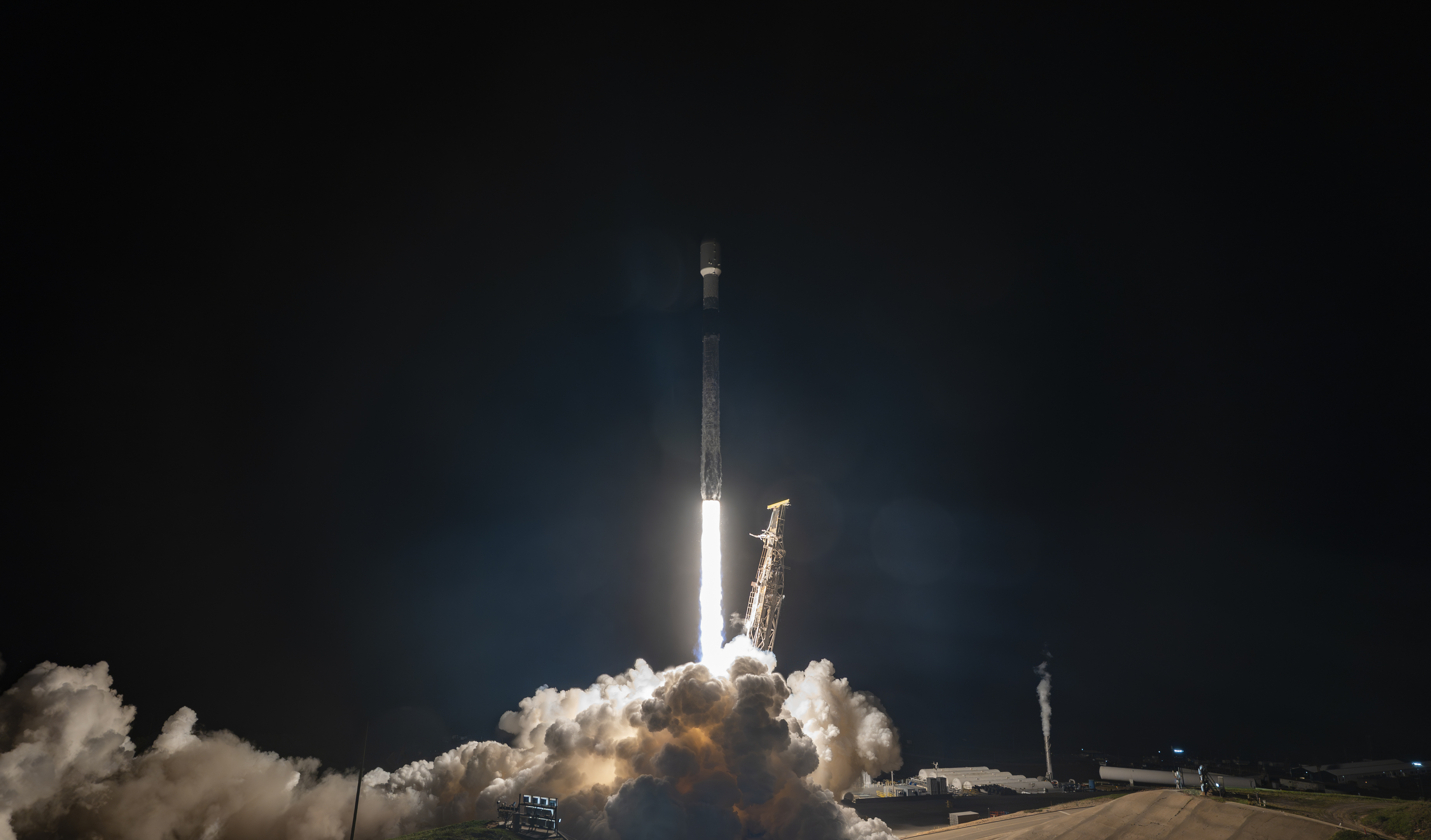
SpaceX targets seven rocket launches from six global sites this week including two Falcon 9 missions from California. 29 Starlink satellites successfully deployed from Cape Canaveral on January 18.

MDA Space Buys Blue Canyon for $620M, Space Brief 20 Jun 2026

MDA Space Buys Blue Canyon for $620M, Space Brief 20 Jun 2026

MDA Space acquires Blue Canyon Technologies for $620 million, and NASA's 2028 Aeolus Mars orbiter goes to a California startup instead of SpaceX.

X Report 22 Dec 2024

X Report 22 Dec 2024

SpaceX successfully launches two rideshare missions to mid-inclination orbits, expanding their satellite deployment capabilities.

The Day Two Astronauts Proved We Could Reach the Moon

The Day Two Astronauts Proved We Could Reach the Moon

Sixty years ago, Frank Borman and James Lovell launched aboard Gemini 7 for a grueling 14-day mission that would prove humans could endure the journey to the moon and achieve the first true rendezvous in space

Space Brief 28 Sep 2025

Space Brief 28 Sep 2025

Today's highlights include China's latest satellite launches, Blue Origin's expansion plans, and Purdue University's groundbreaking suborbital mission with Virgin Galactic.

The Kessler Syndrome

The Kessler Syndrome

The Kessler Syndrome threatens humanity's future in space as cascading satellite collisions create exponential debris growth. With 36,000+ tracked objects and recent incidents accelerating risks, we face a critical juncture: implement solutions now or potentially lose access to low Earth orbit forever.