STARLINK-31676 (59900)

COSPAR: 2024-100R | Alt Name: Starlink 31676

Image
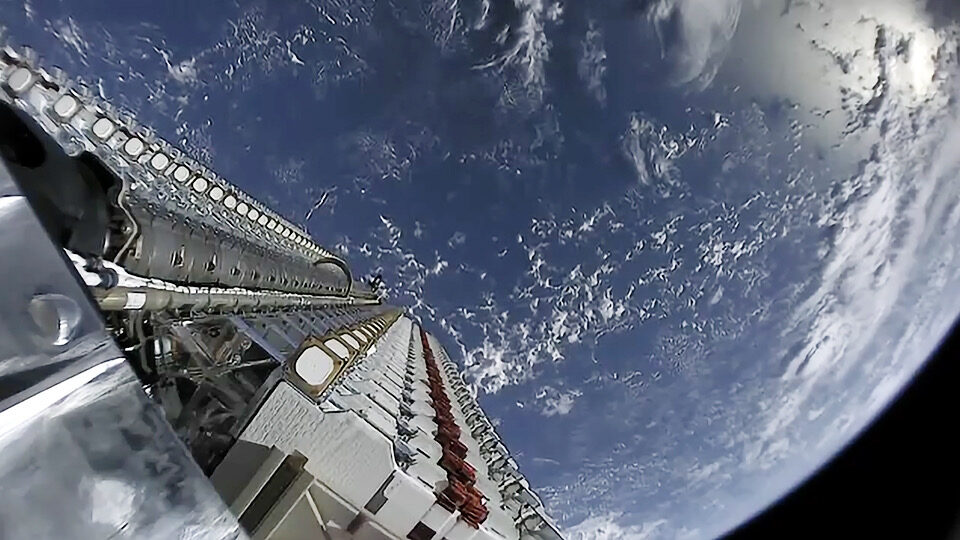
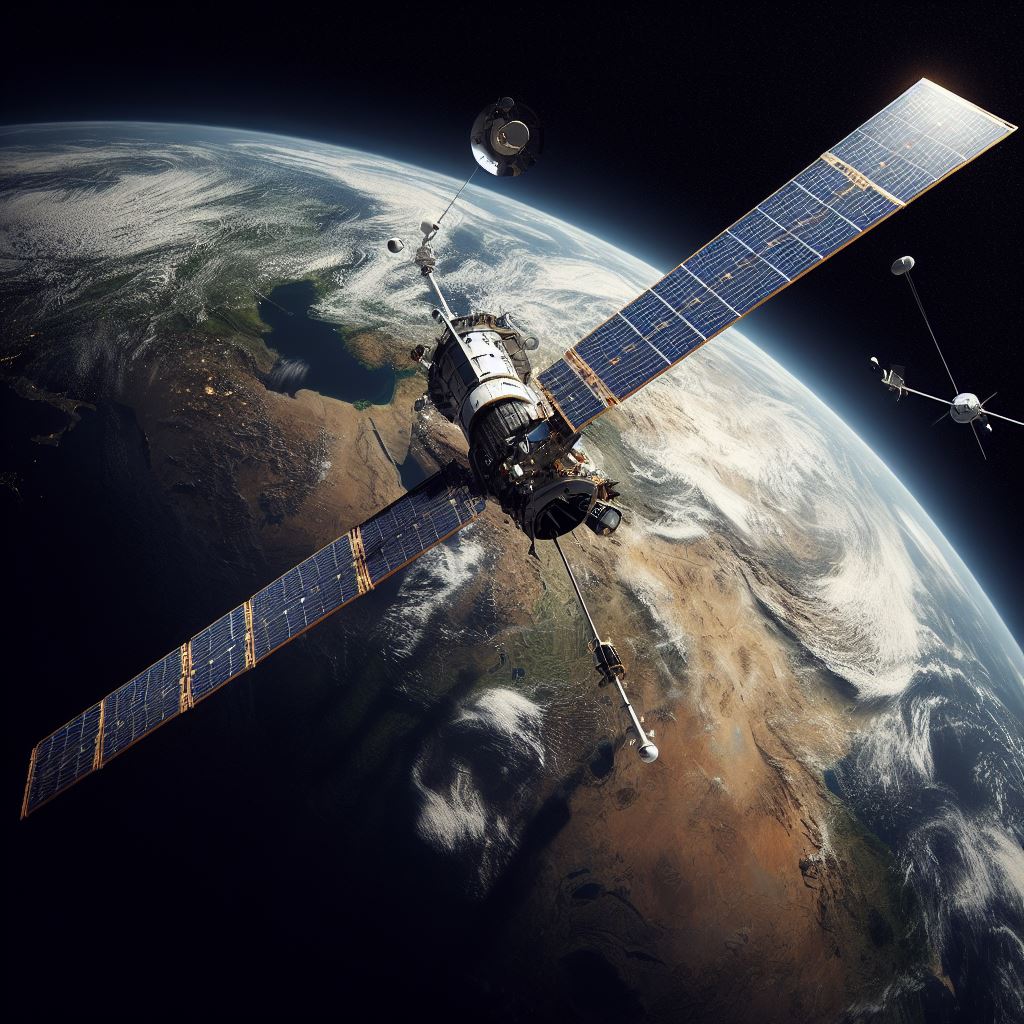
STARLINK-31676 Satellite Image
Additional Sources
Launch Details

Launch Date

May 28, 2024

Launch Pad

LC40

Launch Vehicle

Falcon 9

Orbital Elements

NORAD ID

59900

International Designator

2024-100R

Epoch

Mon, 20 Jul 2026 01:58:33 GMT

Apogee

Calculating...

Perigee

Calculating...

Inclination

43.00°

Right Ascension

97.80°

Eccentricity

Calculating...

Argument of Perigee

257.25°

Period

94.27 min

Mean Motion

15.28 rev/day

Latitude

Calculating...

Longitude

Calculating...

Altitude

Calculating...

Velocity

Calculating...

Polar Plot
3D Visualization
Basic Satellite Info

Name

STARLINK-31676

Alternative Name

Starlink 31676

Type

Payload

Status

Operational

Owner

SPXS

Country

United States

Constellation

N/A

Related Satellites

Major Events

N/A

Latest TLEs
1 59900U 24100R   26201.08232664  .00000389  00000+0  23652-4 0  9993
2 59900  43.0013  97.7960 0000759 257.2542 102.8225 15.27579657121291

Source: Celestrak

Summary
The Starlink-31676 satellite, identified by NORAD CAT ID 59900 and OBJECT ID 2024-100R, is a part of the Starlink v2 Mini configuration under SpaceX's (SPXS) constellation. Launched on May 28, 2024, from LC40 at AFETR using a Falcon 9 launch vehicle, this satellite has a dry mass of 700 kg and a launch mass of 730 kg. Its dimensions are 0.3 meters in length, with a diameter of 4.1 meters and a span of 29 meters. Equipped with Ku/Ka/E-band payload and an optical inter-satellite link, it is powered by solar arrays and batteries. The satellite uses Argon ion thrusters for propulsion and operates for communication purposes under the ownership of SpaceX (SPXS). Its shape is described as box plus pan, and it falls under the Starlink Group 6-60-16 payload category.

Starlink is a satellite constellation developed by SpaceX with the aim of providing global broadband internet coverage. Thousands of small satellites are deployed in low Earth orbit (LEO), enabling high-speed internet access even in remote areas. However, the rapid increase in satellites raises concerns about space debris and the potential for collisions, which can lead to further debris creation and endanger other spacecraft. Additionally, the sheer number of Starlink satellites can affect astronomical observations by increasing light pollution. Proper deorbiting plans and international coordination are essential to mitigate these challenges and ensure long-term sustainability in space.
Physical Characteristics

Length

0.3

Diameter

4.1

Span

29

Dry Mass

700

Launch Mass

730

Shape

Box + pan

Radar Cross Section

Unknown

Visual Magnitude

Unknown

Color

Unknown

Material Composition

Unknown

Technical Details

Payload

Starlink Group 6-60-16

Purpose

Communication

Mission

Communication

Manufacturer

SPXS

Life Expectancy

Unknown

Bus

Starlink V2M

Configuration

Starlink v2 Mini

Motor

Argon ion thrusters

Equipment

Ku/Ka/E-band payload, optical inter-satellite link

Power System

Solar arrays, batteries

ADCS

Unknown

Transmitter Frequency

Unknown

Map
This tool will help you track the satellite's position and predict its upcoming passes over your location. Simply input the coordinates or click the geolocation button to get started.
Next Pass
Azimuth Elevation Time (Local)
Start Azimuth
Max Elevation
Stop Azimuth
Time Until
Pass Duration

Satellite Articles

View All Posts »

Learn more about satellites and other related topics.

Starship Launch Site Construction Advances at Kennedy Space Center | KeepTrack X Report

Starship Launch Site Construction Advances at Kennedy Space Center | KeepTrack X Report

Starship launch site construction progresses at Kennedy Space Center and Cape Canaveral. Elon Musk trolls Ryanair after budget airline refuses to install Starlink on its fleet.

York Space Goes Public at $629M, Cold War JUMPSEAT Spy Satellites Declassified | KeepTrack Space Brief

York Space Goes Public at $629M, Cold War JUMPSEAT Spy Satellites Declassified | KeepTrack Space Brief

York Space raises $629M in IPO to expand satellite manufacturing. NRO declassifies Cold War-era JUMPSEAT spy satellites. Lockheed to boost THAAD interceptor production from 96 to 400 per year.

Boeing Ramps Up Missile-Tracking Sensor Production for Military Sats | KeepTrack Space Brief

Boeing Ramps Up Missile-Tracking Sensor Production for Military Sats | KeepTrack Space Brief

Boeing opens new facility to boost missile-tracking sensor production for military satellites. Tory Bruno joins Blue Origin for national security projects. 25 Starlink sats launched.

Space Brief 10 Feb 2025

Space Brief 10 Feb 2025

Discover today's key space events: SpaceX's Starlink launch, rocket debris risks, and advancements in nuclear rocket technology.

Space Brief 16 May 2025

Space Brief 16 May 2025

Today's brief covers challenges in Space Force procurement, promising developments in tracking technologies, and significant budget cuts affecting military aerospace projects.

The End of Free Skies | FAA Starts Charging for Rocket Launches

The End of Free Skies | FAA Starts Charging for Rocket Launches

On April 22, 2026, the FAA published a final rule implementing per-launch user fees for commercial space transportation — the first time the U.S. government has charged payload-based fees for rocket launches. Starting at 25 cents per pound with a $30,000 cap, the fees are modest today. By 2033, they won't be.

Hayabusa2 Executes Risky July 5 Asteroid Flyby, Space Brief 20 Jul 2026

Hayabusa2 Executes Risky July 5 Asteroid Flyby, Space Brief 20 Jul 2026

Japan's Hayabusa2 executed a close-range asteroid flyby on July 5 after mission planners initially rejected the approach as too dangerous. Extended mission pushes hardware past design limits.

Who Owns the Most Satellites Orbiting Earth?

Who Owns the Most Satellites Orbiting Earth?

Uncover the top companies dominating the satellite industry. From SpaceX to One Web, learn who's leading in space assets. Full list inside.