Top Stories
Hayabusa2’s July 5 Asteroid Flyby Nearly Didn’t Happen
Japan’s Hayabusa2 spacecraft executed a close-range flyby of a near-Earth asteroid on July 5, returning detailed imagery of the surface. Mission planners initially rejected the approach distance as too risky, forcing weeks of internal debate before engineers signed off on the final trajectory.
The spacecraft already delivered samples from asteroid Ryugu back to Earth in 2020. This extended mission phase pushes Hayabusa2’s hardware well past its original design margins, and JAXA is treating every close pass as a one-shot opportunity with no room for course correction errors.
Read the full story: Space.com
Boeing Confirms More Cost Growth on Air Force One Ahead of 2028 Delivery
Boeing Defense CEO Steve Parker told reporters ahead of the Farnborough Airshow that the company expects additional cost overruns on the VC-25B Air Force One program as it moves through final assembly, wiring, and certification. The 2028 delivery target remains unchanged for now, but Parker flagged wiring and structural work as the areas most likely to slip budget.
This adds to a program already years behind schedule and billions over its original fixed-price contract. Boeing has repeatedly absorbed cost overruns rather than pass them to the government under the current contract terms.
Read the full story: Breaking Defense
JWST Catches Supermassive Black Holes Mid-Meal
Astronomers using the James Webb Space Telescope identified new details on how supermassive black holes pull in surrounding gas and dust to grow. The observations give researchers a clearer picture of the feeding mechanisms that drive black hole mass buildup at galactic centers.
JWST sits roughly 1.5 million kilometers from Earth at the Sun-Earth L2 point, well beyond the range of standard LEO/GEO tracking tools. You can still find its catalog entry via Track JWST for orbital reference data.
Read the full story: Space.com
USAF Chief Wilsbach Talks Iran Lessons, T-7 Progress, F-35 Delays
Air Force Chief of Staff Gen. Kenneth Wilsbach outlined his top concerns in a sit-down with Breaking Defense, covering operational takeaways from recent Iran contingency planning, the T-7 Red Hawk trainer’s flight test progress, and continued F-35 delivery delays. Wilsbach didn’t sugarcoat the F-35 timeline issues, pointing to software and production bottlenecks as the persistent drag.
The T-7 program has cleared several flight test milestones this year after early setbacks, and Wilsbach signaled it’s on a more stable track than the fighter program.
Read the full story: Breaking Defense
AI Keeps Mistaking Non-Life for Life in Astrobiology Searches
New research shows AI models used to screen for biosignatures in exoplanet and sample data can be repeatedly fooled into flagging non-biological signals as evidence of life. Scientists behind the study say the failure rate is high enough to warrant caution before relying on AI as a primary screening tool in astrobiology missions.
The concern matters directly for upcoming sample-return and exoplanet spectroscopy missions, where automated triage systems are increasingly used to prioritize which data gets human review first.
Read the full story: Space.com
Qatari-Gifted 747 Pulled for Security Overhaul, Trump Says
President Trump said the Qatari-donated 747, rapidly converted for presidential use by L3Harris, will go offline for what he called “maxed out” upgrades. The move follows concerns the aircraft lacked standard security hardening typical of presidential transport, including communications shielding and countermeasure systems.
The jet was meant as a stopgap while Boeing’s VC-25B program runs late. Taking it offline now leaves the administration with fewer options if the 2028 VC-25B delivery slips further.
Read the full story: Breaking Defense
Partial Solar Eclipse and Perseid Peak Line Up August 12
A partial solar eclipse visible across parts of the US and Canada coincides with the Perseid meteor shower’s peak on the night of August 12, 2026. Space.com mapped out 10 viewing locations where skywatchers can catch both events within a single trip, though eclipse visibility varies sharply by latitude.
Clear-sky planning matters more than usual this year since the eclipse window is short and regional. Pair it with a dark-sky Perseid session after sunset for the full event.
Read the full story: Space.com
Satellite of the Day
BEIDOU-3 IGSO-3
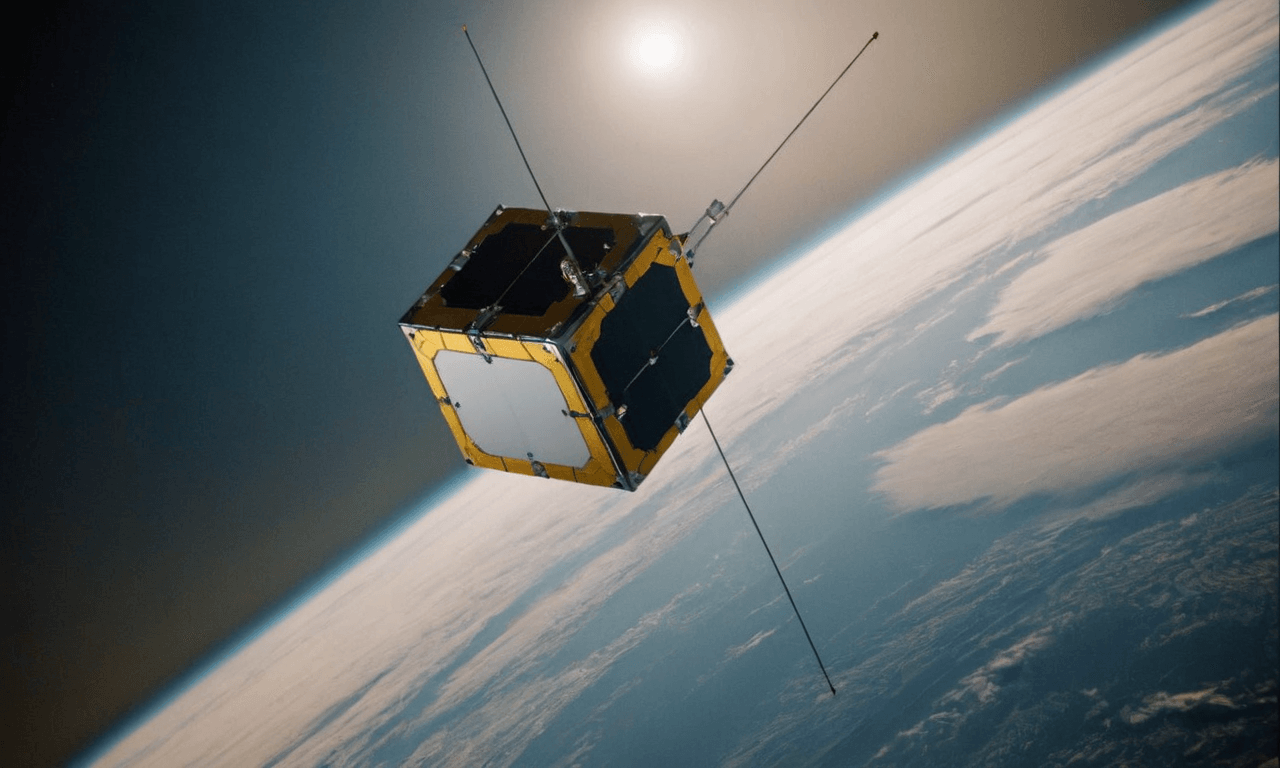
BEIDOU-3 IGSO-3, also known as Beidou DW 49, is a navigation satellite operated by China’s National Space Administration (CNSA) that launched on November 4, 2019, aboard a Chang Zheng 3B rocket from the Xichang Satellite Launch Center. This spacecraft is part of China’s Beidou Navigation Satellite System, the country’s answer to GPS and Europe’s Galileo. With a launch mass of 3,060 kg and a projected mission lifespan of up to 10 years, it carries advanced navigation payloads and is equipped with dual deployable solar arrays to power its systems across a decade-long service life.
The “IGSO” in its designation stands for Inclined Geosynchronous Satellite Orbit, which means Beidou-3 IGSO-3 operates in a tilted geosynchronous path rather than directly above the equator. This orbital configuration provides superior coverage over the Asia-Pacific region, a strategic advantage for regional navigation services. Manufactured by the China Academy of Space Technology (CAST), the satellite measures approximately 3 meters in length with an 18-meter solar array span, making it a substantial platform designed for reliability and redundancy within the broader Beidou constellation.
| Detail | Value |
|---|---|
| NORAD ID | 44709 |
| Operator | CNSA |
| Launch Date | November 4, 2019 |
| Orbit | Inclined Geosynchronous, 54.86° inclination |
| Purpose | Navigation |
| Status | Active |
Track this satellite in real-time: Track BEIDOU-3 IGSO-3
Upcoming Space Launches
July 20
- SpaceX Falcon 9 Block 5:
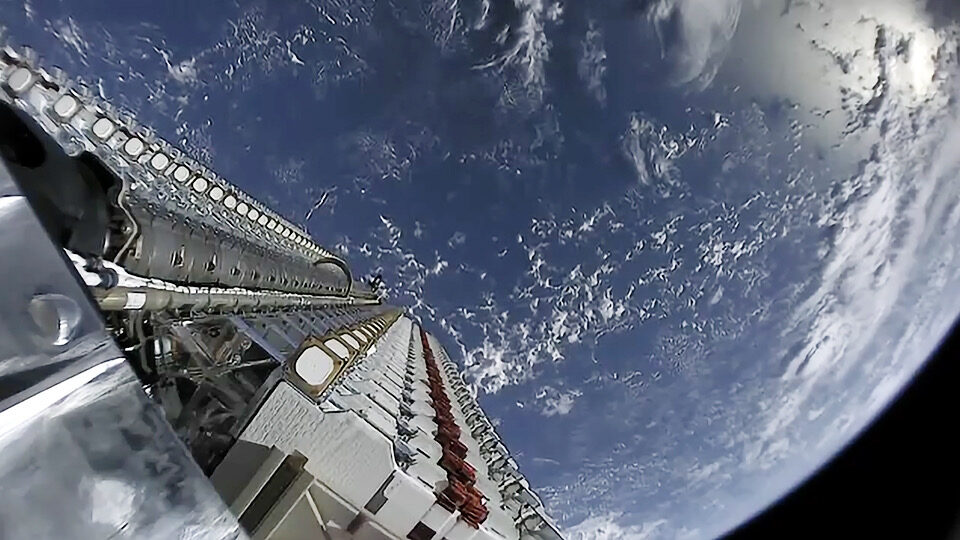
- Starlink Group 17-39 from Space Launch Complex 4E, Vandenberg Space Force Base (14:00 UTC) A batch of 24 Starlink V2 Mini satellites will be launched to low Earth orbit. The first-stage booster, tail number B1082, will be flying for a 23rd time and is scheduled to land on the droneship ‘Of Course I Still Love You’ in the Pacific Ocean. Watch Live
July 21
- SpaceX Falcon 9 Block 5:
- MRV-1 from Space Launch Complex 40, Cape Canaveral Space Force Station (21:15 UTC) This mission, shorthand T1TL-E, will launch another batch of satellites for the Space Development Agency’s Tranche 1 Transport Layer. The Falcon 9 first stage will land on the droneship ‘Of Course I Still Love You’ in the Pacific Ocean. Watch Live
July 22
- Orienspace Technology Gravity-1:
- Unknown Payload from Yellow Sea (Launch Location 5), Haiyang Oriental Spaceport (02:44 UTC) Details of the payload are yet to be confirmed for this Chinese solid-fueled sea-launch mission. Launch Preview
July 23
-
China Aerospace Science and Technology Corporation Long March 3B/E:
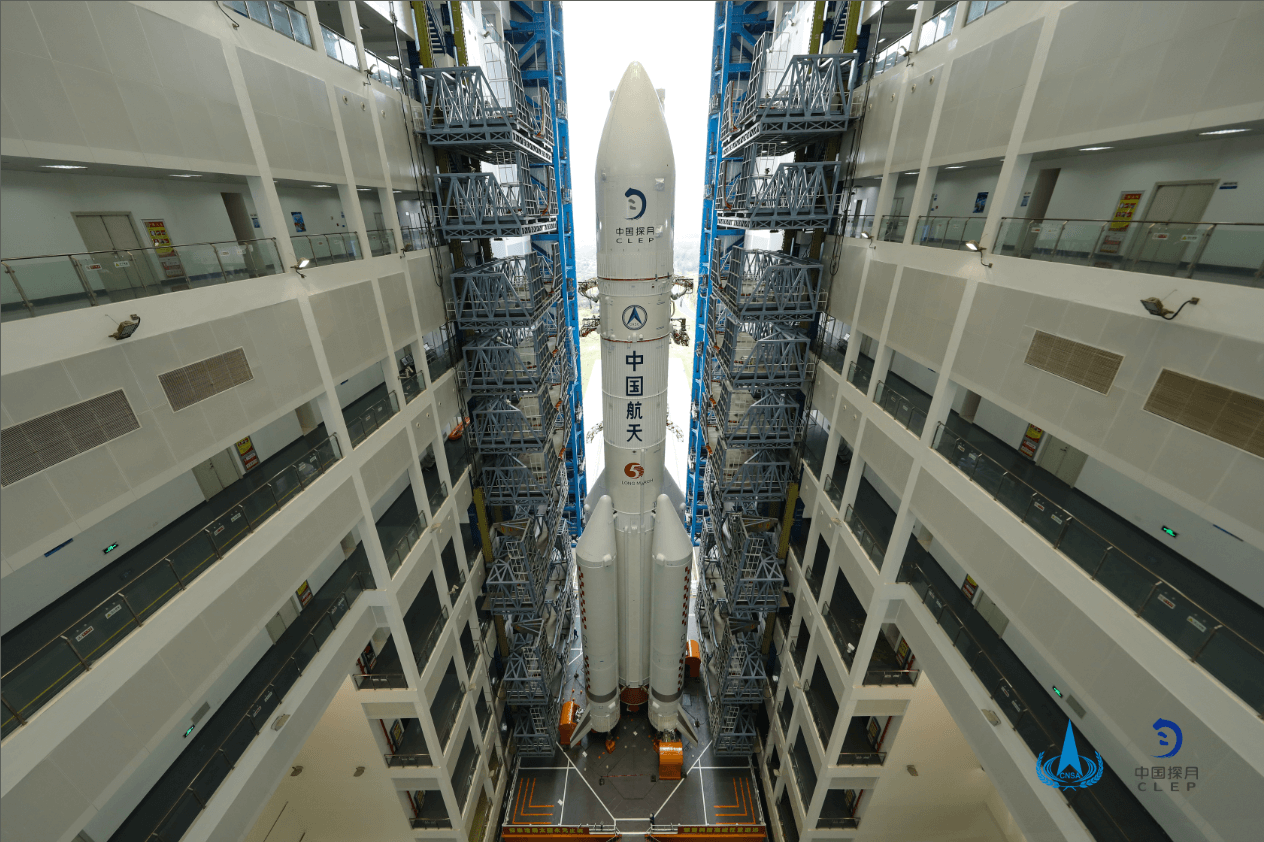
- Unknown Payload from Launch Complex 2 (LC-2), Xichang Satellite Launch Center (11:52 UTC) Details of the payload are yet to be confirmed. The Long March 3B/E is one of the most capable variants in the CZ-3 series, specially developed for transporting heavy communications satellites to geostationary transfer orbit. Launch Preview
-
SpaceX Starship:
- Flight 13 from Orbital Launch Pad 2, SpaceX Starbase, Texas (22:45 UTC) A suborbital test flight of the Starship-Super Heavy stack. The Super Heavy booster (Booster 20) and Starship upper stage (Ship 40) will not be recovered, instead attempting controlled splashdowns in the Gulf of Mexico and Indian Ocean respectively. Starship will also deploy 20 V3 Starlink satellites during the brief suborbital test. Watch Live Launch Preview
-
CAS Space Kinetica 1:
- Unknown Payload from Launch Area 130, Jiuquan Satellite Launch Center (23:24 UTC) Details of the payload are yet to be confirmed. Kinetica 1 is a Chinese solid-propellant light launch vehicle developed by CAS Space, capable of placing about 2 tons into low Earth orbit. Launch Preview
July 24
-
China Aerospace Science and Technology Corporation Long March 8A:
- Unknown Payload from Commercial LC-1, Wenchang Space Launch Site (11:00 UTC) Details of the payload are yet to be confirmed. The Long March 8A is an orbital launch vehicle developed by the China Academy of Launch Vehicle Technology, capable of delivering up to 7 tonnes to a 700 km sun-synchronous orbit.
-
SpaceX Falcon 9 Block 5:
- Starlink Group 17-51 from Space Launch Complex 4E, Vandenberg Space Force Base (14:00 UTC) A batch of 24 Starlink V2 Mini satellites will be launched to low Earth orbit. The first-stage booster, tail number B1082, will be flying for a 23rd time and is scheduled to land on the droneship ‘Of Course I Still Love You’ in the Pacific Ocean. Watch Live
July 28
- SpaceX Falcon 9 Block 5:
- Starlink Group 17-52 from Space Launch Complex 4E, Vandenberg Space Force Base (02:00 UTC) A batch of 24 Starlink V2 Mini satellites will be launched to low Earth orbit. The first-stage booster, tail number B1082, will be flying for a 23rd time and is scheduled to land on the droneship ‘Of Course I Still Love You’ in the Pacific Ocean. Watch Live
July 31
- Rocket Lab Electron:
- LOXSAT 1 from Rocket Lab Launch Complex 1, Mahia Peninsula, New Zealand (00:00 UTC) LOXSAT 1 is a demonstration satellite carrying a complete cryogenic oxygen fluid management system, developed by Eta Space and sponsored by NASA’s Tipping Point program. Integrated on a Rocket Lab Photon-LEO satellite bus, it will collect critical cryogenic fluid management data in orbit for nine months to support future commercial in-space fuel depot capabilities.
Note: Launch dates and times are subject to change due to technical or weather considerations.