


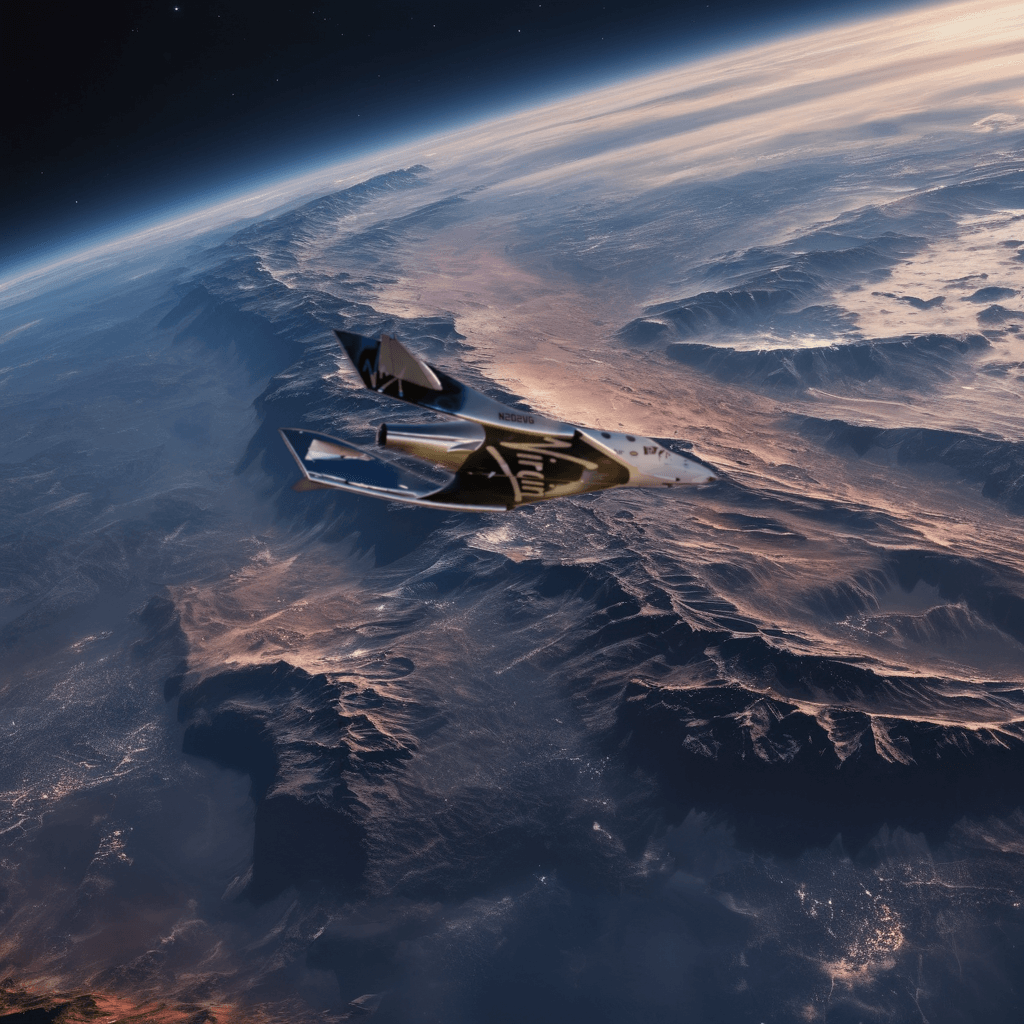
Virgin Galactic's Upcoming "Galactic 06" Spaceflight
On January 26, 2024, Virgin Galactic's "Galactic 06" mission will launch, marking its 11th spaceflight.



Launch Date
March 31, 2024
Launch Site
Launch Pad
LC40
Launch Vehicle
NORAD ID
59368
International Designator
2024-060W
Epoch
Sun, 19 Jul 2026 04:18:36 GMT
Apogee
Calculating...
Perigee
Calculating...
Inclination
43.00°
Right Ascension
237.17°
Eccentricity
Calculating...
Argument of Perigee
262.94°
Period
94.27 min
Mean Motion
15.28 rev/day
Latitude
Calculating...
Longitude
Calculating...
Altitude
Calculating...
Velocity
Calculating...
Name
STARLINK-31419
Alternative Name
Starlink 31419
Type
Status
Owner
SPXS
Country
United States
Constellation
N/A
Related Satellites
Major Events
N/A
1 59368U 24060W 26200.17959152 -.00000363 00000+0 -36671-5 0 9993
2 59368 43.0006 237.1720 0001055 262.9392 97.1340 15.27586543130174
Source: Celestrak
Length
0.3
Diameter
4.1
Span
29
Dry Mass
700
Launch Mass
730
Shape
Box + pan
Radar Cross Section
Unknown
Visual Magnitude
Unknown
Color
Unknown
Material Composition
Unknown
Payload
Starlink Group 6-45-21
Purpose
Communication
Mission
Communication
Manufacturer
SPXS
Life Expectancy
Unknown
Bus
Starlink V2M
Configuration
Starlink v2 Mini
Motor
Argon ion thrusters
Equipment
Ku/Ka/E-band payload, optical inter-satellite link
Power System
Solar arrays, batteries
ADCS
Unknown
Transmitter Frequency
Unknown
Learn more about satellites and other related topics.
On January 26, 2024, Virgin Galactic's "Galactic 06" mission will launch, marking its 11th spaceflight.
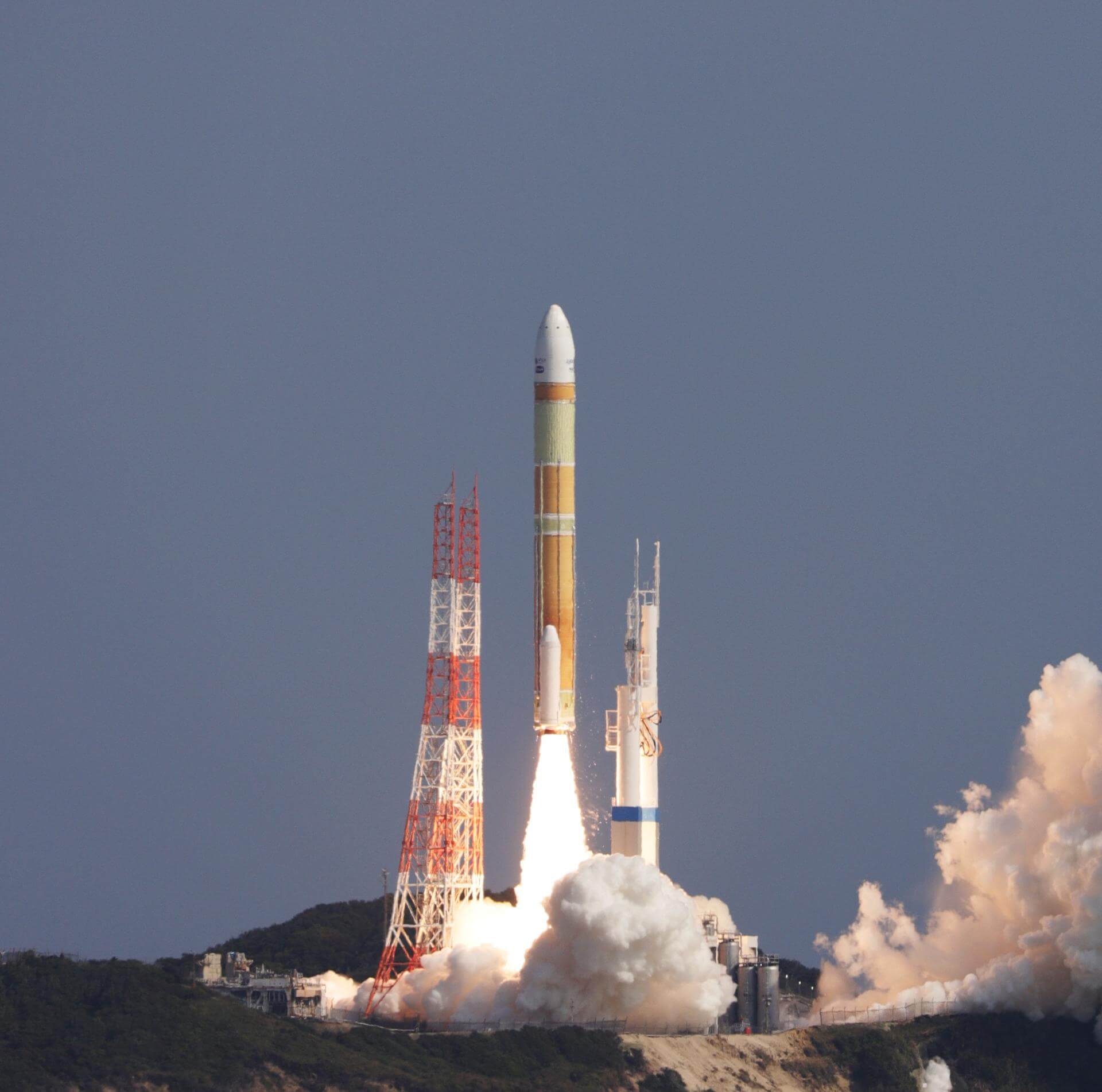
Today's highlights include defense sector investments, major military contracts with Rocket Lab, and a glimpse at new American Innovation dollar coins featuring space achievements.

ULA Vulcan Centaur launches USSF-87 with two GSSAP surveillance satellites to near-GEO orbit. NRO expands commercial imaging. Integrate raises $17M for classified platform.
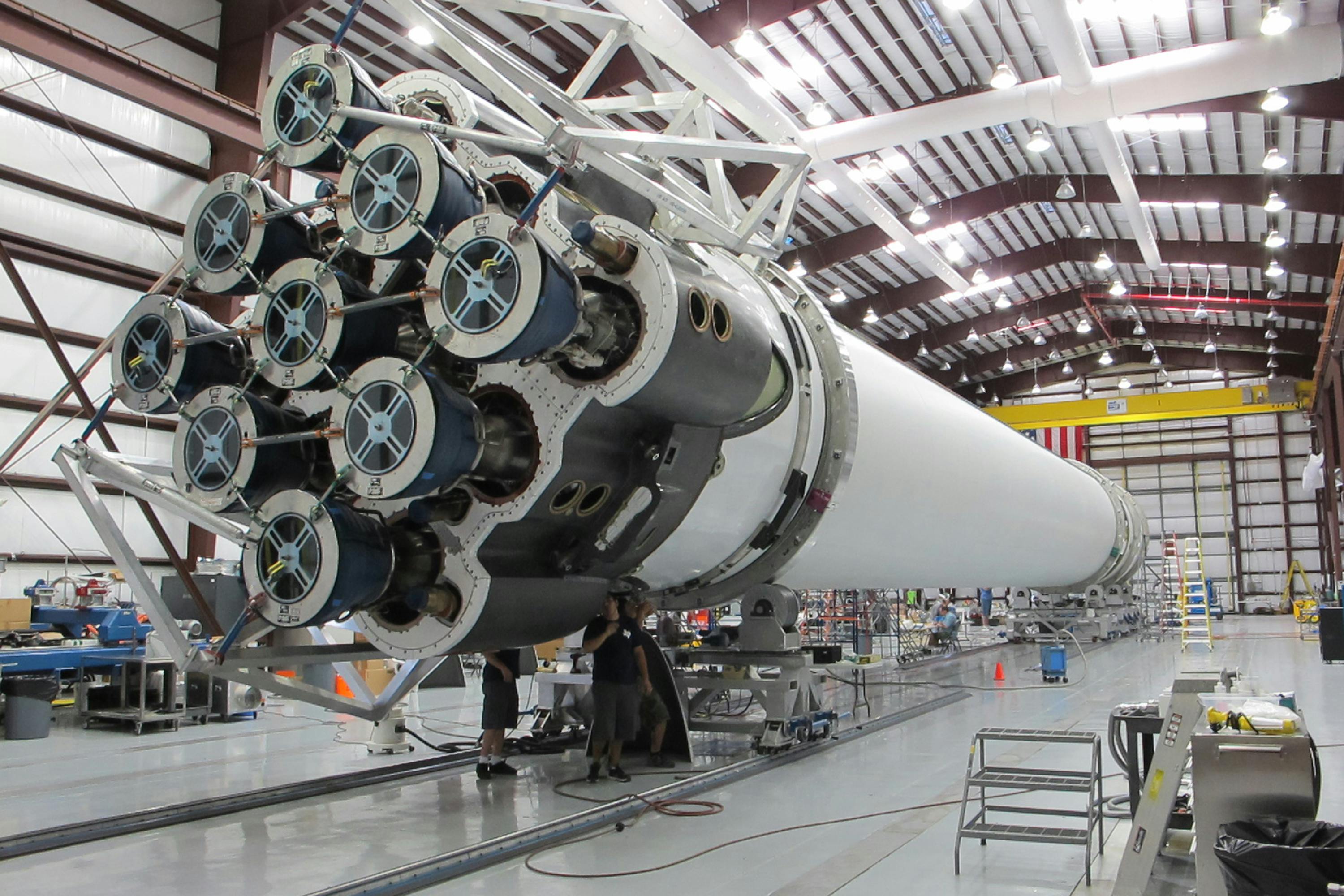
SpaceX makes strides in various sectors, from Starlink expanding services on United Airlines to new hardware aimed at enhancing home connectivity.
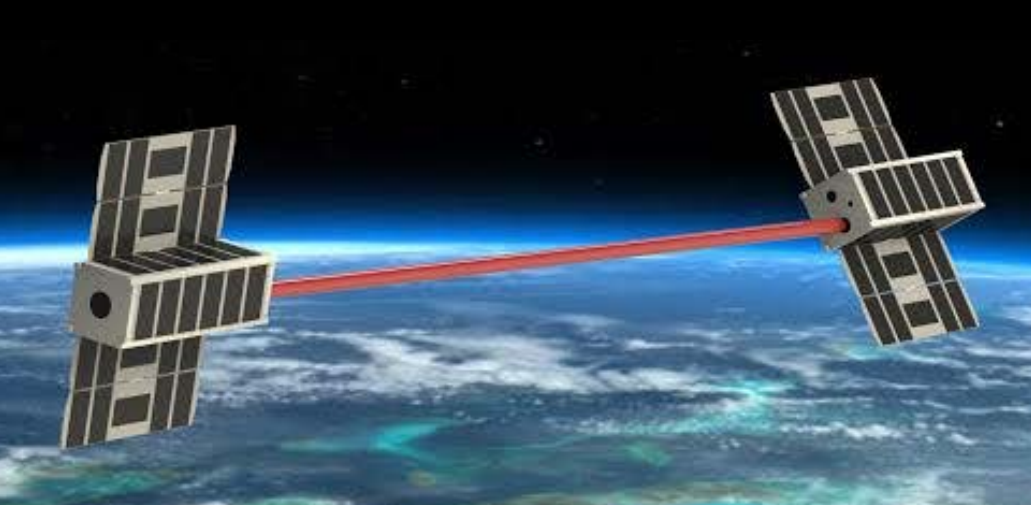
The satellite industry's biggest operators are betting on multi-orbit architectures that combine LEO, MEO, and GEO into unified networks. A San Francisco startup called Contrivian thinks they've overcomplicated the problem, and the physics might be on its side.

As the International Space Station nears retirement, private companies are stepping up to fill the void with their own space stations. Discover the key players and the potential impact on space exploration.

What happens when space objects come home: the fiery physics of returning from orbit and why predicting where debris lands is so difficult
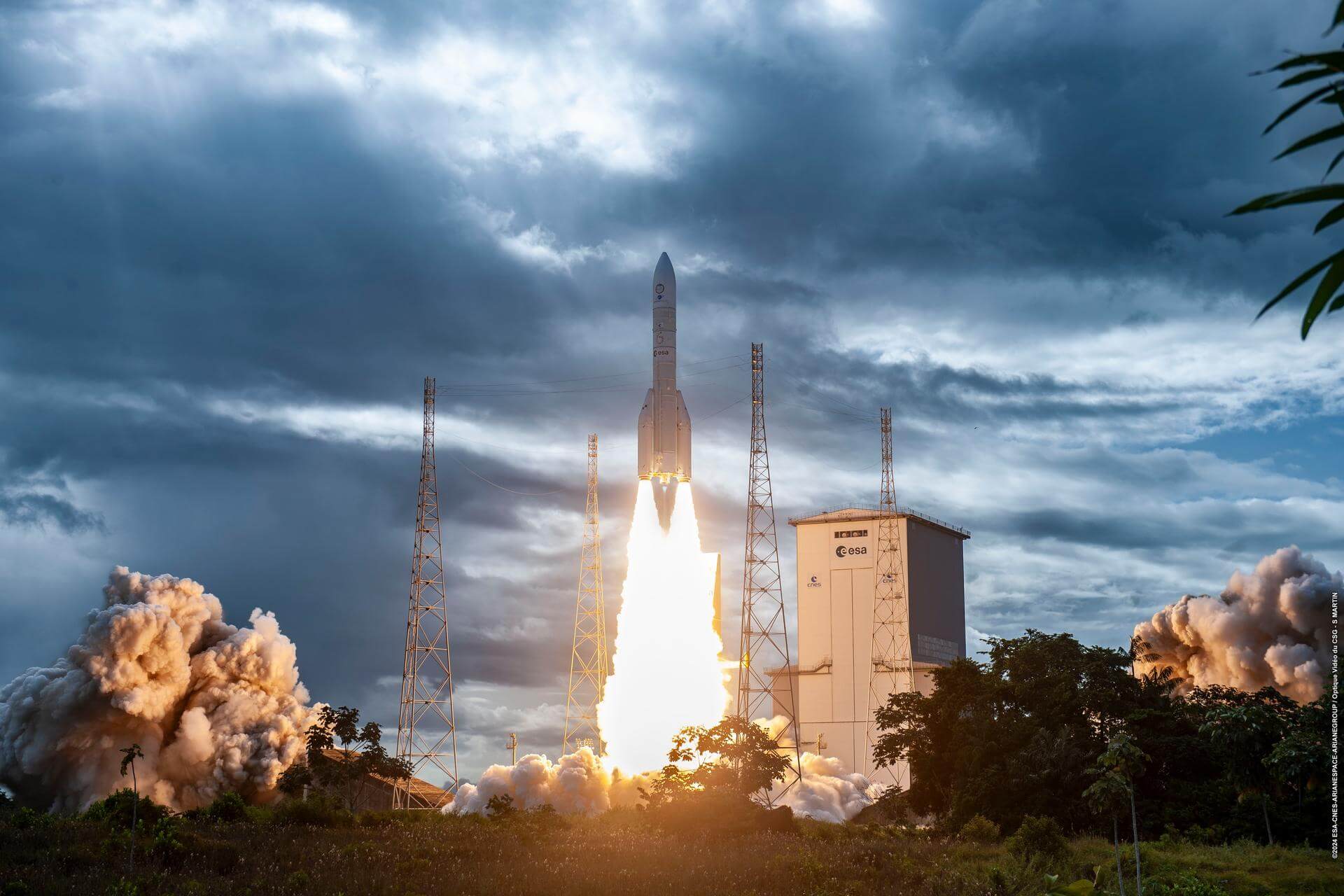
SpaceX launches Starlink satellites from both coasts, while first 3D atmospheric map of an exoplanet reveals extreme weather patterns, and Starlink missions push total count over 8,000 satellites.