SL-4 DEB (05865)

COSPAR: 1972-013D | Alt Name: Sensor cover
DECAYED

Image
SL-4 DEB Satellite Image
Additional Sources
Launch Details

Launch Date

March 4, 1972

Launch Site

PLMSC

Launch Pad

LC41/1

Launch Vehicle

Voskhod 11A57

Orbital Elements

NORAD ID

05865

International Designator

1972-013D

Decay Date

3/5/1972

Basic Satellite Info

Name

SL-4 DEB

Alternative Name

Sensor cover

Type

Debris

Status

Space Junk

Owner

GUKOSR

Country

USSR

Constellation

N/A

Related Satellites

Major Events

N/A

Summary
Space debris, also known as space junk, encompasses all non-functional objects orbiting Earth such as defunct satellites, spent rocket stages, and fragments from collisions or disintegrations. Over time, this debris can accumulate and create an increasingly hazardous environment in orbit. Even tiny fragments, traveling at extremely high velocities, can inflict significant damage on operational satellites and spacecraft. If left unmanaged, the density of debris raises the risk of catastrophic collisions and further fragmentation, compounding the problem and threatening the safety and sustainability of space activities.
Physical Characteristics

Length

0

Diameter

0

Span

0

Dry Mass

0

Launch Mass

0

Shape

N/A

Radar Cross Section

Unknown

Visual Magnitude

Unknown

Color

Unknown

Material Composition

Unknown

Technical Details

Payload

Unknown

Purpose

Unknown

Mission

Unknown

Manufacturer

TSKBE3

Life Expectancy

Unknown

Bus

Zenit deb

Configuration

Unknown

Motor

Unknown

Equipment

Unknown

Power System

Unknown

ADCS

Unknown

Transmitter Frequency

Unknown

Satellite Articles

View All Posts »

Learn more about satellites and other related topics.

The Bomb That NASA Built by Accident

The Bomb That NASA Built by Accident

An overlooked thermostat, eight hours of overheating on a Florida launch pad, and 200,000 miles of coasting through deep space. Then Oxygen Tank No. 2 tore itself apart, and three men had to figure out how to come home alive in a spacecraft designed to land on the Moon.

The Rise of Super Heavy-Lift Rockets

The Rise of Super Heavy-Lift Rockets

Super heavy-lift rockets are the most powerful launch vehicles ever built. They can send humans and cargo to the Moon, Mars, and beyond. But what are they, and why are they so important?

Space Brief 31 Oct 2025

Space Brief 31 Oct 2025

Today we explore defense-driven shifts in satellite operations amid geopolitical tensions and innovative projects pushing the boundaries of space technology.

The Day Superpowers Shared Space

The Day Superpowers Shared Space

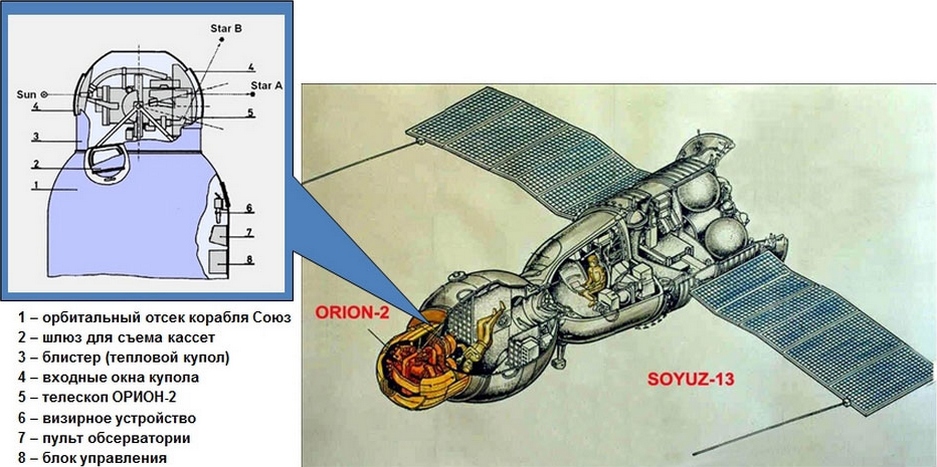
Exactly 52 years ago today, the Soviet Union launched Soyuz 13 - a scientific mission that marked the first time American astronauts and Soviet cosmonauts orbited Earth simultaneously. Armed with a revolutionary ultraviolet telescope, Pyotr Klimuk and Valentin Lebedev would discover elements never before seen in distant nebulae.

Starship V3 Flight 12 Succeeds Despite Engine Shutdown | KeepTrack X Report

Starship V3 Flight 12 Succeeds Despite Engine Shutdown | KeepTrack X Report

Starship V3 completed Flight 12 on May 22 despite one vacuum Raptor shutting down early, with SpaceX's IPO filing revealing bold Starlink Mobile ambitions.

Space Brief 1 Jul 2025

Space Brief 1 Jul 2025

Key developments in the space sector include new partnerships for satellite surveillance, strategic shifts from the Defense Department impacting weather forecasting, and the Space Force's focus on agile satellite technologies.

Air Force Selects General Atomics, Anduril for CCA Wingmen | KeepTrack Space Brief

Air Force Selects General Atomics, Anduril for CCA Wingmen | KeepTrack Space Brief

Air Force awards CCA contracts to General Atomics and Anduril for autonomous fighter wingmen. Autonomy layer split across Anduril, Shield AI, and Collins Aerospace.

The Civilian Space Traffic System America Almost Didn't Build

The Civilian Space Traffic System America Almost Didn't Build

For nearly two decades, the U.S. Air Force and Space Force have been the world's unofficial civilian space traffic control system. The Department of Commerce's Traffic Coordination System for Space (TraCSS) is now taking over that job for commercial satellite operators - in stages, against persistent congressional pressure to kill the program, and with Department of Defense advocates pushing to make it happen before it is too late.