Latest Developments
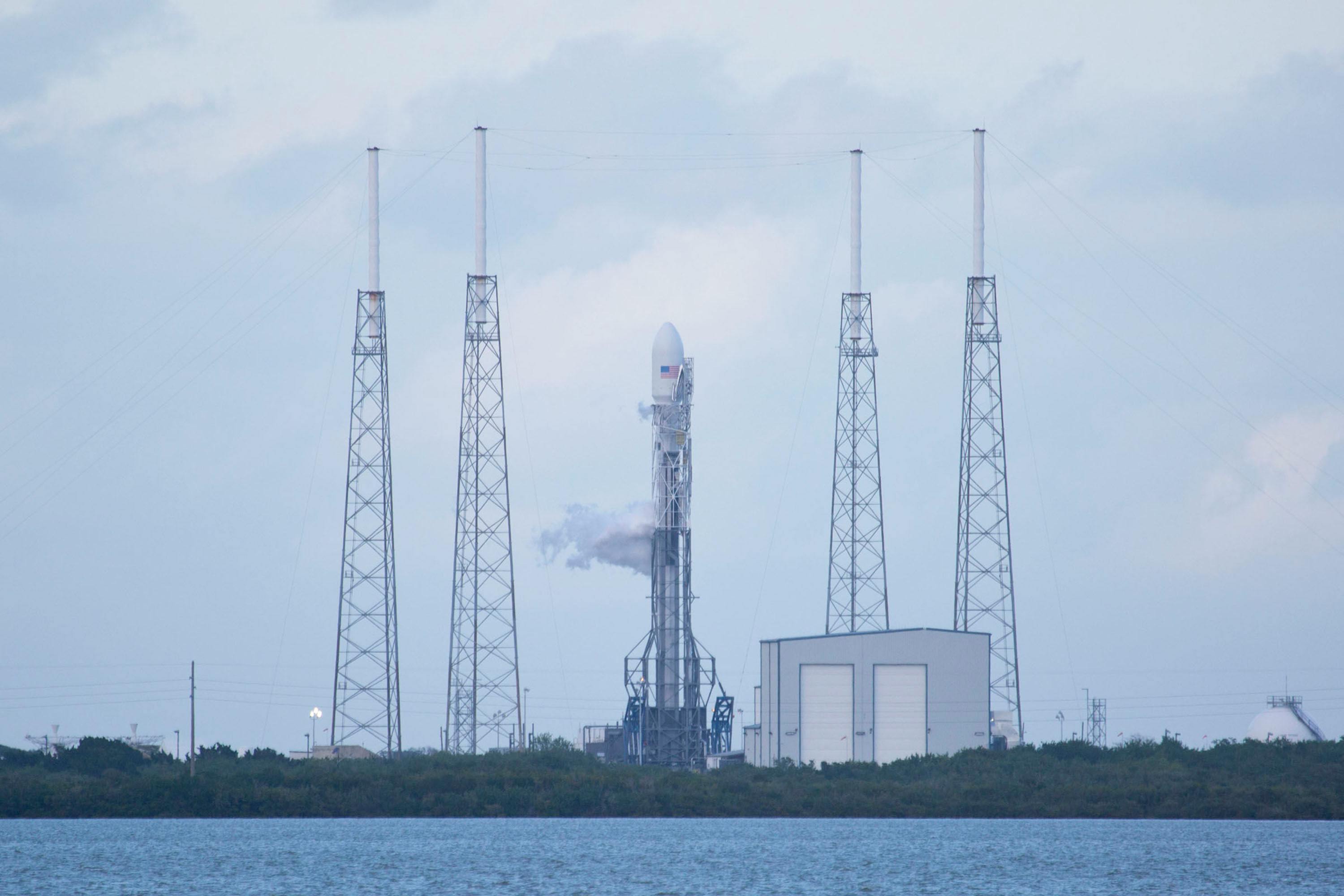
SpaceX’s next-generation Starship V3 rocket completed its first test flight on May 22 — the 12th Starship launch overall — despite one of six third-generation Raptor vacuum engines shutting down early, forcing the flight computer to extend burns on the remaining five to reach an acceptable sub-orbital trajectory. CEO Elon Musk praised the mission as “epic,” calling it a “goal for humanity” even as engineers assessed the anomaly. The flight had been delayed a day after a hydraulic pin issue scrubbed the May 21 attempt in the final minutes of the countdown window. Meanwhile, away from Boca Chica, SpaceX’s IPO prospectus drew significant attention for positioning Starlink Mobile — already supporting 10,354 working satellites across a 10,370-strong on-orbit constellation — as a direct urban competitor to terrestrial mobile networks, not merely a remote-area fallback.
Space Safety
The Starlink conjunction picture shows a moderate overall threat landscape with 10 tracked events in early-to-mid April 2026, though none currently assessed as high risk. The most concerning conjunction involves STARLINK-33563 and COSMOS 2251 DEB on Apr 13, 21:44 UTC with a collision probability of 0.397 and minimum range of 12 meters, followed by STARLINK-5601 approaching DELTA 1 DEB on Apr 11 with a 0.348 probability. Concurrently, 11 Starlink satellites are predicted to reenter between May 22-25, 2026, with STARLINK-32823 on an imminent decay trajectory (May 22, 21:45 UTC) and the remainder spread across a 2-4 day window in late May.
| Risk | Starlink Sat | Other Object | Status | Min Range (km) | Rel Speed (km/s) | Max Prob | Time of Closest Approach |
|---|---|---|---|---|---|---|---|
| MODERATE | STARLINK-33563 | COSMOS 2251 DEB | Non-operational | 0.012 | 11.318 | 0.3973 | Apr 13, 21:44 UTC |
| MODERATE | STARLINK-5601 | DELTA 1 DEB | Non-operational | 0.014 | 8.499 | 0.3479 | Apr 11, 06:26 UTC |
| MODERATE | STARLINK-33680 | FLOCK 4G-17 | Operational | 0.024 | 12.627 | 0.1287 | Apr 9, 13:55 UTC |
| MODERATE | STARLINK-35339 | THEA | Operational | 0.022 | 14.11 | 0.1272 | Apr 11, 01:33 UTC |
| LOW | STARLINK-32841 | YAOGAN-43 01D | Operational | 0.038 | 9.497 | 0.0672 | Apr 11, 14:30 UTC |
| LOW | STARLINK-36431 | WT 1B | Unknown | 0.052 | 1.153 | 0.04499 | Apr 14, 13:45 UTC |
| LOW | STARLINK-32376 | OBJECT AD | Operational | 0.046 | 11.243 | 0.04409 | Apr 12, 08:38 UTC |
| LOW | STARLINK-30245 | SL-19 R/B | Non-operational | 0.037 | 14.371 | 0.04406 | Apr 7, 16:55 UTC |
| LOW | STARLINK-35657 | ION SCV-008 | Operational | 0.041 | 13.969 | 0.03903 | Apr 12, 19:09 UTC |
| LOW | STARLINK-31383 | TEVEL2-7 | Operational | 0.038 | 14.746 | 0.03837 | Apr 8, 19:55 UTC |
| Satellite | NORAD ID | Predicted Decay | Window (min) | Inclination | Lat | Lon |
|---|---|---|---|---|---|---|
| STARLINK-32823 | 62823 | May 22, 21:45 UTC | 1 | 53.1° | 9.9° | 284.6° |
| STARLINK-11462 | 62412 | May 23, 23:18 UTC | 2880 | 43° | 42.3° | 272.5° |
| STARLINK-32335 | 61703 | May 24, 01:47 UTC | 1440 | 53.1° | -23.6° | 207.2° |
| STARLINK-2249 | 48592 | May 24, 06:14 UTC | 1440 | 53° | 21.1° | 326.6° |
| STARLINK-1627 | 46168 | May 24, 19:47 UTC | 1440 | 53° | 31.3° | 172.5° |
| STARLINK-11664 | 63666 | May 24, 22:51 UTC | 1440 | 43° | 29.1° | 343.2° |
| STARLINK-31725 | 59538 | May 25, 00:00 UTC | 1440 | 43° | 9.7° | 146.8° |
| STARLINK-5369 | 54837 | May 25, 03:11 UTC | 2880 | 43° | 20.9° | 267.7° |
| STARLINK-3325 | 50843 | May 25, 06:24 UTC | 1440 | 53.2° | 14.7° | 338.5° |
| STARLINK-1911 | 46749 | May 25, 21:25 UTC | 2880 | 53° | 17.7° | 208.4° |
| STARLINK-6063 | 56811 | May 25, 23:09 UTC | 2880 | 70° | -35.1° | 191.3° |
Detailed Coverage
One Vacuum Raptor Shuts Down Early on Starship V3’s Debut Flight
The most significant technical event of Starship Flight 12 was the premature shutdown of one of three vacuum-optimized Raptor engines aboard the Ship upper stage. With only five of six engines producing thrust, the vehicle’s flight computer autonomously extended the burn durations of the healthy engines, successfully compensating for the deficit and placing Starship on a planned sub-orbital trajectory. While SpaceX declared the mission a success against its primary test objectives, the engine anomaly will drive detailed analysis before the next flight and raises questions about the reliability margins of the new V3 powerplant configuration.
Read the full story: Spaceflight Now
Starship V3 Passes First Flight Test as Flight 12 Hits Most Objectives
The first Starship V3 — the most powerful rocket configuration ever flown — lifted off from Starbase on May 22, completing the majority of SpaceX’s stated test objectives for a suborbital demonstration despite the engine anomaly. The V3 variant represents a thorough redesign of both the Ship upper stage and Super Heavy booster, and its success, even partial, marks a meaningful step toward the rapid reusability and high-cadence flight rates SpaceX needs for both Starlink deployment and deep-space ambitions. Elon Musk’s characterization of the flight as “epic” and a “goal for humanity” signals the company views the autonomous engine compensation as a validation of the vehicle’s fault-tolerant design philosophy rather than a failure.
Read the full story: SpaceNews
Hydraulic Pin Fault Scrubbed V3’s First Launch Attempt at T-Minus Wire
SpaceX’s first attempt to launch Starship V3 on May 21 ended in a scrub during the final minutes of the countdown window after engineers identified a problem with a hydraulic pin in the ground support equipment. The issue joined a broader ground system anomaly that had already compressed the available launch window, and the company chose to stand down rather than push forward with unresolved hardware concerns. SpaceX confirmed the root cause publicly and announced a 24-hour turnaround to the successful May 22 attempt — a relatively fast recovery that speaks to the increasingly mature ground operations at Starbase, even if the scrub drew attention for preempting a high-profile viewing event that had attracted celebrities including Nicki Minaj.
Read the full story: Teslarati
Satellite Images Capture Starship V3 Standing Tall on the Pad Before Launch
A commercial Earth-observation satellite captured a striking high-resolution image of the fully stacked Starship V3 vehicle on its launch mount at Starbase on May 21, just hours before the first launch attempt was scrubbed. The image provided rare external context for the scale of the new rocket, which towers above the orbital launch mount and its surrounding ground infrastructure. For satellite-tracking enthusiasts and constellation analysts, imagery like this also illustrates the increasing role of low Earth orbit assets in monitoring and documenting launch operations — a feedback loop between the very constellation SpaceX is building and the program that depends on it for revenue.
Read the full story: Space.com
SpaceX IPO Prospectus Positions Starlink Mobile to Rival Urban Carriers
SpaceX’s IPO filing made waves this week not for its financial disclosures alone, but for the language used to describe Starlink Mobile’s competitive positioning. The prospectus frames next-generation direct-to-smartphone services as capable of delivering performance “on par with terrestrial mobile networks” — including in dense urban environments where Starlink has historically been treated as a niche supplement. With 11,979 satellites launched to date and a working constellation of 10,354 satellites, SpaceX has the orbital infrastructure to begin backing that claim, though spectrum coordination, regulatory approvals in key markets, and device compatibility remain significant hurdles before Starlink can genuinely challenge AT&T, Verizon, or their international equivalents.
Read the full story: SpaceNews
SpaceX IPO Filing Also Bets Orbital AI Infrastructure Will Beat Big Tech
Beyond Starlink Mobile, SpaceX’s IPO prospectus reveals an ambitious pivot toward orbital data centers, positioning the company as a future competitor to hyperscale cloud and AI infrastructure providers. The filing arrives at an awkward moment for xAI’s Grok, which has struggled to close the performance gap with rival large language model services from OpenAI, Google, and Anthropic. Analysts note that while the orbital AI pitch is speculative on long timelines, SpaceX’s combination of low-cost launch, a global satellite network, and captive compute demand from Starlink ground operations gives it an asymmetric starting position no terrestrial cloud provider can easily replicate.
Read the full story: Ars Technica
Crypto Billionaire Chun Wang Announces Private Starship Mission to Mars
Chinese-born cryptocurrency billionaire Chun Wang revealed during a SpaceX webcast tied to the Flight 12 event that he has contracted with SpaceX for a private flyby mission targeting Mars — with a lunar flyby serving as a precursor milestone. Wang joins a short list of private customers who have publicly committed to deep-space Starship missions, following Yusaku Maezawa’s dearMoon lunar trajectory. SpaceX confirmed the arrangement but offered no firm launch timeline, a familiar posture given the number of program milestones — including full reusability, on-orbit propellant transfer, and regulatory clearance — that must be achieved before a crewed Mars flyby becomes operationally feasible.
Read the full story: Cosmic Log
Constellation Status
There have been no changes to the Starlink constellation since the last check. The constellation currently consists of 11,979 total launched satellites, with 10,370 remaining in orbit, 10,354 of which are actively working, and 1,609 that have decayed from their operational orbits.
- Total Launched: 11979
- Total On Orbit: 10370
- Total Working: 10354
Track Starlink satellites in real-time: Track Starlink