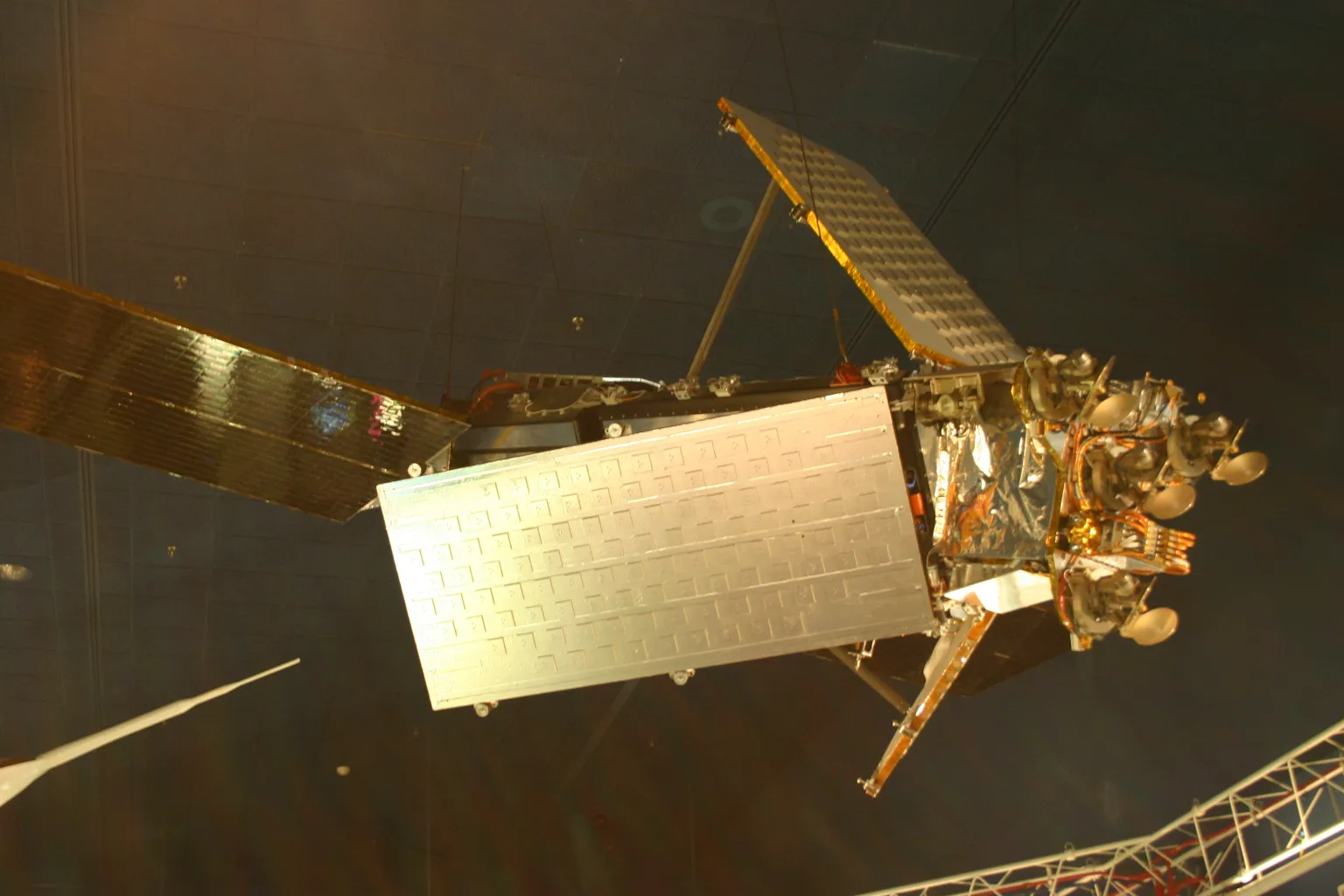
STARLINK-6217 (57058)

COSPAR: 2023-088L | Alt Name: Starlink 6217

Image
STARLINK-6217 Satellite Image
Additional Sources
Launch Details

Launch Date

June 22, 2023

Launch Site

AFWTR

Launch Pad

SLC4E

Launch Vehicle

Falcon 9

Orbital Elements

NORAD ID

57058

International Designator

2023-088L

Epoch

Sun, 19 Jul 2026 00:45:17 GMT

Apogee

Calculating...

Perigee

Calculating...

Inclination

43.00°

Right Ascension

88.56°

Eccentricity

Calculating...

Argument of Perigee

269.31°

Period

94.27 min

Mean Motion

15.28 rev/day

Latitude

Calculating...

Longitude

Calculating...

Altitude

Calculating...

Velocity

Calculating...

Polar Plot
3D Visualization
Basic Satellite Info

Name

STARLINK-6217

Alternative Name

Starlink 6217

Type

Payload

Status

Operational

Owner

SPXS

Country

United States

Constellation

N/A

Related Satellites

Major Events

N/A

Latest TLEs
1 57058U 23088L   26200.03144699 -.00000080  00000+0  66375-5 0  9992
2 57058  43.0030  88.5570 0001407 269.3142  90.7548 15.27581570170427

Source: Celestrak

Summary
The Starlink-6217 satellite, also known as Starlink 6217, is an American communication satellite designed by SpaceX and launched on June 22, 2023, from the Vandenberg Space Launch Complex SLC4E using a Falcon 9 launch vehicle. It has dimensions of 0.2 meters in length, 2.8 meters in diameter, and 9 meters in span with a dry mass of 290 kilograms and a launch mass of 305 kilograms. The satellite is equipped with Ku/Ka-band payload capabilities along with optical inter-satellite links for communication purposes and uses krypton ion thrusters for propulsion. It harnesses solar arrays and batteries for power supply, and its shape resembles a box with panels.

Starlink is a satellite constellation developed by SpaceX with the aim of providing global broadband internet coverage. Thousands of small satellites are deployed in low Earth orbit (LEO), enabling high-speed internet access even in remote areas. However, the rapid increase in satellites raises concerns about space debris and the potential for collisions, which can lead to further debris creation and endanger other spacecraft. Additionally, the sheer number of Starlink satellites can affect astronomical observations by increasing light pollution. Proper deorbiting plans and international coordination are essential to mitigate these challenges and ensure long-term sustainability in space.
Physical Characteristics

Length

0.2

Diameter

2.8

Span

9

Dry Mass

290

Launch Mass

305

Shape

Box + pan

Radar Cross Section

Unknown

Visual Magnitude

Unknown

Color

Unknown

Material Composition

Unknown

Technical Details

Payload

Starlink Group 5-7-11

Purpose

Communication

Mission

Communication

Manufacturer

SPXS

Life Expectancy

Unknown

Bus

Starlink

Configuration

Unknown

Motor

Krypton ion thrusters

Equipment

Ku/Ka-band payload, optical inter-satellite link

Power System

Solar arrays, batteries

ADCS

Unknown

Transmitter Frequency

Unknown

Map
This tool will help you track the satellite's position and predict its upcoming passes over your location. Simply input the coordinates or click the geolocation button to get started.
Next Pass
Azimuth Elevation Time (Local)
Start Azimuth
Max Elevation
Stop Azimuth
Time Until
Pass Duration

Satellite Articles

View All Posts »

Learn more about satellites and other related topics.

SpaceX Eyes Confidential IPO Filing at $1.75T Valuation | KeepTrack X Report

SpaceX Eyes Confidential IPO Filing at $1.75T Valuation | KeepTrack X Report

Reports suggest SpaceX considering confidential IPO filing this March at $1.75T+ valuation. Starship may not fly on NASA's revamped Artemis 3 mission. 25 Starlink sats launched.

Space Force Adds Relativity, Impulse to NSSL Phase 3 | KeepTrack Space Brief

Space Force Adds Relativity, Impulse to NSSL Phase 3 | KeepTrack Space Brief

Space Force expands National Security Space Launch Phase 3 with Relativity Space and Impulse Space joining Lane 1 competition. New entrants gain pathway to military payload contracts.

Space Brief 28 Oct 2024

Space Brief 28 Oct 2024

Explore China's ambitions to expand its Tiangong space station, NASA's next steps for the Europa Clipper mission, and ESA's efforts to support the European space industry. Discover the latest in satellite tracking and consider the fascinating findings on potential life on Mars.

AT&T, Verizon, T-Mobile Unite vs Starlink D2D, X Report 18 May 2026

AT&T, Verizon, T-Mobile Unite vs Starlink D2D, X Report 18 May 2026

Starlink direct-to-device competition unites AT&T, Verizon, and T-Mobile for the first time as SpaceX's 10,354 working satellites reshape mobile coverage.

Space Brief 29 Jan 2025

Space Brief 29 Jan 2025

Today's briefing covers the Space Force's plans for future launches, new initiatives in missile defense, and the latest on military and aerospace advancements.

The Day America Shot Down Its Own Spy Satellite

The Day America Shot Down Its Own Spy Satellite

Seventeen years ago, a Navy cruiser in the Pacific fired a missile at a tumbling reconnaissance satellite that had failed within hours of reaching orbit - officially to prevent toxic fuel from reaching the ground, unofficially to prove something far more significant to China and the world

Space Brief 14 Jan 2025

Space Brief 14 Jan 2025

Today's brief focuses on Blue Origin's scrubbed New Glenn launch, SpaceX's reusability milestone, and a warning from the US Air Force about China's advancements in space capabilities. We're also highlighting a key satellite in orbit.

STS-30 | When Atlantis Sent a Radar to Venus

STS-30 | When Atlantis Sent a Radar to Venus

On May 4, 1989, Space Shuttle Atlantis lifted off from LC-39B carrying Magellan, NASA's first interplanetary mission since 1978. The eleven-year drought ended in a payload bay, and the radar that emerged would map ninety-eight percent of Venus through clouds that no camera could ever see through.