



Space Brief 25 Nov 2025
Today's briefing covers Chinese satellite launches, military defense strategies in space, increasing launch activity at the Space Coast, and potential rivals to SpaceX's Starlink.



NORAD ID
55915
International Designator
2023-037B
Epoch
Sun, 19 Jul 2026 19:01:05 GMT
Apogee
Calculating...
Perigee
Calculating...
Inclination
70.00°
Right Ascension
331.43°
Eccentricity
Calculating...
Argument of Perigee
267.60°
Period
96.11 min
Mean Motion
14.98 rev/day
Latitude
Calculating...
Longitude
Calculating...
Altitude
Calculating...
Velocity
Calculating...
Name
STARLINK-5859
Alternative Name
Starlink 5859
Type
Status
Owner
SPXS
Country
United States
Constellation
N/A
Related Satellites
Major Events
N/A
1 55915U 23037B 26200.79241957 .00000047 00000+0 11773-4 0 9997
2 55915 70.0011 331.4290 0003217 267.5959 92.4832 14.98332234183957
Source: Celestrak
Length
0.2
Diameter
2.8
Span
9
Dry Mass
290
Launch Mass
305
Shape
Box + pan
Radar Cross Section
Unknown
Visual Magnitude
Unknown
Color
Unknown
Material Composition
Unknown
Payload
Starlink Group 2-8-02
Purpose
Communication
Mission
Communication
Manufacturer
SPXS
Life Expectancy
Unknown
Bus
Starlink
Configuration
Unknown
Motor
Krypton ion thrusters
Equipment
Ku/Ka-band payload, optical inter-satellite link
Power System
Solar arrays, batteries
ADCS
Unknown
Transmitter Frequency
Unknown
Learn more about satellites and other related topics.
Today's briefing covers Chinese satellite launches, military defense strategies in space, increasing launch activity at the Space Coast, and potential rivals to SpaceX's Starlink.
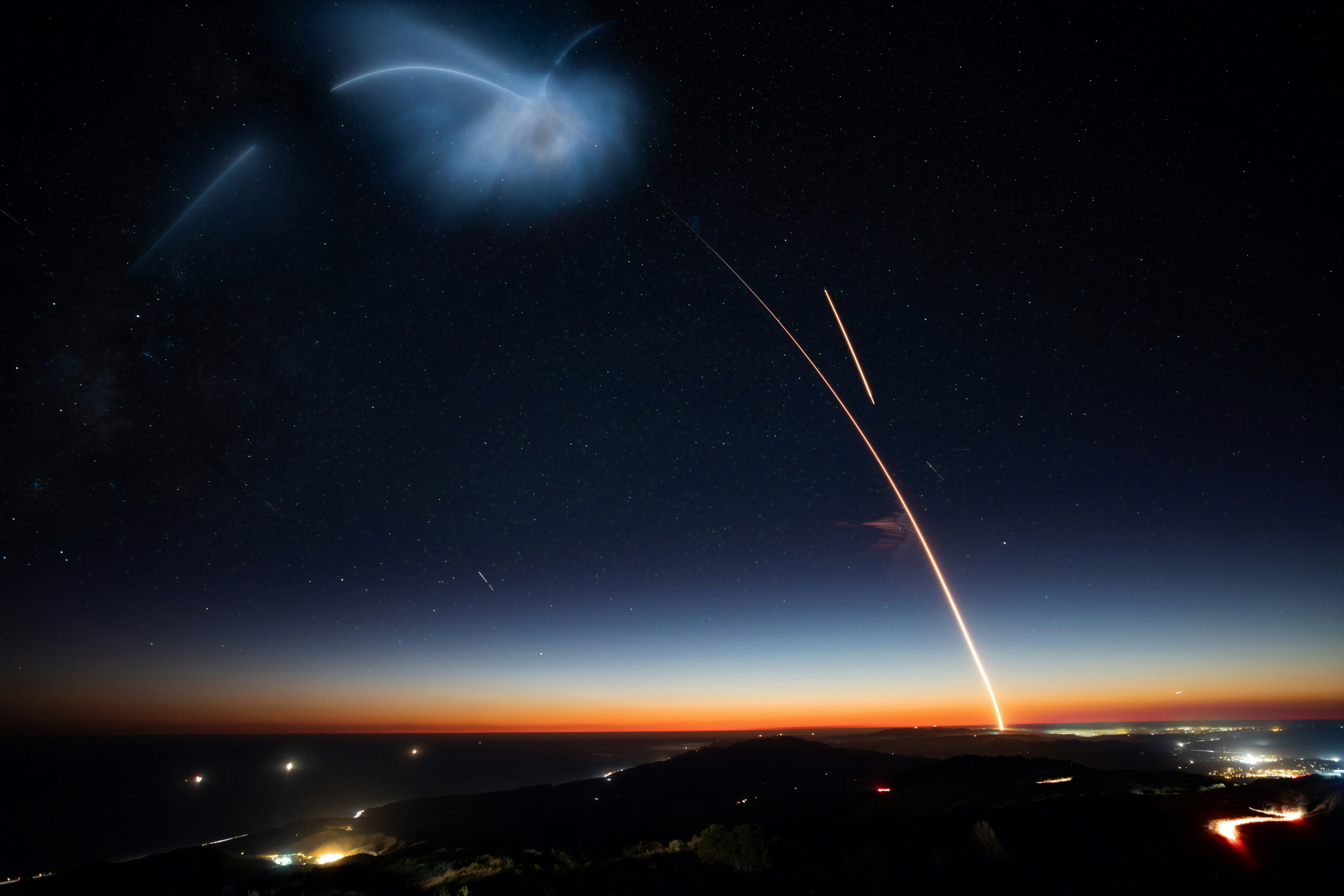
Starship Flight 12 status for May 2026: SpaceX targets mid-May with a revised trajectory, while Starlink 10-38 lofts 29 satellites from Cape Canaveral.

As humanity increasingly relies on satellites, the escalating space junk problem poses a dire threat to our space-based infrastructure. With debris counts reaching alarming levels, urgent action is needed to prevent a cascade of collisions that could make key orbits unusable.

Astroscale selects Isar Aerospace to launch ELSA-M, a commercial deorbit mission targeting defunct satellites in LEO. Over 20,000 trackable debris objects now in orbit.

South Korea's sophisticated network of robotic telescopes provides critical space situational awareness while strengthening the nation's position in space security amid regional tensions

Space Force awards $3.2 billion to 12 companies for Golden Dome boost-phase missile interceptor prototypes. Initial operational capability targeted for 2028.

SpaceX advances pre-launch tests amid Starlink deployment surge and strategic expansions in Texas.

SpaceX experiences a setback with Starship Flight 8 while continuing its Starlink deployment efforts with a successful launch from California.