


X Report 27 Mar 2025
SpaceX successfully launches 27 Starlink satellites and gains approval for internet services in Vietnam.



NORAD ID
55277
International Designator
2023-010J
Epoch
Sun, 19 Jul 2026 19:08:46 GMT
Apogee
Calculating...
Perigee
Calculating...
Inclination
70.00°
Right Ascension
71.40°
Eccentricity
Calculating...
Argument of Perigee
268.62°
Period
96.11 min
Mean Motion
14.98 rev/day
Latitude
Calculating...
Longitude
Calculating...
Altitude
Calculating...
Velocity
Calculating...
Name
STARLINK-5299
Alternative Name
Starlink 5299
Type
Status
Owner
SPXS
Country
United States
Constellation
N/A
Related Satellites
Major Events
N/A
1 55277U 23010J 26200.79775567 .00000455 00000+0 45897-4 0 9995
2 55277 69.9997 71.3982 0002819 268.6186 91.4650 14.98327457192573
Source: Celestrak
Length
0.2
Diameter
2.8
Span
9
Dry Mass
290
Launch Mass
305
Shape
Box + pan
Radar Cross Section
Unknown
Visual Magnitude
Unknown
Color
Unknown
Material Composition
Unknown
Payload
Starlink Group 2-4-09
Purpose
Communication
Mission
Communication
Manufacturer
SPXS
Life Expectancy
Unknown
Bus
Starlink
Configuration
Unknown
Motor
Krypton ion thrusters
Equipment
Ku/Ka-band payload, optical inter-satellite link
Power System
Solar arrays, batteries
ADCS
Unknown
Transmitter Frequency
Unknown
Learn more about satellites and other related topics.
SpaceX successfully launches 27 Starlink satellites and gains approval for internet services in Vietnam.
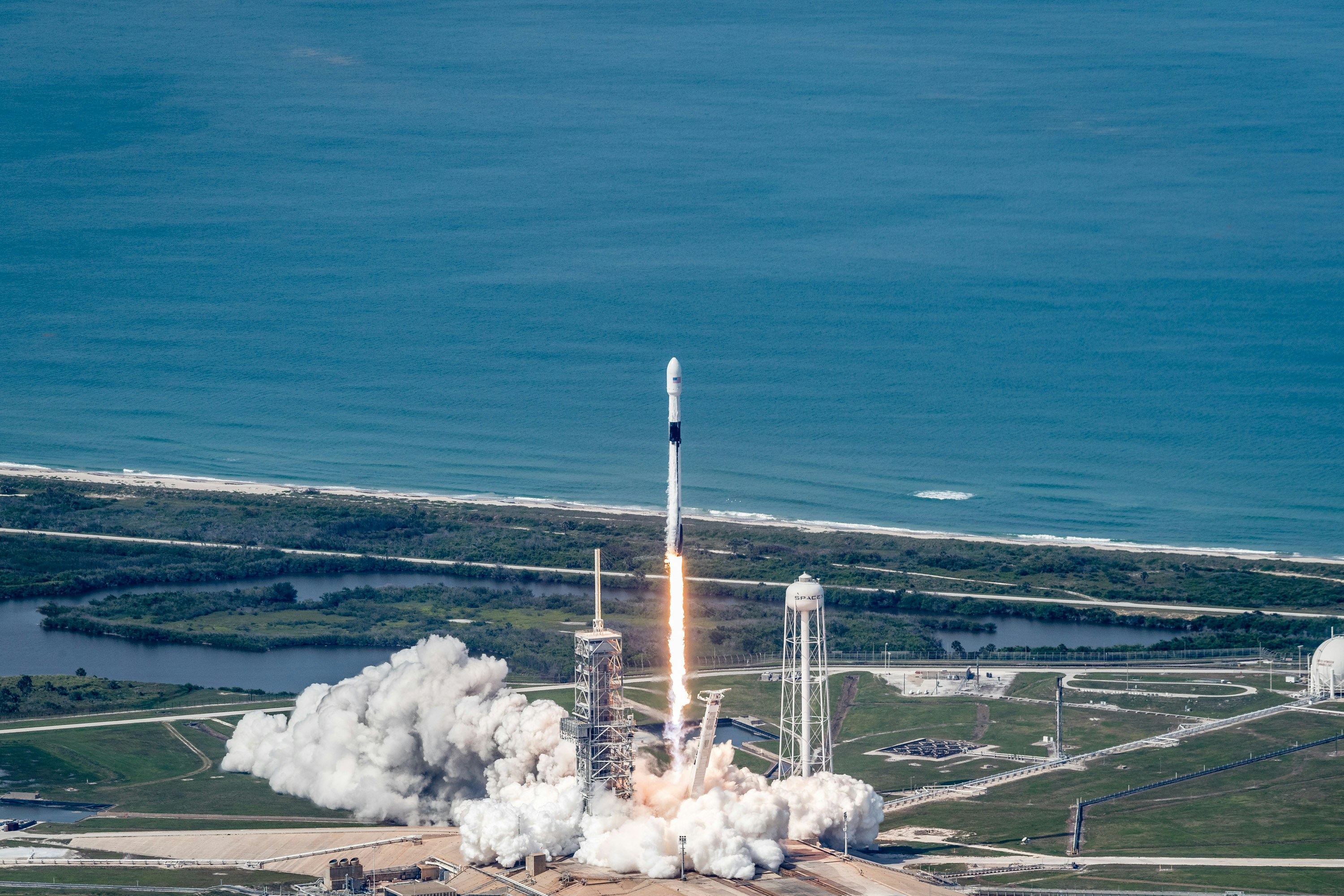
Starship update July 2026: Flight 13 completed a full six-Raptor static fire as SpaceX targets its first Cape Canaveral Starship launch by year's end.
SpaceX flew a Falcon 9 booster for a record 35th time on July 10, deploying 29 Starlink satellites as direct-to-cell tech expands to pet collars.

Today's space brief covers key developments in satellite monitoring, U.K. defense contracts, and critical licensing reforms supporting national security.

On May 4, 1989, Space Shuttle Atlantis lifted off from LC-39B carrying Magellan, NASA's first interplanetary mission since 1978. The eleven-year drought ended in a payload bay, and the radar that emerged would map ninety-eight percent of Venus through clouds that no camera could ever see through.

Today's highlights include China's launch of a mystery spysat, Maxar's terrain data for U.S. Army systems, and multiple U.S. defense firms enhancing satellite capabilities.

SpaceX's Fram2 mission marks a historic first in polar orbit travel, while DARPA unexpectedly detects Falcon 9 reentry using atmospheric listening.
Today's Space Brief highlights the U.S. Air Force's $48 million investment in testing reentry capsules, a Pentagon-backed GPS alternative, and the Space Force's quest for funding autonomy.