Latest Developments
SpaceX is pushing aggressively toward its first Starship launch from Cape Canaveral before the end of 2026, marking a major geographic expansion of the program beyond its Starbase origins in South Texas. Simultaneously, the company crossed a landmark millenary milestone in Falcon 9 launches, underscoring the relentless operational tempo that has placed 12,414 Starlink satellites into orbit to date — with 10,735 currently in orbit and 10,719 actively working. On the hardware side, SpaceX completed a critical full six-engine static fire for Starship Flight 13, bringing the next test flight one step closer to a launch date. A routine Falcon 9 mission from Vandenberg added another 24 satellites to the constellation on July 1, keeping the steady cadence of shell densification on track.
Space Safety
The Starlink conjunction and reentry risk picture for early July 2026 presents one critical threat requiring immediate attention alongside a broader moderate-risk cluster. A HIGH-risk conjunction is forecast between STARLINK-35722 and the non-operational ARIANE 40 R/B on Jul 3, 03:01 UTC, with a minimum range of just 8 meters and maximum collision probability of 1.0—representing the most significant conjunction event in the current dataset. Additionally, nine Starlink satellites are predicted to reenter Earth’s atmosphere between Jul 3-7, 2026, with decay windows ranging from 180 to 1,140 minutes, though none are flagged as high-interest objects requiring active mitigation. Four additional moderate-risk conjunctions involving operational and partially operational Starlink assets are scheduled for early July, primarily between Starlink satellites themselves and with debris from the Fengyun-1C fragmentation event.
| Risk | Starlink Sat | Other Object | Status | Min Range (km) | Rel Speed (km/s) | Max Prob | Time of Closest Approach |
|---|---|---|---|---|---|---|---|
| HIGH | STARLINK-35722 | ARIANE 40 R/B | Non-operational | 0.008 | 13.803 | 1.0 | Jul 3, 03:01 UTC |
| MODERATE | STARLINK-30463 | STARLINK-30468 | Partially Operational | 0.021 | 1.243 | 0.4531 | Jul 5, 11:01 UTC |
| MODERATE | STARLINK-30331 | FENGYUN 1C DEB | Non-operational | 0.014 | 9.578 | 0.3355 | Jul 2, 23:18 UTC |
| MODERATE | STARLINK-5106 | STARLINK-32786 | Operational | 0.049 | 6.927 | 0.1327 | Jul 5, 08:43 UTC |
| MODERATE | STARLINK-1477 | FLOCK 4H-13 | Partially Operational | 0.024 | 13.69 | 0.1126 | Jul 5, 18:38 UTC |
| LOW | STARLINK-32640 | FENGYUN 1C DEB | Non-operational | 0.03 | 13.773 | 0.07409 | Jul 2, 20:17 UTC |
| LOW | STARLINK-36211 | SL-14 R/B | Non-operational | 0.044 | 0.786 | 0.07231 | Jul 3, 15:26 UTC |
| LOW | STARLINK-3694 | HST | Operational | 0.085 | 8.476 | 0.0717 | Jul 3, 01:26 UTC |
| LOW | STARLINK-6211 | STARLINK-36396 | Operational | 0.066 | 10.175 | 0.07156 | Jul 1, 17:00 UTC |
| LOW | STARLINK-6312 | NESS | Operational | 0.04 | 7.828 | 0.0646 | Jul 1, 21:49 UTC |
| Satellite | NORAD ID | Predicted Decay | Window (min) | Inclination | Lat | Lon |
|---|---|---|---|---|---|---|
| STARLINK-1741 | 46567 | Jul 3, 19:04 UTC | 180 | 53° | 7.5° | 222.5° |
| STARLINK-1997 | 47592 | Jul 3, 23:44 UTC | 240 | 53° | -44.3° | 170° |
| STARLINK-4693 | 53605 | Jul 4, 01:57 UTC | 240 | 53.2° | -5.5° | 83.9° |
| STARLINK-1667 | 46155 | Jul 4, 08:18 UTC | 840 | 53° | 46.4° | 79.8° |
| STARLINK-5140 | 56147 | Jul 5, 00:36 UTC | 600 | 43° | 20.5° | 237.3° |
| STARLINK-1905 | 46746 | Jul 6, 02:04 UTC | 780 | 53° | -45.3° | 45.8° |
| STARLINK-1944 | 46796 | Jul 6, 17:17 UTC | 1080 | 53° | 3° | 26.5° |
| STARLINK-1876 | 47161 | Jul 6, 22:05 UTC | 1080 | 53° | -38.7° | 100.7° |
| STARLINK-1531 | 46572 | Jul 7, 05:54 UTC | 1140 | 53° | -14.7° | 77.6° |
Detailed Coverage
Starship Eyes Historic First Launch from Florida’s Space Coast
SpaceX and its contractor teams at Cape Canaveral are accelerating infrastructure work with a firm goal of conducting Starship’s first East Coast launch before the end of 2026. The move would dramatically expand operational flexibility, enabling direct-ascent trajectories to the International Space Station and other high-inclination or GTO destinations that are geometrically difficult from Boca Chica. Construction progress on the launch mount, vehicle assembly facilities, and ground support equipment has been described as on pace, though tight scheduling leaves little margin for delays.
A Florida-based Starship would represent one of the most significant shifts in American heavy-lift launch infrastructure in decades, placing the world’s largest rocket alongside legacy pads used by Saturn V and Space Shuttle. For constellation observers, a Cape Canaveral Starship opens the door to eventual direct high-volume Starlink V3 deployments into higher-inclination shells, which currently require more complex maneuvering from southern Texas trajectories.
Read the full story: NASASpaceFlight
SpaceX Crosses the Millenary Mark: 1,000 Falcon 9 Missions and Counting
Ars Technica’s Rocket Report highlights SpaceX crossing its “millenary milestone” — a reference to the staggering cumulative Falcon 9 mission count that has redefined launch economics and cadence globally. The figure encompasses commercial, government, crewed, and Starlink-dedicated flights, representing a volume no other orbital-class rocket family has approached in the modern era. The milestone arrives as competitors from India to New Zealand race to carve out market share in a launch industry SpaceX has fundamentally restructured.
The milestone is more than symbolic: it reflects the reusable booster program’s maturation, with individual cores now routinely flying 20-plus missions and turnaround times measured in days rather than months. For Starlink specifically, that cadence has enabled the constellation’s current scale of over 10,700 working satellites, a number that continues to climb with each passing week.
Read the full story: Ars Technica
All Six Raptor Engines Ignite: Starship Flight 13 Static Fire Complete
SpaceX conducted a full-duration six-engine static fire of the Starship upper stage at Starbase, burning all Raptor engines for approximately 60 seconds in the most significant pre-flight test milestone for the thirteenth integrated flight test. The successful firing clears one of the last major technical gates before the vehicle can be stacked on its Super Heavy booster and rolled to the orbital launch mount for final preparations. Video footage of the test showed a dramatic plume illuminating the South Texas night sky.
Flight 13 is expected to push further on the program’s ambitious objectives, which have included booster catch attempts, upper-stage reentry demonstrations, and in-space engine restart tests in recent flights. With Florida infrastructure still months away from operational readiness, Boca Chica remains the sole launch site for the near-term test manifest, making a clean path through remaining checkouts critical to maintaining schedule momentum.
Read the full story: Space.com
Falcon 9 Deploys 24 More Starlinks from Vandenberg, Booster B1100 Continues Streak
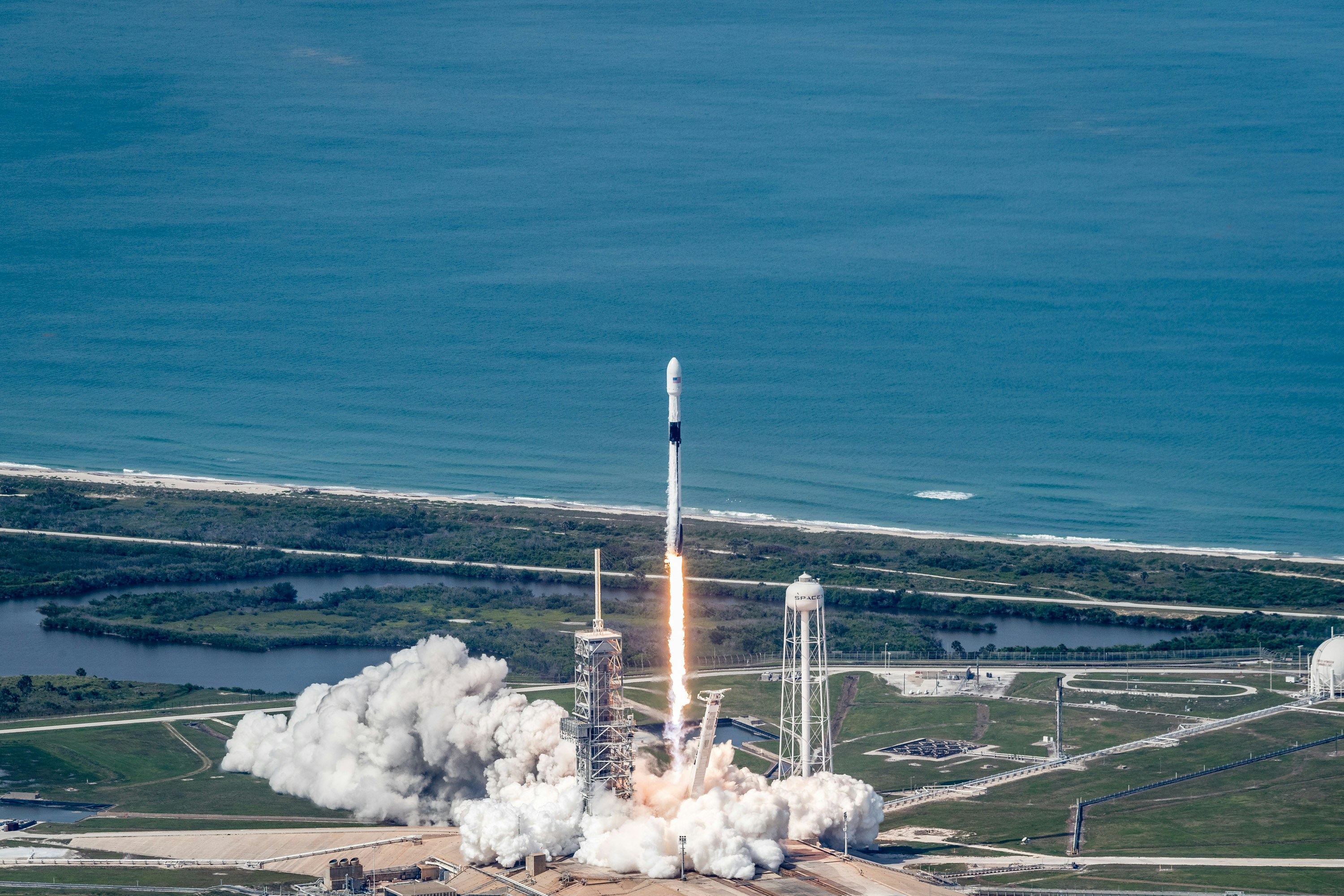
A Falcon 9 rocket lifted off from Vandenberg Space Force Base on July 1, 2026, delivering 24 Starlink satellites to low Earth orbit as part of the Group 17-46 mission. The launch utilized booster B1100, which completed another successful downrange landing aboard the drone ship Of Course I Still Love You. The mission is one of dozens flown from California this year, with Vandenberg’s high-inclination launch corridor serving shells that provide coverage at latitudes including much of Canada, northern Europe, and the polar regions.
Each 24-satellite batch represents a meaningful increment to active service capacity, contributing to the 10,719-satellite working figure that underpins Starlink’s global broadband offering. Tracking data post-deployment will show the fresh batch maneuvering from their insertion altitude to their operational shell over the coming weeks, a process now so routine that it rarely draws attention — yet collectively represents one of the most complex orbital logistics operations in history.
Read the full story: Space.com
Constellation Status
No changes have occurred in the Starlink constellation since the last check. The constellation currently consists of 12,414 total satellites launched, with 10,735 in orbit, 10,719 in working condition, and 1,679 that have decayed.
- Total Launched: 12414
- Total On Orbit: 10735
- Total Working: 10719
Track Starlink satellites in real-time: Track Starlink