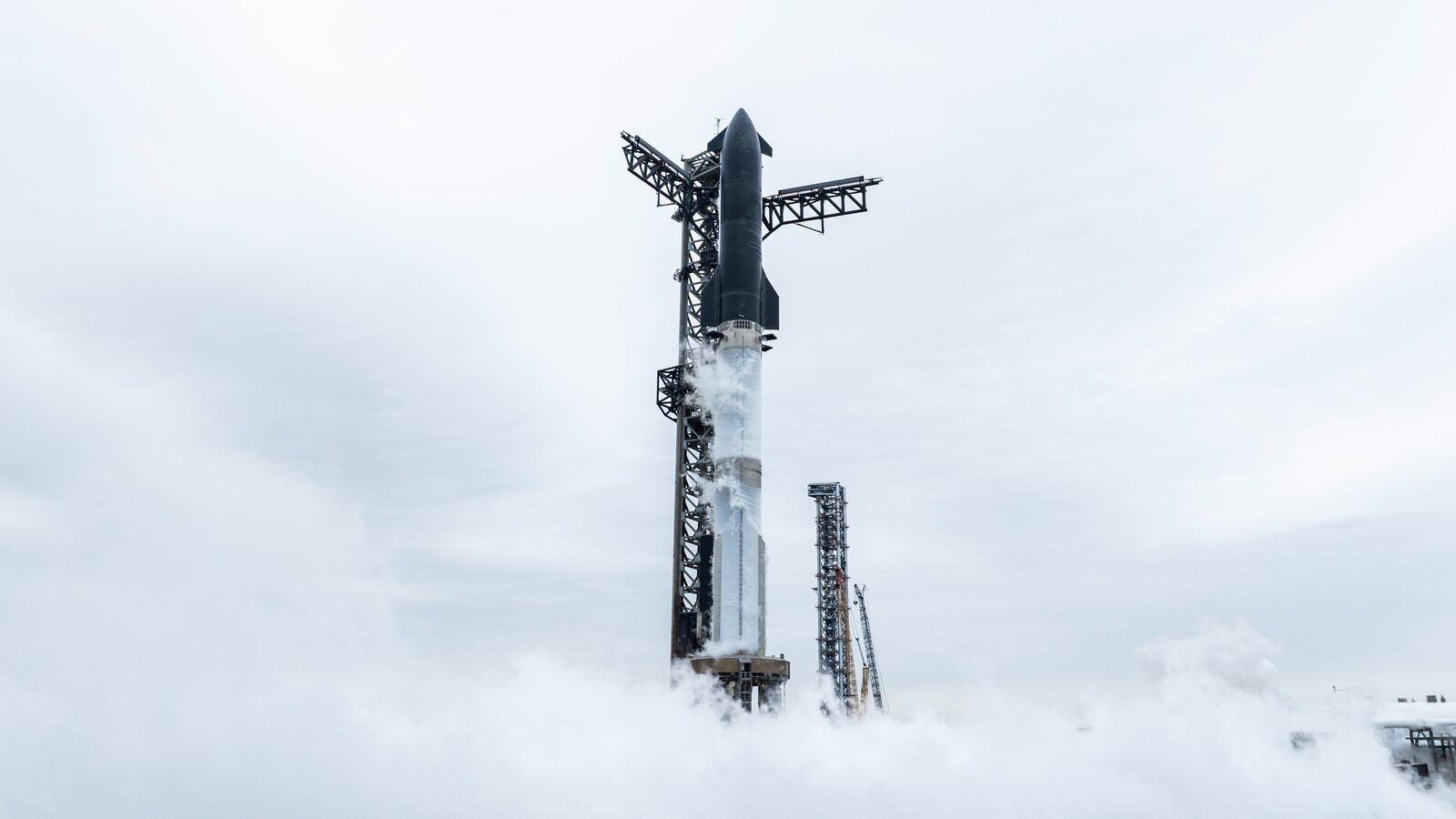
STARLINK-3993 (52692)

COSPAR: 2022-053AN | Alt Name: Starlink 3993

Image
STARLINK-3993 Satellite Image
Additional Sources
Launch Details

Launch Date

May 18, 2022

Launch Pad

LC39A

Launch Vehicle

Falcon 9

Orbital Elements

NORAD ID

52692

International Designator

2022-053AN

Epoch

Sun, 19 Jul 2026 13:54:52 GMT

Apogee

Calculating...

Perigee

Calculating...

Inclination

53.16°

Right Ascension

271.49°

Eccentricity

Calculating...

Argument of Perigee

89.98°

Period

95.44 min

Mean Motion

15.09 rev/day

Latitude

Calculating...

Longitude

Calculating...

Altitude

Calculating...

Velocity

Calculating...

Polar Plot
3D Visualization
Basic Satellite Info

Name

STARLINK-3993

Alternative Name

Starlink 3993

Type

Payload

Status

Operational

Owner

SPXS

Country

United States

Constellation

N/A

Related Satellites

Major Events

N/A

Latest TLEs
1 52692U 22053AN  26200.57977693  .00000299  00000+0  36897-4 0  9995
2 52692  53.1602 271.4862 0001126  89.9798 270.1322 15.08831289231067

Source: Celestrak

Summary
The STARLINK-3993 satellite, also known as Starlink 3993, is a communication spacecraft belonging to SpaceX's Starlink constellation. It was launched on May 18, 2022, from Launch Complex 39A at the Cape Canaveral Space Force Station aboard a Falcon 9 rocket. The satellite has dimensions of approximately 0.2 meters in length and 2.8 meters in diameter, with a span of 9 meters, likely due to its solar arrays. Its dry mass is 275 kilograms, and it was launched with a total mass of 297 kilograms. Equipped with Ku/Ka-band payload systems and an optical inter-satellite link for communication purposes, the satellite uses krypton ion thrusters for propulsion and relies on solar panels paired with batteries for power generation. The spacecraft's shape is described as "Box + pan," reflecting its design that integrates a primary body structure with additional features likely related to its antennas or solar arrays.

Starlink is a satellite constellation developed by SpaceX with the aim of providing global broadband internet coverage. Thousands of small satellites are deployed in low Earth orbit (LEO), enabling high-speed internet access even in remote areas. However, the rapid increase in satellites raises concerns about space debris and the potential for collisions, which can lead to further debris creation and endanger other spacecraft. Additionally, the sheer number of Starlink satellites can affect astronomical observations by increasing light pollution. Proper deorbiting plans and international coordination are essential to mitigate these challenges and ensure long-term sustainability in space.
Physical Characteristics

Length

0.2

Diameter

2.8

Span

9

Dry Mass

275

Launch Mass

297

Shape

Box + pan

Radar Cross Section

Unknown

Visual Magnitude

Unknown

Color

Unknown

Material Composition

Unknown

Technical Details

Payload

Starlink Group 4-18-37

Purpose

Communication

Mission

Communication

Manufacturer

SPXS

Life Expectancy

Unknown

Bus

Starlink

Configuration

Unknown

Motor

Krypton ion thrusters

Equipment

Ku/Ka-band payload, optical inter-satellite link

Power System

Solar arrays, batteries

ADCS

Unknown

Transmitter Frequency

Unknown

Map
This tool will help you track the satellite's position and predict its upcoming passes over your location. Simply input the coordinates or click the geolocation button to get started.
Next Pass
Azimuth Elevation Time (Local)
Start Azimuth
Max Elevation
Stop Azimuth
Time Until
Pass Duration

Satellite Articles

View All Posts »

Learn more about satellites and other related topics.

Space Brief 21 Dec 2025

Space Brief 21 Dec 2025

Today's briefing highlights the SDA's significant satellite award, Blue Origin's groundbreaking flight, and NASA's call for an Artemis review.

L3Harris, Sierra Space Win $1.75B Missile-Tracking Satellite Contract | KeepTrack Space Brief

L3Harris, Sierra Space Win $1.75B Missile-Tracking Satellite Contract | KeepTrack Space Brief

L3Harris and Sierra Space awarded $1.75 billion to build 36 missile-tracking satellites for SDA's Tracking Layer constellation. Hypersonic and ballistic missile detection from low Earth orbit.

Space Brief 4 Apr 2025

Space Brief 4 Apr 2025

Today's highlights include the release of a mystery object by Russian military satellites, SpaceX Fram2 mission insights, Amazon's upcoming satellite launch, and more.

Blue Origin's New Glenn Explodes During Ground Test | KeepTrack Space Brief

Blue Origin's New Glenn Explodes During Ground Test | KeepTrack Space Brief

Blue Origin's New Glenn rocket exploded during ground testing May 28, visible from hundreds of miles across Florida. Fireball halts vehicle pending failure investigation.
Space Brief 19 May 2025

Space Brief 19 May 2025

Today's space brief covers new ultraviolet data from the Europa Clipper, challenges in managing space debris, quantum advances in satellite technology, as well as a failed Indian satellite launch and more.

Space Brief 31 Jan 2025

Space Brief 31 Jan 2025

Today's brief covers advancements in satellite technology initiatives by the U.S. Space Force, geopolitical implications in maritime domains, and Sweden's significant military aid package. Additionally, we spotlight a historical satellite with modern implications.

Army Recruiting 1,000 Space Specialists Alongside Space Force | KeepTrack Space Brief

Army Recruiting 1,000 Space Specialists Alongside Space Force | KeepTrack Space Brief

Army launches space career field seeking 1,000 new specialists. HASC chair Rogers eyes $1.5T defense budget. Army and Marines share fire mission data via JADC2.

SpaceX Wins $4.16B Space Force Contract, X Report 3 Jun 2026

SpaceX Wins $4.16B Space Force Contract, X Report 3 Jun 2026

SpaceX wins a $4.16 billion Space Force satellite contract to track airborne threats worldwide, while dual-pad launches add 53 Starlink satellites.