


Top Stories
L3Harris, Sierra Space to build 36 missile-tracking satellites
The Space Development Agency awarded L3Harris and Sierra Space a combined $1.75 billion contract to build the next batch of missile-tracking satellites. The order covers 36 spacecraft for the Tracking Layer, the constellation designed to spot and track hypersonic and ballistic missiles from low Earth orbit.
This is the latest tranche in SDA’s proliferated architecture, which spreads sensors across dozens of satellites instead of relying on a handful of large, expensive platforms. More satellites in this layer means denser overhead coverage and shorter revisit times over missile launch zones.
Read the full story: SpaceNews
Jackal and Puma spacecraft to chase each other in Victus Haze demo
The Space Force’s Tactically Responsive Space program will fly two satellites, Jackal and Puma, in a rendezvous and proximity operations demo called Victus Haze. One spacecraft will maneuver to approach and inspect the other, testing how fast the U.S. can respond to a satellite closing in on its own assets.
The program has at least three more Victus demonstrations queued up, backed by $300 million requested across fiscal years 2027 to 2031. Each demo pushes the timeline for launch-on-demand response further, a capability the Space Force wants ready if an adversary satellite starts shadowing a U.S. asset in orbit.
Read the full story: Breaking Defense
European government space spending jumps 12% to $15.4 billion
European government space spending rose 12% to roughly $15.4 billion in 2025, according to a July 13 European Space Agency report. That’s a sharp reversal against a 3% decline in global government space spending over the same period.
Rising national defense budgets across Europe are driving the increase. ESA’s numbers suggest European governments are shifting space funding priorities toward military and dual-use programs rather than pure science missions.
Read the full story: SpaceNews
Reditus preps first launch of reentry vehicle for hypersonic target program
Reditus is readying the first launch of its ENOS spacecraft, a reentry vehicle the Missile Defense Agency is evaluating as a hypersonic target and testbed under the SHIELD contract. CEO Stef Crum confirmed the agency’s interest in using ENOS to simulate hypersonic threats for missile defense testing.
A working hypersonic target vehicle gives MDA a repeatable way to test interceptors against realistic threat profiles instead of relying on limited test assets. If ENOS performs as designed on its first flight, it adds a new domestic option to a target inventory that’s been stretched thin.
Read the full story: Breaking Defense
Planning for planetary defense on the moon
NASA’s plans for a permanent lunar base raise a problem nobody’s fully solved: what happens when a small asteroid or meteoroid threatens hardware or crews on the surface. A recent SpaceNews analysis lays out why lunar planetary defense needs its own detection and warning systems, separate from the ones built to protect Earth.
Earth-based planetary defense networks aren’t built to track objects on a collision course with the moon. A dedicated lunar warning system would need its own sensors, likely stationed at cislunar distances, to catch threats Earth-based telescopes would miss entirely.
Read the full story: SpaceNews
Satellite of the Day
COSMOS 2382 (GLONASS-M)
COSMOS 2382 is a Russian GLONASS-M navigation satellite that has been reliably transmitting positioning signals since its launch on December 1, 2001. Built by NPOPMR on the proven Uragan-M bus platform, this satellite is part of Russia’s Global Navigation Satellite System (GLONASS) - the counterpart to the U.S. GPS constellation. Measuring 4 meters long with a 7.8-meter solar panel span, COSMOS 2382 was designed with an ambitious five-year mission lifetime, though like many well-built space assets, it has significantly outlasted its original expectations.
As a mid-inclination navigation satellite in the GLONASS network, COSMOS 2382 contributes to global positioning, navigation, and timing services accessible to both civilian and military users. The satellite’s cylindrical bus with deployable solar arrays and battery systems keeps it powered in the challenging thermal environment of medium Earth orbit. Over two decades in service, this spacecraft represents the durability of the Russian space program’s satellite design philosophy and continues to play a role in the redundancy and robustness of the GLONASS constellation.
| Detail | Value |
|---|---|
| NORAD ID | 26987 |
| Operator | KVR/IACG (Russia) |
| Launch Date | December 1, 2001 |
| Orbit | Medium Earth Orbit, 64.10° inclination |
| Purpose | Navigation |
| Status | Active |
Track this satellite in real-time: Track COSMOS 2382
Upcoming Space Launches
July 14
-
SpaceX Falcon 9 Block 5:
- Starlink Group 10-45 from Cape Canaveral Space Force Station, Florida (07:15 UTC) Deployment of 24 Starlink V2 Mini Optimized satellites into low Earth orbit; first stage booster B1093 will attempt its 15th landing on the droneship Of Course I Still Love You in the Pacific Ocean. Watch Live
-
Russian Federal Space Agency (ROSCOSMOS) Soyuz 2.1a:
- Soyuz MS-29 from Baikonur Cosmodrome, Republic of Kazakhstan (14:47 UTC) Crewed launch carrying cosmonauts Pyotr Dubrov and Anna Kikina alongside NASA astronaut Anil Menon on an eight-month mission to the International Space Station, using a fast-track four-hour docking profile. Watch Live
July 16
-
SpaceX Falcon 9 Block 5:
- SDA Tranche 1 Transport Layer E from Vandenberg Space Force Base, California (20:22 UTC) Launch of another batch of satellites for the Space Development Agency’s Tranche 1 Transport Layer (T1TL-E); first stage will land on the droneship Of Course I Still Love You in the Pacific Ocean. Watch Live
-
SpaceX Starship:
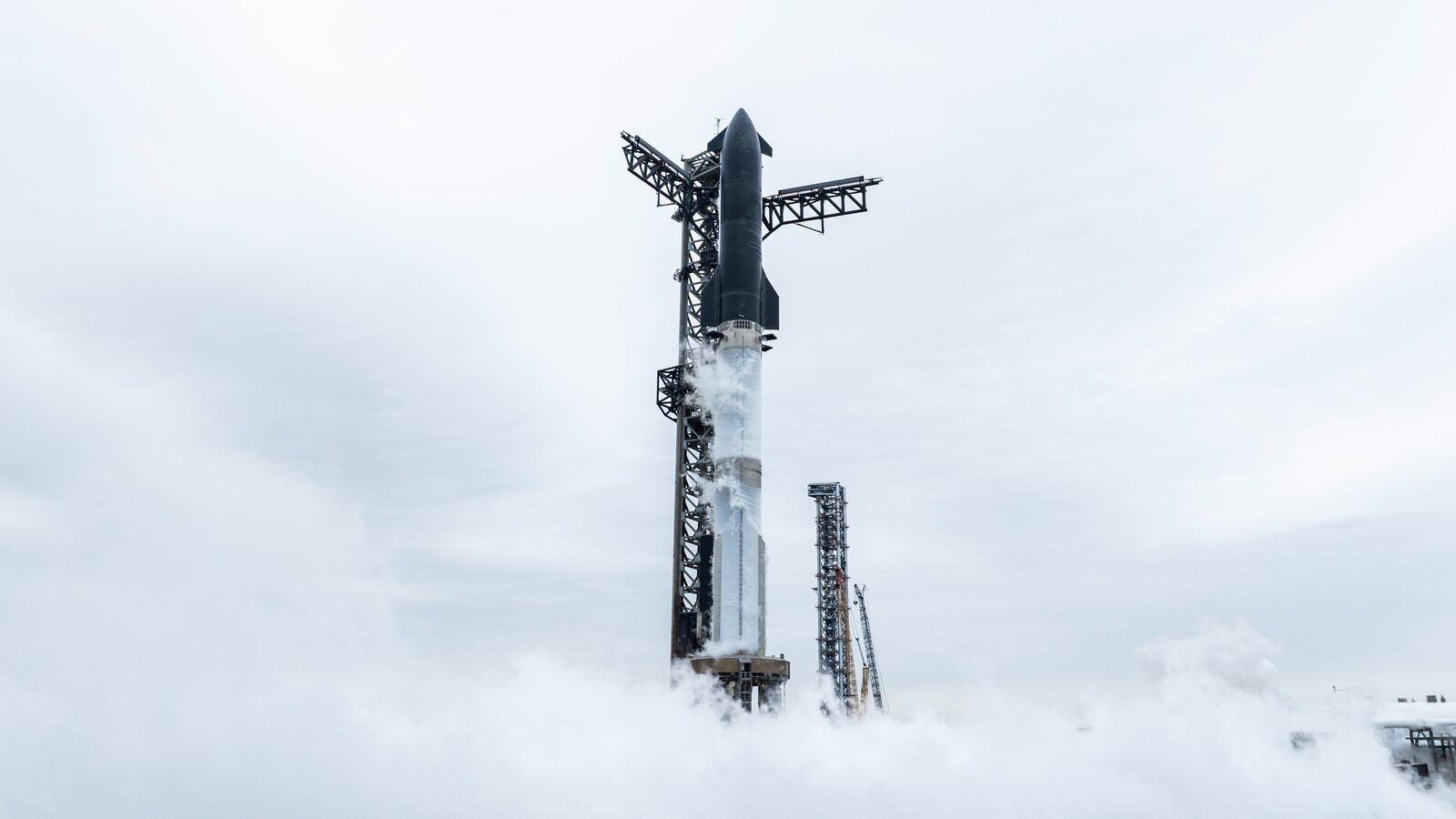
- Flight 13 from SpaceX Starbase, Texas (22:45 UTC) Suborbital test flight of the Starship-Super Heavy vehicle; Booster 20 and Ship 40 will attempt controlled splashdowns in the Gulf of Mexico and Indian Ocean, respectively, while deploying 20 V3 Starlink satellites during the test. Watch Live
July 17
-
Rocket Lab Electron:
- LOXSAT 1 from Rocket Lab Launch Complex 1, Mahia Peninsula, New Zealand (00:00 UTC) Demonstration of a complete cryogenic oxygen fluid management system in orbit, developed by Eta Space and sponsored by NASA’s Tipping Point program, integrated on a Rocket Lab Photon-LEO satellite bus for a planned nine-month technology demonstration.
-
China Aerospace Science and Technology Corporation Long March 7A:
- Unknown Payload from Wenchang Space Launch Site, People’s Republic of China (11:42 UTC) Mission details to be confirmed.
July 18
- Skyroot Aerospace Vikram-I:
- Demo Flight from Satish Dhawan Space Centre, India (05:00 UTC) Test flight of Skyroot’s Vikram-I orbital launch vehicle. Launch Preview
July 20
- SpaceX Falcon 9 Block 5:
- Starlink Group 17-39 from Vandenberg Space Force Base, California (14:00 UTC) Deployment of 24 Starlink V2 Mini Optimized satellites into low Earth orbit. Watch Live
July 21
- SpaceX Falcon 9 Block 5:
- MRV-1 from Cape Canaveral Space Force Station, Florida (21:15 UTC) Launch of the SpaceLogistics MRV-1 mission extension payload, including a Mission Robotic Vehicle and multiple Mission Extension Pods.
July 23
-
China Aerospace Science and Technology Corporation Long March 3B/E:
- Unknown Payload from Xichang Satellite Launch Center, People’s Republic of China (11:00 UTC) Mission details to be confirmed.
-
SpaceX Falcon 9 Block 5:
- Starlink Group 17-51 from Vandenberg Space Force Base, California (14:00 UTC) Deployment of 24 Starlink V2 Mini Optimized satellites into low Earth orbit. Watch Live
Schedule Changes
- Added a new Falcon 9 Block 5 launch for the MRV-1 mission, scheduled for July 21.
- SpaceX Falcon 9 Block 5 Starlink Group 15-14 has launched successfully and is now removed from the upcoming schedule.
- SpaceX Falcon 9 Block 5 SDA Tranche 1 Transport Layer E status updated from “To Be Confirmed” to “Go for Launch.”
- Long March 7A Unknown Payload status updated from “To Be Confirmed” to “Go for Launch.”
Note: Launch dates and times are subject to change due to technical or weather considerations.



