

X Report 12 Feb 2025
SpaceX swaps Crew Dragon capsules with NASA to accelerate Crew-10 launch, and successfully launches multiple Starlink satellites into orbit.


Launch Date
January 13, 2022
Launch Site
Launch Pad
LC40
Launch Vehicle
NORAD ID
50985
International Designator
2022-002B
Decay Date
6/23/2023
Name
FOSSASAT-2E1
Alternative Name
WISeSAT-1
Type
Status
Owner
WISEK
Country
Switzerland
Constellation
N/A
Related Satellites
Major Events
N/A
Length
0.1
Diameter
0.05
Span
0.1
Dry Mass
0.5
Launch Mass
0.5
Shape
Box
Radar Cross Section
Unknown
Visual Magnitude
Unknown
Color
Unknown
Material Composition
Unknown
Payload
FossaSat-2E1
Purpose
Technology
Mission
Technology
Manufacturer
FOSSA
Life Expectancy
Unknown
Bus
PocketQube 2P
Configuration
PocketQube (2P)
Motor
None
Equipment
Unknown
Power System
Solar cells, batteries
ADCS
Unknown
Transmitter Frequency
Unknown
Learn more about satellites and other related topics.
SpaceX swaps Crew Dragon capsules with NASA to accelerate Crew-10 launch, and successfully launches multiple Starlink satellites into orbit.

Today's briefing covers a last-minute abort of a SpaceX Starlink launch, NASA's preparation for hypersonic tests, Airbus's progress in its space business, and more exciting developments in satellite tracking and reusable spaceflight.

As Ukraine explores alternatives to SpaceX's Starlink, the potential adoption of Eutelsat OneWeb's satellite network raises critical questions about connectivity, resilience, and strategic autonomy.

NRO awards three commercial data contracts and explores vetting satellite firms for airborne target tracking via U.S. Space Force. Strategic expansion of GEOINT capabilities.

ULA's Vulcan Centaur faces potential months-long stand-down. Space Force actively exploring payload reassignment and satellite operational life extensions to cover critical national security missions.
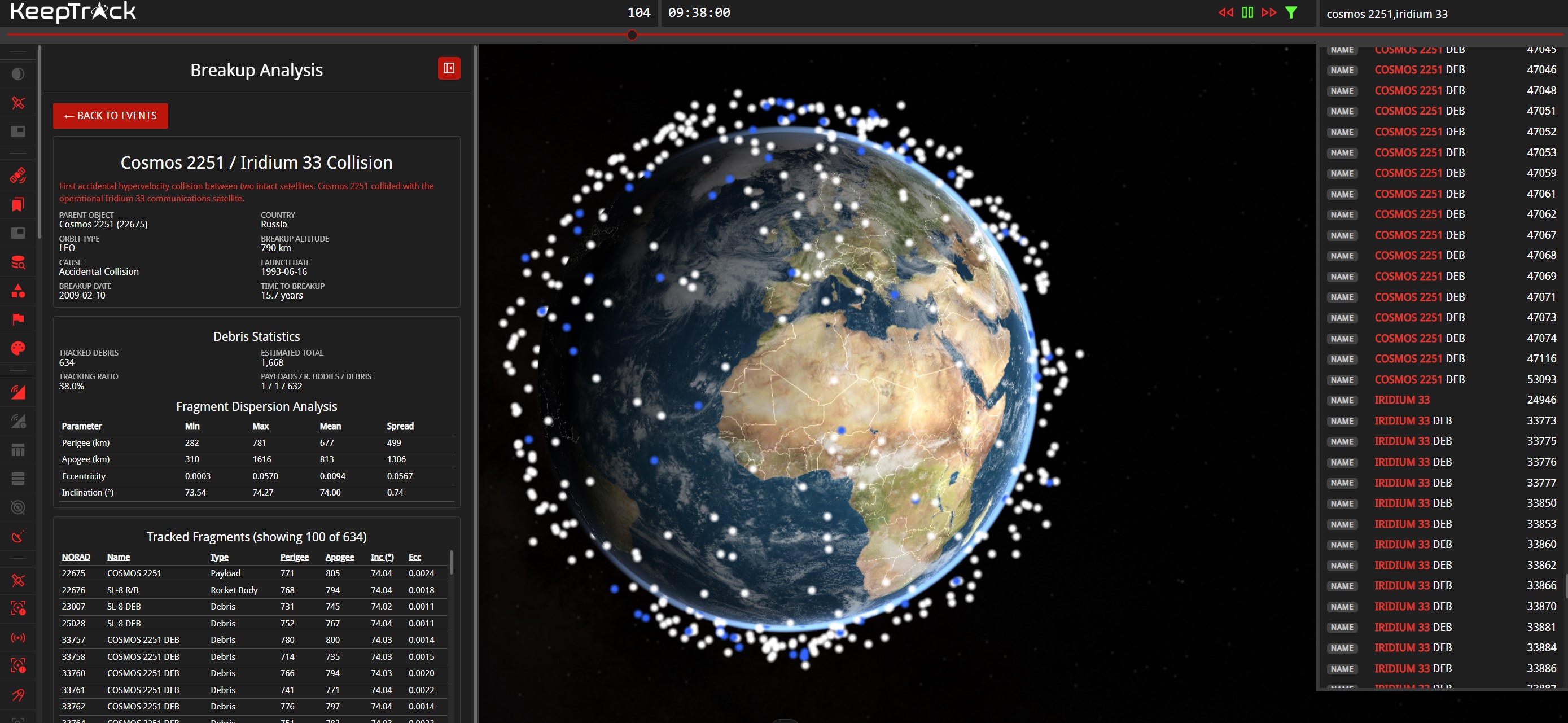
On February 10, 2009, an active Iridium communications satellite and a derelict Soviet military spacecraft slammed into each other 789 kilometers above Siberia. The collision produced more than 2,300 pieces of trackable debris that are still up there. Seventeen years later, the Iridium-Cosmos collision remains the event that made space debris a policy problem the world could no longer ignore.

Tensions between SpaceX and the U.S. government escalate as President Trump's threats could have significant implications on the company's operations and future plans. Meanwhile, India takes a significant step in its space endeavors with a historic astronaut launch.

Twenty-two years ago, the crew of Space Shuttle Columbia awakened to John Lennon's 'Imagine' and shared a profound message about unity and peace that would become part of their enduring legacy