OTV 1 (USA 212) (36514)

COSPAR: 2010-015A | Alt Name: X-37B OTV-1
DECAYED

Image
OTV 1 (USA 212) Satellite Image
Additional Sources
Launch Details

Launch Date

April 22, 2010

Launch Pad

SLC41

Launch Vehicle

Atlas V 501

Orbital Elements

NORAD ID

36514

International Designator

2010-015A

Decay Date

12/3/2010

Basic Satellite Info

Name

OTV 1 (USA 212)

Alternative Name

X-37B OTV-1

Type

Payload

Status

Decayed

Owner

AFRCO

Country

United States

Constellation

N/A

Related Satellites

Major Events

N/A

Summary
OTV 1 (USA 212), also known as X-37B OTV-1, is a reusable space plane operated by AFRCO from the US. It was launched on April 22, 2010, using an Atlas V 501 launch vehicle from SLC41 at AFETR. The satellite measures 8.8 meters in length and span with a diameter of 2.9 meters, has a dry mass of 5000 kg, and was launched with the same mass. It features a deployable solar array for power generation and carries the payload X-37B No. 1 F1. The mission's objective is to serve as a reusable satellite, and it uses AOCS (Attitude and Orbit Control System) for its operations. Its shape consists of half-cylindrical and wing components. Notably, OTV 1 has had varying lifetimes, with nominal operation lasting 270 days, while specific missions ranged from 225 to 675 days. The spacecraft was manufactured by BOHB (Boeing) and serves as a significant asset for reusable space technology.
Physical Characteristics

Length

8.8

Diameter

2.9

Span

8.8

Dry Mass

5000

Launch Mass

5000

Shape

Half Cyl + 2 Wing

Radar Cross Section

Unknown

Visual Magnitude

Unknown

Color

Unknown

Material Composition

Unknown

Technical Details

Payload

X-37B No. 1 F1

Purpose

Reusable satellite

Mission

Reusable satellite

Manufacturer

BOHB

Life Expectancy

270 days (nominal); 225 days (#1); 469 days (#2); 675 days (#3)

Bus

X-37

Configuration

reusable space plane

Motor

AOCS

Equipment

?

Power System

Deployable solar array, batteries

ADCS

Unknown

Transmitter Frequency

Unknown

Satellite Articles

View All Posts »

Learn more about satellites and other related topics.

Pentagon Pauses LEO Constellation as Acquisition Reviews Continue | KeepTrack Space Brief

Pentagon Pauses LEO Constellation as Acquisition Reviews Continue | KeepTrack Space Brief

Pentagon puts LEO constellation layers on hold during acquisition review. SpaceX and xAI join $100M autonomous drone contest. China's Zenk Space completes first stage static fire.

X Report 19 Feb 2025

X Report 19 Feb 2025

SpaceX achieves a new milestone with a Falcon 9 landing near The Bahamas, closely following Rocket Lab's successful satellite launch.

Starlink Launch Cadence: 54 Sats in One Day, X Report 13 Mar 2026

Starlink Launch Cadence: 54 Sats in One Day, X Report 13 Mar 2026

SpaceX Starlink launch cadence 2026: missions 26 and 27 lift off 37 minutes apart on March 13, with 25 and 29 satellites per Falcon 9, 54 in one morning.

X Report 31 Mar 2025

X Report 31 Mar 2025

New experiments in space agriculture begin with Fram2 mission, a historic polar orbit flight, and a Starlink launch postponement.

Space Brief 16 Feb 2025

Space Brief 16 Feb 2025

SpaceX's historic Falcon 9 flight launches 21 Starlink satellites, opening new milestones in space travel. Meanwhile, K2 Space achieves a funding breakthrough, and the first astronaut with a disability is set for a mission to the ISS.

SpaceX and xAI Tapped for Pentagon's $100M Drone Contest | KeepTrack X Report

SpaceX and xAI Tapped for Pentagon's $100M Drone Contest | KeepTrack X Report

Pentagon selects SpaceX and xAI for $100M autonomous drone competition. Two Falcon 9 rockets launch Starlink sats from California and Florida. 11,215 total Starlink satellites launched.

The Day America's Revolutionary Rocket Design Made Its Final Flight

The Day America's Revolutionary Rocket Design Made Its Final Flight

Twenty years ago, an Atlas rocket carrying a classified payload lifted off from Cape Canaveral, marking the end of a revolutionary spacecraft design that helped launch America into the Space Age

Shimizu's Luna Ring - The Plan to Wrap the Moon in Solar Panels

Shimizu's Luna Ring - The Plan to Wrap the Moon in Solar Panels

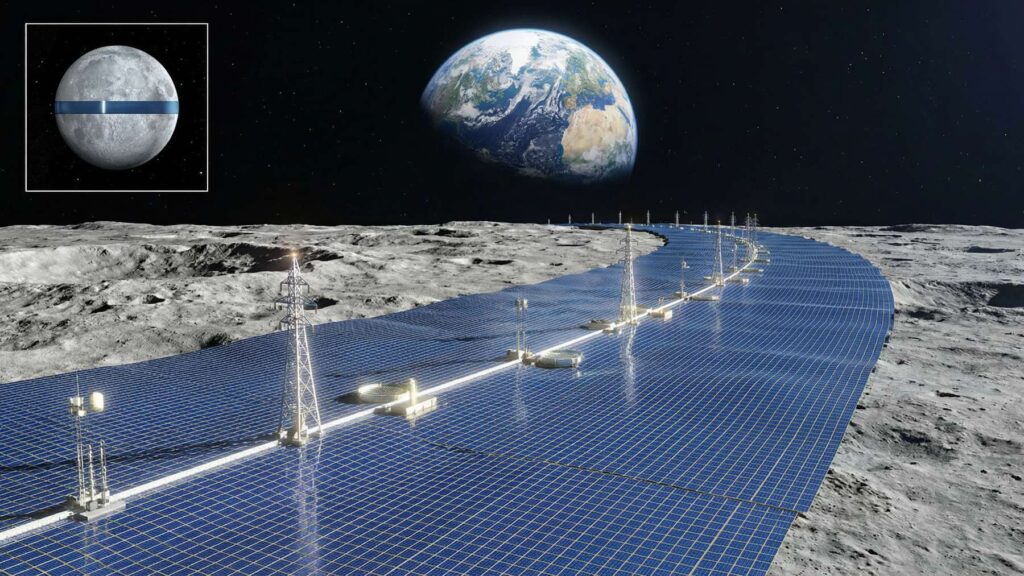
A 220-year-old Japanese construction company wants to build an 11,000-kilometer belt of solar cells around the lunar equator and beam the power back to Earth. The physics checks out. Everything else is another story.