Latest Developments
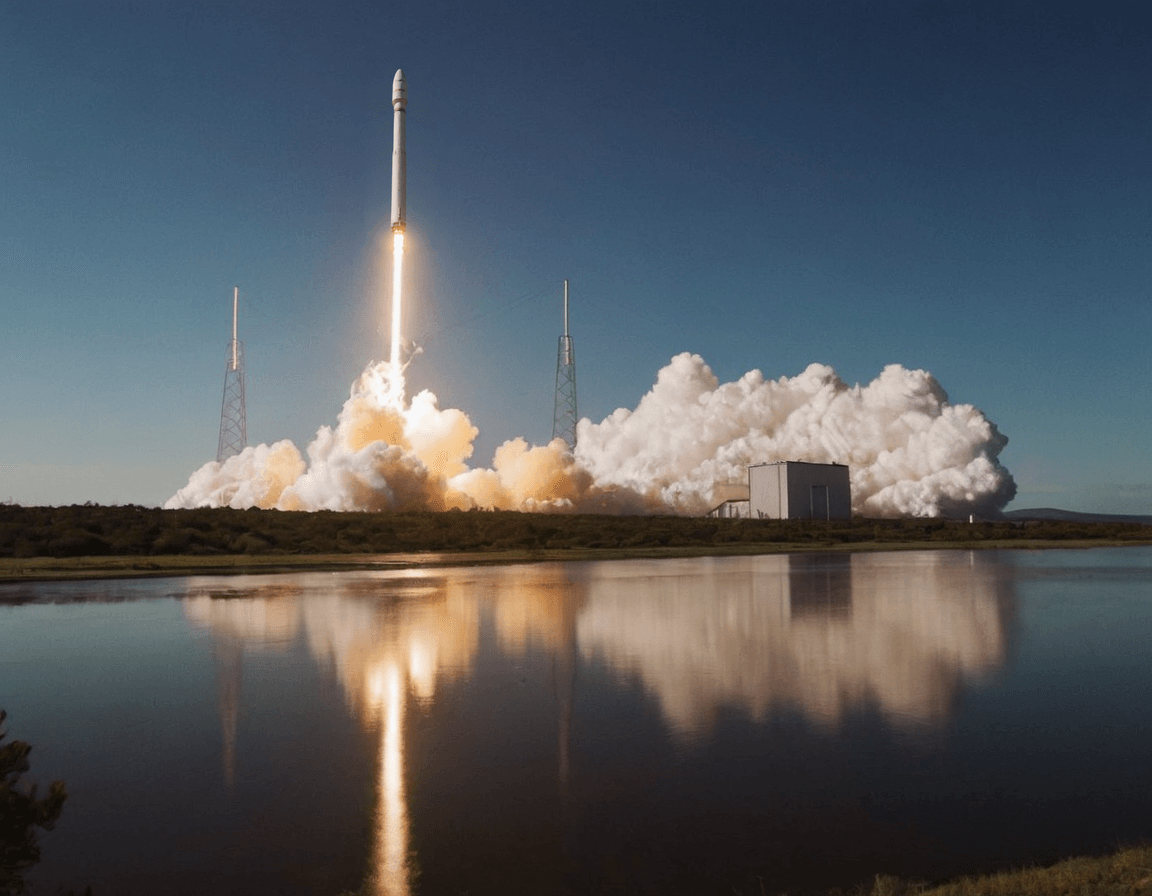
SpaceX is executing a rare same-day dual-launch cadence on March 13, 2026, with Falcon 9 rockets lifting off from both coasts within 37 minutes of each other — deploying 54 Starlink satellites in a single morning and marking the constellation’s 26th and 27th missions of the year. With 9,938 satellites currently operational out of 9,949 in orbit, the two launches will push the active fleet even deeper into uncharted density territory for a commercial LEO constellation. On the regulatory front, FCC Chair Brendan Carr publicly rebuked Amazon for opposing SpaceX’s latest satellite plan, injecting fresh tension into the fiercely competitive broadband satellite sector. Meanwhile, an industry report from Novaspace confirms that Starlink’s vertical integration strategy has fundamentally restructured the global satellite connectivity market, rendering raw bandwidth capacity largely obsolete as a competitive differentiator.
Space Safety
Current Starlink conjunction activity shows elevated collision risk in March 2026, with two HIGH-risk events identified in the tracking data. The most critical conjunction involves STARLINK-35760 and ICEYE-X31 on Mar 18, 20:26 UTC with a minimum range of just 0.002 km, followed by STARLINK-34346 approaching SL-16 debris on Mar 12, 05:37 UTC. Concurrently, seven Starlink satellites are predicted to reenter Earth’s atmosphere between Mar 13-16, with decay windows ranging from 13 to 48 hours, representing a moderate operational churn rate for the constellation.
| Risk | Starlink Satellite | Other Object | Status | Min Range (km) | Rel Speed (km/s) | Max Prob | Time of Closest Approach |
|---|---|---|---|---|---|---|---|
| HIGH | STARLINK-35760 | ICEYE-X31 | Operational | 0.002 | 5.769 | 1.0 | Wed, 18 Mar 2026 20:26:39 UTC |
| HIGH | STARLINK-34346 | SL-16 DEB | Non-operational | 0.008 | 15.111 | 1.0 | Thu, 12 Mar 2026 05:37:56 UTC |
| MODERATE | STARLINK-4583 | LEMUR-2-MARHISYAM | Operational | 0.016 | 14.197 | 0.229 | Wed, 18 Mar 2026 18:22:00 UTC |
| MODERATE | STARLINK-32930 | KUIPER-00209 | Operational | 0.019 | 10.565 | 0.219 | Mon, 16 Mar 2026 12:19:45 UTC |
| MODERATE | STARLINK-4085 | RAAF M1 | Non-operational | 0.020 | 7.948 | 0.217 | Sun, 15 Mar 2026 08:42:22 UTC |
| MODERATE | STARLINK-5739 | YAOGAN-30 06C | Operational | 0.026 | 9.245 | 0.132 | Thu, 12 Mar 2026 05:44:41 UTC |
| MODERATE | STARLINK-5114 | CSC-1 | Operational | 0.027 | 8.363 | 0.130 | Fri, 13 Mar 2026 10:37:47 UTC |
| MODERATE | STARLINK-34116 | EDISON-1 | Operational | 0.029 | 7.000 | 0.119 | Thu, 12 Mar 2026 12:25:34 UTC |
| MODERATE | STARLINK-1559 | STARLINK-35452 | Operational | 0.058 | 3.172 | 0.106 | Sat, 14 Mar 2026 06:46:07 UTC |
| Satellite | NORAD ID | Predicted Decay | Window (min) | Inclination | Latitude | Longitude |
|---|---|---|---|---|---|---|
| STARLINK-1112 | 44925 | Mar 13, 02:46 UTC | 780 | 53° | 53° | 107.7° |
| STARLINK-1738 | 46336 | Mar 13, 16:25 UTC | 1440 | 53° | 11.1° | 211° |
| STARLINK-30995 | 58474 | Mar 14, 10:51 UTC | 1440 | 43° | -4.1° | 211.7° |
| STARLINK-3050 | 49180 | Mar 15, 10:58 UTC | 2880 | 70° | -11° | 94.1° |
| STARLINK-36858 | 68021 | Mar 15, 11:37 UTC | 2880 | 97.3° | -80.6° | 87° |
| STARLINK-1587 | 46157 | Mar 16, 01:22 UTC | 2880 | 53° | 23.9° | 151.4° |
| STARLINK-3767 | 52376 | Mar 16, 04:08 UTC | 2880 | 53.2° | 6° | 78.2° |
Detailed Coverage
FCC Chair Publicly Calls Out Amazon Over SpaceX Satellite Opposition
FCC Chairman Brendan Carr took the unusual step of criticizing Amazon directly on social media platform X, targeting the company’s formal opposition to a SpaceX satellite plan currently before the commission. The public rebuke signals strong regulatory momentum behind SpaceX’s expansion proposals and raises questions about whether Amazon’s Kuiper constellation strategy increasingly relies on regulatory friction rather than technical competition.
The clash underscores a broader war playing out across filing dockets, orbital slots, and spectrum allocations as both companies race to dominate LEO broadband. For satellite trackers, the stakes are real: SpaceX’s proposed plan could authorize additional orbital shells, further densifying an already crowded low Earth orbit environment already hosting nearly 10,000 active Starlink nodes.
Read the full story: Teslarati
SpaceX’s 26th 2026 Mission: 25 Starlinks Targeting Vandenberg Polar Shell
The Starlink 17-31 mission lifted off from Space Launch Complex 4 East at Vandenberg Space Force Base at 7:33:50 a.m. PDT on March 13, carrying 25 satellites destined for a high-inclination orbital shell serving polar and high-latitude coverage regions. The mission is the 26th Starlink launch of 2026, a pace that — if sustained — would easily surpass last year’s cadence and approach the theoretical ceiling of Falcon 9 launch availability.
From a constellation tracking perspective, polar-shell satellites are among the most operationally significant additions to the network, enabling coverage zones in the Arctic, maritime routes, and defense-relevant high-latitude theatres where geostationary satellites cannot compete. Observers with ground-based tracking tools can expect the fresh deployment train to be visible for several days post-insertion.
Read the full story: Spaceflight Now
29 More Starlinks Bound for LEO in Cape Canaveral Morning Launch
Just 37 minutes after the Vandenberg liftoff, SpaceX’s Starlink 10-48 mission was scheduled to depart Space Launch Complex 40 at Cape Canaveral Space Force Station at 8:10 a.m. EDT, adding 29 satellites to a mid-inclination orbital shell. The back-to-back launches demonstrate SpaceX’s industrialized launch cadence and the logistical depth required to sustain simultaneous countdowns across two launch ranges on opposite coasts.
Together, the two March 13 missions represent a single-day addition of 54 satellites — a figure that would have constituted an entire constellation for most operators just a decade ago. Tracking platforms monitoring LEO population density will need to process two separate deployment sequences within the same operational window, a stress-test for both software and conjunction assessment pipelines.
Read the full story: Spaceflight Now
Novaspace Report: Satellite Connectivity Has Entered a “Post-Capacity Era”
Novaspace’s Capacity Pricing Trends 8th Edition, released in February 2026, delivers a landmark finding: the global satellite connectivity market has structurally shifted into what analysts are calling a Post-Capacity Era, where available bandwidth is no longer the primary basis for competitive differentiation. The report identifies Starlink’s vertical integration — controlling satellites, ground infrastructure, user terminals, and software — as the single largest driver of this transformation, having compressed per-megabit pricing to levels that legacy operators cannot profitably match.
The implications extend beyond commercial competition. As bandwidth becomes commoditized, value shifts toward service quality, latency, global coverage consistency, and application-layer features — areas where Starlink’s 9,938-satellite operational fleet gives it structural advantages that newer entrants will struggle to replicate at any near-term launch cadence. For governments and enterprises still evaluating satellite connectivity procurement, the report effectively signals that capacity benchmarks alone are no longer a meaningful basis for vendor selection.
Read the full story: SpaceNews
Constellation Status
The Starlink constellation has remained stable since the last check, with no new launches or orbital changes recorded. The constellation continues to maintain 9,949 satellites in orbit, of which 9,938 are operational, while 1,539 satellites have decayed from orbit out of the 11,488 total launched to date.
- Total Launched: 11488
- Total On Orbit: 9949
- Total Working: 9938
Track Starlink satellites in real-time: Track Starlink