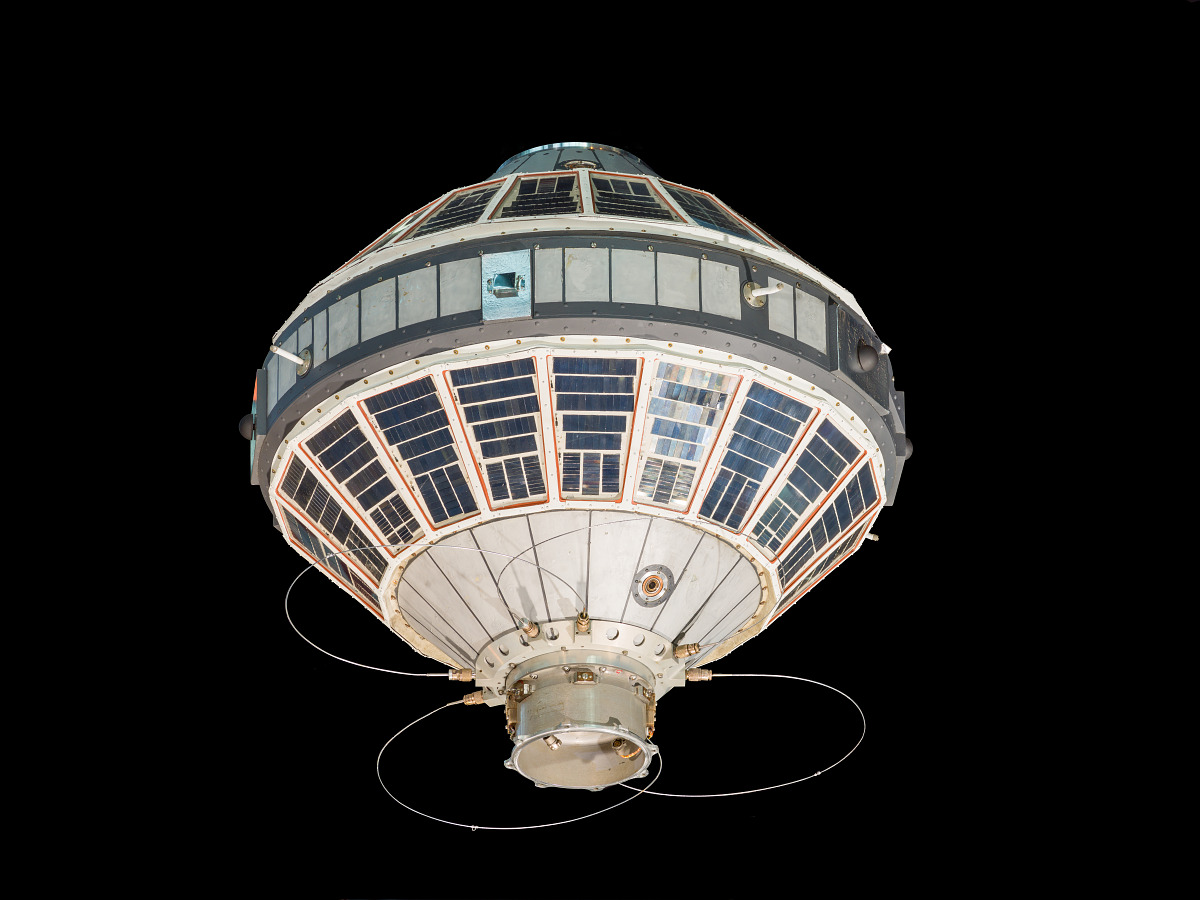
Explorer 7 (00022)

COSPAR: 1959-009A | Alt Name: NASA S-1A

Image
Explorer 7 Satellite Image
Launch Details

Launch Date

October 13, 1959

Launch Pad

LC-5

Launch Vehicle

Juno II

Orbital Elements

NORAD ID

00022

International Designator

1959-009A

Epoch

Sat, 04 Jul 2026 00:06:42 GMT

Apogee

Calculating...

Perigee

Calculating...

Inclination

50.24°

Right Ascension

16.94°

Eccentricity

Calculating...

Argument of Perigee

192.92°

Period

94.17 min

Mean Motion

15.29 rev/day

Latitude

Calculating...

Longitude

Calculating...

Altitude

Calculating...

Velocity

Calculating...

Polar Plot
3D Visualization
Basic Satellite Info

Name

Explorer 7

Alternative Name

NASA S-1A

Type

Payload

Status

Unknown

Owner

NASA

Country

United States

Constellation

N/A

Related Satellites

Major Events

Explorer 7 was launched on October 13, 1959, and provided significant geophysical information on radiation and magnetic storms. It was the first satellite to measure Earth's radiation balance.

Latest TLEs
1 00022U 59009A   26185.00465619  .00016402  00000-0  53139-3 0  9997
2 00022  50.2430  16.9373 0077808 192.9187 166.9781 15.29192616802927

Source: Celestrak

Summary
Here is a 2-3 paragraph summary of the satellite: Explorer 7 was launched on October 13, 1959, and was designed to measure solar X-ray and Lyman-alpha flux, trapped energetic particles, and heavy primary cosmic rays. Secondary objectives included collecting data on micrometeoroid penetration and studying the Earth's radiation balance. The satellite was equipped with scientific instruments mounted on its exterior, including approximately 3,000 solar cells that provided power supplemented by nickel-cadmium batteries. Explorer 7 transmitted useful data from launch until February 1961 and intermittently until August 24, 1961. Explorer 7 provided significant geophysical information on radiation and magnetic storms, making it the first satellite to measure Earth's radiation balance. The satellite was a spin-stabilized spacecraft with a diameter of 0.76 meters and a mass of 41.5 kilograms, built by the Jet Propulsion Laboratory for NASA.
Physical Characteristics

Length

0.76

Diameter

0.76

Span

7

Dry Mass

41.5

Launch Mass

41.5

Shape

Two truncated conical fiberglass shells joined by a cylindrical aluminum center section.

Radar Cross Section

0.506

Visual Magnitude

8.2

Color

Silver

Material Composition

Fiberglass shells and aluminum center section.

Technical Details

Payload

Scientific instruments for measuring solar radiation, cosmic rays, and micrometeoroids.

Purpose

Science

Mission

Explorer 7 was designed to measure solar X-ray and Lyman-alpha flux, trapped energetic particles, and heavy primary cosmic rays. Secondary objectives included collecting data on micrometeoroid penetration and studying the Earth's radiation balance.

Manufacturer

Jet Propulsion Laboratory

Life Expectancy

The satellite transmitted useful data from launch until February 1961 and intermittently until August 24, 1961.

Bus

S-1A

Configuration

Science Explorer

Motor

None

Equipment

The satellite was equipped with instruments to measure solar X-ray and Lyman-alpha flux, trapped energetic particles, heavy primary cosmic rays, micrometeoroid penetration, and thermal radiation.

Power System

Approximately 3,000 solar cells mounted on the satellite's exterior, supplemented by 15 nickel-cadmium batteries.

ADCS

Spin-stabilized

Transmitter Frequency

20 MHz, 108 MHz

Map
This tool will help you track the satellite's position and predict its upcoming passes over your location. Simply input the coordinates or click the geolocation button to get started.
Next Pass
Azimuth Elevation Time (Local)
Start Azimuth
Max Elevation
Stop Azimuth
Time Until
Pass Duration

Satellite Articles

View All Posts »

Learn more about satellites and other related topics.

X Report 31 Aug 2025

X Report 31 Aug 2025

SpaceX successfully launched its ninth Starlink mission of the month, boosting broadband coverage with additional satellites deployed from both coasts. The latest missions underscore the company's commitment to expanding global internet access.


X Report 21 Feb 2025

X Report 21 Feb 2025

SpaceX's Falcon 9 achieves another milestone with successful international launch; Elon Musk discusses the future of the ISS; SpaceX prepares for its 450th Falcon launch.

Seismic Networks Now Track Space Junk, Pentagon Faces Golden Dome Cost Challenges | KeepTrack Space Brief

Seismic Networks Now Track Space Junk, Pentagon Faces Golden Dome Cost Challenges | KeepTrack Space Brief

Johns Hopkins researchers use seismic networks to track space debris in near real-time. Pentagon faces Golden Dome production scale challenges. SpaceX launches 25 Starlink sats in seventh 2026 mission.

X Report 20 Nov 2024

X Report 20 Nov 2024

SpaceX conducts another Starship test flight, with high-profile audience; SEOPS secures Falcon 9 for rideshare mission; Ontario partners with Starlink for rural connectivity.

Space Brief 8 Nov 2024

Space Brief 8 Nov 2024

Today's highlights include Russia's record-setting satellite launch, insights from NASA's AWE during Hurricane Helene, and confirmation of astronaut Suni Williams' good health aboard the ISS.

X Report 8 Dec 2025

X Report 8 Dec 2025

SpaceX faces weather challenges as it scrubs the launch of its 3,000th Starlink satellite. Meanwhile, Elon Musk discusses advancing to a Type II civilization in an engaging social media post.

Starship Flight 13 Static Fire, Florida Push, X Report 4 Jul 2026

Starship Flight 13 Static Fire, Florida Push, X Report 4 Jul 2026

Starship update July 2026: Flight 13 completed a full six-Raptor static fire as SpaceX targets its first Cape Canaveral Starship launch by year's end.

X Report 30 Mar 2025

X Report 30 Mar 2025

SpaceX gears up for major Starlink launch, while Starship developments continue to shape commercial spacefrontiers.