MOLNIYA 1-49 (12156)

COSPAR: 1981-009A | Alt Name: Molniya-1
DECAYED

Image
MOLNIYA 1-49 Satellite Image
Additional Sources
Launch Details

Launch Date

January 30, 1981

Launch Site

PLMSC

Launch Pad

LC43/3

Launch Vehicle

Molniya 8K78M

Orbital Elements

NORAD ID

12156

International Designator

1981-009A

Decay Date

3/12/2024

Basic Satellite Info

Name

MOLNIYA 1-49

Alternative Name

Molniya-1

Type

Payload

Status

Decayed

Owner

GUKOS

Country

USSR

Constellation

N/A

Related Satellites

Major Events

N/A

Summary
MOLNIYA 1-49, also known as Molniya-1, is a communication satellite launched on January 30, 1981, from PLMSC Launch Pad LC43/3 using the Molniya 8K78M launch vehicle. It was manufactured by NPOPM and operated under GUKOS ownership. The spacecraft measures 4.4 meters in length with a diameter of 1.4 meters and a span of 8.6 meters, featuring a Cyl + 6 Pan shape design. Its dry mass is 1620 kilograms, and it had a launch mass of 1650 kilograms. The satellite's power system consists of six deployable solar arrays and batteries. It was equipped with the KDU-414A (S5.114) motor and carried the Molniya-1K No. 59L payload. MOLNIYA 1-49 had a mission lifetime of approximately two years.
Physical Characteristics

Length

4.4

Diameter

1.4

Span

8.6

Dry Mass

1620

Launch Mass

1650

Shape

Cyl + 6 Pan

Radar Cross Section

16.8391

Visual Magnitude

Unknown

Color

Unknown

Material Composition

Unknown

Technical Details

Payload

Molniya-1K No. 59L

Purpose

Communication

Mission

Communication

Manufacturer

NPOPM

Life Expectancy

2 years

Bus

Molniya-1

Configuration

KAUR-2

Motor

KDU-414A (S5.114)

Equipment

Unknown

Power System

6 deployable solar arrays, batteries

ADCS

Unknown

Transmitter Frequency

Unknown

Satellite Articles

View All Posts »

Learn more about satellites and other related topics.

Atlas 5 Retires After Final 551 Flight to Amazon Kuiper | KeepTrack Space Brief

Atlas 5 Retires After Final 551 Flight to Amazon Kuiper | KeepTrack Space Brief

ULA launches the final Atlas 5 551 configuration—its heaviest variant with 5 solid boosters—carrying Amazon's Project Kuiper satellite to low Earth orbit from Cape Canaveral.

Space Brief 8 May 2025

Space Brief 8 May 2025

Today we cover new appointments at NASA, calls for increased Space Force funding, and a successful test of a hypersonic vehicle. Further investigations target SpaceX, and a documentary highlights space superiority.

X Report 7 Aug 2025

X Report 7 Aug 2025

SpaceX's Crew-10 astronauts are set to return to Earth, while Impulse Space takes strides in spacecraft capabilities. Additionally, SpaceX prepares to launch 24 Amazon Project Kuiper satellites.

User-Inspired Update

User-Inspired Update

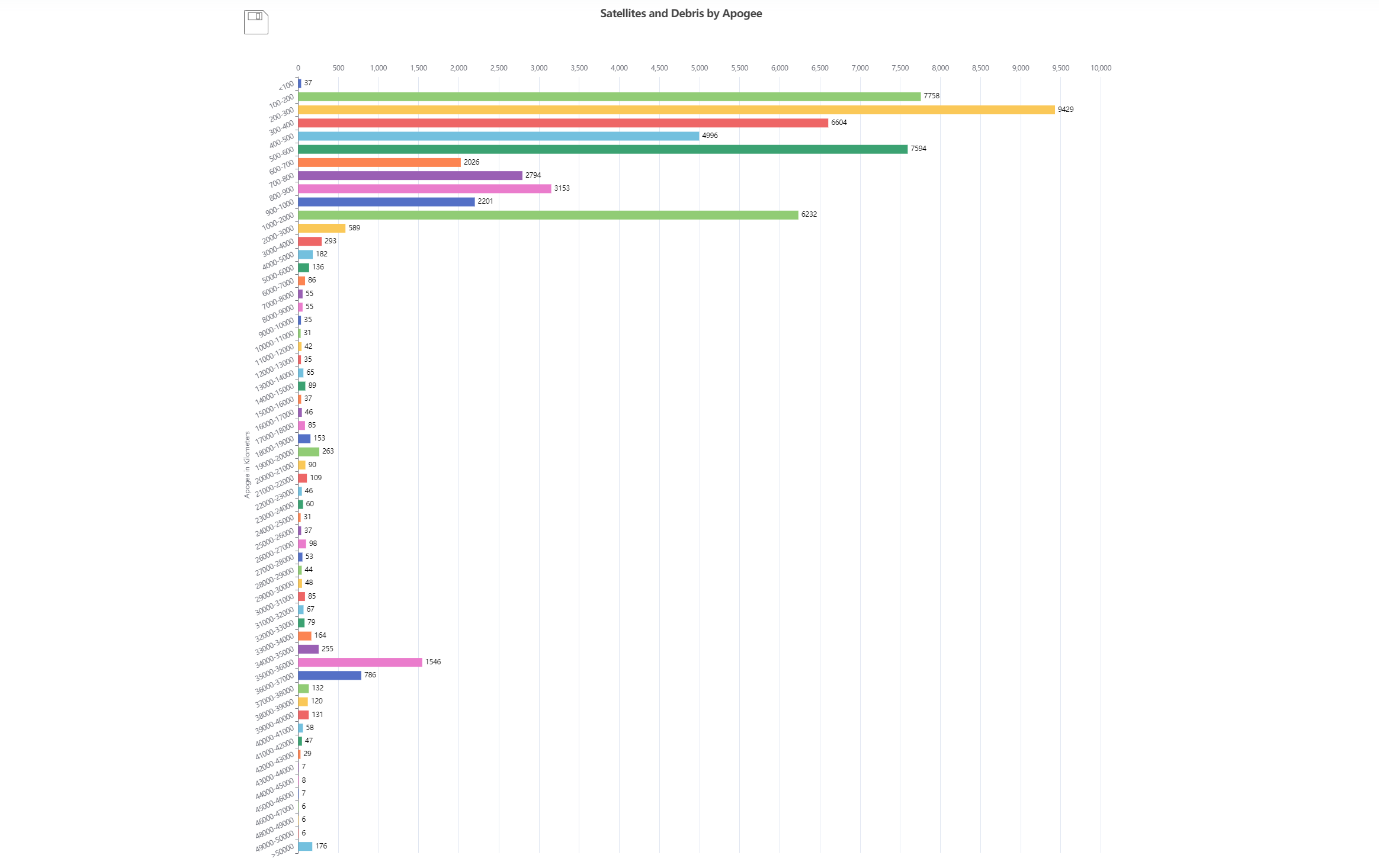
A user suggestion led to the addition of new visualizations for satellites, debris, and unidentified objects across different orbits in KeepTrack.

Space Brief 29 Mar 2025

Space Brief 29 Mar 2025

Key military and technology developments in space; US Space Force and Army strategize national security with new rocket certifications and space training initiatives.

Seismic Networks Now Track Space Junk, Pentagon Faces Golden Dome Cost Challenges | KeepTrack Space Brief

Seismic Networks Now Track Space Junk, Pentagon Faces Golden Dome Cost Challenges | KeepTrack Space Brief

Johns Hopkins researchers use seismic networks to track space debris in near real-time. Pentagon faces Golden Dome production scale challenges. SpaceX launches 25 Starlink sats in seventh 2026 mission.

All 33 Raptor V3 Engines Ignite in Super Heavy Static Fire | KeepTrack X Report

All 33 Raptor V3 Engines Ignite in Super Heavy Static Fire | KeepTrack X Report

SpaceX ignited all 33 next-gen Raptor V3 engines on the Super Heavy booster at Starbase, Texas, marking a critical milestone toward the next Starship flight.

X Report 22 Nov 2024

X Report 22 Nov 2024

SpaceX edges closer to increased Starship launch approvals, secures lunar rover delivery, eyes potential military collaboration, and continues rapid satellite deployment.