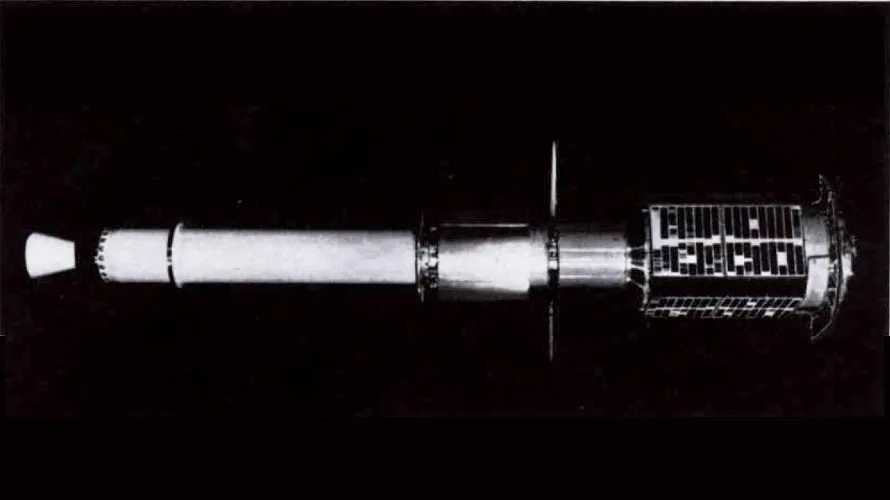
COSMOS 385 (04799)

COSPAR: 1970-108A | Alt Name: Kosmos-385

Image
COSMOS 385 Satellite Image
Additional Sources
Launch Details

Launch Date

December 12, 1970

Launch Site

PLMSC

Launch Pad

LC132/2

Launch Vehicle

Kosmos 11K65M

Orbital Elements

NORAD ID

04799

International Designator

1970-108A

Epoch

Sun, 19 Jul 2026 19:35:02 GMT

Apogee

Calculating...

Perigee

Calculating...

Inclination

74.02°

Right Ascension

335.32°

Eccentricity

Calculating...

Argument of Perigee

272.98°

Period

104.58 min

Mean Motion

13.77 rev/day

Latitude

Calculating...

Longitude

Calculating...

Altitude

Calculating...

Velocity

Calculating...

Polar Plot
3D Visualization
Basic Satellite Info

Name

COSMOS 385

Alternative Name

Kosmos-385

Type

Payload

Status

Unknown

Owner

OKB10

Country

USSR

Constellation

N/A

Related Satellites

Major Events

N/A

Latest TLEs
1 04799U 70108A   26200.81600316  .00000002  00000+0  25287-4 0  9999
2 04799  74.0232 335.3188 0004579 272.9831 240.2356 13.76982951793043

Source: Celestrak

Summary

Apologies, there is no summary for this satellite yet. I am working to generate these for every object in the catalog, but it is going to take time.

Physical Characteristics

Length

3

Diameter

2

Span

17

Dry Mass

680

Launch Mass

680

Shape

Cyl + Ant

Radar Cross Section

2.935

Visual Magnitude

Unknown

Color

Unknown

Material Composition

Unknown

Technical Details

Payload

Tsiklon No. 16L

Purpose

Navigation / Communication

Mission

Navigation / Communication

Manufacturer

OAZ

Life Expectancy

Unknown

Bus

KAUR-1 11F617

Configuration

KAUR-1

Motor

Unknown

Equipment

Unknown

Power System

Solar cells, batteries

ADCS

Unknown

Transmitter Frequency

Unknown

Map
This tool will help you track the satellite's position and predict its upcoming passes over your location. Simply input the coordinates or click the geolocation button to get started.
Next Pass
Azimuth Elevation Time (Local)
Start Azimuth
Max Elevation
Stop Azimuth
Time Until
Pass Duration

Satellite Articles

View All Posts »

Learn more about satellites and other related topics.

X Report 16 Jul 2025

X Report 16 Jul 2025

SpaceX successfully launched another batch of Starlink satellites while marking a significant milestone with the 500th Falcon 9 mission. Additionally, the company is preparing for further testing of its Starship system and has begun collaborating with Amazon on their Project Kuiper constellation.
X Report 1 Mar 2025

X Report 1 Mar 2025

FAA greenlights Flight 8 of SpaceX's Starship while senators examine Air Force nominee's ties to the company.

Space Brief 29 Jun 2025

Space Brief 29 Jun 2025

Today's space brief covers SpaceX's new contract with the U.S. Space Force, multiple Starlink launches, Rocket Lab's rapid launch success, and the final mission of Japan's H-IIA rocket.

X Report 11 May 2025

X Report 11 May 2025

SpaceX successfully launched 28 Starlink satellites from Florida, marking a significant milestone in their deployment strategy. This follows the recent launch of 26 satellites from California, highlighting ongoing expansion efforts.

Space Force Raises Andromeda Contract to $6.2B for SSA Satellites | KeepTrack Space Brief

Space Force Raises Andromeda Contract to $6.2B for SSA Satellites | KeepTrack Space Brief

U.S. Space Force increased Andromeda contract ceiling to $6.2 billion for next-generation space situational awareness satellites replacing GSSAP and SILENTBARKER programs.

X Report 1 May 2025

X Report 1 May 2025

SpaceX launches diabetes research mission to ISS; EU considers SES for Starlink support; Amazon's Kuiper enters satellite race.

The Satellite That Found 22 Photons and Changed Astronomy

The Satellite That Found 22 Photons and Changed Astronomy

On April 27, 1961, a Scout rocket lifted a 37-kilogram NASA satellite into orbit from Wallops Island carrying the first serious instrument for detecting cosmic gamma rays. Explorer 11 operated for seven months before its tape recorder failed. In that time it registered 22 gamma-ray photons - a pitiful number by modern standards, but enough to launch an entire branch of astronomy.

The Satellite That Taught Us What We Were Doing to the Planet

The Satellite That Taught Us What We Were Doing to the Planet

Landsat 7 launched on April 15, 1999, designed to last five years. It operated for twenty-five, survived a failure that destroyed a fifth of every image it took, and became part of the longest continuous record of Earth's surface ever assembled. Then they made the data free.