


Space Brief 25 Jun 2025
Today's highlights include the launch of a U.S. military satellite via SpaceX, a new French defense agreement for satellite services, and the Missile Defense Agency's successful ICBM target tracking with long-range radar.



Launch Date
October 30, 1970
Launch Site
Launch Pad
LC90/20
Launch Vehicle
Tsiklon-2
NORAD ID
04629
International Designator
1970-091J
Epoch
Sun, 19 Jul 2026 17:33:57 GMT
Apogee
Calculating...
Perigee
Calculating...
Inclination
62.84°
Right Ascension
212.36°
Eccentricity
Calculating...
Argument of Perigee
70.41°
Period
110.50 min
Mean Motion
13.03 rev/day
Latitude
Calculating...
Longitude
Calculating...
Altitude
Calculating...
Velocity
Calculating...
Name
COSMOS 375 DEB
Alternative Name
deb Kosmos-375
Type
Status
Owner
PKO
Country
USSR
Constellation
N/A
Related Satellites
Major Events
N/A
1 04629U 70091J 26200.73191970 .00000175 00000+0 85224-4 0 9992
2 04629 62.8356 212.3572 0969688 70.4122 299.8877 13.03209939634065
Source: Celestrak
Length
0
Diameter
0
Span
0
Dry Mass
0
Launch Mass
0
Shape
N/A
Radar Cross Section
0.4401
Visual Magnitude
Unknown
Color
Unknown
Material Composition
Unknown
Payload
Unknown
Purpose
Unknown
Mission
Unknown
Manufacturer
Unknown
Life Expectancy
Unknown
Bus
Unknown
Configuration
Unknown
Motor
Unknown
Equipment
Unknown
Power System
Unknown
ADCS
Unknown
Transmitter Frequency
Unknown
Learn more about satellites and other related topics.
Today's highlights include the launch of a U.S. military satellite via SpaceX, a new French defense agreement for satellite services, and the Missile Defense Agency's successful ICBM target tracking with long-range radar.

SpaceX advances with Starship tests as Starlink continues global expansion. Key infrastructure updates from Cape Canaveral involve multiple industry players.

SpaceX secures environmental approval for Starship launches at SLC-37 while Castelion, a company founded by SpaceX veterans, raises $350 million for hypersonic missile production.

SpaceX successfully launches 21 Starlink satellites from Florida, marking another milestone in its satellite internet constellation. The Falcon 9 rocket was also successfully recovered at sea.
Today's stories cover Rocket Lab's innovative DiskSat launch, Digantara's expansion to missile defense, and DARPA's satellite surveillance network expansion, among other updates in military and satellite technology.
Today's space brief covers new ultraviolet data from the Europa Clipper, challenges in managing space debris, quantum advances in satellite technology, as well as a failed Indian satellite launch and more.
SpaceX prepares for the next Starship test flight with significant vehicle upgrades, launches UAE's Thuraya-4 satellite, and reflects on a record-breaking 2024 while planning for a promising 2025.
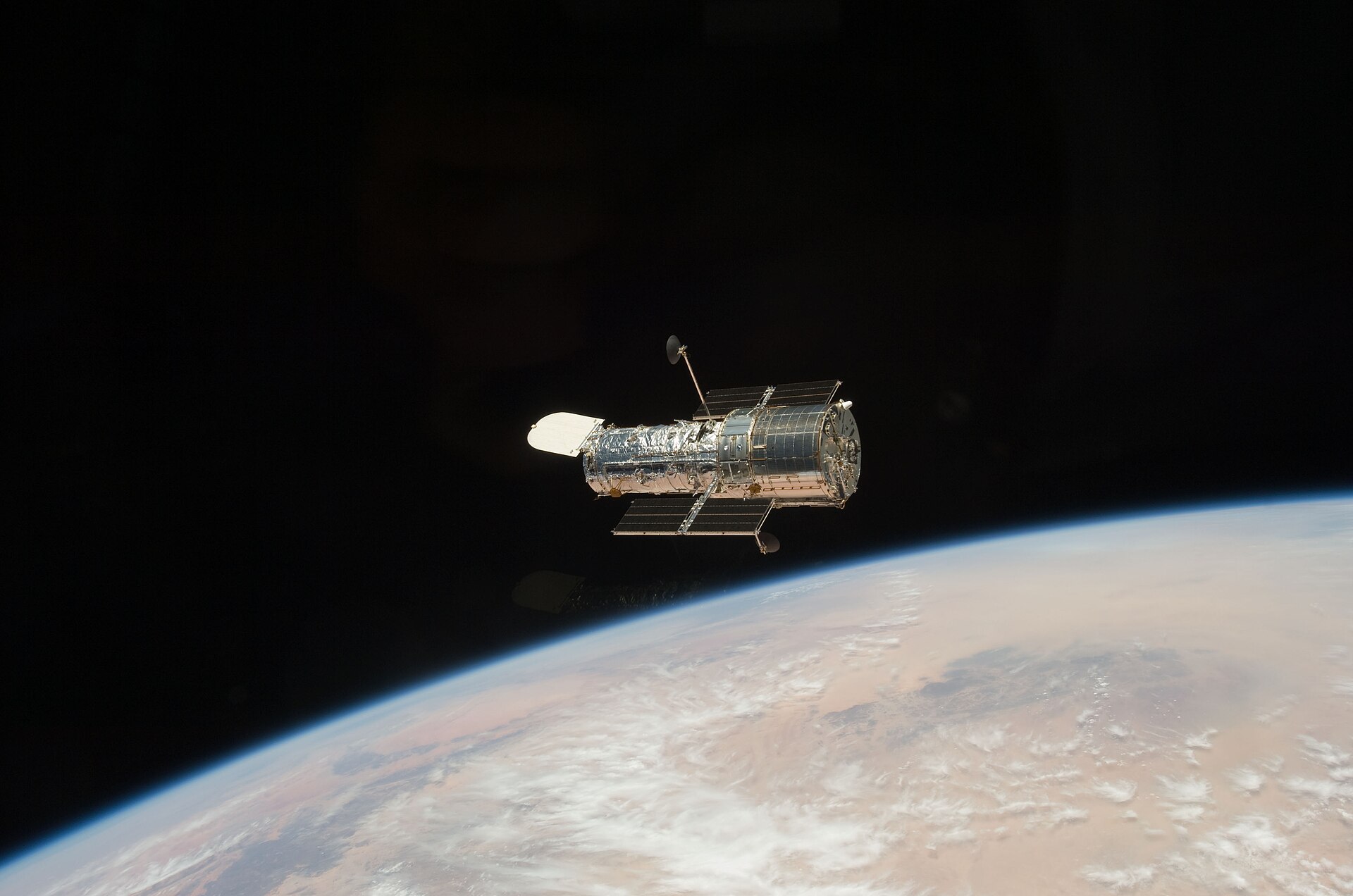
On April 25, 1990, the Space Shuttle Discovery's robotic arm lifted a 11,110-kilogram barrel of mirrors and instruments out of the payload bay and released it into orbit. Six weeks later, the first images came back badly out of focus. The Hubble Space Telescope had been ground to the wrong prescription, and America had just spent $2.5 billion on what the press was calling a 'technoturkey.'