Latest Developments
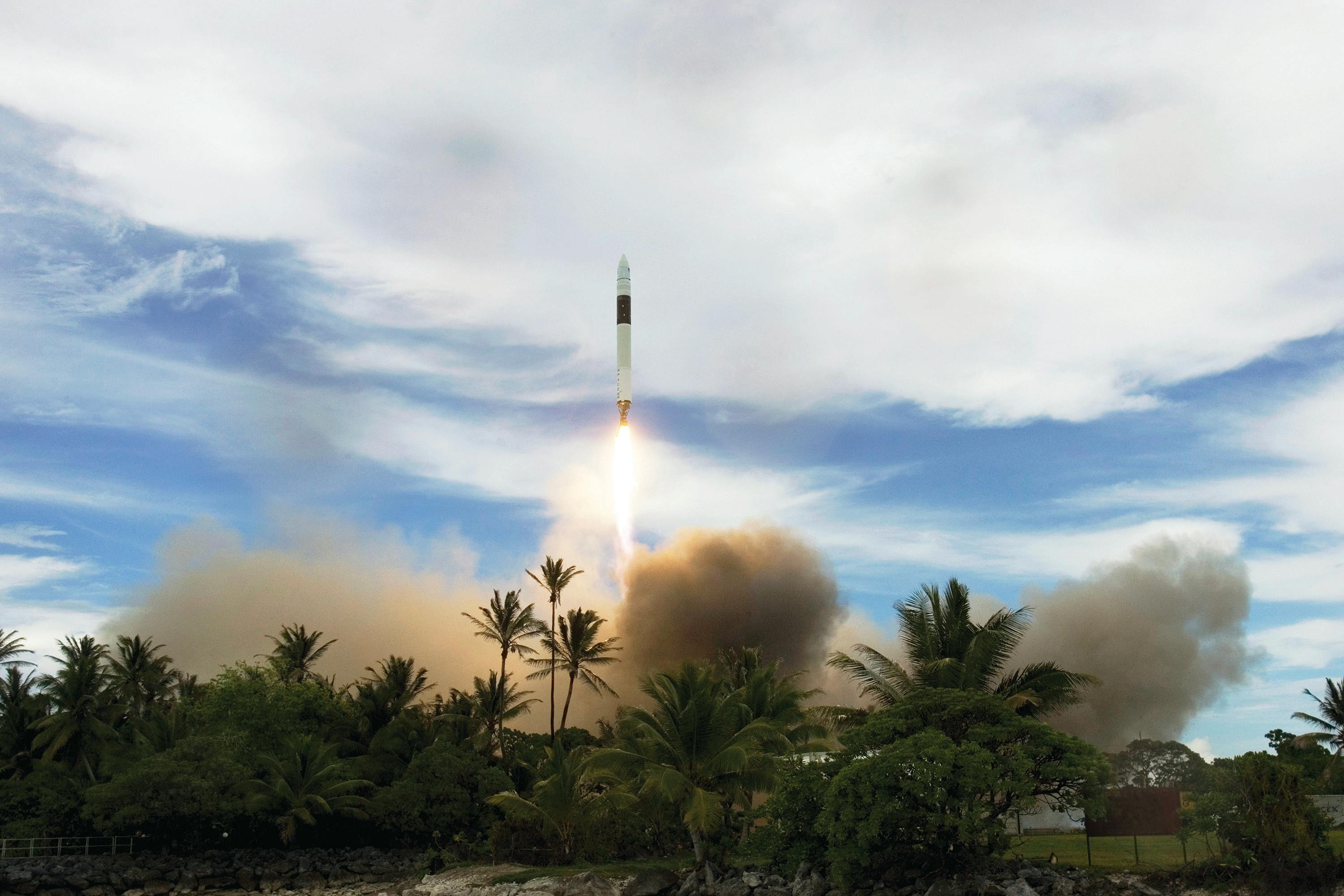
SpaceX made history this week not on a launch pad but in a boardroom, officially completing its absorption of Elon Musk’s xAI venture under a unified SpaceXAI brand — marking what analysts are calling the largest private-sector merger ever recorded. On the launch side, a Falcon 9 lifted off from Vandenberg Space Force Base early Tuesday carrying 81 rideshare payloads to Sun-synchronous orbit, deploying everything from military technology demonstrators to in-space 3D printers across a 2.5-hour deployment window. The booster landed successfully on a drone ship at sea, continuing SpaceX’s unbroken streak of orbital-class reuse. With 10,759 Starlink satellites currently in orbit — 10,743 of them operational — and 12,443 launched to date, the constellation remains the world’s largest active satellite network by a wide margin.
Space Safety
The Starlink conjunction environment presents elevated risk from a HIGH-severity event involving STARLINK-4621 and the non-operational SL-18 R/B scheduled for Jul 9, 2026 at 23:44 UTC, with a minimum approach distance of 0.011 km and maximum collision probability of 1.0. Six additional MODERATE-risk conjunctions are forecast across early-to-mid July, while concurrent reentry predictions indicate nine Starlink objects will decay between Jul 6–10, 2026, with decay windows ranging from 60 to 1,200 minutes. The operational impact and debris generation potential warrant continued close monitoring of both conjunction and reentry events during this high-activity period.
| Risk | Starlink Sat | Other Object | Status | Min Range (km) | Rel Speed (km/s) | Max Prob | Time of Closest Approach |
|---|---|---|---|---|---|---|---|
| HIGH | STARLINK-4621 | SL-18 R/B | Non-operational | 0.011 | 14.173 | 1.0 | Jul 9, 23:44 UTC |
| MODERATE | STARLINK-30464 | STARLINK-36196 | Operational | 0.048 | 10.027 | 0.1285 | Jul 4, 22:40 UTC |
| MODERATE | STARLINK-5106 | STARLINK-32760 | Operational | 0.049 | 10.192 | 0.1211 | Jul 11, 06:11 UTC |
| MODERATE | STARLINK-5400 | STARLINK-5781 | Partially Operational | 0.053 | 6.407 | 0.1203 | Jul 7, 15:32 UTC |
| LOW | STARLINK-36967 | LEMUR-2-AFFIE-WAUWIE | Operational | 0.038 | 7.332 | 0.0733 | Jul 8, 04:03 UTC |
| Satellite | NORAD ID | Predicted Decay | Window (min) | Inclination | Lat | Lon |
|---|---|---|---|---|---|---|
| STARLINK-1876 | 47161 | Jul 6, 21:05 UTC | 60 | 53.0° | 47.9° | 208.9° |
| STARLINK-1882 | 46784 | Jul 6, 21:22 UTC | 60 | 53.0° | -50.9° | 40.2° |
| STARLINK-5042 | 53899 | Jul 7, 08:00 UTC | 60 | 53.2° | 19.1° | 76.5° |
| STARLINK-1547 | 46347 | Jul 7, 11:55 UTC | 180 | 53.0° | -51.5° | 184.5° |
| STARLINK-1635 | 46172 | Jul 7, 12:19 UTC | 120 | 53.0° | 45.9° | 319.0° |
| STARLINK-2363 | 47903 | Jul 8, 04:21 UTC | 600 | 53.1° | 46.3° | 146.3° |
| STARLINK-1962 | 47563 | Jul 9, 03:21 UTC | 780 | 53.0° | 13.1° | 141.0° |
| STARLINK-1735 | 46565 | Jul 9, 12:17 UTC | 1140 | 53.0° | -14.9° | 308.7° |
| STARLINK-11416 [DTC] | 62594 | Jul 10, 14:42 UTC | 1200 | 43.0° | 4.5° | 309.2° |
Detailed Coverage
SpaceX and xAI Officially Merge Into SpaceXAI, Rewriting Private Sector History
In what is being described as the most consequential corporate event in the history of the commercial space industry, SpaceX has formally completed its merger with Elon Musk’s artificial intelligence company xAI. The combined entity now operates under the SpaceXAI brand, signaling an intent to deeply integrate large-scale AI capabilities — including inferencing, autonomous systems, and data analytics — directly into SpaceX’s launch, satellite, and Starlink internet operations. The deal is being called the largest private merger in history by total enterprise value.
The strategic implications are significant for the Starlink constellation specifically. With over 10,743 working satellites generating continuous telemetry, xAI’s infrastructure could be leveraged for onboard autonomy, collision-avoidance optimization, and ground-network routing improvements. Satellite trackers and orbital analysts will be watching closely for any changes to how Starlink satellites maneuver or communicate as the integration proceeds.
Read the full story: TESLARATI
Falcon 9 Deploys 81 Payloads on Transporter-17, Sticks Landing at Sea
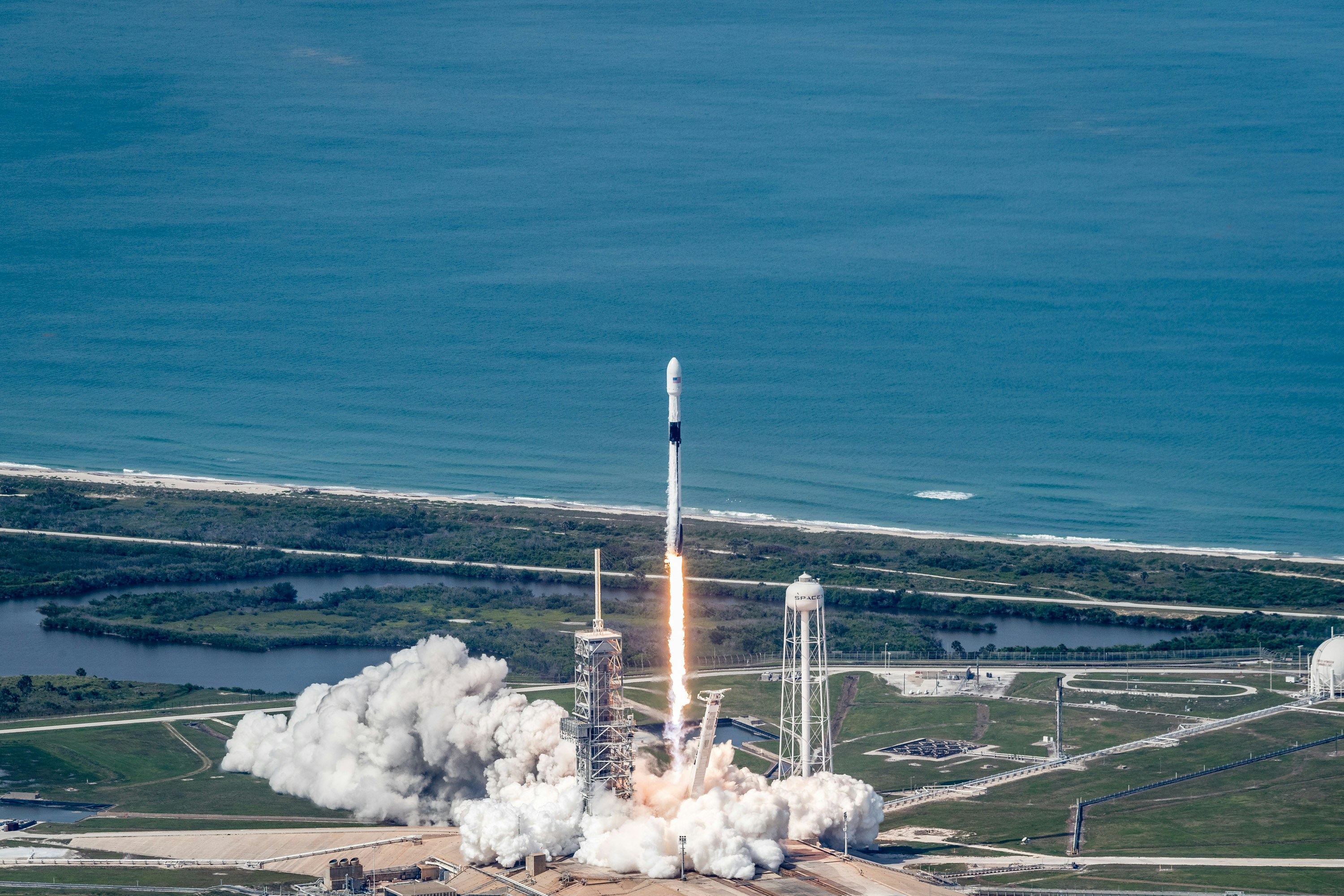
A SpaceX Falcon 9 rocket lifted off from Space Launch Complex 4E at Vandenberg Space Force Base at 12:12 a.m. PDT on July 7, carrying 81 payloads as part of the Transporter-17 dedicated smallsat rideshare mission. The rocket deployed its diverse manifest to Sun-synchronous Earth orbit over approximately 2.5 hours before the first-stage booster executed a successful landing on a drone ship positioned in the Pacific Ocean. The 95-minute launch window opened without issue, and the mission proceeded nominally through payload separation.
The 81-satellite manifest illustrates the breadth of commercial and government interest in low-cost orbital access: payloads included fire detection sensors, military technology demonstrators, and in-space additive manufacturing hardware. Sun-synchronous orbits at the altitudes used by this mission place the new objects in a well-trafficked shell that satellite trackers will be monitoring for catalog integration in the coming days. Transporter-17 continues SpaceX’s cadence of offering affordable per-kilogram pricing that has fundamentally restructured the small satellite launch market.
Read the full story: Space.com
Rideshare Manifest Deep Dive: Military Tech and 3D Printers Among Transporter-17 Payloads
Beyond the headline payload count, the Transporter-17 mission carried technology with notable defense and manufacturing implications. Military technology demonstrators aboard the flight represent continued Pentagon interest in utilizing commercial rideshare infrastructure for rapid on-orbit testing — a pattern that has accelerated under Space Force procurement priorities. Fire-detection satellite payloads, meanwhile, underscore growing commercial demand for persistent Earth observation in support of wildfire monitoring, a use case that has attracted significant government and insurance-sector interest.
The inclusion of in-space 3D printing hardware points toward a longer-term trend: manufacturing capability being moved off Earth and into orbit itself. For satellite operators and tracking analysts, each of the 81 objects will require individual cataloging by the 18th Space Defense Squadron, adding to the already dense population of objects in Sun-synchronous orbital shells and reinforcing the need for robust space situational awareness infrastructure.
Read the full story: Spaceflight Now
Long March 10B and Vikram-I Among Six Orbital Launches Scheduled This Week
This week’s global launch slate is unusually competitive, with six orbital missions on the manifest from multiple nations. China’s Long March 10B is set for its debut flight, representing a significant milestone in the People’s Republic’s next-generation heavy-lift program. India’s Vikram-I rocket, developed by private launch startup Skyroot Aerospace, is also scheduled for its inaugural orbital attempt — a landmark for India’s emerging commercial space sector.
Three additional Falcon 9 flights are expected during the same period, continuing SpaceX’s dominant launch cadence. Together, the week’s manifest illustrates how rapidly the global launch market has fragmented, with national programs and private ventures from multiple continents now capable of reaching orbit on increasingly short timescales. For constellation operators and tracking services, weeks like this one create significant workload spikes as dozens of new objects enter the catalog simultaneously across multiple orbital regimes.
Read the full story: NASASpaceFlight
Constellation Status
There have been no changes to the Starlink constellation since the last check. As of July 5, 2026, the constellation consists of 12,443 total satellites launched, with 10,759 currently in orbit, 10,743 of which are operational, and 1,684 that have decayed from orbit.
- Total Launched: 12443
- Total On Orbit: 10759
- Total Working: 10743
Track Starlink satellites in real-time: Track Starlink