· x report · 3 min read
Starlink 10-50 Launches With Semiconductor Payload Aboard | KeepTrack X Report
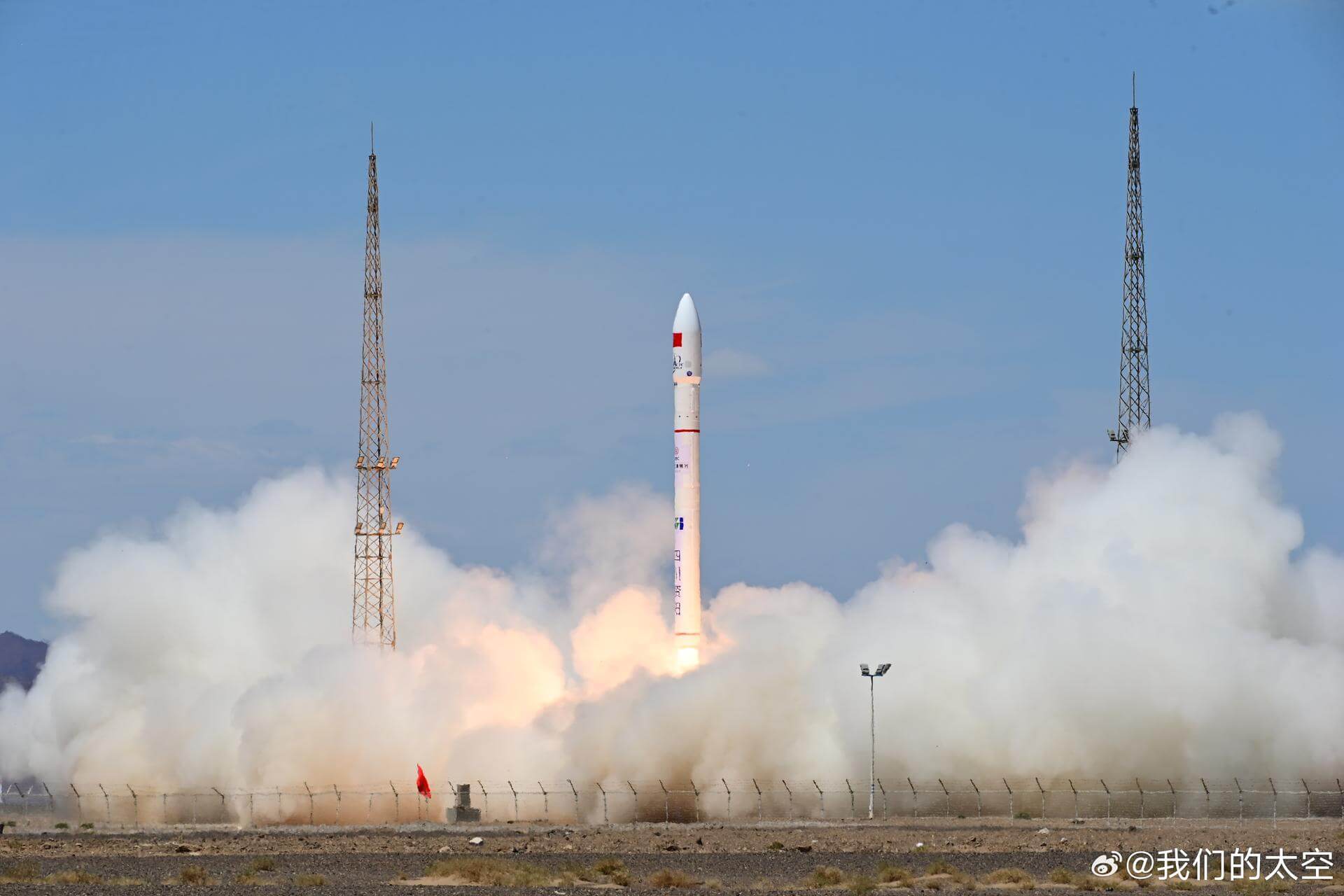
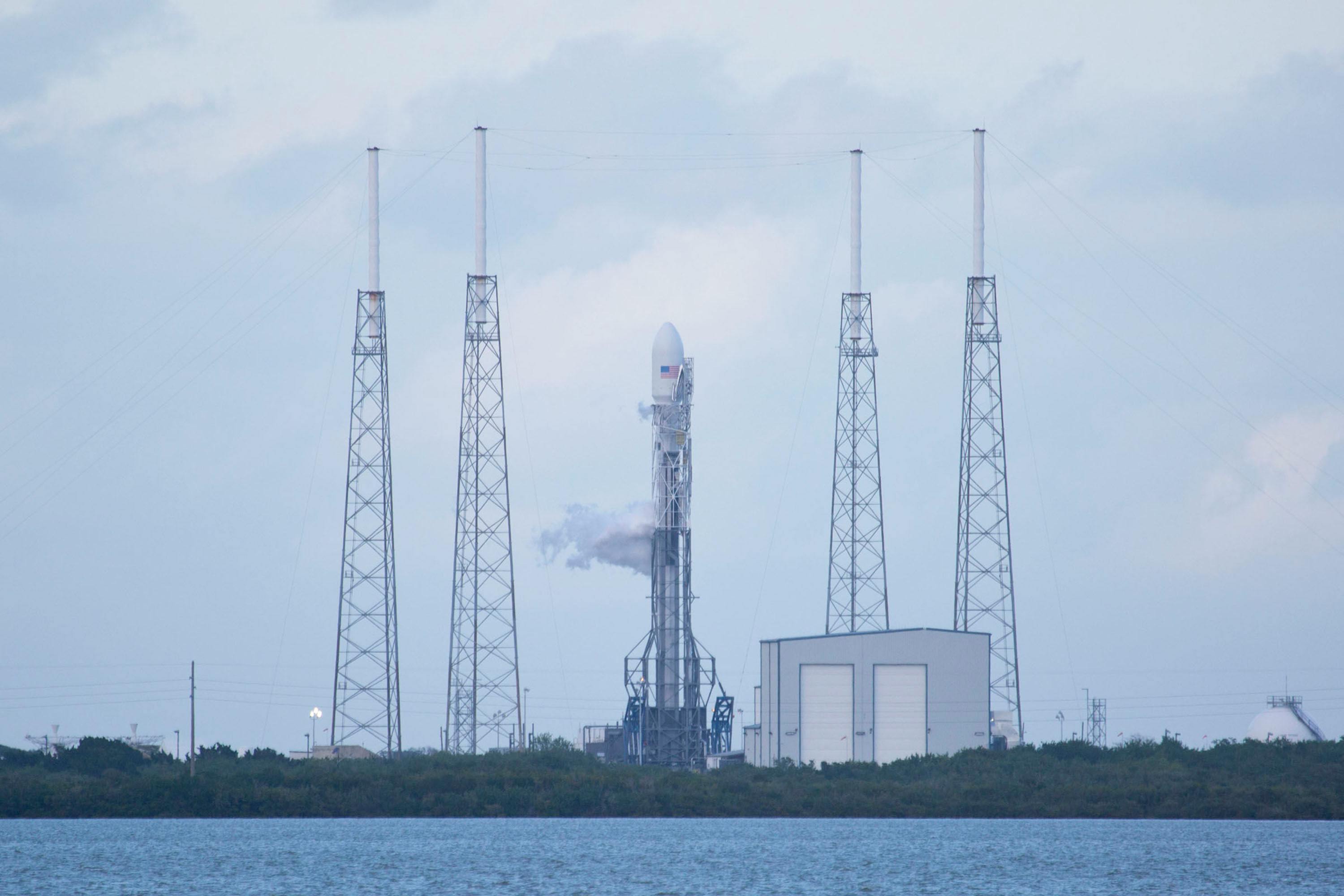
A Falcon 9 lifted off from SLC-40 at 6:50 a.m. EDT carrying Starlink satellites and Besxar Space Industries semiconductor test pods.
Latest Developments
SpaceX’s Starlink 10-50 mission added to the growing constellation on July 4th, lifting off from Space Launch Complex 40 at 6:50 a.m. EDT alongside a novel commercial rideshare payload: two semiconductor manufacturing test pods from Besxar Space Industries. The mission marks an increasingly common pattern for Falcon 9 flights, where Starlink replenishment serves as a cost-efficient carrier for third-party experimental hardware. With 12,443 Starlink satellites launched to date, 10,759 currently in orbit, and 10,743 confirmed operational, the constellation continues its steady march toward broader global coverage. The inclusion of manufacturing-focused payloads points to growing industry interest in microgravity semiconductor research as a practical commercial venture.
Space Safety
The Starlink conjunction and reentry threat picture presents two critical HIGH-risk events within the next week, with STARLINK-4621 facing repeated close approaches to the defunct SL-18 R/B on Jul 9, 2026 at a minimum range of 0.011 km and maximum probability of 1.0. Additionally, six MODERATE-risk conjunctions are tracked across the constellation, primarily involving partially operational or recently degraded satellites, while ten LOW-risk events round out the broader collision avoidance picture. On the reentry front, ten Starlink satellites are currently under active decay prediction, with STARLINK-1944 expected to reenter within the next 57 minutes and several others following within 2–4 days, representing a moderate operational tempo for disposal events across the 53° inclination band.
| Risk | Starlink Sat | Other Object | Status | Min Range (km) | Rel Speed (km/s) | Max Prob | Time of Closest Approach |
|---|---|---|---|---|---|---|---|
| HIGH | STARLINK-4621 | SL-18 R/B | Non-operational | 0.011 | 14.173 | 1.0 | Jul 9, 23:44 UTC |
| MODERATE | STARLINK-30464 | STARLINK-36196 | Operational | 0.048 | 10.027 | 0.1285 | Jul 4, 22:40 UTC |
| MODERATE | STARLINK-5106 | STARLINK-32760 | Operational | 0.049 | 10.192 | 0.1211 | Jul 11, 06:11 UTC |
| MODERATE | STARLINK-5400 | STARLINK-5781 | Partially Operational | 0.053 | 6.407 | 0.1203 | Jul 7, 15:32 UTC |
| LOW | STARLINK-36967 | LEMUR-2-AFFIE-WAUWIE | Operational | 0.038 | 7.332 | 0.0733 | Jul 8, 04:03 UTC |
| Satellite | NORAD ID | Predicted Decay | Window (min) | Inclination | Lat | Lon |
|---|---|---|---|---|---|---|
| STARLINK-1944 | 46796 | Jul 6, 01:07 UTC | 57 | 53° | -1.2° | 276.8° |
| STARLINK-1905 | 46746 | Jul 6, 01:51 UTC | 120 | 53° | -48.4° | 335.9° |
| STARLINK-1531 | 46572 | Jul 6, 12:04 UTC | 180 | 53° | 17.5° | 325.1° |
| STARLINK-1876 | 47161 | Jul 6, 22:37 UTC | 240 | 53° | 53.1° | 218.2° |
| STARLINK-1882 | 46784 | Jul 7, 02:41 UTC | 360 | 53° | 44.9° | 203.6° |
| STARLINK-5042 | 53899 | Jul 7, 18:24 UTC | 540 | 53.2° | 42.3° | 305.2° |
| STARLINK-1635 | 46172 | Jul 7, 21:04 UTC | 540 | 53° | 34.5° | 166° |
| STARLINK-2363 | 47903 | Jul 8, 07:36 UTC | 900 | 53.1° | -1.7° | 149.5° |
| STARLINK-1962 | 47563 | Jul 9, 00:47 UTC | 1140 | 53° | 52.5° | 272.4° |
| STARLINK-1735 | 46565 | Jul 9, 12:17 UTC | 1140 | 53° | -14.9° | 308.7° |
Detailed Coverage
Falcon 9 Carries Semiconductor Manufacturing Pods on Starlink 10-50 Flight
SpaceX’s Starlink 10-50 mission broke new ground in rideshare utility on Independence Day, with the Falcon 9 booster carrying not just another batch of flat-panel broadband satellites but two semiconductor manufacturing test pods developed by Besxar Space Industries. Liftoff from Space Launch Complex 40 at Cape Canaveral occurred at 6:50 a.m. EDT (1050 UTC), with the first-stage booster handling the dual-manifest mission in what has become a hallmark of SpaceX’s high-cadence launch tempo.
The Besxar pods are designed to test whether microgravity orbital conditions can improve semiconductor crystal growth and fabrication processes — a concept that has attracted renewed investment as terrestrial chip manufacturing faces physical scaling limits. Flying alongside operational Starlink satellites means the test beds share an orbital neighborhood with over 10,700 active broadband nodes, raising interesting proximity and tracking considerations for operators monitoring the deployment zone. Observers using satellite tracking tools will want to monitor the newly catalogued objects as they separate and drift from the primary Starlink deployment stack in the coming days.
Read the full story: Spaceflight Now
Constellation Status
The Starlink constellation has remained stable since the last check, with no changes to report. The constellation currently maintains 12,443 total satellites launched, 10,759 in orbit, 10,743 operational satellites, and 1,684 decayed satellites.
- Total Launched: 12443
- Total On Orbit: 10759
- Total Working: 10743
Track Starlink satellites in real-time: Track Starlink
B1049