· x report · 5 min read
SpaceX Orbits 7.5-Ton SiriusXM Satellite & 24 Starlinks | KeepTrack X Report
SpaceX completed two launches June 28, orbiting the 15,000-lb SXM-11 satellite and 24 Starlink V2 craft from Vandenberg.
Latest Developments
SpaceX capped a busy June 28 with back-to-back launches from opposite coasts, demonstrating the company’s sustained cadence across both commercial and constellation programs. First, a Falcon 9 lifted the 15,000-pound SiriusXM SXM-11 satellite from Cape Canaveral Space Force Station at 10:25 p.m. EDT, the heaviest commercial comsat SpaceX has flown in recent months. Hours earlier, a separate Falcon 9 departing Vandenberg Space Force Base at 9:09 a.m. PDT deployed another 24 Starlink broadband satellites, continuing to reinforce a constellation that now stands at 10,706 operational spacecraft out of 10,722 in orbit across 12,390 total launched.
Space Safety
The Starlink conjunction and reentry threat picture shows one significant concern requiring immediate attention. A HIGH-risk conjunction is predicted between STARLINK-30922 and TIANMU-1 15 on Jun 24, 2026, with a minimum range of only 0.007 km and maximum collision probability of 1.0—representing a critical close approach. Additionally, seven Starlink satellites are forecast to reenter Earth’s atmosphere between Jun 29 and Jul 2, 2026, with decay windows ranging from 60 to 1,140 minutes, presenting distributed reentry risk across multiple geographic regions.
| Risk | Starlink Sat | Other Object | Status | Min Range (km) | Rel Speed (km/s) | Max Prob | Time of Closest Approach |
|---|---|---|---|---|---|---|---|
| HIGH | STARLINK-30922 | TIANMU-1 15 | Operational | 0.007 | 14.292 | 1.0 | Jun 24, 10:27 UTC |
| Satellite | NORAD ID | Predicted Decay | Window (min) | Inclination | Lat | Lon |
|---|---|---|---|---|---|---|
| STARLINK-1716 | 46672 | Jun 29, 04:03 UTC | 60 | 53° | -19° | 8.9° |
| STARLINK-1964 | 47565 | Jun 29, 04:51 UTC | 60 | 53° | -8.5° | 131° |
| STARLINK-1655 | 47623 | Jun 29, 21:44 UTC | 240 | 53° | 33.9° | 269.3° |
| STARLINK-4679 | 53782 | Jul 1, 22:47 UTC | 1080 | 53.2° | -46.7° | 125.5° |
| STARLINK-1663 | 46535 | Jul 2, 02:27 UTC | 1140 | 53° | 19.8° | 128° |
| STARLINK-5034 | 53888 | Jul 2, 11:05 UTC | 1020 | 53.2° | -38.4° | 358.8° |
| STARLINK-3858 | 52553 | Jul 2, 13:14 UTC | 1080 | 53.2° | 17.3° | 351.7° |
Detailed Coverage
SpaceX Orbits Massive 7.5-Ton SiriusXM SXM-11 Satellite on Dual-Coast Launch Day
SpaceX launched the SiriusXM SXM-11 satellite from Space Launch Complex 40 at Cape Canaveral Space Force Station at 10:25 p.m. EDT on June 28, 2026, kicking off a rare same-day dual-launch event for the company. The spacecraft, built by Intuitive Machines and stretching more than 230 feet when its solar arrays are deployed, tipped the scales at approximately 15,000 pounds — making it one of the most massive geostationary payloads Falcon 9 has ever hoisted. The mission is part of SiriusXM’s broader satellite radio constellation refresh, aimed at extending coverage reliability and service longevity for North American subscribers well into the next decade.
The Falcon 9’s performance on this high-energy geostationary transfer orbit mission underscores the rocket’s continued versatility across payload classes. Trackers should watch for SXM-11’s gradual apogee-raising maneuvers over the coming weeks as it drifts toward its operational geostationary slot — a process that will take the spacecraft through a range of orbital altitudes before it settles into the GEO belt.
Read the full story: Spaceflight Now
24 More Starlinks Join LEO Constellation in Sunday Morning Vandenberg Launch
A SpaceX Falcon 9 booster lifted off from Space Launch Complex 4E at Vandenberg Space Force Base at 9:09 a.m. PDT on June 28, delivering 24 Starlink satellites into low Earth orbit as part of the Starlink 17-40 mission. The launch brought the cumulative Starlink tally to 12,390 spacecraft launched since the program’s inception, with 10,722 currently tracked in orbit and 10,706 confirmed operational. Booster B1088 continued its flight heritage on this mission, adding another reuse cycle to SpaceX’s well-worn West Coast workhorse.
The Vandenberg manifest remains one of the primary pathways for Starlink shells serving higher-inclination orbital planes, which provide improved coverage across polar and high-latitude regions including Alaska, Canada, and Scandinavia. Satellite trackers monitoring the Starlink 17-40 deployment should expect the freshly released objects to perform their initial orbit-raising burns over the next several days before blending into the broader operational shell.
Read the full story: Space.com
Same-Day Dual Launch Highlights SpaceX’s Maturing Operational Tempo
The pairing of the SXM-11 and Starlink 17-40 missions on a single calendar day — launched from opposite coasts and targeting entirely different orbital regimes — offers a clear illustration of how far SpaceX’s launch operations have matured. Executing a geostationary transfer mission from Florida and a LEO broadband deployment from California within roughly 13 hours of each other requires distinct range coordination, recovery assets, and mission planning pipelines operating simultaneously without interference. It is a cadence that no other launch provider currently matches at scale.
For the broader commercial launch market, the SXM-11 mission is particularly notable as it marks continued confidence from major satellite operators in Falcon 9’s ability to handle high-value, heavy geostationary payloads — a segment historically dominated by larger vehicles. With Starship’s heavy-lift ambitions still maturing, Falcon 9 remains the reliable backbone for both SpaceX’s own constellation growth and the commercial manifest.
Read the full story: Space.com
Starlink 17-40 Adds to Vandenberg’s Busiest Launch Stretch in Years
Spaceflight Now’s live coverage of the Starlink 17-40 mission documented a clean liftoff at 1609 UTC from Vandenberg’s SLC-4E, with the Falcon 9 executing a nominal ascent profile before releasing its stack of 24 Starlink V2 Mini satellites into their target deployment orbit. The California launch site has seen a substantial uptick in tempo throughout 2026, serving as the preferred pad for inclinations that Cape Canaveral’s geometry cannot efficiently reach. This mission continues a string of Vandenberg Starlink flights that have collectively added hundreds of satellites to the constellation in recent months.
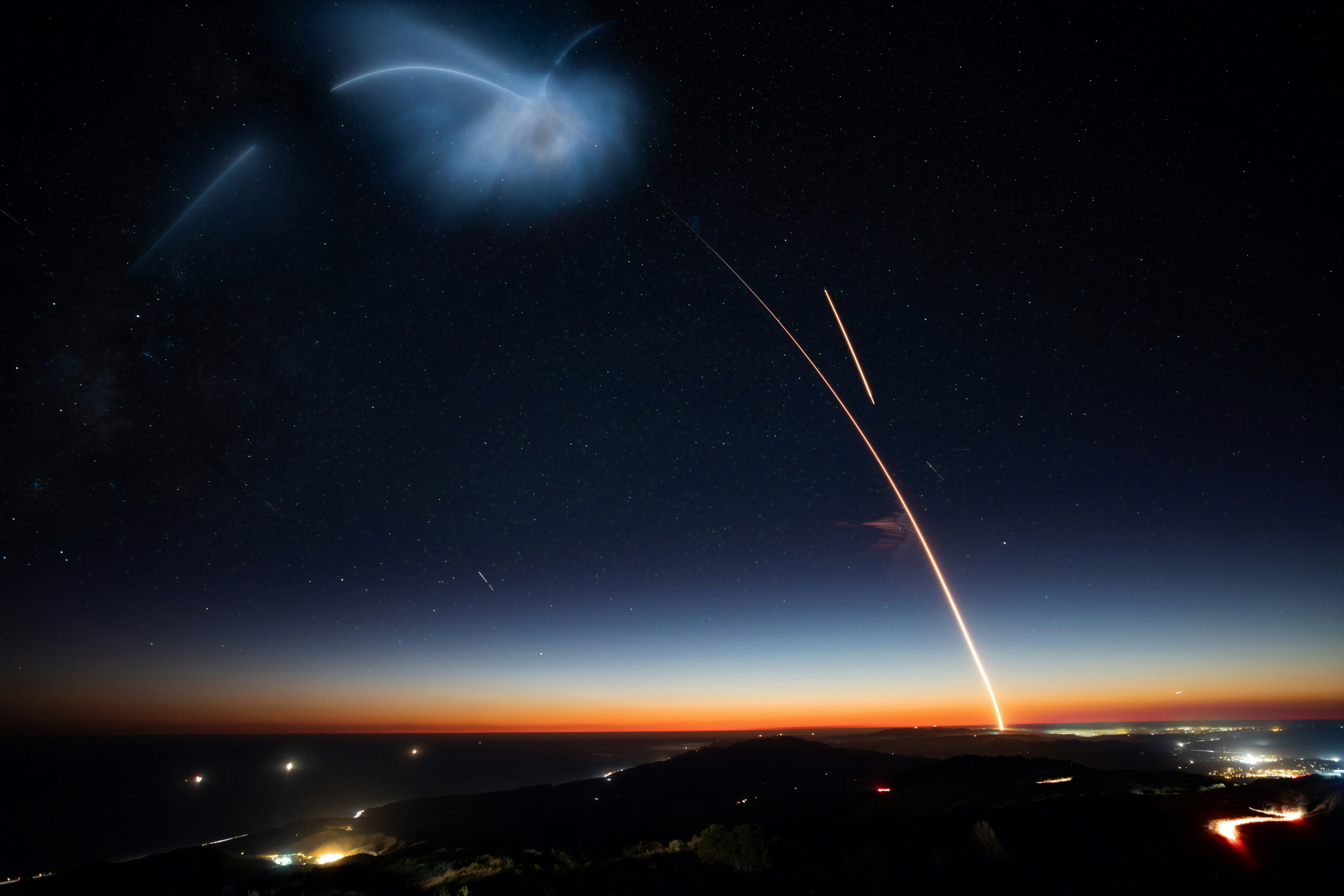
Ground observers along the California coast and into the Pacific Northwest were afforded a clear viewing opportunity during Sunday morning’s ascent, with the Falcon 9’s exhaust plume catching early daylight at altitude and creating a visible arc across the sky. The booster subsequently completed its recovery landing, maintaining SpaceX’s near-perfect reuse record for this vehicle.
Read the full story: Spaceflight Now
Constellation Status
The Starlink constellation has remained unchanged since the last check, maintaining a total of 12,390 launched satellites with 10,722 currently in orbit. Of the in-orbit satellites, 10,706 are operational, while 1,668 have decayed from the constellation.
- Total Launched: 12390
- Total On Orbit: 10722
- Total Working: 10706
Track Starlink satellites in real-time: Track Starlink
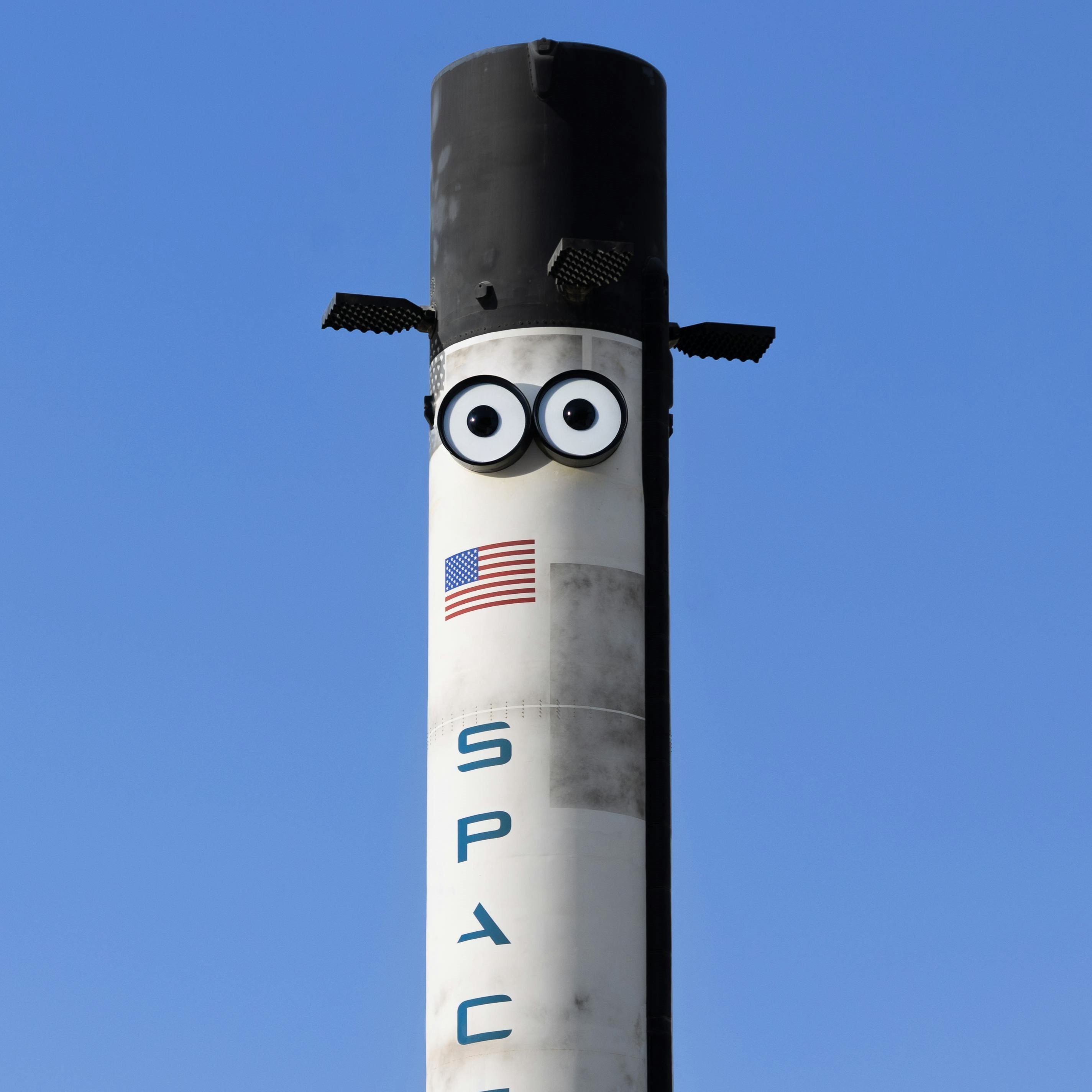
B1049