Latest Developments
SpaceX made two significant moves this week that signal ambitions well beyond its already dominant Starlink internet business: a secretive first test flight of the Starfall reentry capsule on June 23, and Elon Musk’s public confirmation of Starmind — a planned AI satellite constellation targeting one million orbital compute nodes. Meanwhile, on the bread-and-butter Starlink side, a Falcon 9 lifted 24 more satellites from Vandenberg Space Force Base on June 24, continuing the drumbeat of constellation expansion that has brought the network to 10,666 working satellites out of 10,682 in orbit across 12,342 total launched. Rounding out a busy week in the regulatory arena, a new non-geostationary orbit trade association launched without SpaceX, raising pointed questions about the company’s willingness to engage with industry governance.
Space Safety
The Starlink conjunction and reentry landscape presents one critical collision risk requiring immediate monitoring alongside four predicted reentry events within the coming week. A HIGH risk conjunction is forecast between STARLINK-30922 and the operational Chinese satellite TIANMU-1 15 on Jun 24, 2026 at 10:27 UTC, with a minimum range of only 7 meters and a maximum collision probability reaching 1.0—representing the most severe threat in the current tracking dataset. Simultaneously, four Starlink satellites are predicted to reenter Earth’s atmosphere between Jun 25-27, 2026, with decay windows ranging from 7 to 19 hours, presenting manageable but notable reentry risk across dispersed geographic zones.
| Risk | Starlink Sat | Other Object | Status | Min Range (km) | Rel Speed (km/s) | Max Prob | Time of Closest Approach |
|---|---|---|---|---|---|---|---|
| HIGH | STARLINK-30922 | TIANMU-1 15 | Operational | 0.007 | 14.292 | 1.0 | Jun 24, 10:27 UTC |
| Satellite | NORAD ID | Predicted Decay | Window (min) | Inclination | Lat | Lon |
|---|---|---|---|---|---|---|
| STARLINK-1928 | 46758 | Jun 25, 09:40 UTC | 420 | 53° | 50.3° | 159.3° |
| STARLINK-5875 | 57221 | Jun 25, 11:57 UTC | 1140 | 43° | -18.7° | 16.2° |
| STARLINK-1665 | 46356 | Jun 27, 09:49 UTC | 960 | 53° | 12.2° | 93.4° |
| STARLINK-1931 | 46790 | Jun 27, 13:52 UTC | 1020 | 53° | 1.6° | 146.2° |
Detailed Coverage
SpaceX’s Starfall Reentry Capsule Takes Its First Secretive Flight
SpaceX flew the inaugural test mission of Starfall, its undisclosed reentry capsule program, on June 23, with virtually no pre-launch transparency and minimal post-launch detail. The program has been treated as one of SpaceX’s most closely guarded development efforts, and the debut flight did nothing to change that posture — no payload manifest, no mission parameters, and no public commentary from the company accompanied the launch.
The secrecy surrounding Starfall has fueled speculation about its intended customer base, with analysts pointing toward national security users who require precision reentry and cargo return capability. Trackers monitoring orbital objects in the hours following the launch will be watching closely for any catalogued objects that could be associated with the mission, though classification of the payload makes positive identification challenging.
Read the full story: SpaceNews
Elon Musk Confirms Starmind: One Million AI Satellites Targeting Data Center Disruption
Elon Musk officially confirmed the name “Starmind” for SpaceX’s planned orbital artificial intelligence constellation, setting an audacious target of one million compute nodes in orbit. The vision positions Starmind as a direct competitor to terrestrial hyperscale data centers, with the argument that distributing compute across low Earth orbit removes geographic latency penalties and physical infrastructure vulnerabilities for certain workloads.
The scale of the ambition is staggering even by SpaceX standards. With Starlink already representing the largest satellite constellation in history at over 10,600 operational spacecraft, a Starmind build-out of a million nodes would dwarf it by two orders of magnitude. The orbital environment, conjunction management, and spectrum coordination implications would be profound, and it remains to be seen how regulators worldwide would process licensing at that scale.
Read the full story: Teslarati
Industry Forms NGSO Trade Group — Without SpaceX
Amazon, alongside several other non-geostationary satellite operators, has formally established a trade association dedicated to representing the NGSO sector’s interests before regulators and policymakers. The notable absence is SpaceX, which operates by far the largest NGSO constellation on the planet and whose participation would give the body significantly more weight.
SpaceX’s decision to stay out mirrors its broader pattern of operating independently from industry coalitions, preferring to engage regulatory bodies directly rather than through shared advocacy structures. Critics argue that a trade group without SpaceX risks speaking for only a fraction of the market it claims to represent, while others suggest the remaining members may actually prefer setting policy frameworks without having to negotiate positions with a competitor that holds overwhelming market leverage.
Read the full story: SpaceNews
Falcon 9 Delivers 24 Starlink Satellites from Vandenberg
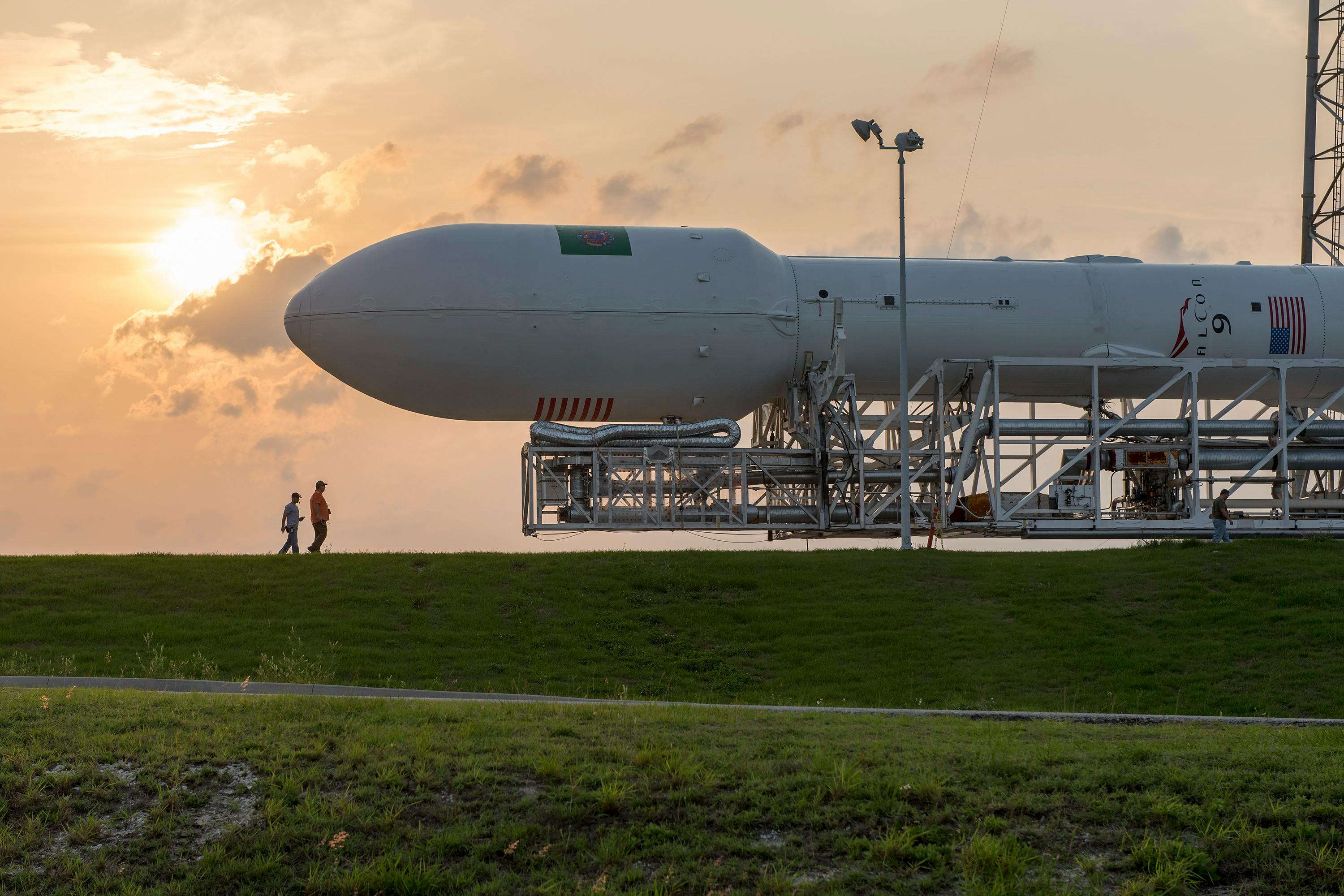
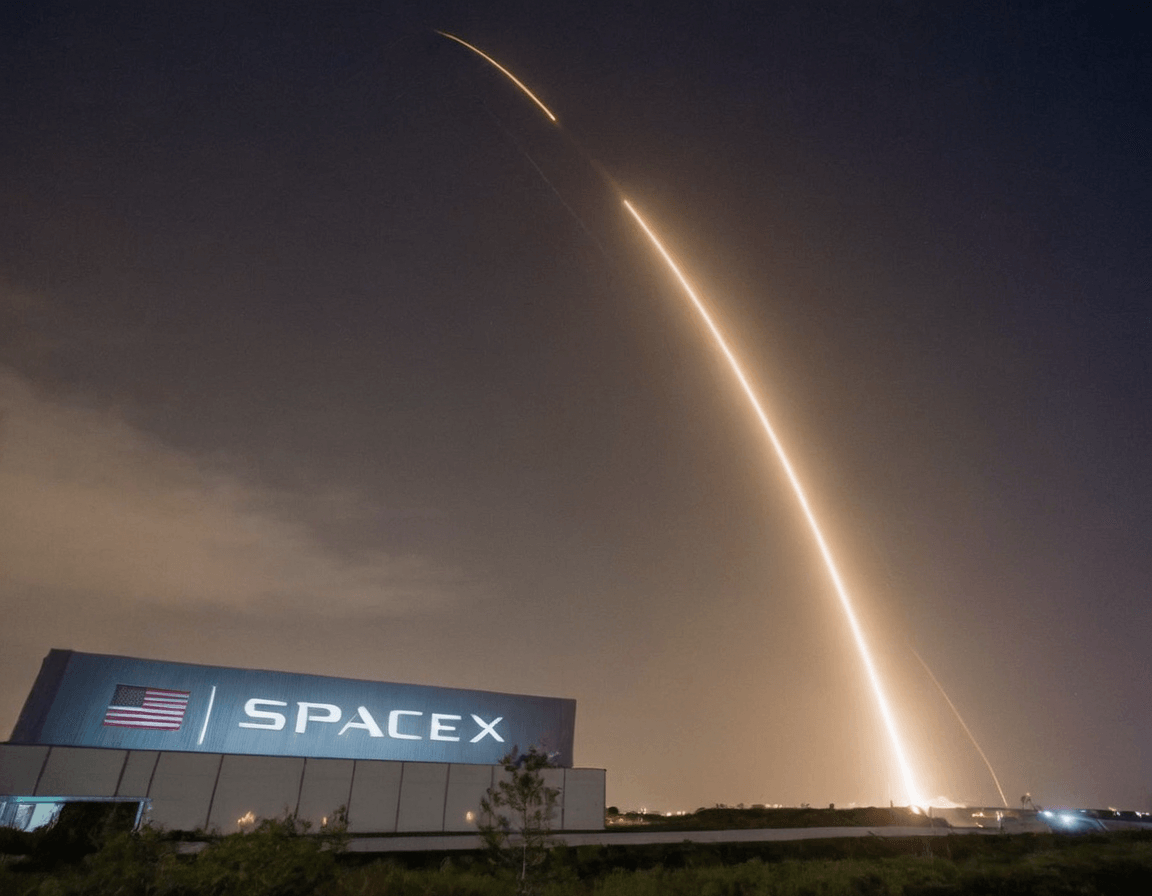
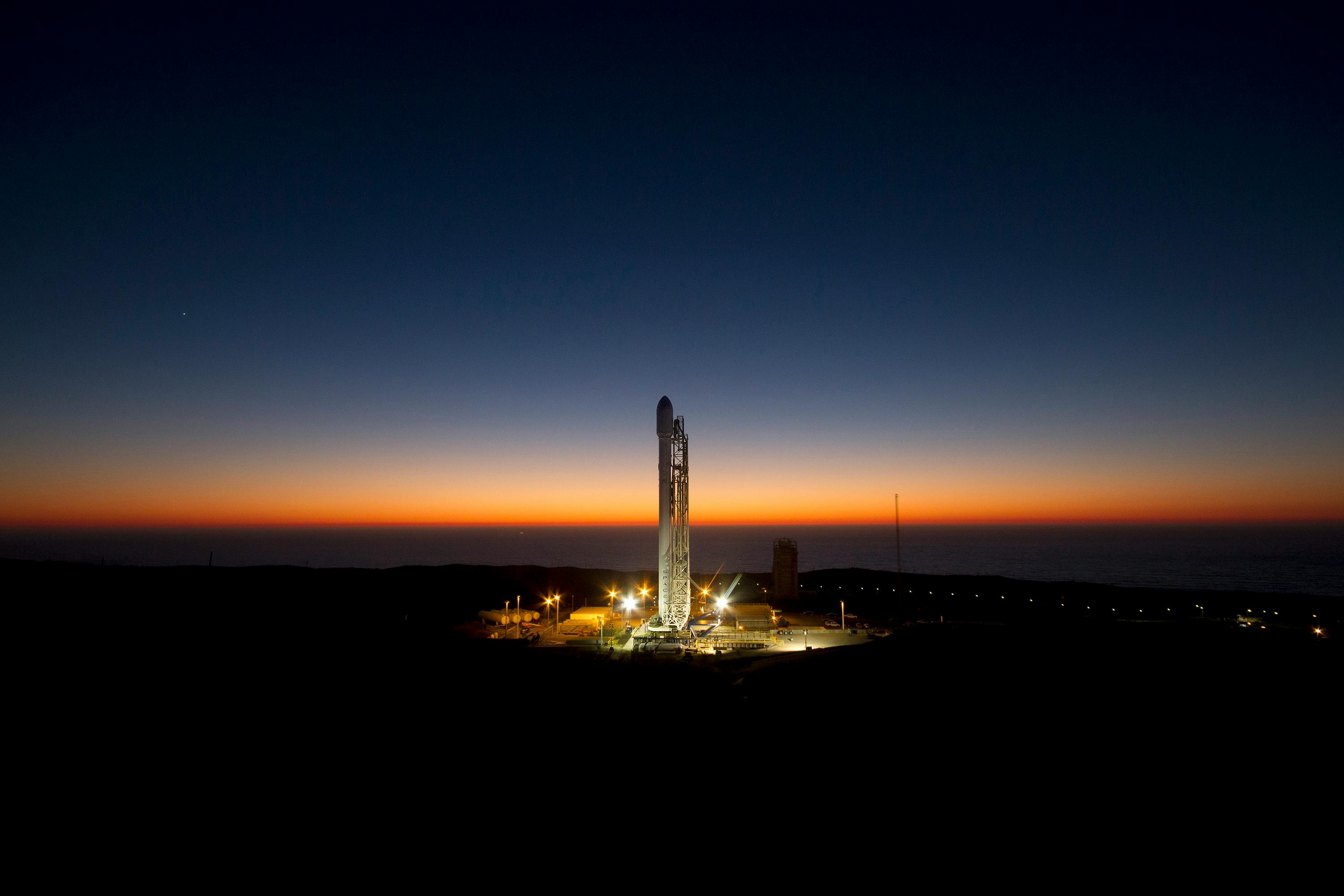
A Falcon 9 rocket lifted off from Vandenberg Space Force Base on the night of June 24, carrying 24 Starlink satellites as part of the Group 17-45 mission. The launch proceeded nominally, with the first stage booster completing another successful return landing aboard the droneship Of Course I Still Love You in the Pacific Ocean.
The mission is a routine but essential addition to the constellation, which now counts 12,342 satellites launched in total with 10,682 currently in orbit and 10,666 confirmed operational. Each batch of 24 incrementally improves coverage density, redundancy margins, and capacity headroom, particularly for high-demand mid-latitude markets.
Read the full story: Space.com
Weekly Launch Roundup: Pegasus XL Headlines a Crowded Manifest
This week’s global launch manifest featured six orbital attempts, with the rare Pegasus XL air-launched rocket sharing the schedule with multiple Falcon 9 missions and competing Chinese launches. The Pegasus XL, operated by Rocket Lab’s heritage launch division, conducts only occasional flights and its inclusion in a busy week underscored the increasingly dense cadence of orbital access across multiple operators and nations.
The crowded manifest also highlights the growing complexity of range scheduling and conjunction risk management as launch frequency continues to climb. For satellite trackers, a week with six orbital launches across multiple inclinations means a corresponding surge in newly catalogued objects requiring initial orbit determination and monitoring against existing populations.
Read the full story: NASASpaceFlight
Constellation Status
There have been no changes to the Starlink constellation since the last check. The constellation currently consists of 12,342 total satellites launched, with 10,682 remaining in orbit, 10,666 of which are operational, and 1,660 that have decayed from orbit.
- Total Launched: 12342
- Total On Orbit: 10682
- Total Working: 10666
Track Starlink satellites in real-time: Track Starlink