Latest Developments
Starlink’s reach into the highest levels of U.S. government came into sharp focus this week as President Trump unveiled a Qatar-gifted Boeing 747-8 serving as an interim Air Force One, fitted with SpaceX’s satellite internet service for presidential communications. The installation underscores Starlink’s growing role in critical government and defense connectivity, well beyond its civilian broadband roots. Meanwhile, SpaceX pressed forward with constellation expansion, with the Starlink 17-28 mission — the 58th Starlink orbital deployment overall — targeting liftoff from Vandenberg Space Force Base on June 20. With 10,647 operational satellites currently working on orbit out of 10,663 tracked in orbit, SpaceX continues its relentless cadence of launch and replenishment.
Space Safety
Current Starlink conjunction and reentry assessments indicate elevated operational risk in late June 2026. A single HIGH risk conjunction is flagged between STARLINK-30922 and TIANMU-1 15 on June 24, 2026, with a minimum approach distance of only 7 meters and a maximum collision probability of 1.0, representing a critical threat requiring immediate attention. Additionally, six Starlink satellites are predicted to reenter Earth’s atmosphere between June 21-24, 2026, with decay windows ranging from 1 minute to 22 hours, distributed across multiple orbital inclinations and ground-track locations.
| Risk | Starlink Sat | Other Object | Status | Min Range (km) | Rel Speed (km/s) | Max Prob | Time of Closest Approach |
|---|---|---|---|---|---|---|---|
| HIGH | STARLINK-30922 | TIANMU-1 15 | Operational | 0.007 | 14.292 | 1.0 | Wed, 24 Jun 2026 10:27:05 UTC |
| Satellite | NORAD ID | Predicted Decay | Window (min) | Inclination | Lat | Lon |
|---|---|---|---|---|---|---|
| STARLINK-3633 | 51793 | Jun 21, 03:33 UTC | 1 | 53.2° | -38.5° | 86.4° |
| STARLINK-5140 | 56147 | Jun 21, 08:48 UTC | 1320 | 43.0° | 31.2° | 234.2° |
| STARLINK-1677 | 46576 | Jun 22, 15:26 UTC | 540 | 53.0° | 13.0° | 343.9° |
| STARLINK-1958 | 47559 | Jun 22, 15:44 UTC | 540 | 53.0° | 15.9° | 18.3° |
| STARLINK-2220 | 48570 | Jun 23, 01:02 UTC | 1140 | 53.1° | -20.0° | 277.6° |
| STARLINK-3151 | 49408 | Jun 24, 02:22 UTC | 1080 | 53.2° | 13.4° | 284.1° |
Detailed Coverage
Starlink Goes Presidential: Trump’s Interim Air Force One Flies with SpaceX Connectivity
President Donald Trump publicly showcased the Boeing 747-8 gifted by Qatar at Joint Base Andrews on June 19, 2026, confirming the aircraft has been outfitted with Starlink terminals as part of its advanced communications suite. The plane, valued at approximately $400 million, is being modified to serve as a bridge Air Force One while the long-delayed VC-25B replacement program continues its slow progress through Boeing’s production pipeline.
The integration of Starlink into presidential aviation is a notable milestone for SpaceX’s government services division, signaling a level of institutional trust in the low Earth orbit constellation for high-priority, secure-adjacent communications. While the specific security configuration of the Starlink terminals aboard has not been disclosed, the public endorsement by the sitting president represents significant visibility for the network — now spanning more than 12,318 cumulative launches — at the very pinnacle of executive branch operations.
Read the full story: Teslarati
Falcon 9 Targets Vandenberg for 58th Starlink Mission, Carrying 24 More Satellites
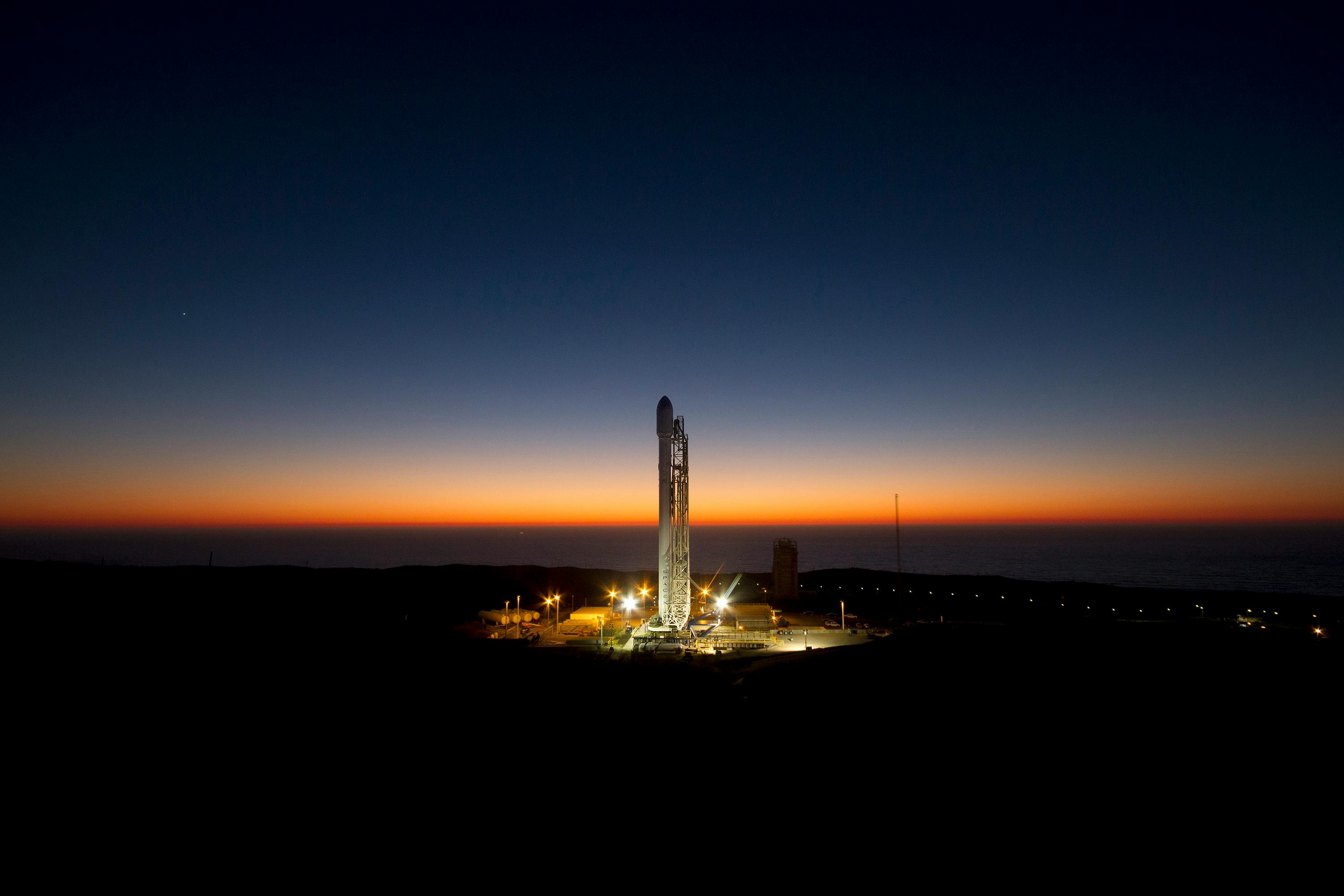
SpaceX’s Starlink 17-28 mission was set for liftoff from Space Launch Complex 4E at Vandenberg Space Force Base on June 20, 2026, with a precise instantaneous window opening at 8:12:16 a.m. PDT. The flight carries 24 Starlink satellites, continuing the steady drumbeat of shell-filling missions that have built the constellation to its current operational scale.
Mission 17-28 marks the 58th dedicated Starlink orbital deployment, reflecting SpaceX’s sustained launch tempo that has averaged well over one Starlink mission per week across recent months. Satellites from this batch will join the broader low Earth orbit architecture where over 10,600 spacecraft are actively maintaining connectivity for users worldwide, with tracking tools like KeepTrack enabling observers to follow each newly raised orbital plane as it slots into the constellation’s expanding geometry.
Read the full story: Spaceflight Now
Constellation Status
There have been no changes to the Starlink constellation since the last check. The constellation currently consists of 12,318 total satellites launched, with 10,663 currently in orbit, 10,647 operational and working, and 1,655 that have decayed.
- Total Launched: 12318
- Total On Orbit: 10663
- Total Working: 10647
Track Starlink satellites in real-time: Track Starlink