· x report · 7 min read
SpaceX IPO Raises $75B at $135/Share on Nasdaq Debut | KeepTrack X Report
SpaceX's historic $75B IPO priced at $135/share launches SPCX on Nasdaq at a $1.77 trillion valuation — the largest IPO in history.
Latest Developments
SpaceX made history today as shares of SPCX began trading on the Nasdaq stock exchange, with the company pricing its IPO at $135 per share and raising a record $75 billion — the largest initial public offering ever recorded — pushing its valuation to $1.77 trillion. The milestone arrives on the same day SpaceX is scheduled to launch yet another Starlink mission from Cape Canaveral’s Pad 40, underscoring the company’s relentless operational tempo even amid a landmark corporate event. With 12,241 Starlink satellites launched to date, 10,600 currently in orbit, and 10,584 actively working, the constellation that underpins much of SpaceX’s revenue case for investors has never been larger or more capable. Elon Musk, already the world’s wealthiest person, is expected to cross the trillionaire threshold as a direct result of today’s market debut.
Space Safety
The current Starlink conjunction and reentry threat picture shows moderate activity with two elevated-risk events identified in the near-term tracking window. Between June 7-13, 2026, SOCRATES has flagged 10 conjunction events involving Starlink assets, with two rated as MODERATE risk: STARLINK-30526 approaching STARLINK-35247 on Jun 10 at 18:10 UTC (0.3026 max probability), and STARLINK-1133 with STARLINK-34975 on Jun 7 at 16:23 UTC (0.1047 max probability). Concurrently, 5 Starlink satellites are predicted to reenter Earth’s atmosphere between June 12-14, 2026, with decay windows ranging from 540 to 1,140 minutes; none are currently flagged as high-interest objects but represent normal end-of-life operations for the constellation.
| Risk | Starlink Sat | Other Object | Status | Min Range (km) | Rel Speed (km/s) | Max Prob | Time of Closest Approach |
|---|---|---|---|---|---|---|---|
| MODERATE | STARLINK-30526 | STARLINK-35247 | Operational | 0.029 | 1.352 | 0.3026 | Jun 10, 18:10 UTC |
| MODERATE | STARLINK-1133 | STARLINK-34975 | Operational | 0.054 | 9.686 | 0.1047 | Jun 7, 16:23 UTC |
| LOW | STARLINK-30585 | FALCONSAT-6 | Operational | 0.034 | 7.762 | 0.08638 | Jun 13, 01:24 UTC |
| LOW | STARLINK-3060 | COSMOS 2221 | Unknown | 0.027 | 14.628 | 0.07515 | Jun 9, 06:53 UTC |
| LOW | STARLINK-6263 | FLOCK 4G-7 | Operational | 0.029 | 14.277 | 0.07431 | Jun 11, 23:42 UTC |
| LOW | STARLINK-30385 | ELECTRON KICK STAGE R/B | Non-operational | 0.031 | 13.435 | 0.07403 | Jun 11, 04:00 UTC |
| LOW | STARLINK-36171 | COSMOS 1275 DEB | Non-operational | 0.036 | 11.423 | 0.06593 | Jun 11, 08:28 UTC |
| LOW | STARLINK-36648 | QMR-KWT-2 (RS95S) | Operational | 0.037 | 12.875 | 0.0554 | Jun 8, 05:44 UTC |
| LOW | STARLINK-1262 | STARLINK-35484 | Operational | 0.085 | 0.077 | 0.05513 | Jun 9, 13:02 UTC |
| LOW | STARLINK-35892 | YAOGAN-35 01A | Operational | 0.049 | 3.857 | 0.04918 | Jun 9, 13:34 UTC |
| Satellite | NORAD ID | Predicted Decay | Window (min) | Inclination | Lat | Lon |
|---|---|---|---|---|---|---|
| STARLINK-2065 | 47672 | Jun 12, 13:44 UTC | 540 | 53.1° | 2.8° | 146.7° |
| STARLINK-3004 | 48880 | Jun 13, 04:52 UTC | 1140 | 97.7° | -82.2° | 67.0° |
| STARLINK-1795 | 46696 | Jun 13, 20:24 UTC | 840 | 53.0° | 47.8° | 333.1° |
| STARLINK-3729 | 52135 | Jun 13, 21:43 UTC | 1020 | 53.2° | 45.7° | 234.1° |
| STARLINK-2114 | 47393 | Jun 14, 18:26 UTC | 1140 | 53.0° | -42.7° | 352.8° |
Detailed Coverage
SpaceX Goes Public: $75 Billion IPO Makes SPCX the Biggest Market Debut in History
SpaceX priced its initial public offering at $135 per share on June 12, 2026, raising $75 billion and beginning public trading on the Nasdaq under the ticker symbol “SPCX.” The offering values the company at approximately $1.77 trillion, surpassing every previous IPO in financial history. For satellite trackers and Starlink watchers, the moment cements what the constellation’s growth trajectory has long implied: SpaceX is no longer merely a launch provider but one of the most valuable technology and infrastructure companies on Earth.
The IPO gives public investors direct exposure to the Starlink broadband business, the Falcon 9 launch manifest, and SpaceX’s longer-range ambitions including Starship and proposed orbital data centers. Analysts are watching SPCX closely as a bellwether for the broader commercial space economy, and the debut is expected to trigger a wave of increased institutional attention on the sector.
Read the full story: Teslarati
Falcon 9 Lifts Off from Pad 40 on IPO Day, Carrying 24 More Starlink Satellites
In a striking demonstration of business-as-usual confidence, SpaceX scheduled a Falcon 9 Starlink launch from Pad 40 at Cape Canaveral Space Force Station on the very morning its stock began trading, with liftoff targeted for 8:37 a.m. EDT (1237 UTC). The simultaneity of a historic financial event and a routine orbital mission speaks volumes about the operational maturity SpaceX has achieved — the company treats multi-billion-dollar market debuts and satellite deployments as parallel, non-competing activities.
The Cape Canaveral mission follows directly on the heels of a Vandenberg launch the previous day, maintaining the brisk cadence that has driven the Starlink constellation past 10,584 operational satellites. Each successful Falcon 9 flight and booster recovery reinforces the unit economics argument that underpins SpaceX’s $1.77 trillion valuation.
Read the full story: Spaceflight Now
Pre-IPO Starlink Launch: 24 Satellites Deployed from Vandenberg on June 11
One day before the Nasdaq debut, a Falcon 9 booster — B1071 — lifted off from Space Launch Complex 4E at Vandenberg Space Force Base at 8:05:59 a.m. PDT (1505:59 UTC), deploying 24 Starlink satellites into low Earth orbit. The mission proceeded without reported anomalies, with the booster completing its return to the drone ship OCISLY as planned. The timing, less than 24 hours ahead of the IPO opening bell, was a deliberate signal to prospective investors that SpaceX’s production and launch pipeline is robust and self-sustaining.
From a constellation tracking perspective, the 24 satellites represent the latest increment to a network whose sheer scale now demands continuous monitoring. As the constellation grows toward and potentially beyond current FCC license caps, orbital slot management and conjunction avoidance coordination with other operators will only grow in complexity and public scrutiny.
Read the full story: Space.com
Musk Outlines Plan for 1 Million AI Satellites — Orbital Data Centers Move from Concept to Strategy
Ahead of the IPO, Elon Musk provided additional detail on SpaceX’s ambition to deploy up to one million AI-enabled satellites serving as orbital data centers, a concept that would dwarf even the full Starlink Gen 2 constellation by orders of magnitude. Musk framed the initiative as a natural extension of Starlink’s infrastructure, leveraging SpaceX’s unmatched launch cadence and Starship’s projected heavy-lift economics to make space-based compute commercially viable for the first time.
The proposal raises profound questions for the satellite tracking and space safety community. One million operational objects in LEO — even if staged across multiple shells and altitudes — would represent an unprecedented challenge for conjunction assessment, space traffic management, and regulatory frameworks that were not designed for fleets of this scale. Whether the vision translates to filed FCC applications in the near term remains to be seen, but its articulation on the eve of the IPO signals it is being positioned as a core long-term revenue thesis for SPCX shareholders.
Read the full story: Space.com
Seattle’s Space Economy Eyes Ripple Effects from SpaceX’s Record Public Offering
The Pacific Northwest space community is watching the SpaceX IPO with particular interest, according to analysts familiar with the region’s dense cluster of aerospace contractors, satellite operators, and venture-backed startups. A $75 billion capital raise of this magnitude tends to expand investor appetite across the entire sector, potentially unlocking follow-on funding for smaller companies developing launch vehicles, ground systems, and space services that are complementary to — or competitive with — SpaceX’s own offerings.
Seattle-area firms supplying components, software, or ground infrastructure to Starlink or other SpaceX programs may also see indirect valuation lifts as the market re-rates the commercial space sector upward. The IPO could additionally accelerate talent flows and spur new company formations as SpaceX equity becomes liquid and early employees begin to diversify holdings.
Read the full story: Cosmic Log
By the Numbers: What SPCX’s $1.77 Trillion Valuation Means for Starlink’s Role
At $1.77 trillion, SpaceX’s market capitalization on IPO day places it among the handful of most valuable publicly traded companies in the world, and Starlink is widely regarded as the single largest contributor to that figure. The broadband constellation — with 10,584 satellites actively working as of today — generates recurring subscription revenue across consumer, enterprise, maritime, aviation, and government segments, providing the kind of predictable cash flow that public market investors prize. Starlink’s trajectory from zero to more than 10,000 working satellites in under five years is arguably the fastest large-scale infrastructure buildout in history.
For the satellite tracking community, the IPO introduces a new dynamic: SpaceX’s operational decisions regarding launch cadence, deorbit timelines, and orbital shell selection will now be subject to quarterly earnings scrutiny and shareholder pressure alongside existing regulatory oversight. That tension between financial performance incentives and responsible space operations will be worth monitoring closely as SPCX matures as a public company.
Read the full story: Spaceflight Now
Constellation Status
The Starlink constellation remained unchanged since the last check, with 12,241 satellites launched to date, 10,600 currently in orbit, 10,584 in working condition, and 1,641 that have decayed from orbit.
- Total Launched: 12241
- Total On Orbit: 10600
- Total Working: 10584
Track Starlink satellites in real-time: Track Starlink
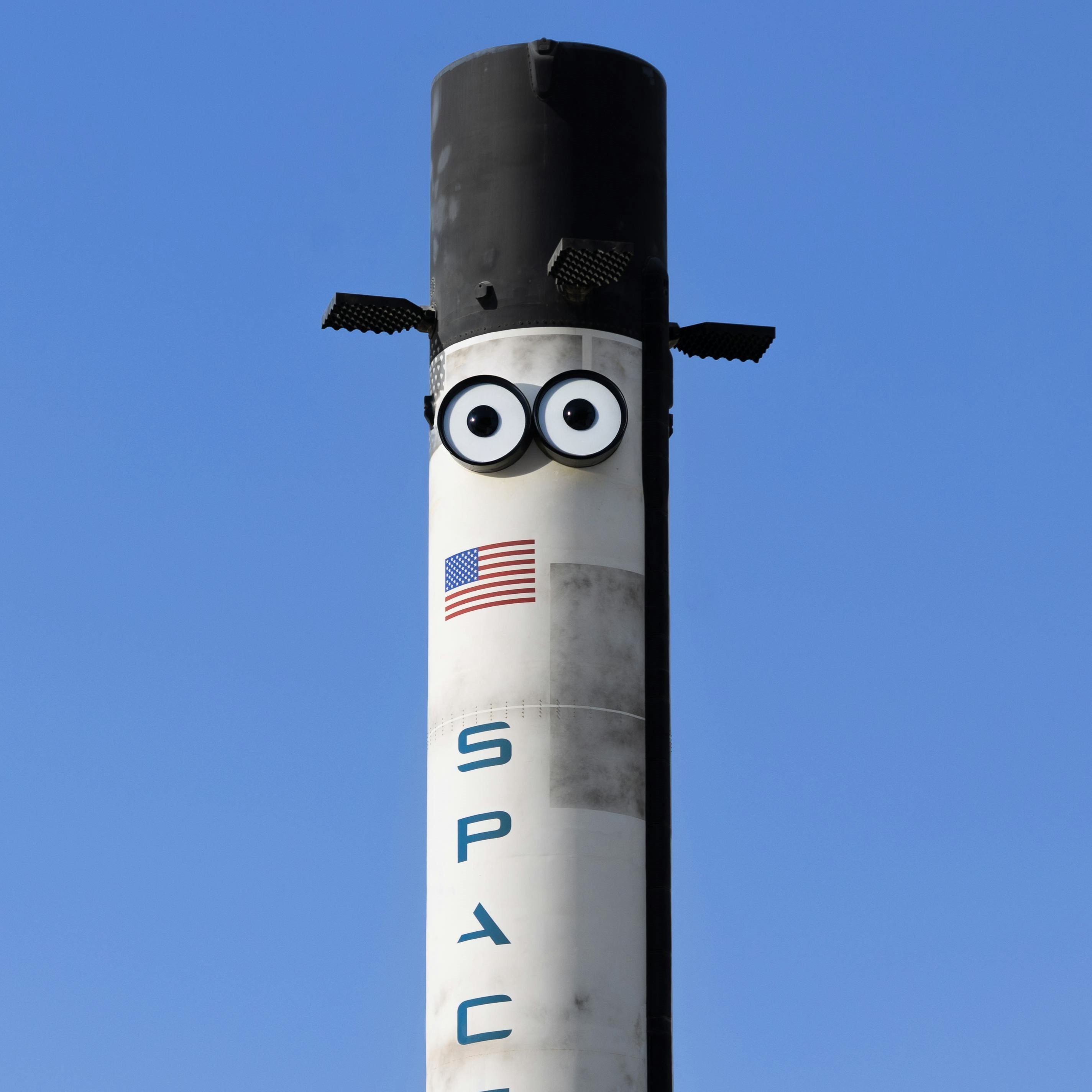
B1049