Latest Developments
SpaceX is barreling toward one of its most consequential test flights yet, targeting May 19 for the debut of Starship Version 3 — the tallest rocket ever assembled — launching for the first time from the newly completed Launch Pad 2 at Starbase, Texas. The milestone comes alongside a major regulatory win: the FCC has approved SpaceX’s acquisition of EchoStar spectrum to expand Starlink’s direct-to-device coverage, albeit with a $2.4 billion escrow condition attached. Meanwhile, on the operational front, the CRS-34 Cargo Dragon mission to the International Space Station was scrubbed on May 12 due to poor weather at Cape Canaveral, with a revised launch window opening May 13 carrying 6,500 pounds of science payloads and supplies. With 10,375 Starlink satellites currently in orbit and 10,359 confirmed working across a constellation of 11,979 launched, SpaceX’s cadence of technical achievement and mission complexity continues to accelerate on every front simultaneously.
Space Safety
The current Starlink conjunction picture shows four moderate-risk events scheduled for April 2026, with the highest-risk conjunction involving STARLINK-33563 and COSMOS 2251 debris on Apr 13, 2026 at a maximum collision probability of 0.397. While no conjunctions currently exceed the high-risk threshold, the concentration of moderate-risk events within a two-week window warrants continued monitoring, particularly those involving non-operational debris objects. Concurrently, three Starlink satellites are predicted to reenter between May 13-15, 2026, with decay windows ranging from 19 to 48 hours, representing nominal operational attrition for the constellation.
| Risk | Starlink Sat | Other Object | Status | Min Range (km) | Rel Speed (km/s) | Max Prob | Time of Closest Approach |
|---|---|---|---|---|---|---|---|
| MODERATE | STARLINK-33563 | COSMOS 2251 DEB | Non-operational | 0.012 | 11.318 | 0.3973 | Apr 13, 21:44 UTC |
| MODERATE | STARLINK-5601 | DELTA 1 DEB | Non-operational | 0.014 | 8.499 | 0.3479 | Apr 11, 06:26 UTC |
| MODERATE | STARLINK-33680 | FLOCK 4G-17 | Operational | 0.024 | 12.627 | 0.1287 | Apr 9, 13:55 UTC |
| MODERATE | STARLINK-35339 | THEA | Operational | 0.022 | 14.110 | 0.1272 | Apr 11, 01:33 UTC |
| LOW | STARLINK-32841 | YAOGAN-43 01D | Operational | 0.038 | 9.497 | 0.0672 | Apr 11, 14:30 UTC |
| LOW | STARLINK-36431 | WT 1B | Unknown | 0.052 | 1.153 | 0.0450 | Apr 14, 13:45 UTC |
| LOW | STARLINK-32376 | OBJECT AD | Operational | 0.046 | 11.243 | 0.0441 | Apr 12, 08:38 UTC |
| LOW | STARLINK-30245 | SL-19 R/B | Non-operational | 0.037 | 14.371 | 0.0441 | Apr 7, 16:55 UTC |
| LOW | STARLINK-35657 | ION SCV-008 | Operational | 0.041 | 13.969 | 0.0390 | Apr 12, 19:09 UTC |
| LOW | STARLINK-31383 | TEVEL2-7 | Operational | 0.038 | 14.746 | 0.0384 | Apr 8, 19:55 UTC |
| Satellite | NORAD ID | Predicted Decay | Window (min) | Inclination | Lat | Lon |
|---|---|---|---|---|---|---|
| STARLINK-1733 | 46564 | May 13, 11:41 UTC | 1440 | 53° | 15.2° | 262.1° |
| STARLINK-1019 | 44724 | May 14, 18:37 UTC | 2880 | 53° | 4.9° | 9.8° |
| STARLINK-1790 | 46691 | May 15, 17:57 UTC | 1140 | 53° | -52.8° | 336.0° |
Detailed Coverage
Weather Scrubs CRS-34 Dragon Launch; Rescheduled for May 13
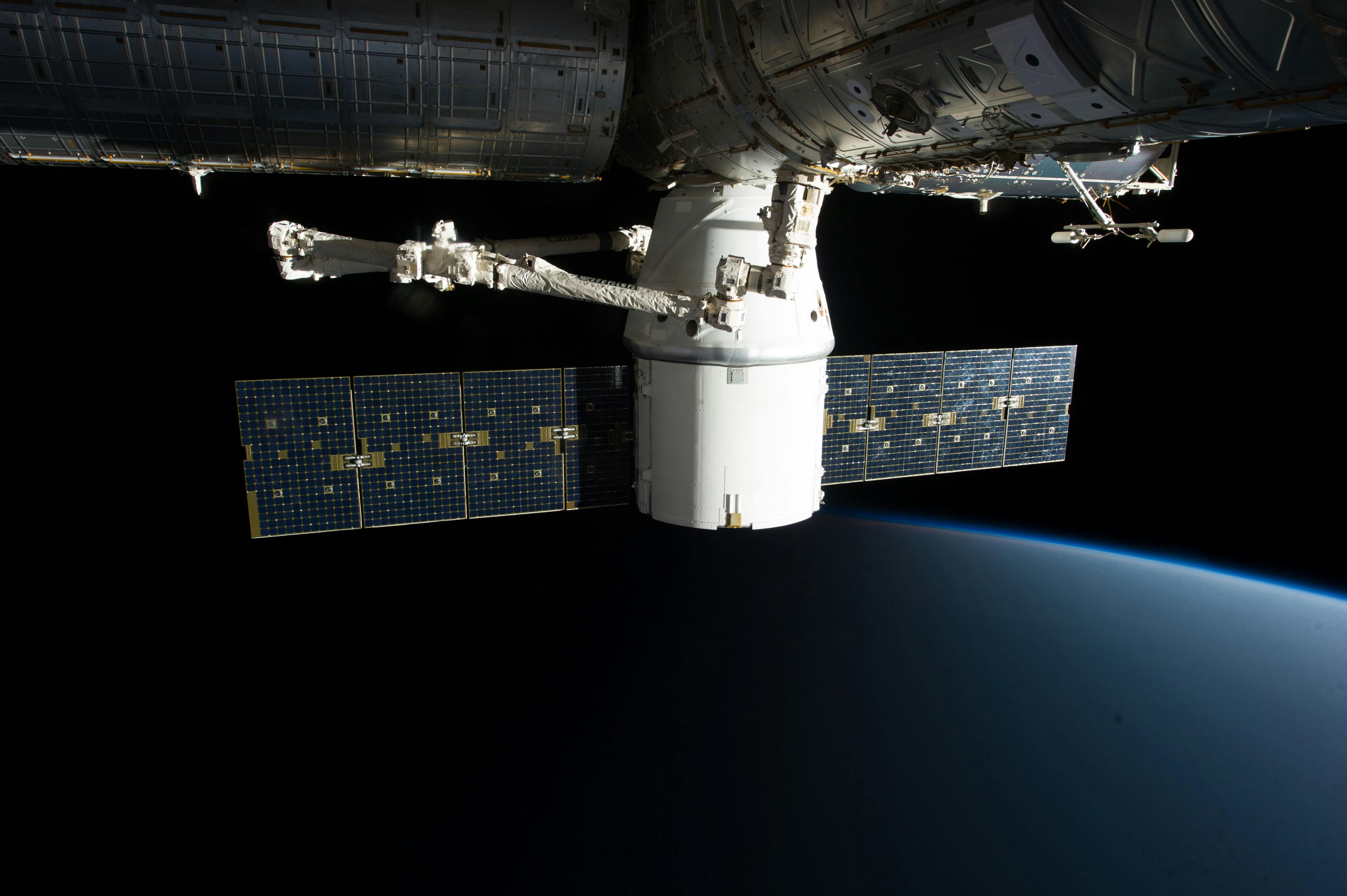
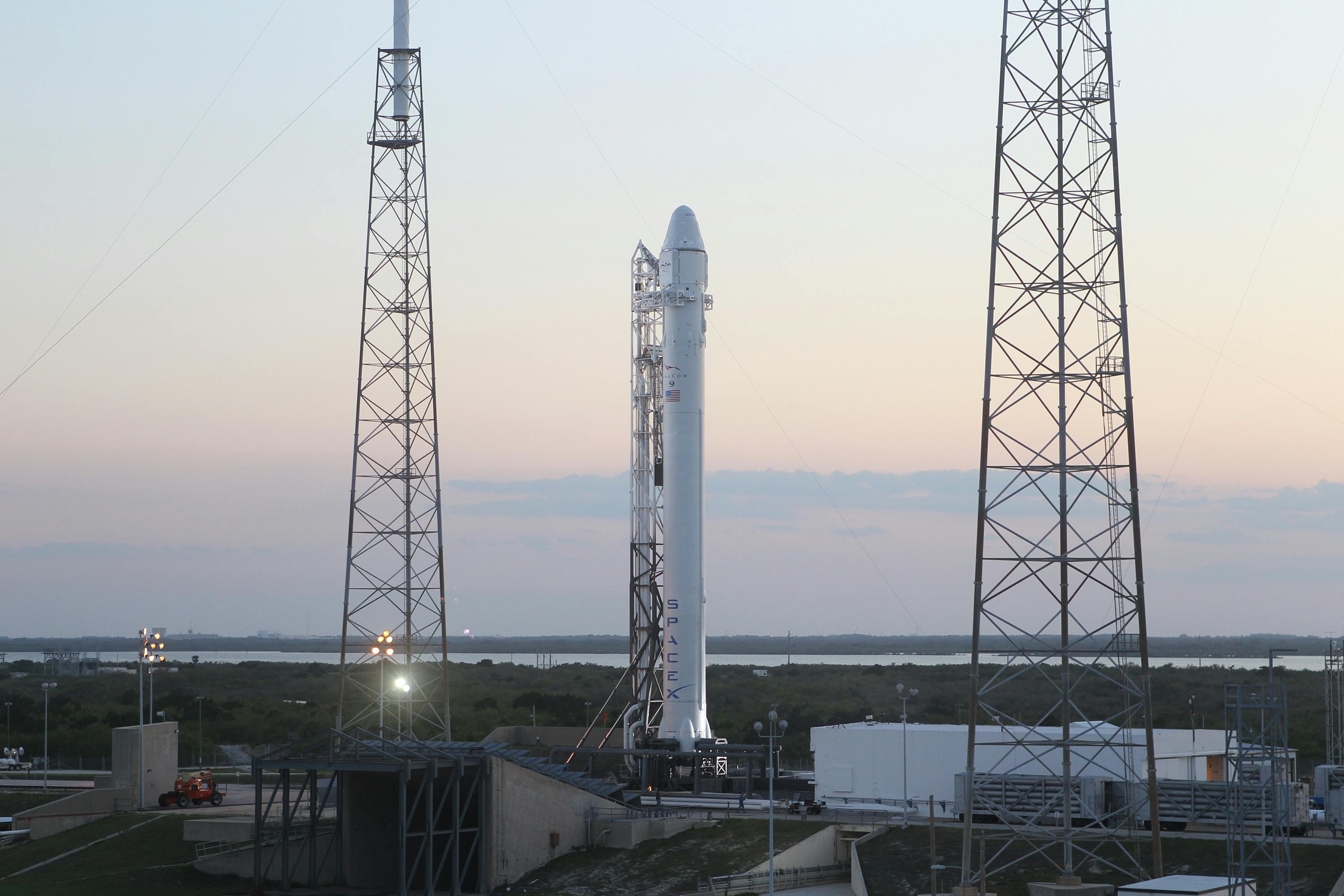
Poor weather at Cape Canaveral Space Force Station forced NASA and SpaceX to stand down from the first attempt to launch the 34th Commercial Resupply Services mission on May 12. The Falcon 9 rocket, loaded with 6,500 pounds of cargo for the International Space Station, was targeting pad 40 for a 6:50 p.m. EDT liftoff before conditions deteriorated beyond acceptable flight rules. The mission was subsequently rescheduled for Wednesday, May 13, with live coverage available for those wanting to track the Dragon’s ascent and rendezvous with the Station.
The delay adds to a brief but notable string of scheduling friction around CRS-34, which had already slipped 24 hours prior to the weather scrub. Once aloft, Dragon will deliver science experiments, crew provisions, and hardware in what remains one of NASA’s most logistically critical contracted operations. Satellite trackers can expect to observe the Dragon spacecraft on a rendezvous approach trajectory in the days following launch.
Read the full story: Spaceflight Now
Starship V3 Gets May 19 Target Date for Historic Debut from Pad 2
SpaceX has officially set May 19 as the target date for the first launch of Starship Version 3, marking the debut of both a substantially redesigned vehicle and the brand-new Launch Pad 2 facility at Starbase. The upgraded stack introduces a host of hardware improvements across both the Super Heavy booster and the Ship upper stage, changes specifically engineered to support NASA’s Artemis 3 crewed lunar landing mission currently scheduled for 2027. The flight will serve as a high-stakes systems validation, testing propulsion, structural, and ground infrastructure upgrades in a single integrated demonstration.
Ahead of the launch target, SpaceX completed a full fueling test of the V3 stack — the first time the new vehicle has been loaded with propellant — a critical milestone that clears the path for final launch readiness reviews. The fully stacked and fueled Starship V3 has already claimed the title of tallest rocket ever built, surpassing the previous record set by its own predecessor. Observers and satellite trackers worldwide are expected to monitor the flight closely, as its trajectory and any deployed test payloads will be of immediate interest to the orbital tracking community.
Read the full story: Spaceflight Now
Starship V3 Fueling Test Complete — and It’s the Tallest Rocket Ever Built
Before the May 19 launch date was formally announced, SpaceX quietly cleared one of the final pre-flight hurdles by successfully conducting a full propellant loading test of the Starship V3 stack. The wet dress rehearsal-style operation confirmed that the new vehicle’s plumbing, pressurization systems, and ground support equipment at Pad 2 perform as designed under cryogenic conditions. The achievement formally makes Starship V3 the tallest rocket ever constructed, edging out earlier Starship iterations and the Saturn V in sheer height.
The fueling test is significant not just as a record but as an operational confidence builder. Each prior Starship version reached this stage only after months of iterative debugging, and the relative smoothness of V3’s fueling campaign suggests SpaceX has internalized hard lessons from earlier test flights. With Artemis 3 lunar mission timelines depending on Starship’s human landing system variant, the pressure to demonstrate reliable performance on this debut flight is considerable.
Read the full story: Ars Technica
FCC Approves SpaceX EchoStar Spectrum Acquisition with $2.4 Billion Escrow Condition
The Federal Communications Commission has granted SpaceX approval to acquire EchoStar’s spectrum holdings, a deal that will significantly bolster Starlink’s direct-to-device (D2D) capabilities across the United States. The approval comes with a notable condition: SpaceX must place $2.4 billion in escrow, tied to unresolved disputes over EchoStar’s previously abandoned terrestrial 5G network buildout obligations. The escrow requirement reflects regulatory caution around ensuring that spectrum acquired for satellite broadband is not used to sidestep prior terrestrial deployment commitments tied to the original license.
For Starlink’s D2D ambitions — which aim to connect standard smartphones directly to the constellation without specialized hardware — the additional spectrum is a meaningful resource. As Starlink’s working constellation holds steady at 10,359 satellites, the ability to leverage higher-quality licensed spectrum could accelerate coverage density and throughput for direct cellular service partnerships already underway with T-Mobile and international carriers. The regulatory approval marks one of the more consequential FCC decisions affecting the commercial satellite sector in recent years.
Read the full story: SpaceNews
Nine Launches Scheduled for the Week of May 11 as SpaceX and China Dominate Manifest
The week of May 11 represents one of the busiest stretches on the 2026 launch calendar, with nine missions spanning American and Chinese launch providers slated to lift off across the seven-day window. SpaceX accounts for multiple entries on the manifest, with CRS-34 and potential Starlink batch missions among the expected flights, while China’s cadence reflects its own aggressive satellite constellation and space station logistics tempo. The density of simultaneous launch activity underscores how dramatically the orbital environment has transformed in just a few years.
For satellite trackers and conjunction analysts, weeks like this are operationally significant. Each batch launch adds newly cataloged objects to already congested orbital shells, and the parallel activity of two major spacefaring nations compresses the timeline between launches and first radar contact for tracking networks. KeepTrack users can expect updated orbital element sets and new object notifications throughout the week as ground stations acquire and catalog fresh debris and operational payloads alike.
Read the full story: NASASpaceFlight
Ron Baron Doubles Down on SpaceX Investment Conviction
Veteran fund manager Ron Baron, founder and CEO of Baron Capital, used a May 12 appearance on CNBC’s Squawk Box to reaffirm his long-standing bullish position on both SpaceX and Tesla. Baron, whose firm has been one of the most prominent institutional backers of SpaceX through its private market exposure, indicated that buying in both companies will continue despite broader market volatility. His comments reinforce the view among a subset of major investors that SpaceX’s vertically integrated launch and satellite business represents a generational wealth-creation opportunity.
While investment commentary sits outside the typical scope of technical spaceflight analysis, Baron’s continued public commitment to SpaceX carries signal value for the company’s trajectory. Private valuations and investor confidence directly influence SpaceX’s capacity to fund programs like Starship development, Starlink expansion, and eventual point-to-point Earth transportation — all of which have downstream implications for constellation growth and orbital activity that KeepTrack monitors.
Read the full story: Teslarati
CRS-34 Mission Profile: 6,500 Pounds to ISS Aboard Falcon 9
With the weather scrub behind it, the CRS-34 Dragon mission is carrying one of the more scientifically rich cargo manifests in recent resupply history. The 6,500-pound payload includes biological research samples, materials science experiments, hardware for crew health studies, and provisions supporting the current Expedition crew aboard the International Space Station. The mission flies under SpaceX’s Commercial Resupply Services 2 contract with NASA, a framework that has now reliably delivered cargo to the Station across dozens of missions since 2019.
The Falcon 9’s booster for this mission is expected to land downrange following stage separation, continuing SpaceX’s near-perfect streak of first-stage recoveries that underpins the economics of the entire Starlink deployment program. Once Dragon reaches the Station, its approach and berthing can be tracked by observers using publicly available orbital data — a reminder that even routine resupply missions generate trackable objects of interest to the amateur and professional satellite monitoring community.
Read the full story: Space.com
Constellation Status
The Starlink constellation has remained stable since the last check, with no new launches or orbital changes recorded. The constellation currently consists of 11,979 total satellites launched to date, of which 10,375 remain in orbit and 10,359 are operational, while 1,604 have decayed from orbit.
- Total Launched: 11979
- Total On Orbit: 10375
- Total Working: 10359
Track Starlink satellites in real-time: Track Starlink