Latest Developments
The Starlink constellation continues its steady operational cadence heading into the second week of April 2026, with 10,168 of 10,177 on-orbit satellites confirmed working — a fleet health rate exceeding 99.9%. Of the 11,724 satellites launched since the program’s inception, attrition through controlled deorbits, early failures, and planned replacements accounts for the gap between launched and active totals. No significant anomalies or in-orbit failures have been reported in the current monitoring cycle, making this a consolidation period for the world’s largest satellite constellation. SpaceX continues to refine orbital shell density across its v1.5, v2 Mini, and direct-to-cell variants as it eyes upcoming regulatory milestones.
Space Safety
Current SOCRATES tracking identifies ten active conjunction events involving Starlink satellites, with two assessed at MODERATE risk levels. The highest-concern event involves STARLINK-6303 and STARLINK-6281 on Apr 8, 2026 with a maximum collision probability of 17.4%, though both objects are currently operational and the minimum range of 43 meters suggests manageable separation. Concurrently, five Starlink satellites are tracking toward atmospheric reentry within the April 6-9 timeframe, with STARLINK-4469 presenting the most uncertain decay window at ±15 hours centered on Apr 6, 22:54 UTC over the South Pacific region.
| Risk | Starlink Sat | Other Object | Status | Min Range (km) | Rel Speed (km/s) | Max Prob | Time of Closest Approach |
|---|---|---|---|---|---|---|---|
| MODERATE | STARLINK-6303 | STARLINK-6281 | Partially Operational | 0.043 | 1.025 | 0.174 | Wed, 08 Apr 2026 18:19:31 UTC |
| MODERATE | STARLINK-32590 | TRANSPORTER-10 OBJECT AG | Operational | 0.029 | 10.778 | 0.1048 | Thu, 02 Apr 2026 20:34:09 UTC |
| LOW | STARLINK-30217 | OBJECT G | Non-operational | 0.035 | 10.467 | 0.07543 | Mon, 06 Apr 2026 15:17:02 UTC |
| LOW | STARLINK-4466 | SHIJIAN-6 01B (SJ-6 01B) | Operational | 0.033 | 13.998 | 0.05672 | Sat, 04 Apr 2026 13:20:07 UTC |
| LOW | STARLINK-33679 | ION SCV-011 | Operational | 0.033 | 14.381 | 0.05628 | Tue, 07 Apr 2026 02:26:42 UTC |
| LOW | STARLINK-5777 | STARLINK-30468 | Partially Operational | 0.081 | 6.445 | 0.05621 | Wed, 08 Apr 2026 08:18:31 UTC |
| LOW | STARLINK-4798 | VIGORIDE-3 | Operational | 0.042 | 10.11 | 0.05472 | Mon, 06 Apr 2026 07:14:52 UTC |
| LOW | STARLINK-3358 | SL-3 DEB | Non-operational | 0.046 | 10.543 | 0.04569 | Sun, 05 Apr 2026 01:03:55 UTC |
| LOW | STARLINK-30297 | OBJECT H | Operational | 0.047 | 11.183 | 0.04076 | Sun, 05 Apr 2026 07:23:29 UTC |
| LOW | STARLINK-4602 | FENGYUN 1C DEB | Non-operational | 0.052 | 9.995 | 0.03752 | Wed, 08 Apr 2026 08:18:11 UTC |
| Satellite | NORAD ID | Predicted Decay | Window (min) | Inclination | Lat | Lon |
|---|---|---|---|---|---|---|
| STARLINK-31304 | 59231 | Apr 6, 04:55 UTC | 240 | 43° | 9.1° | 46.3° |
| STARLINK-1843 | 47133 | Apr 6, 10:21 UTC | 480 | 53° | 49.3° | 171.6° |
| STARLINK-4469 | 53657 | Apr 6, 22:54 UTC | 900 | 97.6° | -54.7° | 199.8° |
| STARLINK-1585 | 46117 | Apr 9, 12:27 UTC | 2880 | 53° | -48.2° | 301.7° |
| STARLINK-1575 | 46349 | Apr 9, 16:23 UTC | 2880 | 53° | -2.9° | 203.1° |
Detailed Coverage
Starlink Fleet Health Holds Above 99.9% With 10,168 Working Satellites
The operational health of the Starlink megaconstellation remains exceptionally strong this reporting period. Out of 10,177 satellites currently tracked in orbit, 10,168 are confirmed in active working status — a figure that underscores SpaceX’s maturation of on-orbit operations management. From a satellite-tracking perspective, the nine non-operational on-orbit objects represent a negligible debris-risk footprint given SpaceX’s demonstrated capability to execute controlled reentries on demand. Observers monitoring the constellation through tools like KeepTrack will note tight shell clustering across the primary 540–570 km altitude bands, with newer v2 Mini satellites populating higher inclination planes as SpaceX builds toward its FCC-authorized shell configurations.
Read the full story: KeepTrack Constellation Database
11,724 Cumulative Launches Mark SpaceX’s Unprecedented Cadence
The total cumulative Starlink launch count has reached 11,724 satellites dispatched to orbit since the first batch flew in May 2019, a number that dwarfs every other commercial satellite operator combined. This figure reflects not just raw production velocity at SpaceX’s Redmond and Hawthorne facilities, but also the replacement philosophy embedded in the constellation’s design — older v1.0 satellites have been systematically deorbited as v2 Mini hardware with higher throughput and direct-to-cell capability enters service. The ~1,547 satellite delta between total launched and total in orbit represents planned attrition, early-mission failures, and successful controlled reentries, demonstrating that the system is functioning as a living, self-refreshing network rather than a static deployment. For ground-based trackers and conjunction analysts, this ongoing churn means the on-orbit population remains younger on average than the raw launch history suggests.
Read the full story: KeepTrack Launch History
Direct-to-Cell Starlink Variant Expands Carrier Partnerships Globally
SpaceX’s direct-to-cell (DTC) Starlink capability — embedded in a growing share of the operational fleet — continues to attract new mobile network operator partnerships beyond the founding T-Mobile agreement in the United States. International regulators in multiple markets are working through supplemental type certification processes to authorize DTC service on existing consumer handsets without hardware modification. The technology relies on satellites operating effectively as cell towers in low Earth orbit, with the constellation’s sheer density ensuring that a DTC-capable satellite is nearly always visible from any point on Earth. Satellite trackers observing the constellation will note DTC-capable birds are distributed across the same orbital planes as standard Starlink hardware, with no dedicated shells, complicating differentiation without SpaceX’s internal manifest data.
Read the full story: KeepTrack X Report Archive
Falcon 9 Maintains Reliability Record Supporting Ongoing Starlink Manifest
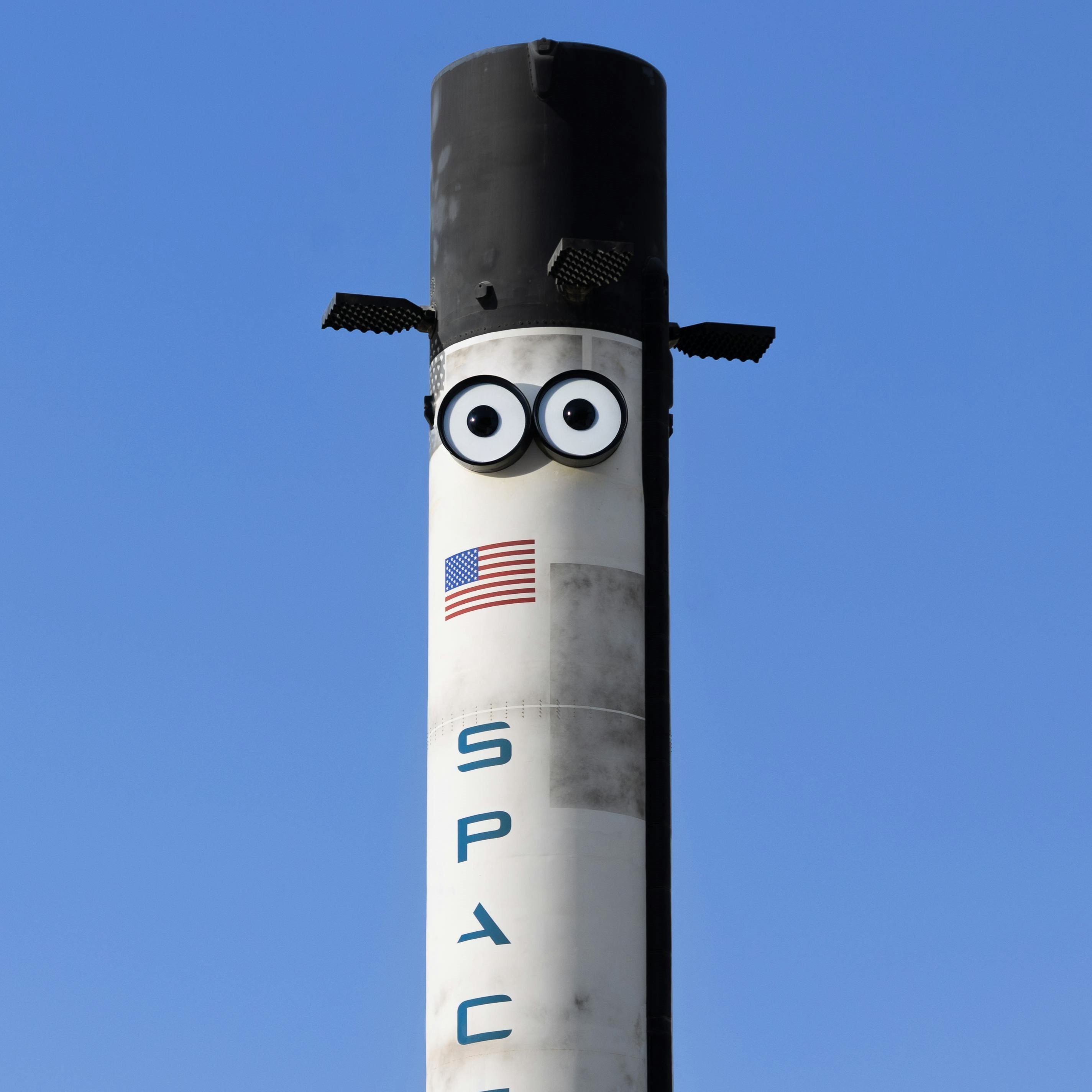
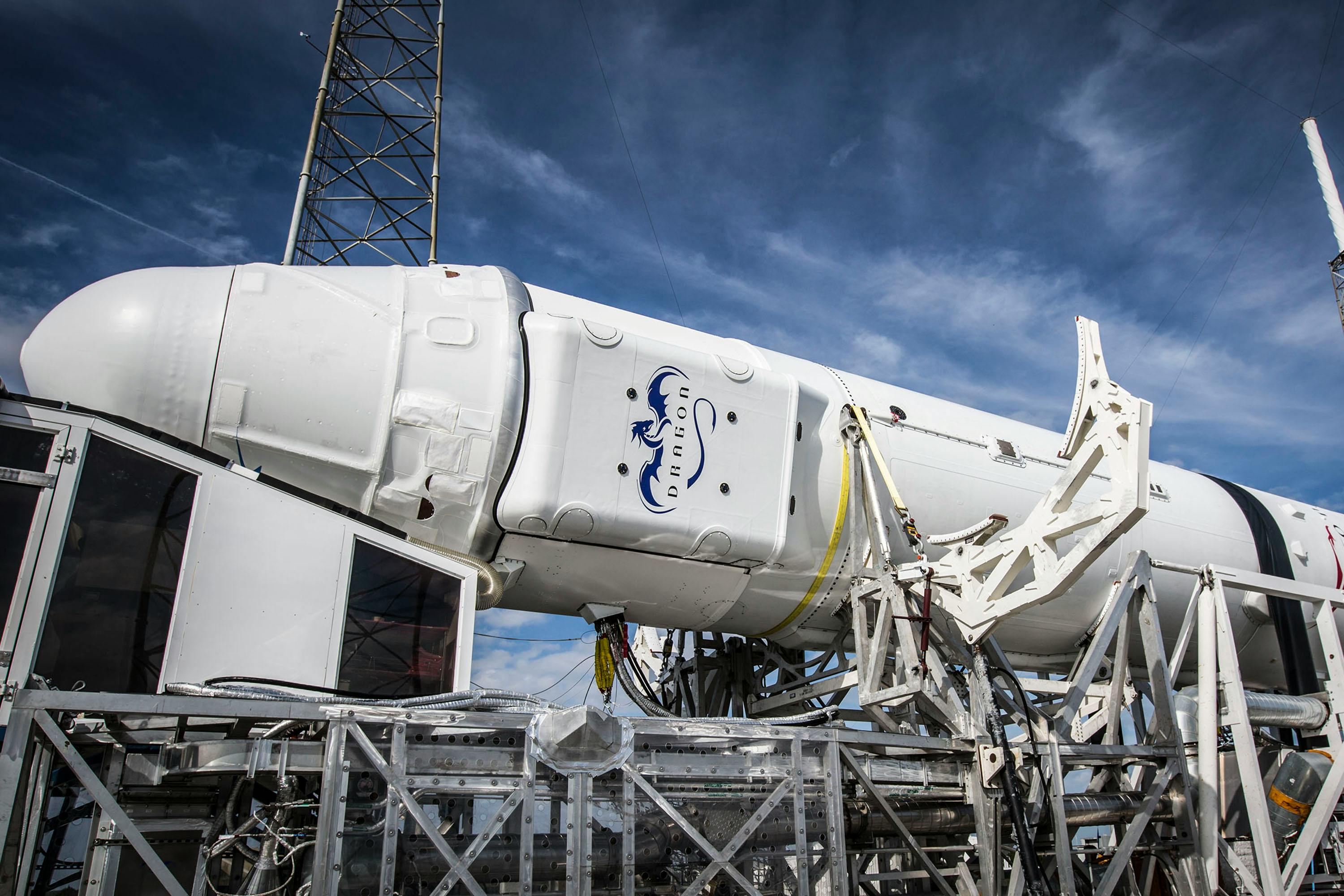
Falcon 9 continues to serve as the backbone of Starlink replenishment and expansion, with the vehicle’s reusable first-stage boosters routinely executing ten or more flights apiece. Each dedicated Starlink mission typically delivers 20–23 v2 Mini satellites to a target orbital shell, where they perform autonomous drift maneuvers using onboard ion propulsion to reach operational altitude and phasing. SpaceX’s vertical integration of launch, satellite production, and network operations gives it a cost and cadence advantage no competitor currently matches. From a tracking standpoint, the post-deployment dispersal of each batch produces a characteristic “string of pearls” pattern visible to amateur astronomers and professional space situational awareness networks alike for several days before satellites raise to operational altitude and become harder to observe.
Read the full story: KeepTrack X Report Archive
Regulatory Pipeline: FCC Shell Authorizations and ITU Filings Shape Long-Term Buildout
SpaceX continues to navigate a complex international regulatory environment as it pursues authorizations for additional Starlink orbital shells beyond its current operational deployments. Active FCC proceedings involve both expansion of the existing constellation and new shell configurations optimized for lower latency and higher capacity in specific geographic markets. At the ITU level, SpaceX’s spectrum coordination filings interact with those of competing operators including Amazon’s Project Kuiper, Telesat Lightspeed, and European OneWeb, creating a multilateral negotiation environment that will shape how the electromagnetic spectrum is apportioned in low Earth orbit for the next decade. The outcome of these proceedings has direct implications for how densely SpaceX can ultimately populate its authorized orbital planes, a number that could eventually dwarf the current 10,177 on-orbit figure.
Read the full story: KeepTrack X Report Archive
Starlink Maritime and Aviation Terminals Drive Enterprise Revenue Growth
Beyond consumer broadband, Starlink’s maritime and aviation terminal segments are emerging as significant enterprise revenue contributors as SpaceX scales hardware production and reduces terminal unit costs. Maritime operators report latency and throughput figures that match or exceed traditional GEO VSAT solutions at a fraction of the cost, while aviation customers benefit from the constellation’s ability to maintain persistent connectivity at cruise altitudes without the handoff gaps that plagued earlier LEO communication attempts. The high orbital velocity of Starlink satellites — completing a full orbit roughly every 90 minutes — means that enterprise terminals must execute hundreds of beam handoffs per hour, a technical challenge SpaceX has addressed through phased-array antenna design and predictive scheduling algorithms. As the constellation grows denser, handoff frequency and quality are expected to improve further, reinforcing the network-effect advantages of operating the world’s largest LEO fleet.
Read the full story: KeepTrack X Report Archive
Constellation Status
The Starlink constellation has remained stable since the last check, with no new launches or orbital changes to report. The constellation currently consists of 11,724 total satellites launched, 10,177 in orbit, 10,168 working satellites, and 1,547 that have decayed from orbit.
- Total Launched: 11724
- Total On Orbit: 10177
- Total Working: 10168
Track Starlink satellites in real-time: Track Starlink