Latest Developments
SpaceX’s ambitions beyond broadband are drawing intense scrutiny this week after Elon Musk offered new technical details on plans for an orbital data center constellation, prompting leading astronomers to warn that such deployments — combined with proposed orbiting mirror projects — would “completely destroy the night sky.” The backlash arrives as SpaceX simultaneously unveiled its stake in TERAFAB, a $25 billion chip factory targeting one terawatt of annual AI compute alongside Tesla and xAI. On the launch front, the Starlink 10-62 mission added 29 more satellites to a constellation now standing at 11,641 launched, 10,126 in orbit, and 10,116 operational. The convergence of commercial AI infrastructure ambitions with an already-dense low Earth orbit environment is reshaping regulatory and scientific debates at an accelerating pace.
Space Safety
I don’t have active conjunction or reentry data to analyze at this moment. The SOCRATES conjunction dataset shows no current events involving Starlink satellites, and the TIP reentry prediction system is not reporting any imminent Starlink decays. This represents a relatively benign operational environment for the Starlink constellation, though continuous monitoring remains essential given the dynamic nature of orbital mechanics and the large number of active Starlink vehicles in orbit.
| Risk | Starlink Sat | Other Object | Status | Min Range (km) | Rel Speed (km/s) | Max Prob | Time of Closest Approach |
|---|---|---|---|---|---|---|---|
| No current events | — | — | — | — | — | — | — |
| Satellite | NORAD ID | Predicted Decay | Window (min) | Inclination | Lat | Lon |
|---|---|---|---|---|---|---|
| No predictions | — | — | — | — | — | — |
Detailed Coverage
Astronomers Sound Alarm Over SpaceX Orbital Data Centers and Mirror Satellites
The scientific community is pushing back hard against two parallel proposals threatening observational astronomy: giant orbiting mirror projects and SpaceX’s emerging plans for million-satellite AI data center constellations. Experts quoted by Space.com described the combined effect as “really intolerable,” warning that reflective orbital infrastructure operating at scale would permanently compromise ground-based astronomy and erase a shared human heritage stretching back millions of years.
The criticism lands at a particularly sensitive moment, as regulators and astronomers are still negotiating dark-sky mitigation measures with existing Starlink-class operators. An orbital data center layer — potentially orders of magnitude larger than the current 10,116-satellite working constellation — would represent an entirely new category of interference, one for which existing coordination frameworks have no precedent.
Read the full story: Space.com
Musk Reveals Technical Blueprint for Orbital Data Center Constellation
Elon Musk broke new ground this week by sharing additional technical details about SpaceX’s vision for a constellation of data-processing satellites operating in orbit — though financial specifics remain firmly under wraps. The disclosure, reported by SpaceNews, signals that the program is progressing beyond the conceptual stage, with design parameters now defined enough to communicate externally.
The orbital data center concept would leverage the same mass-manufacturing and rapid-launch cadence that built Starlink into a 10,000-plus satellite network in under six years. From a tracking perspective, a large fleet of compute-dense satellites would introduce new challenges for conjunction analysis and space traffic management, particularly if orbital altitudes overlap with existing Starlink shells.
Read the full story: SpaceNews
TERAFAB: SpaceX, Tesla, and xAI’s $25B Bet on AI Compute Supremacy
SpaceX joined Tesla and xAI this week in unveiling TERAFAB, an audacious $25 billion chip fabrication venture targeting one terawatt of AI compute capacity annually. The announcement positions the Musk industrial ecosystem as a vertically integrated AI hardware supplier, with potential downstream implications for how SpaceX designs and operates its own satellite constellations, including future orbital data center nodes.
For Starlink watchers, the significance lies in self-sufficiency: custom AI silicon designed in-house could accelerate onboard processing capabilities for next-generation satellites, reducing latency and offloading compute from ground stations. If TERAFAB delivers at scale, it could fundamentally alter the cost and capability curve for intelligent satellite systems across the entire SpaceX portfolio.
Read the full story: Teslarati
Starlink 10-62 Adds 29 Satellites in Cape Canaveral Northeasterly Trajectory Launch
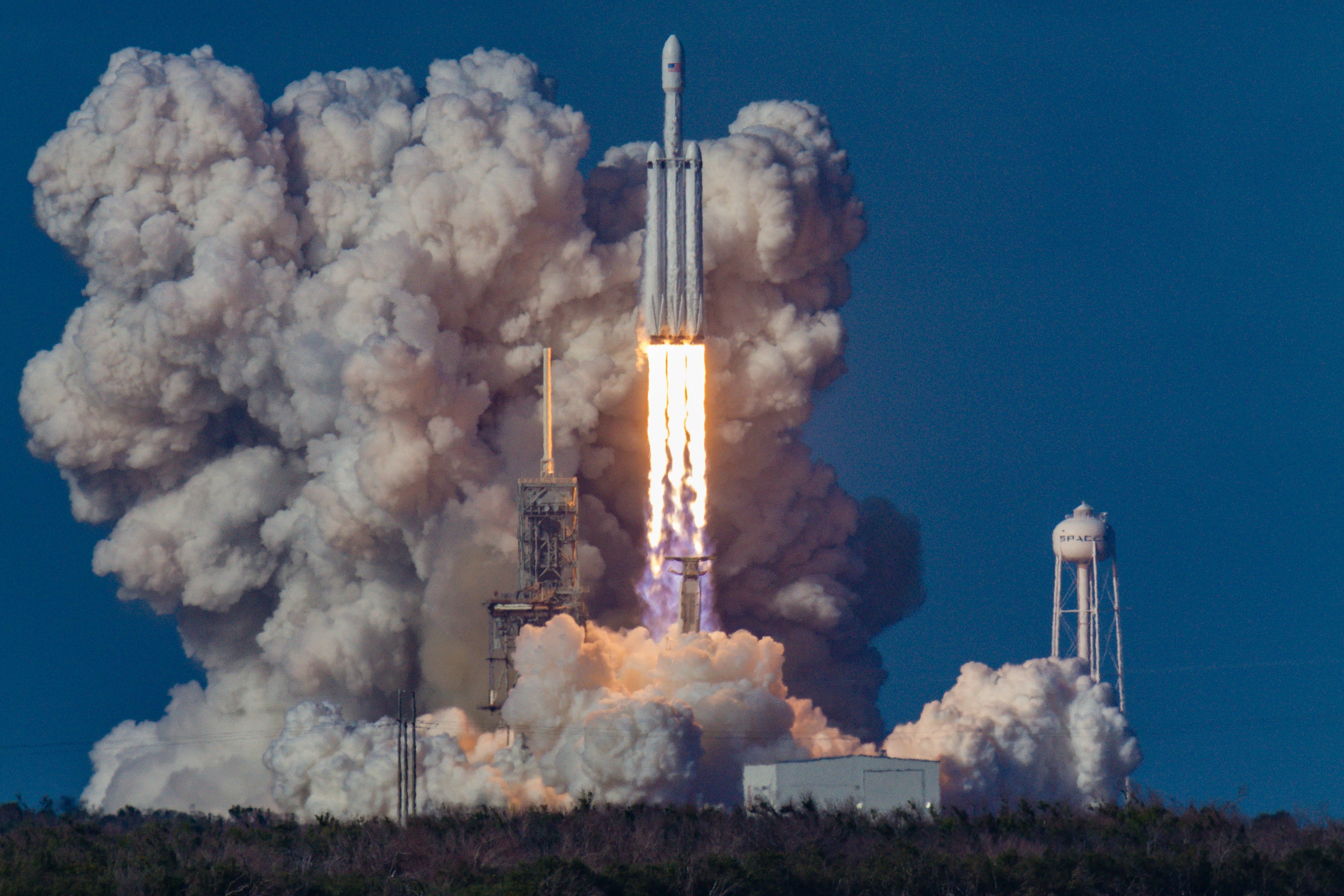
A Falcon 9 rocket lifted off from Launch Complex 40 at Cape Canaveral Space Force Station at 10:47 a.m. EDT on March 22, carrying 29 Starlink satellites on the 10-62 mission. The vehicle flew a northeasterly azimuth, a routing consistent with mid-inclination shell deployments designed to improve coverage density over populated northern latitudes.
The mission continues SpaceX’s relentless cadence, incrementally padding a constellation that now counts 11,641 total launches and 10,116 satellites actively on station. With orbital data center ambitions now publicly confirmed, each routine Starlink launch also serves as a proof-of-concept for the industrial throughput that any future compute constellation would depend upon.
Read the full story: Spaceflight Now
Constellation Status
There have been no changes to the Starlink constellation since the last check. As of March 23, 2026, the constellation remains at 11,641 total satellites launched, with 10,126 currently in orbit, 10,116 of which are operational, and 1,515 that have decayed from orbit.
- Total Launched: 11641
- Total On Orbit: 10126
- Total Working: 10116
Track Starlink satellites in real-time: Track Starlink