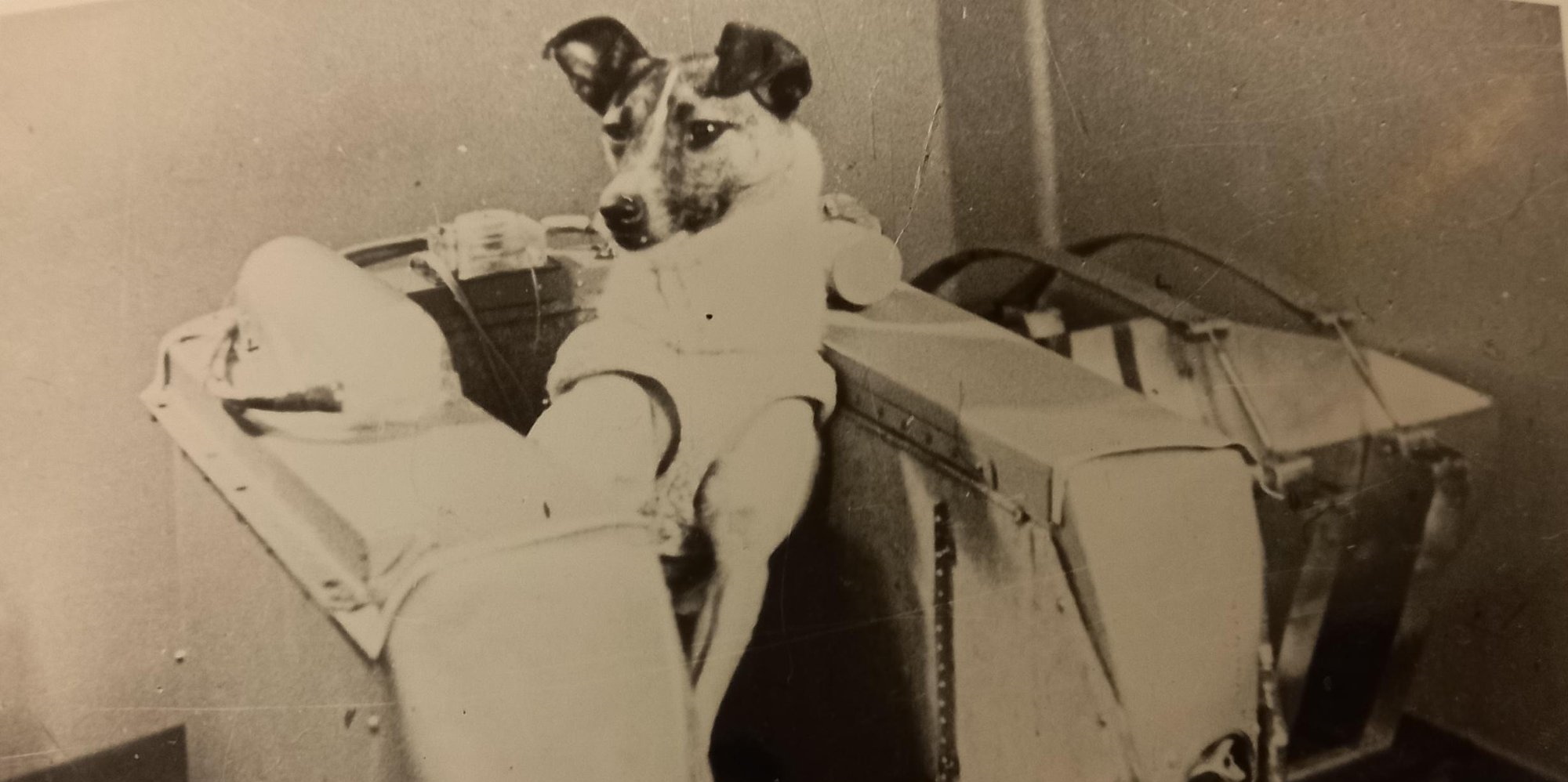
On a cold November morning in 1957, handlers at the Soviet Academy of Sciences strapped a small mongrel dog into a padded capsule roughly the size of a washing machine drum. The dog had been a stray, picked up from the streets of Moscow because Soviet scientists believed that strays, having survived Russian winters without shelter, would be tougher than purebreds. She weighed about five kilograms. Her name, assigned by the technicians who had spent weeks training her, was Laika. It meant “Barker.”
The technicians knew something that the rest of the world would not learn for decades: Laika was not coming back. No reentry system existed. No recovery plan had been drawn up. The capsule she sat in had food, water, and air recycling for several days, but the mission’s engineering timeline had been so compressed that the thermal control system was cobbled together from whatever was available. The entire spacecraft had been designed, built, and tested in less than four weeks.
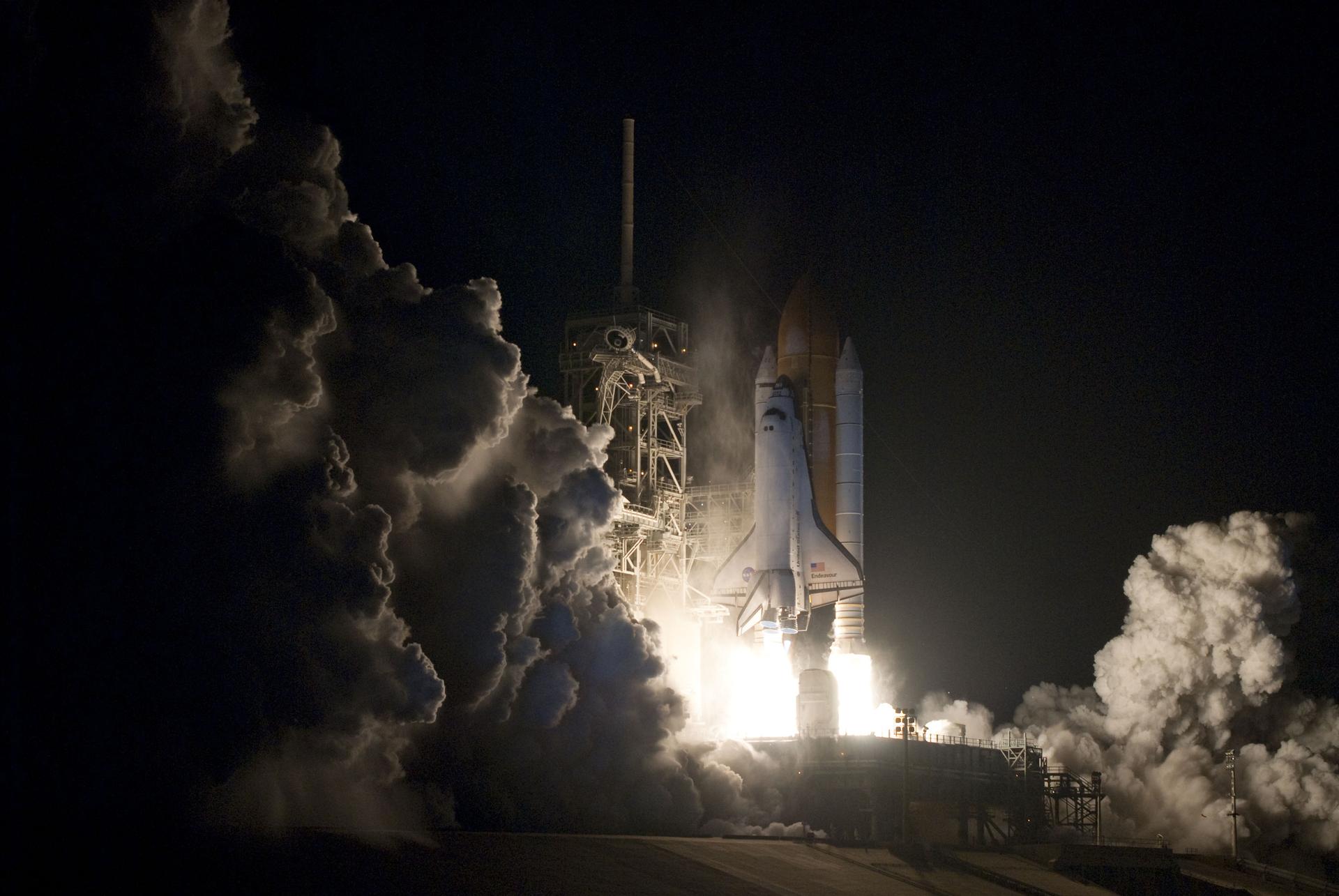
At 5:30 AM Moscow time on November 3, 1957, a modified R-7 rocket lifted Sputnik 2 into orbit. Laika became the first living creature to circle the Earth. Five months later, on April 14, 1958, the 508-kilogram spacecraft tumbled through the upper atmosphere over the North Atlantic, flashing white-hot as friction consumed it. By then, Laika had been dead for 162 days. She had probably been dead for 161 of them.
The Soviet Union claimed otherwise for almost half a century.
Three Weeks to Build the Impossible
The story of Sputnik 2 begins with a phone call. On October 4, 1957, the Soviet Union stunned the world by launching Sputnik 1, a polished aluminum sphere that did nothing except orbit the Earth and emit a steady radio pulse. The propaganda impact was enormous. Nikita Khrushchev, who had shown little interest in Korolev’s rocket program before that day, suddenly understood what orbital spaceflight meant for Soviet prestige.
He called Sergei Korolev, the Chief Designer, and asked for something even more spectacular in time for November 7, the fortieth anniversary of the Bolshevik Revolution. That gave Korolev four weeks. Korolev, who had survived six years in a Stalinist labor camp and knew what happened to people who disappointed the leadership, said yes.
Work with animals is a source of suffering to all of us. We treated them like babies who couldn’t speak. The more time passes, the more I’m sorry about it. We shouldn’t have done it. We did not learn enough from this mission to justify the death of the dog.
The deadline made a proper spacecraft impossible. Korolev’s team had no time to design a reentry capsule, no time to build a reliable life support system, and no time to test the thermal control system that would keep the cabin temperature within survivable limits. They took a pressurized payload container from the existing dog-flight program (which had been launching animals on suborbital trajectories since 1951) and bolted it beneath an instrument sphere on the R-7’s upper stage. The dog would ride in a harness with enough room to stand, sit, or lie down. Feeding was automated through a gelatinized food paste. Waste was collected by a bag attached to the harness.
What they could not solve was heat. The Blok A core stage, which was supposed to separate from the payload after reaching orbit, failed to detach. This meant the spacecraft was carrying the mass and surface area of the spent booster, which disrupted the planned thermal balance. The cabin temperature began climbing almost immediately after orbital insertion.
What Actually Happened
For decades, the official Soviet account held that Laika survived for four to seven days before running out of oxygen, and that she was euthanized remotely by poisoned food before the air ran out. This version appeared in Soviet encyclopedias, Western textbooks, and popular accounts of the space race through the end of the twentieth century. Some versions claimed she survived even longer.
5-7
Hours Laika Actually Survived
Cabin temperatures climbed past 40 degrees Celsius within hours of reaching orbit. Telemetry showed her heart rate tripled during launch, partially recovered in orbit, then stopped transmitting entirely by the fourth orbit.
The truth came out in October 2002, when Dimitri Malashenkov, one of the scientists who had worked on the Sputnik 2 mission, presented a paper at the World Space Congress in Houston. Malashenkov reported what the telemetry data had always shown: Laika died of overheating and stress during the fourth orbit, approximately five to seven hours after launch. The cabin temperature, which was supposed to stay between 15 and 30 degrees Celsius, rose above 40 degrees as the failed booster separation prevented the thermal control system from functioning.
The telemetry data had been available to Soviet scientists from the beginning. The decision to maintain the false narrative was political, not scientific. Admitting that the spacecraft’s thermal system had failed within hours would have undermined the propaganda victory that Khrushchev had demanded.
The Dog from the Streets
Laika was one of several dogs in the Soviet space biology program, which had been flying animals on suborbital rocket flights since 1951. The program preferred strays, specifically female strays (females were smaller and the waste collection hardware was simpler for them), and the scientists developed genuine attachments to the animals. Vladimir Yazdovsky, who led the biological training program, took Laika home to play with his children before the mission, a decision that suggests he understood what was about to happen.
The Soviet dog program flew at least 57 dogs on suborbital and orbital missions between 1951 and 1966. Most survived. Some flew multiple times. Strelka and Belka, who orbited the Earth aboard Sputnik 5 in August 1960, returned safely and became celebrities. One of Strelka’s puppies, Pushinka, was given to President Kennedy’s daughter Caroline as a diplomatic gift.
Laika’s training involved progressively smaller confinement chambers, centrifuge rides to simulate launch acceleration, and feeding from the automated gel dispenser she would use in orbit. She was reportedly calm and cooperative throughout training. Two other dogs, Albina and Mushka, served as backups. Albina had already survived two suborbital flights. Mushka was used for ground testing of the life support hardware.
The final selection came down to Laika and Albina. Korolev chose Laika. The reasoning is not documented in any surviving record.
The Broadcast and the Backlash
The Soviet Union announced Sputnik 2’s launch on November 3, 1957, and the reaction was immediate and split. In the Soviet Union, Laika was celebrated as a hero. Stamps were printed. Children were told she was comfortable and eating well in orbit. In the West, the response was more complicated. The launch demonstrated that the Soviets could put a living creature into orbit, which was an obvious stepping stone to putting a human there. But animal welfare organizations, particularly the Royal Society for the Prevention of Cruelty to Animals in the United Kingdom, organized protests. British dog lovers picketed the Soviet embassy in London.
The ethical question was straightforward: Laika had been sent to die. There was no reentry capability. Even if the thermal control system had worked perfectly, even if she had survived for the designed mission duration of seven days, the mission would have ended with her death. The food paste for the final meal reportedly contained a sedative that would have euthanized her painlessly. Whether that constitutes an acceptable outcome depends on what you believe about the moral status of animals sent to die for scientific and political purposes.
The Soviet government addressed none of this honestly. The official line remained that Laika had lived for days and died peacefully. The West had no telemetry data to contradict this. It would be forty-five years before the truth emerged.
What They Learned
The uncomfortable question is whether Sputnik 2 produced any scientific value proportional to its cost. Malashenkov’s data showed that a living mammal could survive launch and orbital insertion, that the heart and respiratory systems recovered from the stress of acceleration, and that weightlessness did not immediately cause fatal physiological effects. These were genuinely open questions in 1957. Some scientists had theorized that mammals could not swallow in zero gravity, or that the cardiovascular system would fail without the constant pull of gravity.
Laika’s flight confirmed that orbital spaceflight was survivable for a mammal, at least for the duration of the launch and the first few orbits. But the data was compromised by the thermal failure, and similar suborbital experiments had already established that dogs could tolerate brief periods of weightlessness and high-g launch loads. Gazenko’s assessment, delivered decades later with the weight of a career in space medicine behind it, was blunt: they did not learn enough to justify what they did.
The real value of Sputnik 2 was political. It demonstrated Soviet capability and accelerated the American response. NASA was established less than a year later. The space race, in its full Cold War intensity, was partly a consequence of a five-kilogram dog dying of heat exhaustion in a capsule that was never meant to come home.
April 14, 1958
When Sputnik 2 reentered the atmosphere on April 14, 1958, it was one of the brightest artificial reentry events anyone had observed. The spacecraft, still attached to its booster stage, tumbled end over end as it hit the denser layers of the atmosphere, producing a visible flare over the North Atlantic before it disintegrated.
Nobody mourned publicly. The Soviet press noted the reentry without ceremony. The West had moved on to other concerns. Laika’s story faded into the background of the space race, resurfacing occasionally in anniversary retrospectives but never receiving the sustained attention that later missions commanded.
It was not until the post-Soviet era that Russian scientists began speaking openly about what had happened. Gazenko’s 1998 statement was the first public expression of regret from anyone directly involved. Malashenkov’s 2002 paper at the World Space Congress finally put the telemetry data into the scientific record. In 2008, Russian authorities unveiled a small monument near the military research facility in Moscow where Laika had been trained: a bronze dog standing atop a rocket, looking upward.
The monument does not mention that she died in pain, alone, in a capsule that was heating up because the booster didn’t separate, on a spacecraft that was never designed to bring her back, built in three weeks to meet a political deadline. But the scientists who worked with her remembered. Gazenko spent the rest of his career in space medicine. He died in 2007, a year before the monument was dedicated. He never retracted what he said.
References(9)
- Sputnik 2 - NASA NSSDCA Spacecraft Details
- Laika - Smithsonian National Air and Space Museum
- The USSR Orbits Second Artificial Satellite with Dog Laika Onboard - Russian Space Web
- This Month in Astronomical History: Launch of Sputnik 2 - American Astronomical Society
- Laika the Space Dog: First Living Creature in Orbit - Space.com
- Oleg Gazenko - Wikipedia (biographical details and 1998 quote)
- 14 April 1958: Sputnik 2 Burns Up Re-entering Earth's Atmosphere - Afterburner.com
- Is Laika's Body Still in Space? The Truth About Sputnik 2 - Orbital Xploration
- Laika: Background, Spaceflight, and Facts - Britannica