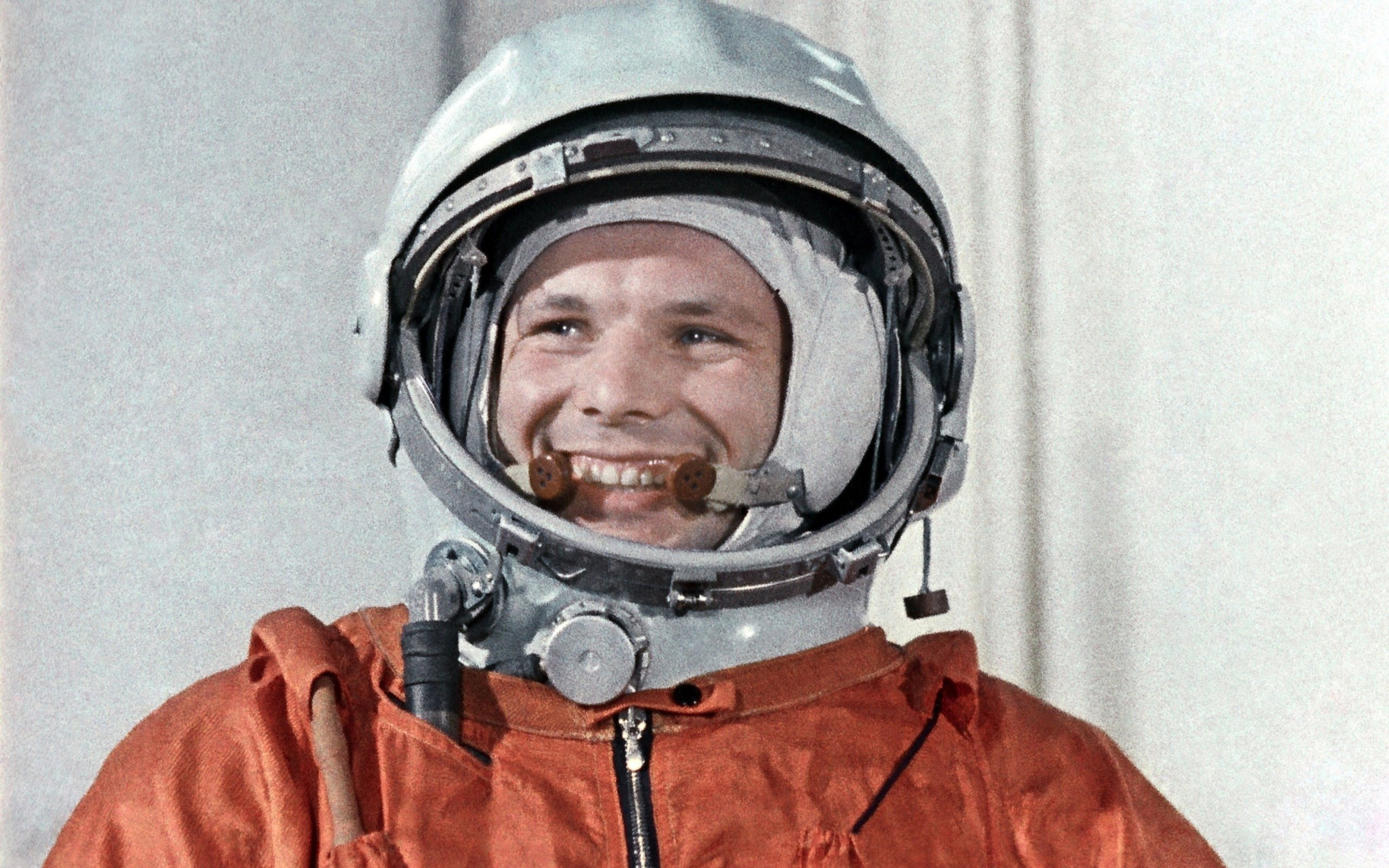
At 9:07 Moscow time on the morning of April 12, 1961, a 27-year-old former foundry worker from Klushino sat strapped inside a spherical capsule atop a rocket that had been designed, first and foremost, to deliver nuclear warheads. The countdown reached zero. The five engines of the Vostok-K booster ignited. And Yuri Alekseyevich Gagarin, Senior Lieutenant in the Soviet Air Force, said the only thing a person could say at a moment like that: “Poyekhali!” - Let’s go.
One hundred and eight minutes later, human civilization was different. A species that had spent its entire existence bound to the surface of a single planet had sent one of its own into orbit and brought him back alive. It was, by any reasonable measure, the most consequential 108 minutes in the history of exploration.
What makes April 12 extraordinary, though, is that history chose to rhyme. Exactly twenty years later - to the day - NASA launched the Space Shuttle Columbia on STS-1, the first flight of the most complex flying machine ever built. Commander John Young and pilot Robert Crippen rode 6.8 million pounds of thrust off Pad 39A at Kennedy Space Center, becoming the first humans to fly a winged orbital vehicle and the first to fly a crewed spacecraft on its maiden voyage without a single prior uncrewed test flight.
Two missions. Two leaps of faith. One date. This is the story of both.
The Gamble That Started Everything
The Soviet space program in early 1961 was a masterwork of calculated recklessness. Chief Designer Sergei Korolev - whose identity was a state secret so closely guarded that his own mother didn’t know what he did - had been rushing to beat the Americans into orbit with a human being. The Vostok spacecraft had flown five uncrewed test missions. Two had failed. One carried dogs that died on reentry. Another carried dogs that survived, but only after the capsule landed 3,500 kilometers off target in deep Siberian wilderness.
Korolev decided this was good enough.
Gagarin was chosen from a group of twenty cosmonauts partly for his skill, partly for his composure, and partly for a bluntly practical reason: he was short. At 157 centimeters - just under five foot two - he fit inside the Vostok capsule, which was not much larger than a washing machine. His backup, Gherman Titov, was considered the better pilot, but Korolev worried that Titov’s more intellectual temperament might not play as well in the inevitable propaganda campaign.
The engineers were so uncertain about how a human mind would function in weightlessness that they locked the spacecraft’s manual controls. A sealed envelope containing the override code was placed inside the cabin - Gagarin’s emergency escape hatch from full automation. In practice, his flight surgeon and his training instructor had both quietly given him the code before launch, which tells you something about the gap between official Soviet caution and the reality of how things actually worked.
108 Minutes
The Vostok-K rocket performed flawlessly at launch. Within minutes, Gagarin was in orbit, traveling at 28,000 kilometers per hour at altitudes between 169 and 327 kilometers. He reported feeling fine. He ate and drank from tubes. He noted that weightlessness was pleasant and that objects floated in front of him. He looked out the window and saw the Earth.
“The Earth is blue,” he radioed. “How wonderful. It is amazing.”
What ground control didn’t tell him - and what wouldn’t become public for decades - was how close the mission came to killing him. When the retrorockets fired for reentry, a valve malfunction caused the engine to cut off one second early. The instrument module, which was supposed to separate cleanly from the descent capsule, stayed attached by a bundle of cables. The entire assembly began tumbling violently as it hit the upper atmosphere, spinning the capsule through a terrifying sequence of rotations with its fragile hatch - not its heat shield - intermittently facing the direction of travel.
Gagarin experienced forces severe enough to nearly knock him unconscious. For ten agonizing minutes, the cables held. Then the heat of reentry burned through them, the instrument module tore away, and the descent capsule finally righted itself with the heat shield forward. The system worked - but not in the way anyone had designed it to.
At 7,000 meters altitude, still well above the ground, the capsule hatch blew off and Gagarin’s ejection seat fired, catapulting him into the cold April air over the Saratov region. He descended under his own parachute while the empty Vostok capsule drifted down separately under its own. He landed in a plowed field near the village of Smelovka. A farmer’s wife and her granddaughter were the first people to see him - a man in an orange flight suit and white helmet, walking toward them with a parachute dragging behind.
“Don’t be afraid,” he told them. “I am a Soviet citizen like you, who has descended from space, and I must find a telephone to call Moscow.”
The Lie That Lasted Decades
The Soviet government immediately claimed that Gagarin had landed inside his spacecraft. This was not a minor detail. The Fédération Aéronautique Internationale, which certifies aviation and spaceflight records, required that a pilot land with the craft for the flight to count as an official record. The Soviets knew this. They lied about it systematically for decades.
This matters because it set a pattern. The Soviet space program’s greatest achievements were real - Gagarin genuinely orbited the Earth, genuinely experienced weightlessness, genuinely survived reentry. But the narrative around those achievements was systematically curated to hide the failures, the near-misses, and the engineers who died in the process. Korolev himself had survived a Stalinist labor camp. He knew what happened to Soviet programs that admitted mistakes.
Twenty Years Later, a Different Kind of Courage
If Gagarin’s flight was a gamble disguised as triumph, STS-1 was something arguably more audacious: a calculated risk taken in full public view, with the entire world watching and every engineer’s doubt documented in writing.
The Space Shuttle Columbia had been in development since 1972. By the time it reached the launch pad in 1981, the program had consumed over $10 billion and was two years behind schedule. Much of the delay centered on the thermal protection system - the 31,000 individual silica tiles that covered the orbiter’s belly and were supposed to protect it from the 1,650-degree Celsius heat of reentry. The tiles were fragile, handmade, and notoriously difficult to bond to the aluminum airframe. When Columbia was ferried from the Rockwell factory in Palmdale to Kennedy Space Center in March 1979, it arrived with 7,800 tiles missing.
The tile problem consumed two more years. Workers installed and reinstalled tiles by hand, often removing and replacing them multiple times to achieve proper fit. By launch day, every tile was in place - but no one was certain they would stay there.
What I saw out the window blew my mind. We were being engulfed by some kind of soft orange glow. I nudged John. He said, ‘Yeah, I know. We’re in the middle of some kind of fire.’
Commander John Young was 50 years old and already the most experienced astronaut alive. He had flown Gemini 3 and Gemini 10, orbited the Moon on Apollo 10, walked on its surface during Apollo 16, and commanded the Apollo-Soyuz support crew. He was, by every account, preternaturally calm. When asked before launch whether he was nervous about flying a spacecraft that had never been tested in space, he reportedly said, “Anyone who sits on top of the largest hydrogen-oxygen fueled system in the world, knowing they’re going to light the bottom, and doesn’t get a little worried, does not fully understand the situation.”
Robert Crippen, the pilot, was a rookie. He’d been selected as an astronaut in 1969 for the Air Force’s Manned Orbital Laboratory program, transferred to NASA when MOL was cancelled, and waited twelve years for his first flight. STS-1 was worth the wait.
Columbia Flies
At 7:00 AM Eastern time on April 12, 1981 - twenty years to the day after Gagarin - Columbia’s three Space Shuttle Main Engines ignited, followed 3.8 seconds later by the twin Solid Rocket Boosters. The combined thrust of 6.8 million pounds lifted the 4.5-million-pound vehicle off Launch Pad 39A, the same pad that had launched Apollo 11.
Shuttle Program Approved
President Nixon approves the Space Shuttle as NASA's next crewed vehicle, replacing the expendable capsules of Mercury, Gemini, and Apollo.
Columbia Arrives at KSC
Orbiter arrives from Palmdale with 7,800 of 31,000 heat shield tiles missing. Two years of tile rework follow.
First Launch Attempt
STS-1 scrubbed due to a timing synchronization problem between Columbia's four general-purpose computers.
Columbia Launches
At 7:00 AM ET, Columbia lifts off from Pad 39A. Young and Crippen reach orbit 8.5 minutes later.
Landing at Edwards AFB
Columbia glides to a perfect landing on Rogers Dry Lake after 54.5 hours and 37 orbits. Post-flight inspection reveals 16 tiles lost and 148 damaged.
The ascent was nominal. Eight and a half minutes after liftoff, Columbia was in orbit. Young and Crippen spent two days testing systems, opening and closing the payload bay doors (critical for thermal management in orbit), and photographing the spacecraft from every angle they could. What they saw from orbit concerned them: photographs of the underside revealed that some thermal tiles were missing from the OMS pods at the rear of the orbiter. But they had no way to inspect the belly - the tiles that actually mattered for reentry.
On the ground, engineers ran frantic analyses. The missing tiles were in non-critical areas. The belly tiles appeared intact. The math said Columbia would survive reentry. Young and Crippen had no choice but to trust the math.
On April 14, they fired the orbital maneuvering engines, dropped out of orbit, and plunged into the atmosphere. Crippen watched from the flight deck as Columbia was engulfed in a soft orange glow - superheated plasma streaming past the windows at temperatures that would have melted the aluminum structure in seconds without the tiles. The communications blackout lasted twelve minutes. Then Columbia emerged, intact, gliding toward Rogers Dry Lake at Edwards Air Force Base.
The landing was perfect. Post-flight inspection revealed that 16 tiles had been lost during ascent and 148 more were damaged - most from the overpressure wave of the SRB ignition. None of the critical belly tiles had failed. The math had been right.
The Echo
The coincidence of the date was not accidental. NASA chose April 12 for STS-1 deliberately, a nod to Gagarin’s flight that acknowledged the Soviet achievement while staking a claim for a new era of spaceflight. Young later said he was aware of the symbolism but focused on more practical concerns, like whether the tiles would hold.
The two missions bookend a transformation in how humanity thought about space. Gagarin’s flight proved it was physically possible - that a human body could survive launch, orbit, weightlessness, and reentry. Columbia’s flight proved it could be made routine - or at least that was the promise. The Shuttle was supposed to fly every two weeks, carrying satellites, experiments, and eventually space station components into orbit at a fraction of the cost of expendable rockets.
That promise was never fulfilled. Columbia flew 27 more missions over the next 22 years. On its 28th, on February 1, 2003, a piece of insulating foam struck the leading edge of the left wing during launch, creating a breach that allowed superheated gas to penetrate the wing structure during reentry. Columbia disintegrated over Texas and Louisiana. All seven crew members were killed. The same thermal protection system that had performed flawlessly on STS-1 - despite losing 16 tiles - had been fatally compromised by a failure mode that engineers had flagged and managers had dismissed as an acceptable risk.
Why April 12 Still Matters
The United Nations declared April 12 the International Day of Human Space Flight in 2011, on the fiftieth anniversary of Gagarin’s mission. Russia has celebrated it as Cosmonautics Day since 1962. In the West, it’s often observed as Yuri’s Night - an unofficial holiday organized by space enthusiasts since 2001.
But the date carries weight beyond ceremony. April 12 is a reminder that the foundational achievements of human spaceflight were accomplished not by cautious incrementalism but by people who accepted enormous personal risk in machines that their own engineers weren’t sure would work. Gagarin rode a capsule with locked controls and a reentry system that tumbled him through the atmosphere by accident. Young and Crippen flew a spacecraft that had never been to orbit before, protected by a heat shield made of 31,000 hand-glued ceramic tiles, and trusted the math.
Sixty-five years after Gagarin and forty-five years after STS-1, the human spaceflight enterprise is safer, more capable, and vastly more expensive than what either mission’s architects could have imagined. But the fundamental question that both crews answered - are you willing to go? - remains the same for every astronaut who straps in. April 12 is the day we remember that someone said yes first.
References(12)
- Yuri Gagarin and Vostok 1, the First Human Spaceflight - The Planetary Society
- The Flight of Vostok 1 - European Space Agency
- Vostok 1 - NASA NSSDCA Spacecraft Details
- April 12, 1981: Launch of the First Shuttle Mission - NASA
- STS-1: Astronaut Bob Crippen Remembers the Ride of His Life - NASA History
- 40 Years Ago: Columbia Takes Flight! - NASA History
- The First Space Shuttle: 40 Years Since STS-1 - National Air and Space Museum
- 'Poyekhali!' Remembering Our First Space Voyager - Space Safety Magazine
- Tiles Pop Up In Columbia's History - CBS News
- April 12 in Space History - Cosmosphere
- Behind the Secrecy of Vostok 1 - AmericaSpace
- Soviet Cosmonaut Yuri Gagarin Becomes the First Man in Space - History.com