· today in space history · 4 min read
The Day Humanity's First Modular Space Station Reached Orbit
Thirty-nine years ago, a Proton rocket carried the core of the Mir space station into orbit, launching an unprecedented era of continuous human presence in space and international cooperation
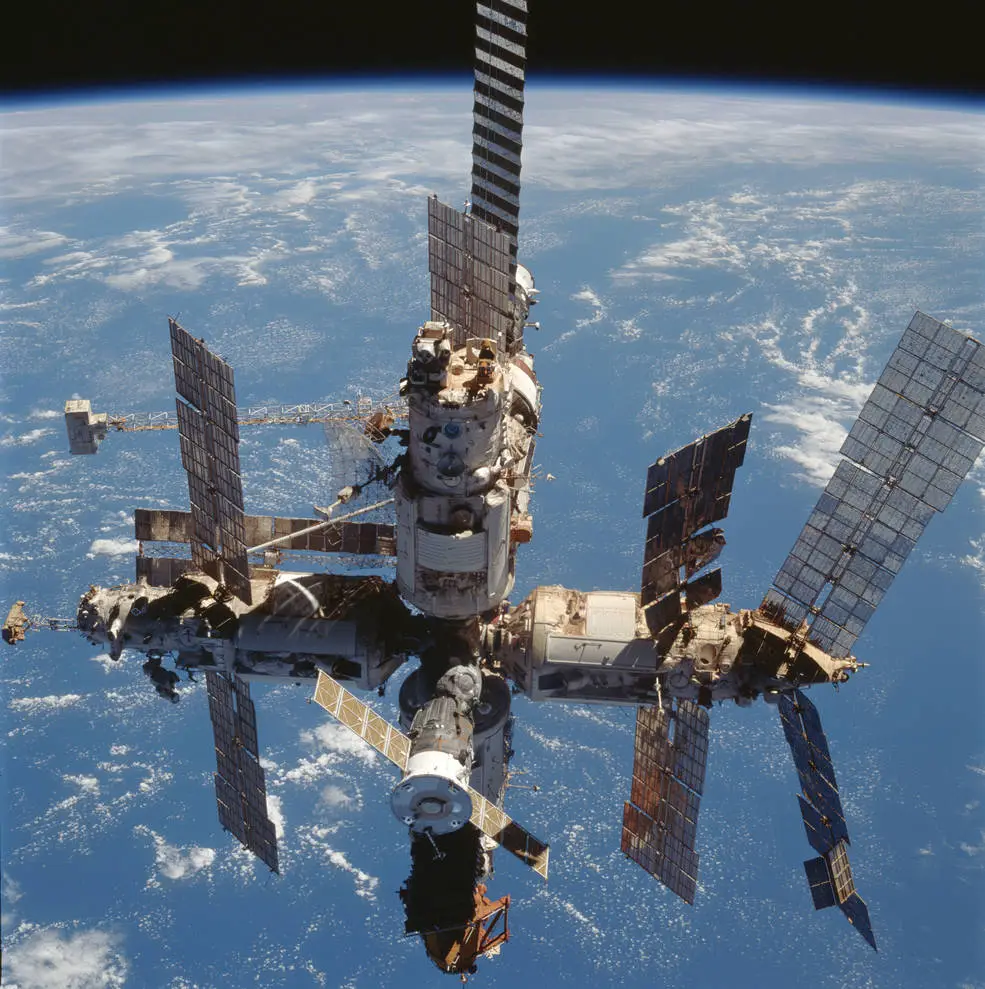
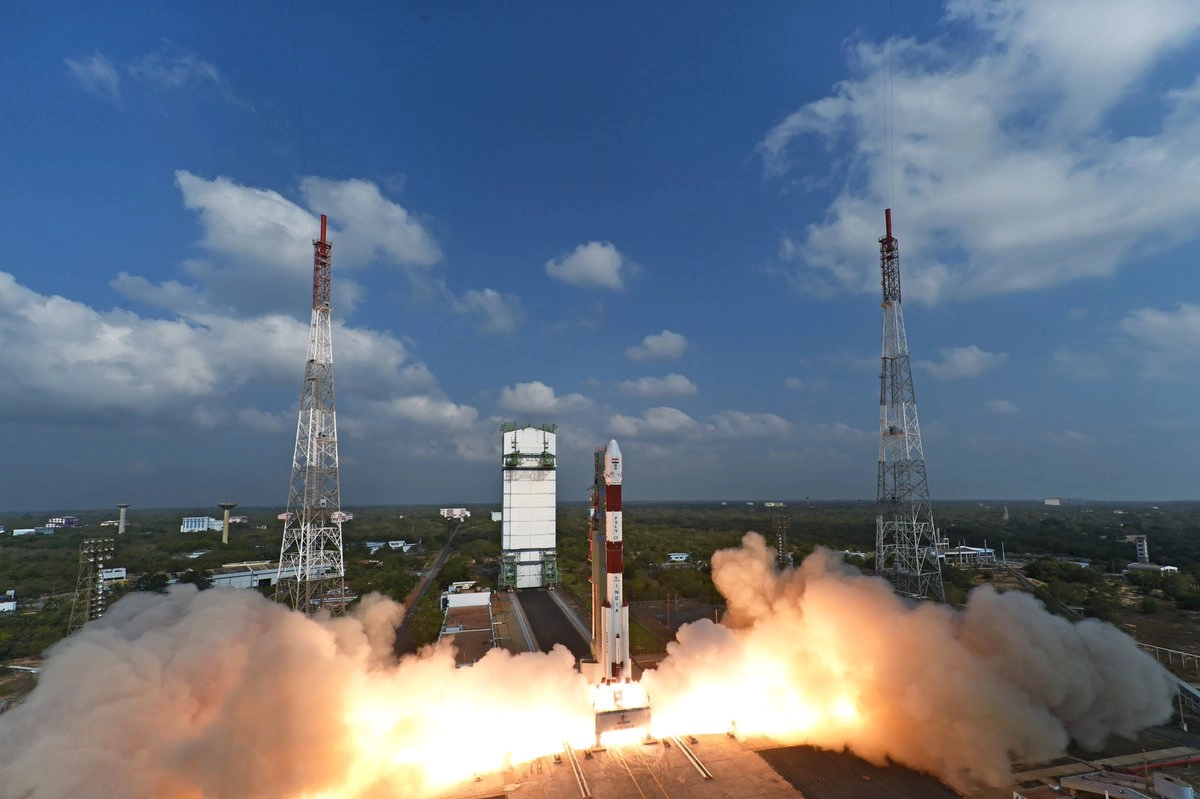
On February 19, 1986, at 21:28 GMT, the night sky over the Baikonur Cosmodrome lit up as a massive Proton-K rocket thundered skyward from Launch Complex 200/39. Inside its payload fairing sat the 20,100-kilogram core module of Mir, a revolutionary space station that would transform humanity’s presence in orbit and lay the groundwork for international cooperation in space.
A New Era in Space Architecture
The launch of Mir marked a pivotal advancement in space station design. Unlike its predecessors, the Salyut stations, Mir was conceived as a modular structure that could be expanded over time. This innovative approach would allow the station to grow and adapt to new research requirements, a concept that would later become fundamental to the International Space Station’s design.
The core module, despite its massive size, represented just the beginning. It contained the basic systems needed for human habitation-living quarters, life support systems, communications equipment, and guidance controls. But it was designed with multiple docking ports, anticipating the addition of specialized research modules that would transform it into a full-fledged orbital research complex.
The Complex Dance of Orbital Assembly
Achieving operational orbit proved to be a delicate process. The core module was initially placed in a lower orbit of 172 by 301 kilometers, from which it gradually maneuvered to its operational altitude. By March 6, the module had established itself in its final orbit, passing within just 10 kilometers of its predecessor, Salyut 7, two days later.
This precise orbital positioning demonstrated the Soviet Union’s growing mastery of space operations. The station’s communications systems were enhanced by the first use of the geosynchronous Luch relay satellite on March 29, establishing a more reliable link between the station and ground control.
A Laboratory Above Earth
From the beginning, Mir was equipped as a sophisticated orbital laboratory. The core module carried an impressive array of scientific equipment:
- The Splav-2 and Korund facilities for crystal growth and materials research
- The Kashtan electrophoresis unit for biological studies
- Specialized spectrometers including the Spektr-256 and MKS-M
- The Pion-M multipurpose physics unit, weighing 41 kilograms
- The Biryuza semiconductor materials research installation
This initial complement of scientific equipment demonstrated the station’s commitment to a broad research program spanning materials science, physics, and biology.
Engineering for the Long Haul
The station’s design reflected hard-learned lessons from previous space stations. Engineers incorporated redundant systems and the ability to receive replacement parts and upgrades via supply missions. However, these precautions wouldn’t prevent all challenges-by April 1989, reports indicated that about 50% of the scientific equipment had become inoperable, and power supply issues began emerging with batteries struggling to hold charges from the solar panels.
The Price of Progress
The ambitious project came with a significant price tag. By April 1989, the total costs for Mir, including the core module, the Kvant module, all supporting Soyuz and Progress spacecraft, and two additional modules, had reached 1.471 billion rubles. This investment, however, would prove worthwhile as Mir evolved into humanity’s first long-term orbital home.
Looking Forward
Today, as we plan the next generation of space stations and prepare for missions to the Moon and Mars, Mir’s legacy continues to influence space exploration. Its modular design philosophy and international cooperation framework laid the foundation for the International Space Station and future commercial space stations. The lessons learned from Mir’s fifteen years in orbit-both its successes and challenges-continue to shape how we approach long-duration spaceflight and orbital laboratory operations.
The launch of Mir’s core module on that February evening wasn’t just the beginning of a space station-it was the start of humanity’s permanent presence in space, a presence that continues unbroken to this day through the International Space Station. As we look toward establishing permanent bases on the Moon and eventually Mars, the pioneering achievements of Mir remind us that the most ambitious dreams of space exploration can become reality through innovation, persistence, and international cooperation.

Theodore Kruczek