In the early morning hours of February 4, 1970, a Thorad-Agena rocket thundered skyward from Vandenberg Air Force Base, carrying aboard it a spacecraft that would revolutionize space propulsion. The Space Electric Rocket Test 2 (SERT-2) might have seemed modest in size at just 1,400 kilograms, but it carried technology that would eventually power humanity’s exploration of the solar system: the ion engine.
A Revolutionary Leap in Propulsion
Traditional chemical rockets had taken humans to the Moon, but NASA engineers knew that exploring the deeper reaches of space would require something more efficient. Ion engines, which use electrical fields to accelerate charged particles to extremely high speeds, promised to provide that efficiency. SERT-2 would prove whether this promising technology could work reliably in the harsh environment of space.
Engineering for the Unknown
At the heart of SERT-2 were two identical 15-centimeter diameter mercury ion engines, each capable of producing 28 millinewtons of thrust at 4,200 seconds of specific impulse-about ten times more efficient than chemical rockets. While this thrust might seem tiny compared to conventional rockets, the ability to operate continuously for months or years meant ion engines could ultimately provide far more total acceleration.
The spacecraft itself represented a marvel of engineering pragmatism. The development program had included extensive ground testing, with individual thrusters running for over 6,700 hours before launch. Engineers had even tested a prototype spacecraft with an operating ion engine for 2,400 hours in vacuum chambers, working to anticipate every possible challenge of operating this new technology in space.
Breaking New Ground
SERT-2’s mission plan called for at least six months of operation-ambitious for any spacecraft of its era, let alone one testing revolutionary new technology. The mission would measure actual thrust produced in space, demonstrate electromagnetic compatibility with other spacecraft systems, and prove the engines could restart reliably in orbit.
What followed exceeded everyone’s expectations. Not only did the spacecraft work, but it continued operating far beyond its planned mission life. The first engine thrusted for 3,781 hours, while the second accumulated 2,011 hours of operation. One power processing unit-the complex electronics needed to operate the ion engine-accumulated nearly 17,900 hours of operation during the course of the mission.
Lessons that Shaped the Future
The mission revealed both the promise and challenges of ion propulsion. While the engines eventually developed shorts in their ion optical systems that limited their operation, they proved the fundamental viability of the technology. The thrust measured in space matched ground test predictions within measurement uncertainty, validating the extensive pre-flight testing program. Perhaps most importantly, the engines demonstrated over 300 successful restarts, proving they could be operated reliably over extended periods.
Legacy in Modern Spaceflight
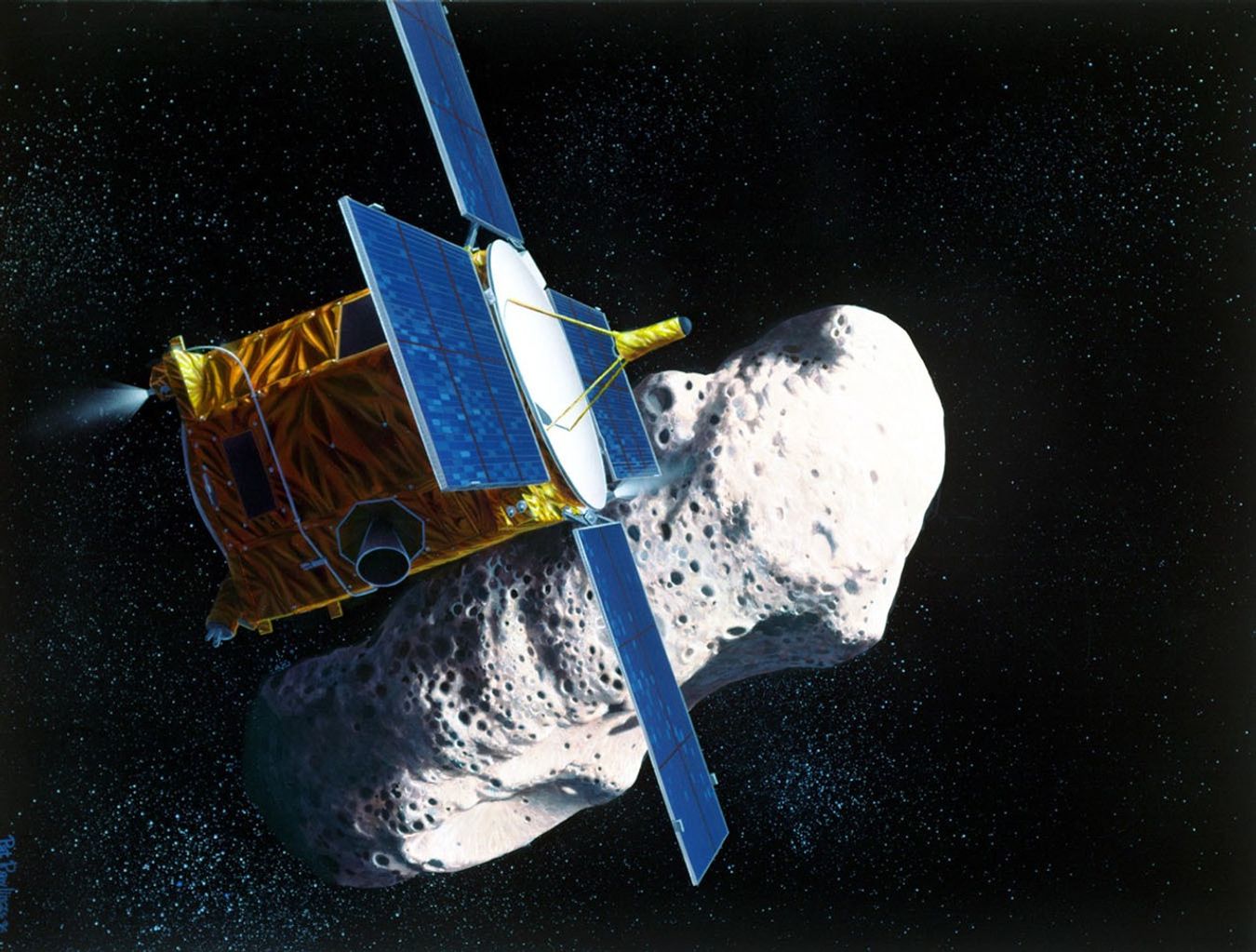
The success of SERT-2 laid the groundwork for modern electric propulsion. NASA’s Dawn mission, which visited both Vesta and Ceres in the asteroid belt, relied on ion engines directly descended from SERT-2’s pioneering technology. Today, ion propulsion systems are used on everything from communications satellites for station-keeping to ambitious deep space missions like ESA’s BepiColombo Mercury explorer.
The mission’s influence extended beyond just propulsion technology. The rigorous ground testing program established standards still followed today, while the electromagnetic compatibility requirements it pioneered remain crucial for modern spacecraft design.
Looking Forward
As humanity prepares for ambitious new missions to the Moon, Mars, and beyond, the legacy of SERT-2 continues to influence spacecraft design. Modern solar electric propulsion systems, essential for NASA’s lunar Gateway space station and future Mars cargo missions, build directly on the foundation laid by those first mercury ion engines.
The spacecraft that thundered into orbit fifty-five years ago today did more than just test a new technology-it helped establish a new paradigm for space exploration. While chemical rockets remain essential for launching from Earth, the efficient, reliable electric propulsion technology pioneered by SERT-2 has become indispensable for long-duration spaceflight. As we push further into the solar system, the vision of those early engineers who believed in the promise of electric propulsion continues to light the way forward.