The week of 2026-07-19 to 2026-07-26 delivered six completed orbital and suborbital launches, all successful, headlined by SpaceX flying Starship Flight 13 out of Starbase after two delayed attempts. China put up four missions across three different rockets, SpaceX added two more Starlink batches despite a rare Falcon 9 abort mid-week, and the Space Development Agency signed off on 36 new Golden Dome missile-tracking satellites worth $1.75 billion. A classified Chinese satellite designed to sweep the geostationary belt also drew attention from analysts watching unusual GEO behavior. Below is the full rundown of what flew, what broke news, and what is coming next.
By the Numbers
- Orbital and suborbital launches: 6 (6 successful)
- Top stories covered: 9
- Starlink satellites in orbit: 10,881 (10,865 working)
- On deck next week: 9 launches
The Week in Launches
2026-07-25: Falcon 9 Block 5 / Starlink Group 17-51 (SpaceX). Launched from Space Launch Complex 4E at Vandenberg, this batch pushed SpaceX’s Starlink cadence back to normal after the week’s earlier abort. Outcome: successful.
2026-07-24: Starship / Flight 13 (SpaceX). Flying from Orbital Launch Pad 2, this was the thirteenth integrated Starship test and came after SpaceX bumped the target date twice during the week. The flight reached its suborbital test objectives successfully, a needed bounce-back after the delays that dogged the schedule going into launch week.
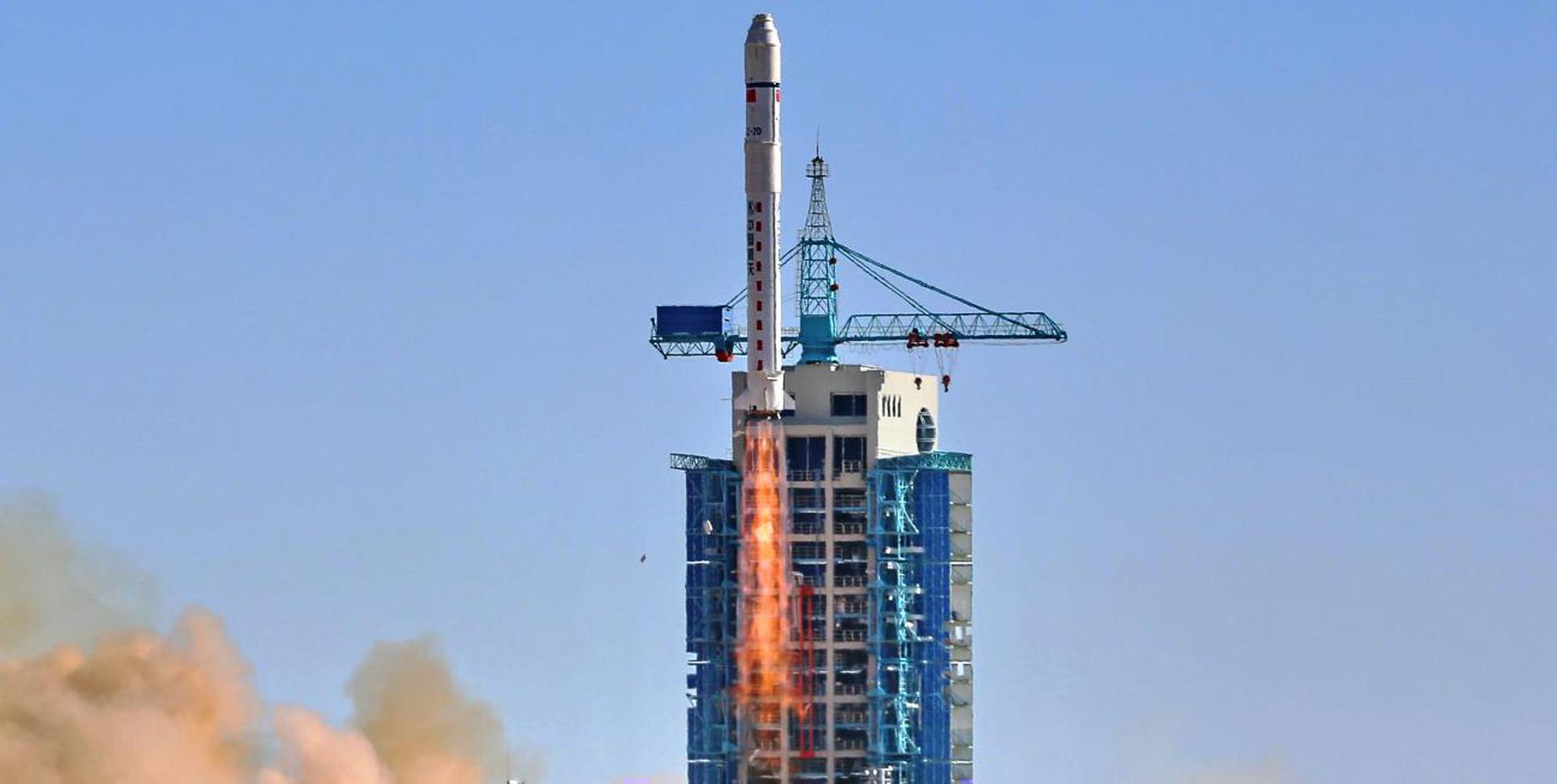
2026-07-23: Long March 3B/E / Tianlian 2-06 (CASC). Launched from LC-2, this mission added another data-relay satellite to China’s Tianlian network, which supports communications with crewed and uncrewed spacecraft. Outcome: successful, placed into geostationary transfer orbit.
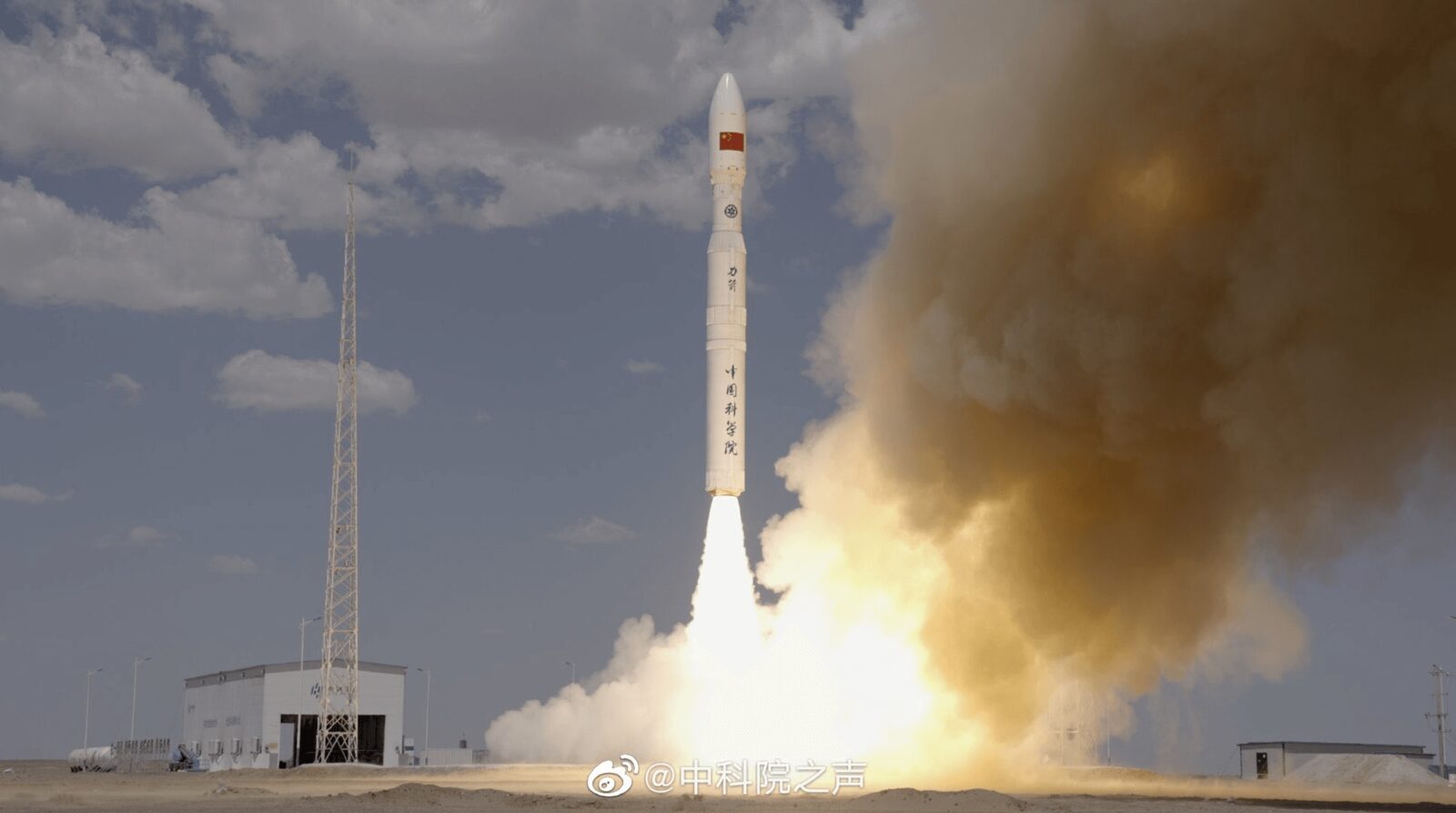
2026-07-23: Kinetica 1 / 5 satellites (CAS Space). Lifting off from Launch Area 130, this flight delivered five satellites to sun-synchronous orbit. Outcome: successful.
2026-07-22: Gravity-1 / 9 satellites (OrienSpace). Launched from a sea platform in the Yellow Sea, this solid-fueled rocket carried nine satellites to sun-synchronous orbit. Outcome: successful.
2026-07-21: Falcon 9 Block 5 / Starlink Group 17-39 (SpaceX). This mission is notable for what happened the day before it flew. SpaceX aborted the first liftoff attempt at the last second on July 20, a rare event for the Falcon 9 program, before successfully launching 24 Starlink satellites from Vandenberg’s pad 4E on July 21. The mission also marked SpaceX’s 85th Falcon 9 launch of the year.
Two additional missions were active in the window but had not confirmed outcomes as of this recap: a Falcon 9 carrying the MRV-1 payload was reported in flight on July 21, and a Long March 8A launch with an unannounced payload was listed as to be confirmed on July 24.
Top Stories
Space Force orders 36 more Golden Dome missile-tracking satellites for $1.75 billion
The Space Development Agency announced new contracts with two companies to build 36 satellites supporting the Trump administration’s Golden Dome missile-defense architecture. The deal, worth up to $1.75 billion combined, expands the tracking layer meant to detect and follow ballistic and hypersonic threats from orbit.
For anyone tracking military constellations, this is another large batch of low-Earth-orbit sensor satellites headed for catalog entries in the next few years. The scale of Golden Dome’s satellite orders continues to grow well beyond the program’s original proof-of-concept batches.
Read the full story: Space.com
China’s Shijian-31 satellite is sweeping GEO using a unique orbit
A classified Chinese satellite launched in June, Shijian-31, is flying an unusual orbit that gives it a sweeping vantage point across the geostationary belt rather than sitting in a fixed slot. Analysts flagged the behavior as distinct from typical GEO satellite operations.
Satellites that deviate from standard GEO station-keeping patterns draw close scrutiny from trackers because the maneuvering itself can reveal intent, whether inspection, signals collection, or something else. Shijian-31’s path is exactly the kind of orbit that keeps analysts checking TLEs daily.
Read the full story: SpaceNews
Qatari Air Force One will be taken offline for “maxed out” upgrades: Trump
President Trump said the modified 747 serving as Qatar’s Air Force One will go offline for further upgrades after concerns that the jet, rapidly retrofitted by L3Harris, lacked security features typical of presidential transport aircraft.
The story is a reminder that not every high-value asset making news this week is in orbit. Aircraft security modifications tie directly into the broader defense contractor ecosystem that also builds and operates military space hardware.
Read the full story: Breaking Defense
SpaceX launches Northrop mission to extend the life of aging satellites
A DARPA-backed servicing vehicle launched this week to install propulsion pods on three commercial satellites already parked in geostationary orbit. The mission is designed to extend the operational life of aging GEO assets rather than replace them outright.
In-orbit servicing missions like this one add new objects and relative-motion events to the GEO catalog that trackers need to account for. As satellite life-extension technology matures, expect more of these small servicing spacecraft showing up near commercial GEO neighborhoods.
Read the full story: SpaceNews
SpaceX Falcon 9 sends Starlink satellites to orbit a day after rare launch abort
SpaceX’s Falcon 9 aborted its first attempt to launch 24 Starlink satellites from Vandenberg on July 20, an uncommon occurrence for the workhorse rocket. The company recycled and launched successfully the next day.
Aborts this late in a countdown are unusual enough on Falcon 9 that they are worth logging, especially given how routine Starlink launches have become. The turnaround of under 24 hours also shows how quickly SpaceX can recover from a scrub.
Read the full story: Space.com
USAF Chief Wilsbach on lessons from Iran, T-7 flight and F-35 delays
Air Force Chief of Staff Gen. Kenneth Wilsbach discussed takeaways from recent operations over Iran along with the status of the T-7 trainer flight test program and continuing F-35 delivery delays.
Air Force modernization decisions ripple into space operations, since many of the same units and budget lines support both airborne and orbital assets. Wilsbach’s comments give a window into priorities that will shape procurement well beyond this year.
Read the full story: Breaking Defense
Elon Musk sends first warning to SpaceX short sellers
Elon Musk posted on X warning that firms holding significant short positions against SpaceX face what he called very low survival odds over time. The comment came amid continued volatility in SpaceX shares, now trading publicly under the ticker SPCX following the company’s IPO.
Public trading adds a new layer of scrutiny to SpaceX’s launch cadence and mission outcomes, since every Starlink batch, Starship test, and national security launch now carries a market reaction alongside the technical one.
Read the full story: Teslarati
A former astronaut may be gearing up for a presidential run
Senator Mark Kelly, a former NASA astronaut and retired Navy aviator, is reportedly being considered as a potential Democratic presidential candidate.
A spaceflight background is rare in national politics, and Kelly’s experience could shape how space policy, satellite regulation, and defense space programs get discussed on the campaign trail if he enters the race.
Read the full story: Space Explored
Making progress: Relativity’s Terran R, Rocket Lab’s Neutron, and PLD Space’s Miura 5
While Starship’s flight test program has dominated headlines, three other next-generation launch vehicles quietly advanced this week: Relativity Space’s Terran R, Rocket Lab’s Neutron, and PLD Space’s Miura 5.
Each of these vehicles targets a different slice of the medium-lift market, and their progress matters for anyone tracking how crowded the launch provider field is about to become over the next year or two.
Read the full story: NASASpaceFlight
Constellation Watch
Starlink now stands at 12,620 satellites launched, with 10,881 still in orbit and 10,865 reported working. 1,739 satellites have decayed since the program began. Two more Falcon 9 batches went up this week (Group 17-39 and Group 17-51), keeping SpaceX’s build-out pace steady even with the mid-week abort, and the constellation remains the single largest object population tracked in low Earth orbit by a wide margin.
The Week Ahead
- 2026-07-30: Falcon 9 launches NROL-95, a national security payload for the NRO, alongside a Long March 6A mission from China carrying an unannounced payload.
- 2026-07-31: A busy day with three Rocket Lab Electron launches (LOXSAT 1, StriX Launch 11, and the iQPS-7 mission “The Grain Goddess Provides”), plus the debut demo flight of ADD’s new Mir rocket.
- 2026-07-29: Falcon 9 flies Starlink Group 17-52, paired with a Long March 7A mission carrying an unspecified payload.
- 2026-08-01: Another Falcon 9 Starlink launch, Group 17-53, opens the following week.
Watch the Mir demo flight closely since it is a new vehicle’s first attempt, and keep an eye on NROL-95 given the added national security significance of anything flying under that designation.