publishDate: 2026-07-28T09:01:06Z title: ‘Rocket Lab Lands $266M Space Force Missile-Defense Deal | KeepTrack Space Brief’ excerpt: “Rocket Lab signed a $266 million Space Force deal for 18 suborbital missile-defense launches from Alaska’s Pacific Spaceport Complex.” image: ~/assets/images/space-brief/image-2026-07-28.jpg category: space-brief tags:
- space news
- satellite tracking
- Rocket Lab
- Space Force
- missile defense
- satellite communications
Top Stories
Pentagon Locks In L3Harris to Scale Interceptor Motor Production
The Pentagon has finalized terms of a seven-year deal with L3Harris to ramp up production of rocket motors for PAC-3 and THAAD interceptors. The agreement isn’t signed yet but the framework is set - L3Harris will expand manufacturing capacity to meet growing demand for missile-defense hardware.
THAAD and PAC-3 systems track and intercept threats that KeepTrack users also monitor as part of the broader space-based sensor network feeding early warning data. More interceptor production capacity signals the Pentagon expects sustained demand, not a one-off surge.
Read the full story: Breaking Defense
Rocket Lab Wins $266M Space Force Contract for Alaska Launches
Rocket Lab signed a $266 million deal with the U.S. Space Force covering up to 18 suborbital missile-defense missions. Most launches will fly from Pacific Spaceport Complex in Alaska, giving the Space Force a West Coast-adjacent site for target and interceptor testing.
This adds to Rocket Lab’s growing defense launch portfolio alongside its commercial Electron and Neutron work. Suborbital missile-defense flights won’t show up as catalog objects the way orbital launches do, but the cadence tells you how much the Pentagon is investing in live-fire testing infrastructure.
Read the full story: Space.com
Lockheed Says Laser Air Defense Goes Operational Before 2030
Lockheed Martin’s Stephanie Hill pushed back on the industry joke that laser weapons are perpetually five years out. She told Breaking Defense the company expects operational laser air-defense systems fielded before the decade ends.
No specific program or platform was named. Directed-energy systems for missile and drone defense have been in testing for years - the claim here is about fielding timelines, not new technology.
Read the full story: Breaking Defense
Sphinx Defense Wins $287M for Strategic Satcom Mission Planning Software
Sphinx Defense secured a $287 million contract to build mission planning software for the Evolved Strategic Satcom (ESS) program - the next-generation constellation meant to replace legacy strategic communications satellites. The award covers software, not spacecraft hardware.
ESS is designed to give U.S. Strategic Command resilient, jam-resistant links for nuclear command and control. Mission planning tools like this determine how operators task and reposition satellites in the constellation once it’s on orbit.
Read the full story: SpaceNews
Air Force Targets 2030 for Adaptive Engine on F-47
John Sneden, head of the Air Force’s propulsion directorate, said adaptive turbofan engine technology “could” integrate onto the forthcoming F-47 stealth fighter by 2030. He stressed no final decision has been made on whether the engine flies on that airframe.
Adaptive engines adjust bypass ratios in flight for better fuel efficiency and thrust across different speed regimes. The F-47 program itself remains in early development, so this is a capability roadmap comment, not a program commitment.
Read the full story: Breaking Defense
Satellite of the Day
OrbComm FM-2
OrbComm FM-2 is part of the OrbComm constellation, a pioneering system of small satellites designed to provide global mobile satellite communications and data messaging services. Launched on February 10, 1998, aboard a Taurus 2210 rocket from Air Force Western Test Range, this 144-kilogram cylindrical satellite has been a workhorse in the low Earth orbit communications network. The OrbComm system was revolutionary for its time, offering two-way messaging, emergency alerting, and position reporting to remote users worldwide - decades before the modern mega-constellations transformed the space industry.
FM-2 operates in a near-polar orbit, making it ideal for coverage at high latitudes where traditional geostationary satellites struggle. The satellite’s longevity speaks to solid engineering; it has far outlasted initial projections and continues to contribute to the global OrbComm network alongside newer-generation satellites launched in recent years. For space domain awareness enthusiasts, FM-2 represents an important milestone in commercial satellite history and remains visible on tracking networks to this day.
| Detail | Value |
|---|---|
| NORAD ID | 25161 |
| Operator | OSCC |
| Launch Date | February 10, 1998 |
| Orbit | Low Earth Orbit, 107.98° inclination |
| Purpose | Mobile satellite communications and data messaging |
| Status | Active |
Track this satellite in real-time: Track OrbComm FM-2
Upcoming Space Launches
July 29
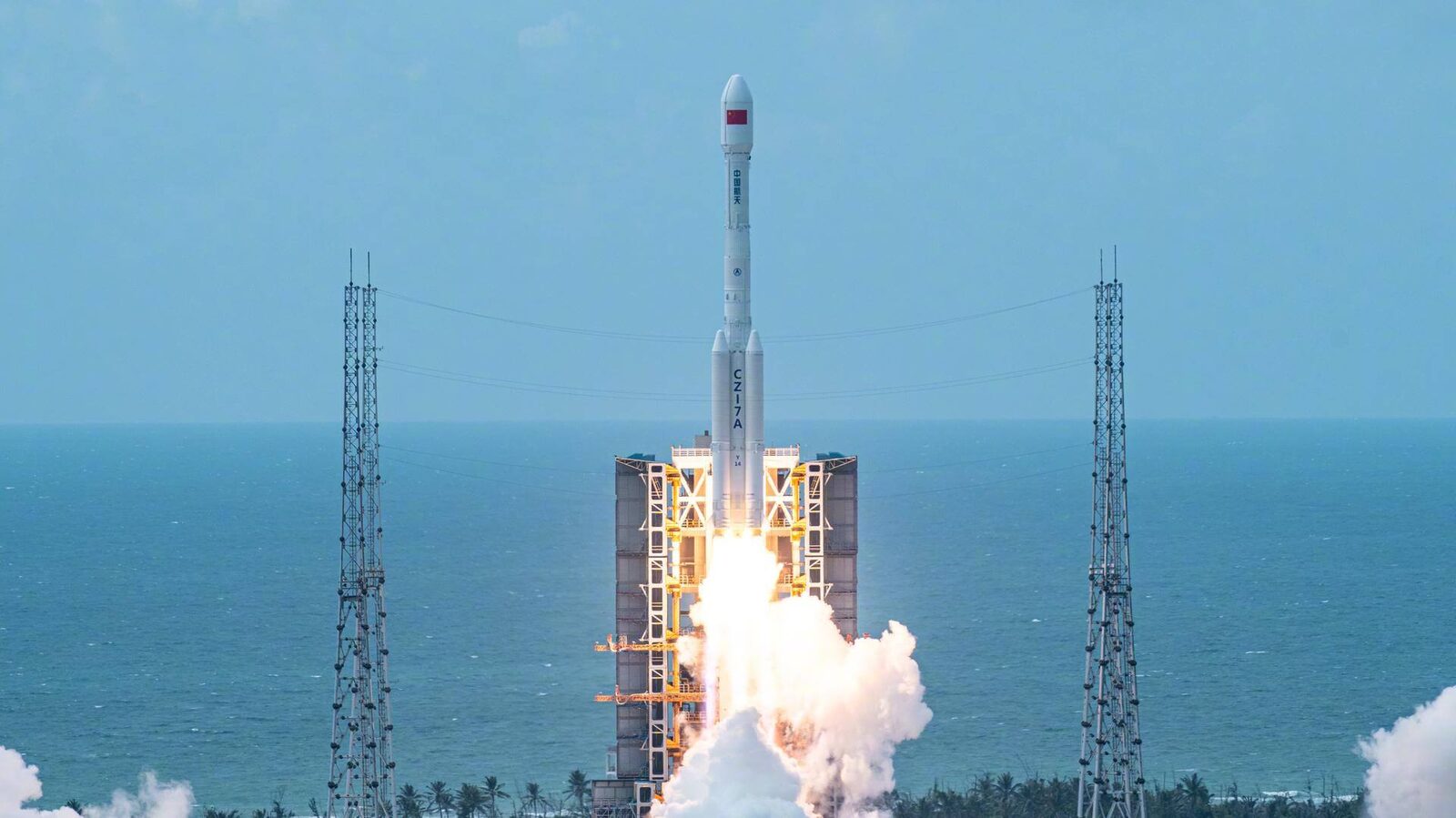
- China Aerospace Science and Technology Corporation Long March 7A:
- Unknown Payload from Wenchang Space Launch Site (11:42 UTC) Details TBD. Launch Preview
July 30
- China Aerospace Science and Technology Corporation Long March 6A:
- Unknown Payload from Taiyuan Satellite Launch Center (00:52 UTC) Details TBD. The Long March 6A is China’s first rocket to incorporate solid rocket boosters, developed jointly by CASC and the Shanghai Academy of Spaceflight Technology. Launch Preview
- SpaceX Falcon 9 Block 5:
- NROL-95 from Cape Canaveral Space Force Station (06:37 UTC) A classified payload mission for the National Reconnaissance Office, launched under a Government/Top Secret mission designation. The reusable Falcon 9 Block 5 booster continues SpaceX’s national security launch cadence. Watch Live
July 31
- SpaceX Falcon 9 Block 5:
- Starlink Group 17-52 from Vandenberg Space Force Base (02:00 UTC) Deployment of 24 Starlink V2 Mini satellites to low Earth orbit; booster B1100 to land on droneship ‘Of Course I Still Love You’. Watch Live
- Rocket Lab Electron:
- LOXSAT 1 from Rocket Lab Launch Complex 1, Mahia Peninsula (Time TBD) A technology demonstration mission for Eta Space, sponsored by NASA’s Tipping Point program, testing a cryogenic oxygen fluid management system aboard a Photon-LEO satellite bus over a 9-month in-orbit demonstration.
- StriX Launch 11 from Rocket Lab Launch Complex 1, Mahia Peninsula (Time TBD) Launch of a synthetic aperture radar Earth-imaging satellite for Japanese company Synspective into sun-synchronous orbit.
- The Grain Goddess Provides (iQPS Launch 7) from Rocket Lab Launch Complex 1A, Mahia Peninsula (Time TBD) Deployment of a synthetic aperture radar Earth observation satellite for Japanese company iQPS. Watch Live Launch Preview
- Agency for Defense Development Mir:
- Demo Flight from Sea Launch (Time TBD) A test flight for the Mir small satellite launch vehicle, a South Korean military “quick response” rocket system. Launch Preview
August 3
- SpaceX Falcon 9 Block 5:
- Starlink Group 17-53 from Vandenberg Space Force Base (14:00 UTC) Deployment of 24 Starlink V2 Mini satellites to low Earth orbit; booster B1100 to land on droneship ‘Of Course I Still Love You’. Watch Live
August 4
- China Aerospace Science and Technology Corporation Long March 8A:
- Unknown Payload from Wenchang Space Launch Site (08:44 UTC) Details TBD. The Long March 8A offers increased payload capacity of up to 7 tonnes to sun-synchronous orbit, using an enlarged 3.35-meter second stage with upgraded YF-75H engines.
Note: Launch dates and times are subject to change due to technical or weather considerations.