


Top Stories
Shijian-31 Is Casing the GEO Belt From a Custom Orbit
China’s Shijian-31, launched in June, isn’t sitting still in a standard GEO slot. Analysts tracking the satellite say it’s flying a custom orbit that lets it sweep across the geostationary belt rather than parking at one longitude, giving it repeated close looks at other operators’ spacecraft.
That kind of orbit is a signature move for inspection and surveillance satellites. If Shijian-31 keeps cycling through GEO neighbors, expect more conjunction alerts and closer scrutiny from US Space Command as it passes near commercial and military birds.
Read the full story: SpaceNews
Pentagon Offers Industry a Hand on Critical Mineral EO Deadline
A new executive order gives companies until the start of 2027 to rework their supply chains for critical minerals used in defense and space hardware. Industry groups are telling the Pentagon that timeline is tight, especially for firms sourcing rare earths and specialty alloys from a handful of overseas suppliers.
DoD officials say they’re open to working with contractors on compliance, but haven’t offered a formal extension. For satellite builders dependent on these materials, the deadline lands right as demand for military and commercial space hardware keeps climbing.
Read the full story: Breaking Defense
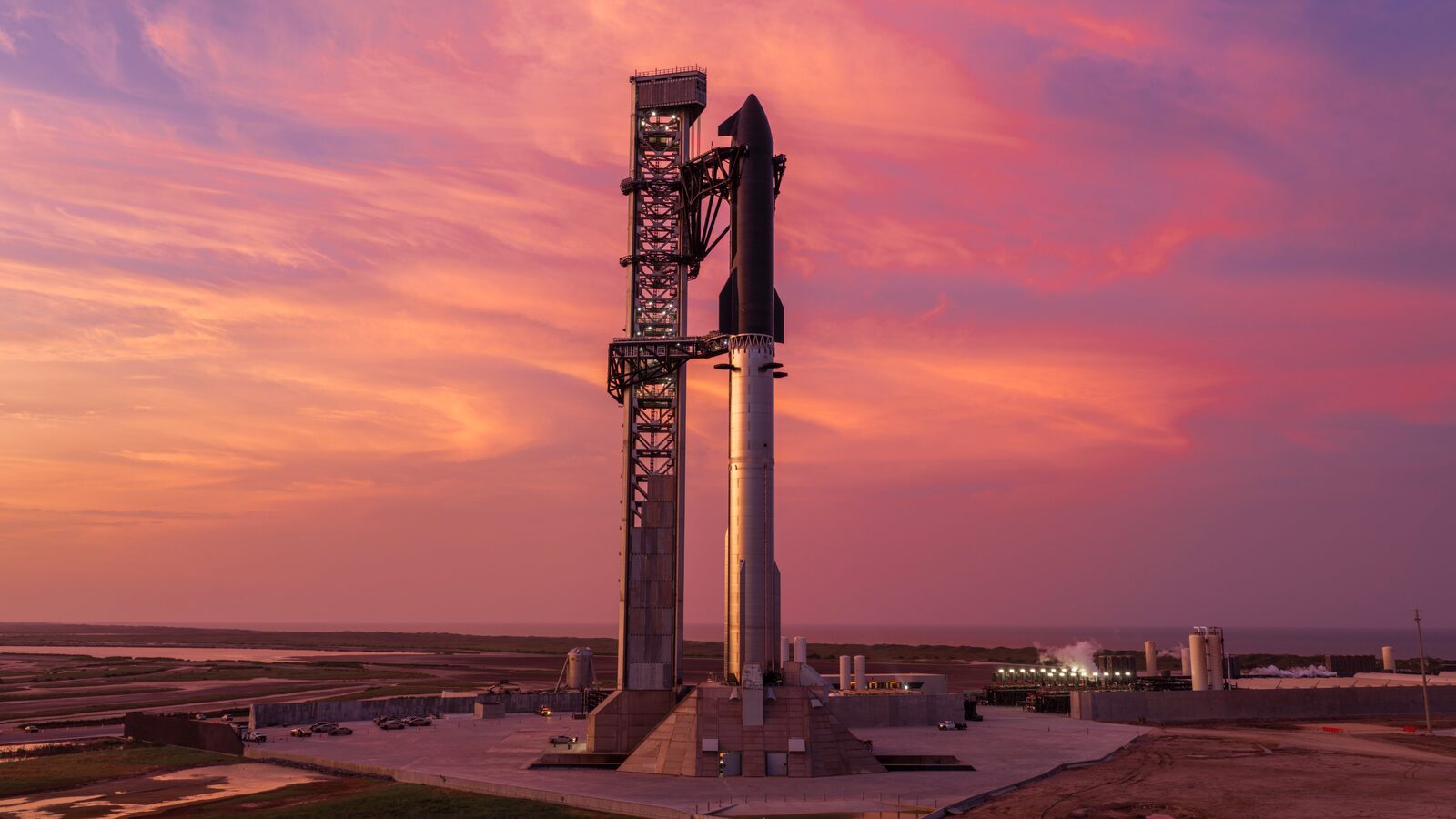
Starship Flight 13 Slips to Friday on Weather, Not Engines
SpaceX pushed the next Starship test flight from Boca Chica to Friday, citing weather over South Texas instead of the engine issues that dogged earlier attempts. The company hasn’t detailed which specific conditions triggered the scrub.
Flight 13 follows a string of test flights where SpaceX has been chasing full booster and ship recovery. A clean flight window matters here - repeated weather scrubs stack up against the cadence SpaceX needs to hit for Artemis-related Starship milestones.
Read the full story: Teslarati
Greece Puts $3.4B Into Achilles’ Shield Air Defense Network
Athens approved more than $3.4 billion for a national air defense system dubbed Achilles’ Shield, built heavily around Israeli-sourced interceptor and radar tech. The program is part of a wider European push to stand up layered “shield” defenses against drone and missile threats.
Greece joins a growing list of NATO members funding national air defense buildouts this year. These systems increasingly rely on space-based cueing and early warning, tightening the link between missile defense architectures and the satellites that feed them targeting data.
Read the full story: Breaking Defense
Mark Kelly Floated as Possible Democratic Presidential Candidate
Senator Mark Kelly, a former NASA astronaut and retired Navy aviator, is reportedly being weighed as a Democratic presidential contender. Kelly flew four Space Shuttle missions before his Senate career and has kept space policy as a recurring theme in his committee work.
No campaign announcement has been made. If Kelly runs, he’d be the rare candidate who can speak to NASA funding, commercial launch policy, and orbital debris rules from firsthand flight experience.
Read the full story: Space Explored
Lockheed Martin Ventures Puts $100M Into European Defense Startups
Lockheed Martin’s venture arm is committing $100 million to European defense firms working on quantum sensing, autonomy, and advanced manufacturing. The fund’s general manager told Breaking Defense the goal is early access to technologies that could feed into Lockheed’s own space and missile defense programs.
The move tracks a broader pattern of US primes buying into European deep-tech startups rather than building everything in-house. For space-adjacent technologies like quantum sensing, that money could accelerate hardware headed toward next-generation missile warning and space domain awareness payloads.
Read the full story: Breaking Defense
Satellite of the Day
GLOBAL-16
GLOBAL-16 is a compact Earth observation satellite operated by BSKG and built by LEOSTL as part of the BSky SCOUT bus program. Launched on December 9, 2021, aboard a Rocket Lab Electron rocket from Launch Complex 1A, this 55 kg microsatellite carries a SpaceView-24 imager designed for Earth observation missions. Despite its small size - just 1 meter long and 0.5 meters in diameter - GLOBAL-16 packs serious capability into a lightweight package, exemplifying the growing trend of distributed small-sat constellations for continuous Earth monitoring.
Operating in a low Earth orbit at 41.99° inclination, GLOBAL-16 was designed with a three-year operational lifetime, making it part of the nimble, rapidly-deployable satellite ecosystem that Rocket Lab has helped enable. The satellite’s power system combines solar cells and onboard batteries to keep its imaging payload operational during eclipse periods. This mission represents an important milestone in accessible space-based Earth observation, proving that high-quality remote sensing doesn’t require massive, expensive satellites - a lesson that’s reshaping the commercial space industry.
| Detail | Value |
|---|---|
| NORAD ID | 49950 |
| Operator | BSKG (US) |
| Launch Date | December 9, 2021 |
| Orbit | Low Earth Orbit, 41.99° inclination |
| Purpose | Earth Observation |
| Status | Active |
Track this satellite in real-time: Track GLOBAL-16
Upcoming Space Launches
July 24
-
China Aerospace Science and Technology Corporation Long March 8A:
- Unknown Payload from Commercial LC-1, Wenchang Space Launch Site (11:00 UTC) Status: To Be Confirmed. Payload details are still undisclosed. The Long March 8A is an upgraded orbital launch vehicle capable of delivering up to 7 tonnes to a 700 km sun-synchronous orbit, featuring a larger 3.35 m diameter hydrolox second stage and uprated YF-75H engines.
-
SpaceX Starship:
- Flight 13 from Orbital Launch Pad 2, SpaceX Starbase (22:45 UTC) A suborbital test flight of the Starship-Super Heavy stack. Booster 20 and Ship 40 will attempt controlled splashdowns in the Gulf of Mexico and Indian Ocean, respectively, without recovery. The flight will also deploy 20 next-generation V3 Starlink satellites as part of the test. Watch Live Launch Preview
July 25
- SpaceX Falcon 9 Block 5:
- Starlink Group 17-51 from Space Launch Complex 4E, Vandenberg Space Force Base (14:00 UTC) A batch of 24 Starlink V2 Mini satellites; booster B1081 will attempt its 26th landing on the droneship Of Course I Still Love You. Watch Live
July 29
-
SpaceX Falcon 9 Block 5:
- Starlink Group 17-52 from Space Launch Complex 4E, Vandenberg Space Force Base (02:00 UTC) Another batch of 24 Starlink V2 Mini satellites; booster B1081 will attempt its 26th droneship landing on Of Course I Still Love You. Watch Live
-
China Aerospace Science and Technology Corporation Long March 7A:
- Unknown Payload from Launch Complex 201, Wenchang Space Launch Site (11:42 UTC) Mission details remain undisclosed. Launch Preview
July 30
-
China Aerospace Science and Technology Corporation Long March 6A:
- Unknown Payload from Launch Complex 9A, Taiyuan Satellite Launch Center (00:52 UTC) Newly scheduled mission; payload details are yet to be confirmed. The Long March 6A is China’s first solid-booster-augmented launcher, combining two YF-100 engines with four solid rocket boosters.
-
SpaceX Falcon 9 Block 5:
- NROL-95 from Space Launch Complex 40, Cape Canaveral Space Force Station (06:37 UTC) A classified payload mission for the U.S. National Reconnaissance Office, now confirmed Go for Launch after previously being unconfirmed. Watch Live
July 31
- Rocket Lab Electron:
- LOXSAT 1 from Rocket Lab Launch Complex 1, Mahia Peninsula, New Zealand (Time TBD) A demonstration of Eta Space’s cryogenic oxygen fluid management system, sponsored by NASA’s Tipping Point program, mounted on a Rocket Lab Photon-LEO bus for a 9-month orbital technology test.
- StriX Launch 11 from Rocket Lab Launch Complex 1, Mahia Peninsula, New Zealand (Time TBD) Deployment of a synthetic aperture radar satellite for Japanese Earth-imaging company Synspective into sun-synchronous orbit.
- The Grain Goddess Provides (iQPS Launch 7) from Rocket Lab Launch Complex 1A, Mahia Peninsula, New Zealand (Time TBD) Launch of a synthetic aperture radar Earth observation satellite for Japanese company iQPS. Watch Live
Schedule Changes
- Added a new Long March 6A mission carrying an unknown payload, now Go for Launch on July 30.
- Long March 3B/E carrying Tianlian 2-06 launched successfully and has been removed from the upcoming schedule.
- Kinetica 1 carrying 5 satellites launched successfully and has been removed from the upcoming schedule.
- Falcon 9 Block 5 NROL-95 status upgraded from To Be Confirmed to Go for Launch.
Note: Launch dates and times are subject to change due to technical or weather considerations.



