Top Stories
Space Force Orders 36 More Golden Dome Missile-Tracking Satellites for $1.75 Billion
The Space Development Agency signed deals worth up to $1.75 billion combined with two companies to build 36 missile-tracking satellites for the Golden Dome missile-defense architecture. The award adds to SDA’s existing Tranche 1 and Tranche 2 constellations, which already track hypersonic and ballistic missile launches from low Earth orbit.
This buy signals SDA is scaling proliferated missile-warning coverage faster than its original timeline suggested. More satellites in this layer means denser tracking data and shorter revisit times over contested regions - a direct input into the missile-defense kill chain the Pentagon is racing to field.
Read the full story: Space.com
Hegseth Puts $37.5B Price Tag on Iran Strike Costs, Seeks Nearly $90B More
Defense Secretary Pete Hegseth told lawmakers the Pentagon needs close to $90 billion in supplemental funding, with $37.5 billion tied directly to operations from the Iran conflict. The hearing turned contentious as members pressed him on where the money would actually go.
Budget fights like this ripple into space programs. Supplemental requests compete with baseline funding lines for satellite procurement, including Golden Dome and SDA tranches - watch whether this request eats into space acquisition accounts later this year.
Read the full story: Breaking Defense
SpaceX Launches Northrop Servicer to Refuel Three GEO Satellites
A SpaceX rocket carried a DARPA-backed Northrop Grumman vehicle into orbit on a mission to install propulsion pods on three commercial satellites parked in geostationary orbit. The pods are designed to extend the operational life of aging GEO assets that would otherwise be retired for lack of fuel.
In-orbit servicing missions like this one complicate object tracking - a single servicer approaching multiple targets over its mission life generates maneuver data that operators need to correlate correctly. Expect more of these missions as GEO fleet owners look to stretch satellite lifespans instead of replacing them outright.
Read the full story: SpaceNews
Destinus Unveils Counter-Rocket Interceptor, Targets 2028 Production
Destinus revealed a new interceptor system built to shoot down incoming rockets before they hit critical infrastructure - command posts, radar sites, ammunition depots. The company is aiming for mass production by 2028.
Ground-based interceptors like this sit downstream of the space-based tracking layer Golden Dome is building. A faster kill chain on the ground only works if the satellites overhead hand off accurate, low-latency tracks - which is exactly what SDA’s new 36-satellite order is meant to deliver.
Read the full story: Breaking Defense
Falcon 9 Sends 24 Starlink Satellites Up a Day After Rare Abort
SpaceX flew booster B1082 out of Vandenberg Space Force Base on Tuesday, carrying 24 Starlink satellites to orbit, one day after the same rocket aborted its first launch attempt on the pad. The abort delayed the mission but didn’t scrub it outright.
Pad aborts are uncommon for Falcon 9’s mature flight record, so this one is worth flagging even though the eventual launch went clean. Track Starlink launches as new satellites populate their operational shells over the coming days.
Read the full story: Space.com
Army’s NGC2 Prototype Faces Final Desert Test at Project Convergence
The 4th Infantry Division’s Next Generation Command and Control prototype heads into its final stress test in the Mojave Desert heat, ahead of Army decisions on wider acquisition of the NGC2 ecosystem. The test evaluates whether the comms architecture holds up under harsh environmental conditions.
NGC2 leans on satellite communications links to move targeting data across dispersed units. How this prototype performs will shape Army demand signals for commercial SATCOM capacity going into next year’s budget cycle.
Read the full story: Breaking Defense
Satellite of the Day
LUOJIA-1 01
LUOJIA-1 01 (also known as Luojia-1 KSW 01 xing) is a compact 6U CubeSat developed by Wuhan University and launched on June 2, 2018, aboard a Chang Zheng 2D rocket from China’s Jiuquan Satellite Launch Center. At just 10 kilograms, this tiny Earth observation satellite packs impressive capabilities into its modest dimensions (0.3m × 0.2m with a 0.5m solar panel span). The mission focuses on gathering Earth observation data, relying on solar cells and onboard batteries for power in its sun-synchronous polar orbit.
What makes LUOJIA-1 01 noteworthy is its role as part of China’s broader CubeSat initiative, demonstrating how university-built small satellites can contribute to operational remote sensing missions. Operating at a 97.8° inclination, it passes over polar regions regularly, making it useful for monitoring high-latitude phenomena. The satellite exemplifies the democratization of space technology - bringing sophisticated Earth observation capabilities within reach of academic institutions and smaller operators.
| Detail | Value |
|---|---|
| NORAD ID | 43485 |
| Operator | Wuhan University (CN) |
| Launch Date | June 2, 2018 |
| Orbit | Sun-synchronous, 97.8° inclination |
| Purpose | Earth observation |
| Status | Active |
Track this satellite in real-time: Track LUOJIA-1 01
Upcoming Space Launches
July 23
-
China Aerospace Science and Technology Corporation Long March 3B/E:
- Unknown Payload from Xichang Satellite Launch Center, Launch Complex 2 (11:52 UTC) Details TBD. Launch Preview
-
SpaceX Starship:
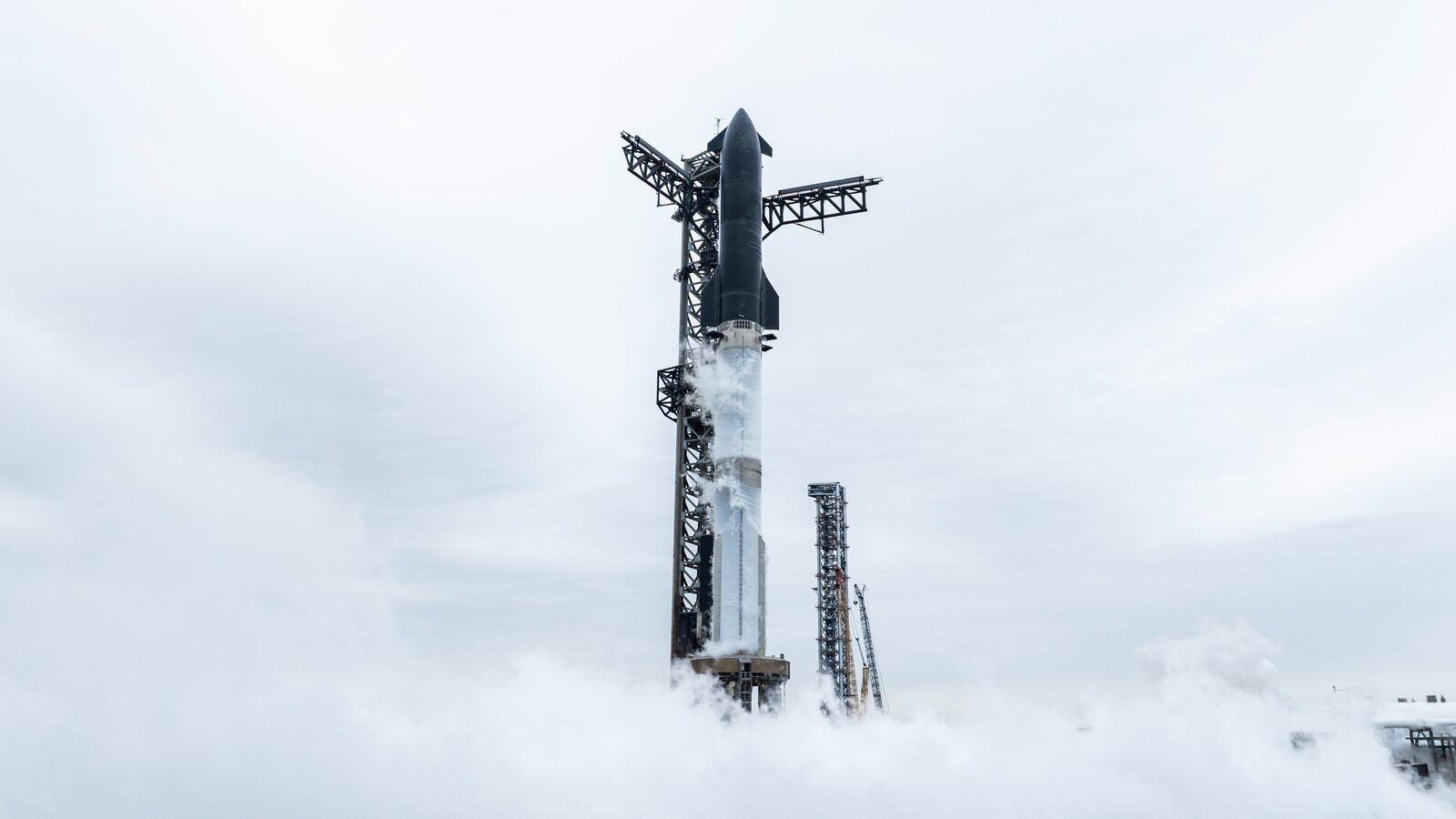
- Flight 13 from SpaceX Starbase, Orbital Launch Pad 2 (22:45 UTC) A SpaceX Starship-Super Heavy rocket will launch from Starbase, Texas, on a suborbital test flight. The Super Heavy booster (Booster 20) and Starship upper stage (Ship 40) will not be recovered but will attempt controlled splash downs in the Gulf of Mexico and Indian Ocean respectively. Starship will deploy 20 V3 Starlink satellites for a brief suborbital test. Watch Live Launch Preview
-
CAS Space Kinetica 1:
- Unknown Payload from Jiuquan Satellite Launch Center, Launch Area 130 (23:24 UTC) Details TBD. Launch Preview
July 24
- China Aerospace Science and Technology Corporation Long March 8A:
- Unknown Payload from Wenchang Space Launch Site, Commercial LC-1 (11:00 UTC) Details TBD.
July 25
- SpaceX Falcon 9 Block 5:
- Starlink Group 17-51 from Vandenberg Space Force Base, Space Launch Complex 4E (14:00 UTC) A SpaceX Falcon 9 rocket will launch another batch of 24 Starlink V2 Mini satellites to low Earth orbit. The first-stage booster, tail number B1082, launching for a 23rd time, is scheduled to land on the droneship, ‘Of Course I Still Love You,’ in the Pacific Ocean. Watch Live
July 29
-
SpaceX Falcon 9 Block 5:
- Starlink Group 17-52 from Vandenberg Space Force Base, Space Launch Complex 4E (02:00 UTC) A SpaceX Falcon 9 rocket will launch another batch of 24 Starlink V2 Mini satellites to low Earth orbit. The first-stage booster, tail number B1082, launching for a 23rd time, is scheduled to land on the droneship, ‘Of Course I Still Love You,’ in the Pacific Ocean. Watch Live
-
China Aerospace Science and Technology Corporation Long March 7A:
- Unknown Payload from Wenchang Space Launch Site, Pad 201 (11:42 UTC) Details TBD. Launch Preview
July 30
- SpaceX Falcon 9 Block 5:
- NROL-95 from Cape Canaveral Space Force Station, Space Launch Complex 40 (06:37 UTC) A SpaceX Falcon 9 rocket is scheduled to launch a classified payload for the National Reconnaissance Office.
July 31
- Rocket Lab Electron:
- LOXSAT 1 from Rocket Lab Launch Complex 1, Mahia Peninsula, New Zealand (00:00 UTC) LOXSAT 1 is a demonstration satellite of a complete cryogenic oxygen fluid management system in orbit, developed by Eta Space and sponsored by NASA’s Tipping Point program. The system will be integrated on a Rocket Lab Photon-LEO satellite bus and collect critical cryogenic fluid management data in orbit for 9 months, demonstrating capabilities of in-space cryogenic storage and transferal.
Schedule Changes
- SpaceX Falcon 9 Block 5 | Starlink Group 17-39: Status updated from Go for Launch to Launch Successful.
- SpaceX Falcon 9 Block 5 | MRV-1: Status updated from Go for Launch to Launch in Flight.
- Gravity-1 | 9 satellites: Status updated from Go for Launch to Launch Successful.
Note: Launch dates and times are subject to change due to technical or weather considerations.