publishDate: 2026-07-16T09:19:33Z title: ‘Saltzman’s Farewell: Prepare for War in Space | KeepTrack Space Brief’ excerpt: “Gen. Chance Saltzman’s final speech as Space Force chief warns of war in space as SpaceX preps a 21-satellite SDA launch from Vandenberg.” image: ~/assets/images/space-brief/image-2026-07-16.jpg category: space-brief tags:
- space news
- satellite tracking
- Space Development Agency
- SpaceX Falcon 9
- Space Force leadership
- military satellites
- budget reconciliation
Top Stories
SpaceX Set to Launch 21 SDA Satellites From Vandenberg
SpaceX is scheduled to launch the Tranche 1 Transporter Layer E mission at 1:32 p.m. PDT (2032 UTC) from pad 4E at Vandenberg Space Force Base. The payload carries 21 satellites for the Space Development Agency’s Proliferated Warfighter Space Architecture, marking the third operational batch delivered to that constellation.
PWSA is designed to give US forces low-latency missile tracking and data relay from low Earth orbit, spread across hundreds of small satellites instead of a handful of exquisite platforms. Once cataloged, these new payloads will show up in KeepTrack’s LEO tracking data alongside the earlier Tranche 0 and Tranche 1 launches.
Read the full story: Spaceflight Now
Saltzman’s Last Speech: “Prepare for War to Preserve Peace”
In his final public address as Chief of Space Operations, Gen. Chance Saltzman told an audience the Space Force needs combat credibility now, not after a conflict starts. He called for deeper coalition ties with allied space forces and pushed back on the idea that procurement reform alone will close capability gaps with China and Russia.
Saltzman’s remarks cap a four-year tenure defined by standing up the Space Force’s warfighting doctrine and building out orbital tracking and defense programs. His successor inherits a service now explicitly planning for satellite-on-satellite conflict rather than just space situational awareness.
Read the full story: SpaceNews
Saltzman: Space Force Now “Eggs in the Batter,” Not Icing on the Cake
On the eve of retirement, Saltzman told reporters the military’s space mission has shifted from a supporting afterthought to a core function baked into national defense planning. He used the metaphor to argue the Space Force’s role in deterrence now sits alongside the Army, Navy, and Air Force rather than behind them.
The comments echo his farewell speech’s call for combat readiness, but frame it in terms of institutional standing inside the Pentagon rather than orbital tactics.
Read the full story: Breaking Defense
Space Force Pays Slingshot $69M for AI Combat Training Tools
Slingshot Aerospace won a 4½-year, $69 million Space Force award to build AI-driven simulations of satellite-defense scenarios. The contract funds training environments where operators can rehearse responses to on-orbit threats before facing them for real.
This lands squarely in the space domain awareness push Saltzman flagged in his farewell remarks - giving crews realistic rehearsal data instead of relying purely on live-fire orbital tests, which remain rare and expensive.
Read the full story: SpaceNews
House GOP’s $60B Defense Package Falls Short of White House Ask
House Republicans released “Reconciliation 3.0,” proposing $60 billion in defense spending tied to Iran War-related costs. That’s $7 billion less than the $67 billion the White House requested.
Space programs typically ride inside broader defense reconciliation bills, so a funding gap at this stage could ripple into SDA and Space Force budget lines later in the appropriations process. Worth watching how the shortfall gets allocated once the bill moves to committee.
Read the full story: Breaking Defense
Satellite of the Day
WESTAR 3
WESTAR 3 was a communication satellite launched by Western Union Telegraph Company (WUTC) on August 10, 1979, aboard a Delta 2914 rocket from Cape Canaveral’s Launch Complex 17A. Carrying 12 C-band transponders, this cylindrical spacecraft with its distinctive dish antenna was designed to provide reliable communication services across North America for a planned operational life of seven years. At 282 kilograms and measuring just 1.6 meters in length with a 3.7-meter solar panel span, WESTAR 3 represented the compact yet capable satellite technology of the late 1970s.
The WESTAR series was instrumental in establishing commercial satellite communication infrastructure during the dawn of the satellite era. WESTAR 3’s low 10.23° inclination orbit positioned it well for North American coverage, and its C-band payload made it suitable for both terrestrial and maritime communication applications. Built by Hughes Space and Earth Systems (HSES), this satellite exemplifies the workhorse communication satellites that helped transition the telecommunications industry into the space age.
| Detail | Value |
|---|---|
| NORAD ID | 11484 |
| Operator | Western Union Telegraph Company (US) |
| Launch Date | August 10, 1979 |
| Orbit | Low Earth Orbit, 10.23° inclination |
| Purpose | Communication |
| Status | Active |
Track this satellite in real-time: Track WESTAR 3
Upcoming Space Launches
July 16
-
SpaceX Falcon 9 Block 5:
- SDA Tranche 1 Transport Layer E from Space Launch Complex 4E, Vandenberg Space Force Base (20:22 UTC) A Falcon 9 will deliver another batch of satellites for the Space Development Agency’s Tranche 1 Transport Layer (T1TL-E), a government/classified mission. The first-stage booster will attempt a landing on the droneship “Of Course I Still Love You” in the Pacific Ocean. Watch Live Launch Preview
-
SpaceX Starship:
- Starship | Flight 13 from Orbital Launch Pad 2, SpaceX Starbase, Texas (22:45 UTC) A test flight of the third development version of Starship. Booster 20 and Ship 40 will not be recovered but will attempt controlled splashdowns in the Gulf of Mexico and Indian Ocean, respectively. Starship will deploy 20 V3 Starlink satellites during this suborbital test. Watch Live Launch Preview
July 17
-
Rocket Lab Electron:
- LOXSAT 1 from Rocket Lab Launch Complex 1, Mahia Peninsula, New Zealand (Time TBD) A technology demonstration mission carrying LOXSAT 1, a cryogenic oxygen fluid management system developed by Eta Space and sponsored by NASA’s Tipping Point program, integrated on a Photon-LEO satellite bus for a 9-month in-orbit demonstration.
-
China Aerospace Science and Technology Corporation Long March 7A:
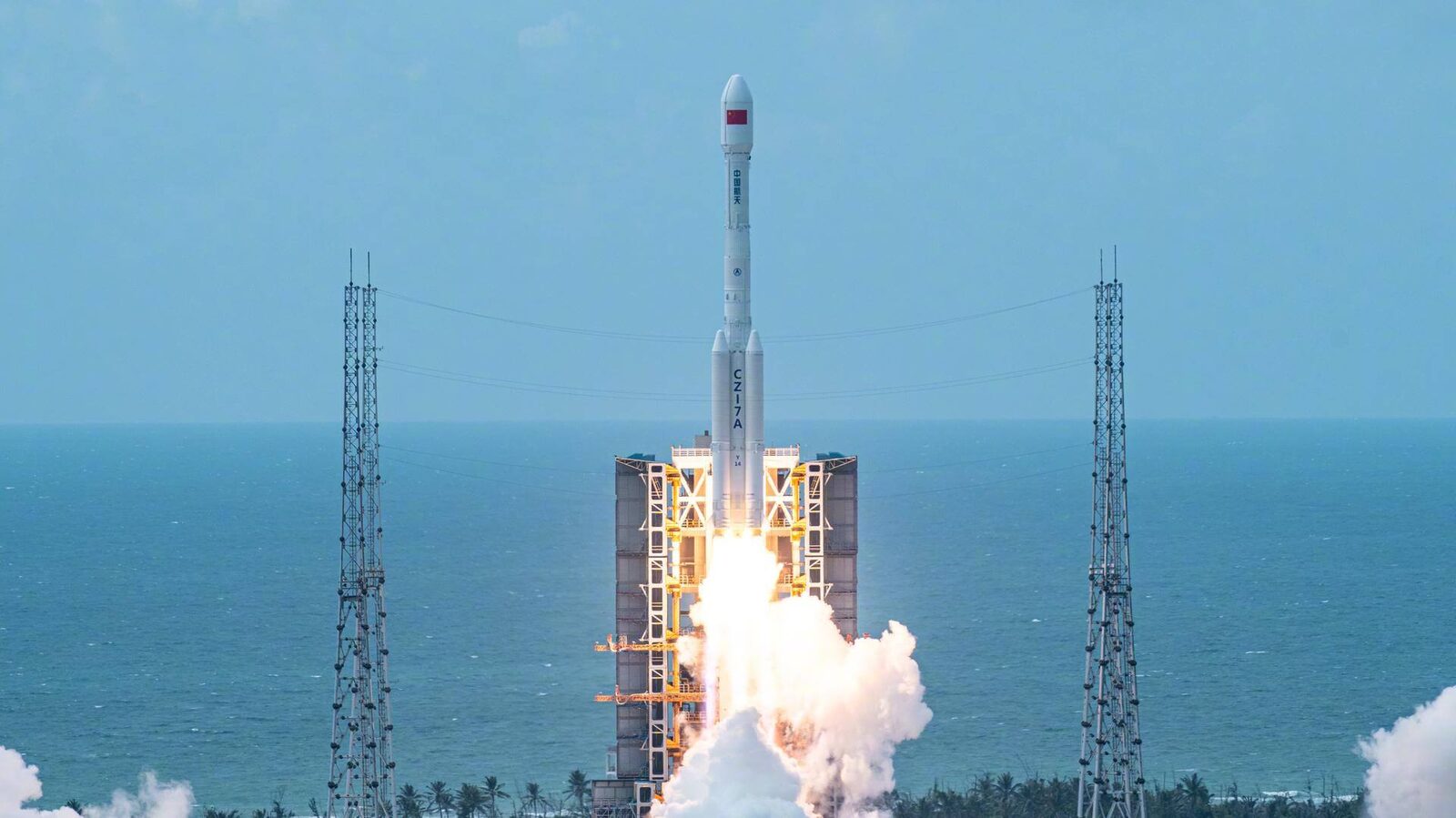
- Unknown Payload from Launch Pad 201, Wenchang Space Launch Site (11:42 UTC) Mission details to be confirmed. Launch Preview
July 18
- Skyroot Aerospace Vikram-I:
- Demo Flight from Satish Dhawan Space Centre First Launch Pad, Satish Dhawan Space Centre, India (05:00 UTC) A demonstration test flight of Skyroot Aerospace’s Vikram-I, a 4-stage orbital launch vehicle capable of delivering up to 350 kg to Low Earth Orbit. Launch Preview
July 20
- SpaceX Falcon 9 Block 5:
- Starlink Group 17-39 from Space Launch Complex 4E, Vandenberg Space Force Base (14:00 UTC) Deployment of 24 Starlink V2 Mini satellites. Booster B1082, flying for a 23rd time, will attempt a droneship landing. Watch Live
July 21
- SpaceX Falcon 9 Block 5:
- MRV-1 from Space Launch Complex 40, Cape Canaveral Space Force Station (21:15 UTC) A Mission Extension category launch supporting the Space Development Agency’s Tranche 1 Transport Layer program. The booster will attempt to land on the droneship “Of Course I Still Love You.” Watch Live
July 22
- Orienspace Technology Gravity-1:
- Unknown Payload from Yellow Sea (launch location 5), Haiyang Oriental Spaceport (02:44 UTC) Mission details to be confirmed. Gravity-1 is a 4-stage solid-fueled launch vehicle capable of delivering up to 6,500 kg to Low Earth Orbit. Launch Preview
July 23
- China Aerospace Science and Technology Corporation Long March 3B/E:
- Unknown Payload from Launch Complex 2, Xichang Satellite Launch Center (11:00 UTC) Mission details to be confirmed. The Long March 3B/E is a medium-range launcher specially developed for transporting heavy communications satellites to geostationary transfer orbit.
July 24
-
China Aerospace Science and Technology Corporation Long March 8A:
- Unknown Payload from Commercial Launch Complex 1, Wenchang Space Launch Site (11:00 UTC) Mission details to be confirmed. The Long March 8A features an upgraded liquid hydrogen/liquid oxygen upper stage with increased sun-synchronous orbit capability of up to 7 tonnes.
-
SpaceX Falcon 9 Block 5:
- Starlink Group 17-51 from Space Launch Complex 4E, Vandenberg Space Force Base (14:00 UTC) Deployment of 24 Starlink V2 Mini satellites. Booster B1082, flying for a 23rd time, will attempt a droneship landing. Watch Live
Schedule Changes
- Gravity-1 | Unknown Payload: Status updated from “To Be Confirmed” to “Go for Launch.”
Note: Launch dates and times are subject to change due to technical or weather considerations.