Top Stories
Space Force Restructures Procurement Into Nine Acquisition Portfolios
Space Force has completed a reorganization of its acquisition structure, creating nine distinct portfolio areas each led by a portfolio acquisition executive. Those executives will now control both requirements definition and modernization decisions across their assigned mission areas — a consolidation of authority that previously was more fragmented.
This kind of structural change matters for contractors and program watchers. Knowing which portfolio owns which program will determine who gets funding priority and who controls the roadmap. The nine-portfolio model mirrors how large defense primes organize internal product lines.
Read the full story: SpaceNews
Space Force Awards Pulse Space $40M for Laser Power Transmission Tech
Space Force has awarded startup Pulse Space a $40 million contract to develop laser systems capable of transmitting both power and data between spacecraft. The technology targets on-orbit energy transfer — beaming power to satellites that need it rather than relying solely on onboard solar panels.
This is a direct bet on space-based power routing as an operational capability. If it works at scale, it changes how satellites are designed and how constellations handle power contingencies. Watch for Pulse Space hardware in future low-orbit test slots.
Read the full story: SpaceNews
DoD and Silicon Valley Converge on Solar Power Beaming Satellites
The Air Force confirmed “Space Operational Energy” is an active focus area, with plans to host industry days and open collaboration pathways with commercial partners. The move aligns with growing private sector investment in space-based solar power transmission — energy collected in orbit and beamed to receivers on the ground or to other spacecraft.
The convergence of DoD interest and venture capital in this space is accelerating. Several Silicon Valley-backed firms are now developing demonstration hardware. An Air Force spokesperson stopped short of naming specific programs or timelines.
Read the full story: Breaking Defense
Pentagon Requests $4.3B Reprogramming to Cover Unforeseen Military Costs
The Pentagon filed a 47-page omnibus reprogramming notification asking Congress to shift $4.3 billion from existing weapon and technology programs to cover what DoD describes as “unforeseen military requirements” in the national interest. The notification doesn’t specify which programs lose funding or what the new requirements are — that detail lives in the full 47-page document.
Reprogramming notifications of this size draw congressional scrutiny. Committees can block or condition the transfers, which means some of the listed cuts may not go through as filed.
Read the full story: Breaking Defense
12-Nation European Coalition Commits $50B to Long-Range Strike Modernization
A 12-member European coalition released a joint statement pledging $50 billion to modernize deep precision strike capabilities. The coalition explicitly tied the investment to shifting U.S. posture on European defense commitments.
Long-range strike modernization in Europe has direct implications for space-based ISR and targeting infrastructure. Precision strike at depth depends heavily on satellite communications, GPS, and overhead surveillance — all systems KeepTrack users track daily.
Read the full story: Breaking Defense
U.S. Army Picks Four Companies for Autonomous Breaching Program
The Army selected four contractors to develop autonomous breaching systems designed to reduce troop exposure during obstacle clearance and ensure passage for follow-on forces. The program reflects the Army’s broader push toward unmanned systems in high-risk assault roles.
No contract values or company names were disclosed in the summary. The autonomous breaching mission involves coordinating robotic assets in GPS-contested and communications-degraded environments — which puts satellite link reliability directly in the requirements chain.
Read the full story: Breaking Defense
Victoria Coleman on U.S. Space Leadership Strategy
Victoria Coleman, former Chief Scientist of the U.S. Air Force and now associate provost at her current institution, appeared on SpaceNews’s Space Minds podcast to discuss maintaining U.S. leadership in space. Coleman’s prior role gave her direct visibility into Air Force science and technology investment priorities.
The podcast format limits hard news, but Coleman’s framing of competitive risk and institutional priorities offers useful context for anyone tracking how DoD thinks about the longer-term space technology competition.
Read the full story: SpaceNews
Satellite of the Day
MUOS-2
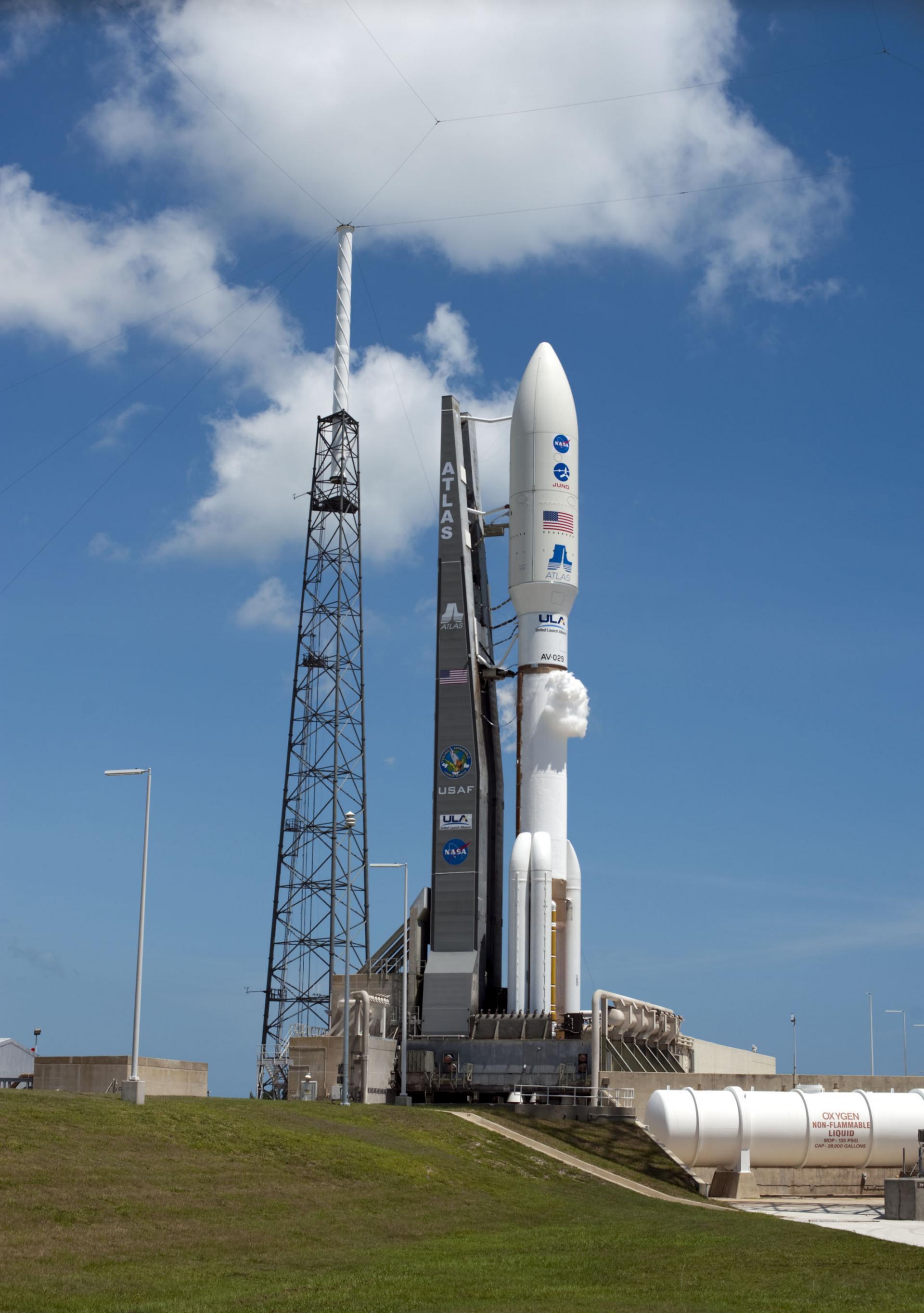
MUOS-2 is a military communications satellite that forms part of the U.S. Mobile User Objective System constellation, operated by SPAWSD (Space and Missile Systems Center). Launched on July 19, 2013, aboard an Atlas V 551 rocket from Cape Canaveral Air Force Station, this Lockheed Martin-built satellite was designed to provide secure, worldwide communications for military personnel. With a design life of 15 years and a launch mass of 6,740 kg, MUOS-2 represents a significant investment in resilient command-and-control infrastructure for the Department of Defense.
The satellite operates from a near-equatorial orbit, making it ideal for global coverage with particular emphasis on equatorial regions where many military operations occur. Its A2100M bus configuration includes deployable solar arrays and sophisticated power management systems, enabling it to maintain continuous communications relay capabilities. MUOS-2 joined its constellation siblings to replace aging ultra-high frequency (UHF) military satellite communications systems with modern, higher-capacity narrowband and wideband services.
| Detail | Value |
|---|---|
| NORAD ID | 39206 |
| Operator | SPAWSD (US) |
| Launch Date | July 19, 2013 |
| Orbit | Geostationary, ~5.0° inclination |
| Purpose | Military communications |
| Status | Active |
Track this satellite in real-time: Track MUOS-2
Upcoming Space Launches
July 11
- SpaceX Falcon 9 Block 5:
- Starlink Group 17-48 from Space Launch Complex 4E, Vandenberg Space Force Base, CA, USA (02:00–06:00 UTC) A batch of 29 Starlink V2 Mini Optimized satellites launching to low Earth orbit. Watch Live Launch Preview
July 12
-
Orienspace Technology Gravity-1:
- Unknown Payload from Haiyang Oriental Spaceport, Haiyang Offshore Launch Location (02:00–06:00 UTC) Details are yet to be confirmed for this mission aboard Gravity-1, a four-stage solid-fueled launch vehicle developed by Chinese private company OrienSpace, capable of delivering up to 6,500 kg to low Earth orbit. Launch Preview
-
Skyroot Aerospace Vikram-I:
- Demo Flight from Satish Dhawan Space Centre First Launch Pad, Satish Dhawan Space Centre, India (05:00–09:00 UTC) The debut flight of Skyroot Aerospace’s Vikram-I, a four-stage orbital launch vehicle with a solid-fueled first three stages and a hypergolic upper stage, capable of delivering up to 350 kg to low Earth orbit. Several cubesats are expected to be aboard, with payload identities yet to be confirmed. Launch Preview
July 14
-
SpaceX Falcon 9 Block 5:
- Starlink Group 10-45 from Space Launch Complex 40, Cape Canaveral Space Force Station, FL, USA (07:15–11:15 UTC) A batch of 29 Starlink V2 Mini Optimized satellites launching to low Earth orbit. Watch Live
-
SpaceX Falcon 9 Block 5:
- Starlink Group 15-14 from Space Launch Complex 4E, Vandenberg Space Force Base, CA, USA (01:16–02:16 UTC) A batch of 29 Starlink V2 Mini Optimized satellites launching to low Earth orbit. Watch Live
-
Russian Federal Space Agency (ROSCOSMOS) Soyuz 2.1a:
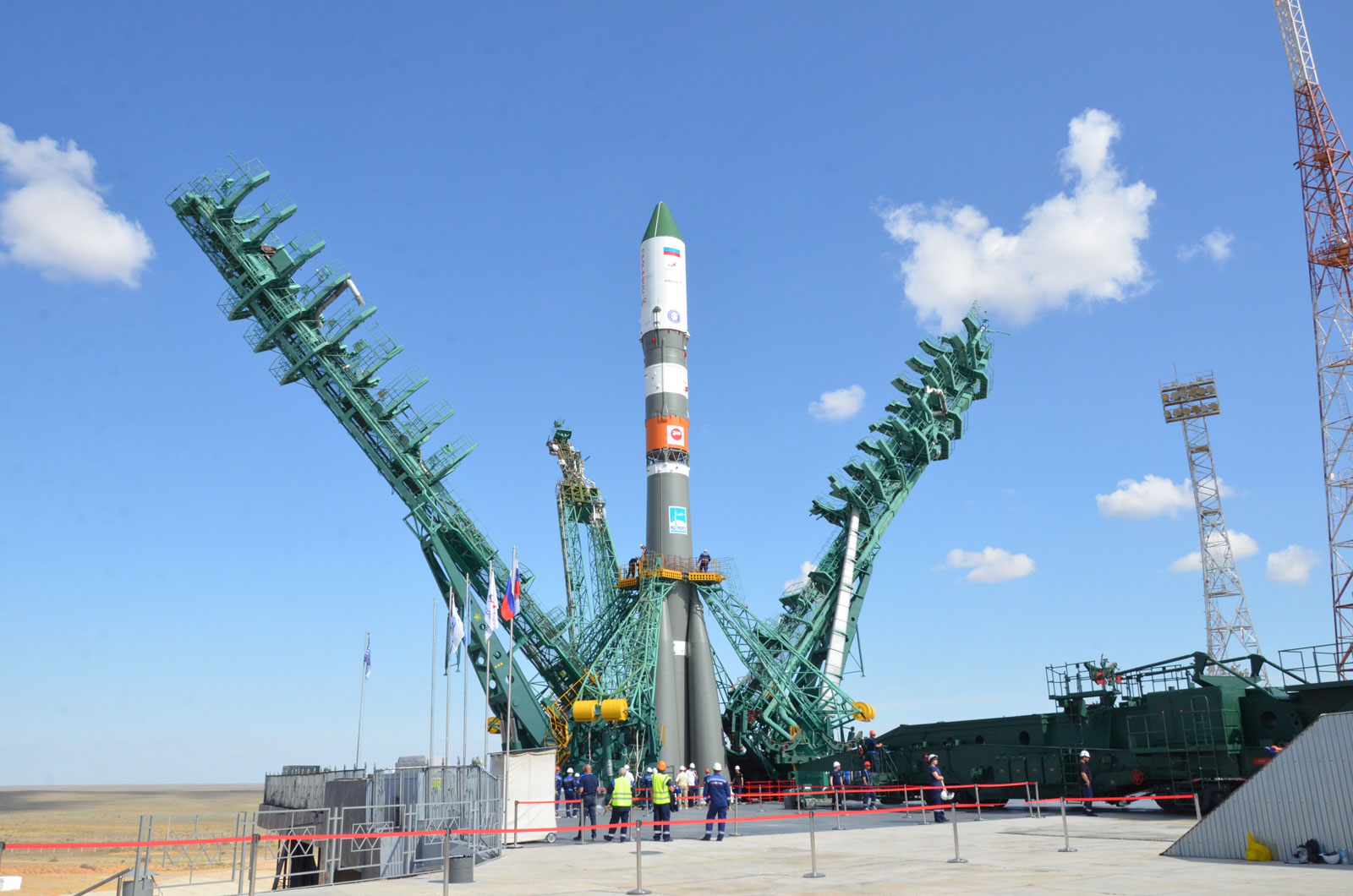
- Soyuz MS-29 from Launch Pad 31/6, Baikonur Cosmodrome, Republic of Kazakhstan (14:47 UTC) Soyuz MS-29 will carry Roscosmos cosmonauts Pyotr Dubrov and Anna Kikina, along with NASA astronaut Anil Menon, to the International Space Station. The Soyuz 2.1A features a fully digital flight control system and is the current standard vehicle for crewed ISS rotation missions. Watch Live
July 15–16
- SpaceX Starship:
- Flight 13 from Orbital Launch Pad 2, SpaceX Starbase, TX, USA (22:45 UTC / window closes 00:56 UTC July 16) The 13th integrated test flight of SpaceX’s fully reusable two-stage Starship super heavy-lift launch vehicle, and the second flight of the Starship V3 configuration. Starship V3 is the third development iteration of the vehicle, with a launch mass of approximately 5,250 tonnes and a nominal low Earth orbit payload capacity of 100,000 kg. This flight is currently To Be Confirmed.
July 16
- SpaceX Falcon 9 Block 5:
- SDA Tranche 1 Transport Layer E from Space Launch Complex 4E, Vandenberg Space Force Base, CA, USA (20:22–21:09 UTC) One of six missions supporting the U.S. Space Force Space Development Agency’s Proliferated Warfighter Space Architecture (PWSA) Tranche 1 Transport Layer constellation. The satellites will operate in low Earth orbit and provide assured, low-latency military data and connectivity to warfighter platforms worldwide, interconnected via Optical Inter-Satellite Links (OISLs) over Ka band.
July 17
-
Rocket Lab Electron:
- LOXSAT 1 from Rocket Lab Launch Complex 1, Mahia Peninsula, New Zealand (window TBD) LOXSAT 1 is a technology demonstration satellite developed by Eta Space and sponsored by NASA’s Tipping Point program. Flying on a Rocket Lab Photon-LEO satellite bus, the mission will validate a complete cryogenic oxygen fluid management system in orbit over nine months, demonstrating in-space cryogenic storage and transfer capabilities to support future commercial propellant depot development.
-
China Aerospace Science and Technology Corporation Long March 7A:
- Unknown Payload from Launch Pad 201, Wenchang Space Launch Site, People’s Republic of China (11:00–14:00 UTC) Details for this mission are yet to be confirmed.
Schedule Changes
- Long March 7A | Unknown Payload has been newly added to the manifest, currently listed as To Be Confirmed with a launch window of July 17, 2026, 11:00–14:00 UTC from Wenchang Space Launch Site.
- Long March 10B | Demo Flight has been removed from the upcoming launch calendar after its status changed from Go for Launch to Launch Successful.
- Falcon 9 Block 5 | Starlink Group 10-42 has been removed from the upcoming launch calendar after its status changed from Go for Launch to Launch Successful.
Note: Launch dates and times are subject to change due to technical or weather considerations.